What’s the Safest Region in Mexico for Tourists?
Thinking about visiting Mexico often brings up a flood of conflicting emotions. You see the stunning photos of turquoise waters, but your family sends you terrifying news clips about cartels. This guide cuts through the noise, providing a veteran expat’s perspective on where you can actually relax, which states are statistically safest, and how to navigate the nuances of Mexican security.
Disclosure: This post may contain affiliate links. We may earn a commission at no extra cost to you if you make a purchase through these links. Read full disclosure.
The Yucatán Peninsula: Mexico's Gold Standard for Safety
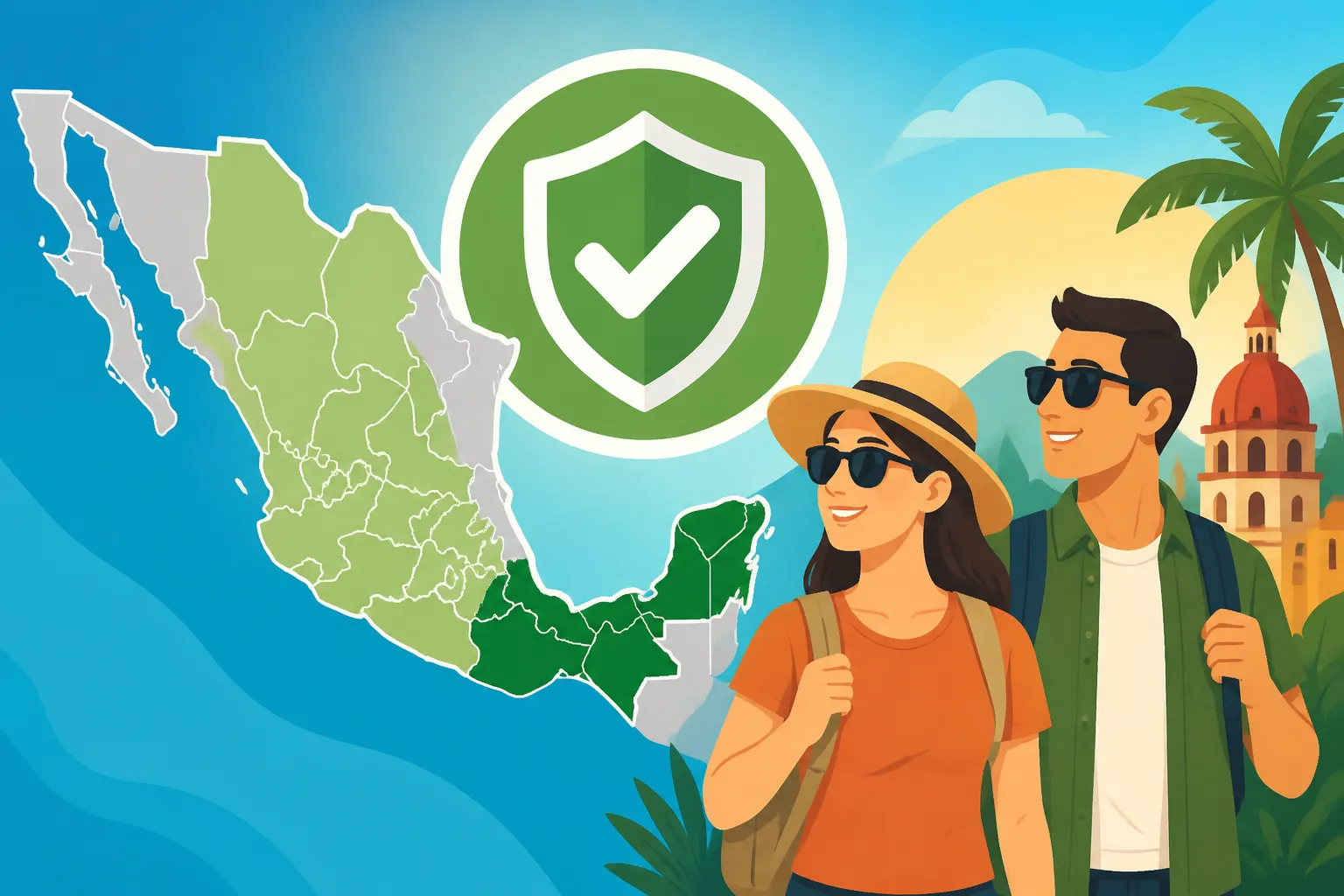
When people ask me where to go for a stress-free first trip, I almost always point them toward the state of Yucatán. It is consistently ranked as the safest state in Mexico, often boasting crime statistics that are lower than many major cities in the United States or Europe. The capital city, Mérida, is the crown jewel of this region. I remember the first time I walked through the streets of Mérida at 11:00 PM; the air was warm, families were eating ice cream in the plazas, and there was a palpable sense of peace that you just don’t find in every metropolitan area.
The safety here isn't an accident. The state government invests heavily in police training and surveillance technology. More importantly, there is a deep-seated culture of community. Neighbors look out for one another, and the local "policía" are generally seen as helpful figures rather than symbols of corruption. If you are looking for a place where you can explore colonial architecture and vibrant markets without constantly looking over your shoulder, this is it. For those planning a stay, using Booking.com to find a renovated "casona" in the Centro Histórico is a great way to immerse yourself in the local vibe while staying in a secure, well-lit area.
Beyond the city limits, the safety extends to the surrounding "pueblos" and archaeological sites. You can take a day trip to the yellow city of Izamal or the ruins of Uxmal with a high degree of confidence. The roads are generally well-maintained and flat, making it one of the best places for a rental car adventure. If you're nervous about navigating on your own, you can book guided excursions through Viator to ensure you're with a reputable local guide who knows the terrain and the safest routes. For more context on the current climate, you might want to check out Is Mexico Safe for Tourists Right Now? to see how the region compares to national trends.
Why Mérida is Unique for Expats and Tourists
Mérida feels like a different country compared to the border towns or the central states often highlighted in the news. The local Yucatec Maya culture places a high value on hospitality and tranquility. You will notice that the pace of life is slower here. While petty theft can happen anywhere, the violent crime that worries most travelers is virtually non-existent in the tourist corridors of Yucatán. This makes it an ideal landing spot for families or solo female travelers who want to experience authentic Mexico without the "edge" found in more turbulent zones.
Exploring the Coastal Safety of the Peninsula
While the state of Yucatán is the safest, the neighboring state of Quintana Roo (home to Cancún and Tulum) requires a bit more situational awareness. However, the island of Holbox and the colonial town of Valladolid remain incredibly safe havens within the peninsula. These areas rely heavily on tourism, and local authorities go to great lengths to protect that industry. When moving between these spots, I always recommend checking How to Choose Safe Neighborhoods to Stay in Mexico so you don't accidentally book a place on the outskirts of a town where lighting and security might be lacking.
The Central Highlands: Colonial Security and the Bajío Region
The Central Highlands, particularly the state of Querétaro and the city of San Miguel de Allende in Guanajuato, offer another layer of safety for the discerning traveler. Querétaro is often cited as one of the best places to live in Mexico due to its booming economy, clean streets, and high safety ratings. It has a very "civilized" feel, with beautiful pedestrian walkways and high-end shopping districts that feel as secure as any upscale neighborhood in Madrid or San Diego.
San Miguel de Allende is a bit of an expat bubble, which contributes to its safety. Because so many foreigners live there year-round, the local economy is hyper-tuned to international standards of security. You’ll find English-speaking residents on almost every corner and a police force that is accustomed to interacting with tourists. If you are interested in the lifestyle there, our Living in San Miguel de Allende: Expat Guide offers a deeper look into the daily reality of the town. To get there from Mexico City or other hubs, I usually suggest using Busbud to book a first-class bus like Primera Plus; these buses use toll roads and are significantly safer than the cheaper, second-class alternatives.
However, the "Bajío" region does have its complexities. While the cities of Querétaro and San Miguel are safe, some surrounding areas in the state of Guanajuato have seen spikes in activity related to the energy industry. The trick here is to stay on the "cuotas" (toll roads) and avoid driving in rural areas at night. For a full breakdown of transit safety, see Driving in Mexico: Toll Roads (Cuotas) vs Free Roads (Libres) to understand why paying those tolls is the best security investment you can make.
The Appeal of Querétaro for Safety-Conscious Travelers
Querétaro represents the "modern" Mexico. It’s a hub for the aerospace and automotive industries, which means the state has a vested interest in maintaining a stable, safe environment for international executives and their families. The historic center is a UNESCO World Heritage site and is patrolled frequently. It’s one of the few places in Mexico where I feel comfortable carrying a professional camera openly.
San Miguel de Allende: The Expat Stronghold
The safety in San Miguel de Allende is bolstered by its compact nature. Most of the action happens in the "Centro," where the streets are narrow and heavily foot-trafficked. This density naturally discourages certain types of crime. If you’re worried about navigating the city’s steep cobblestones and vibrant nightlife, you can find many walking tours on Viator that will help you get your bearings with a group. It’s a great way to learn How to Avoid Common Scams in Mexico while seeing the sights.
Baja California Sur: Geographic Isolation as a Shield
Baja California Sur, the southern half of the Baja peninsula, is another region that consistently ranks high for tourist safety. Its primary advantage is geography. Being separated from the mainland by the Sea of Cortez means that the flow of goods and people is much easier for authorities to monitor. The two main hubs, Los Cabos and La Paz, are very different but equally committed to visitor security.
La Paz is the more "Mexican" of the two, serving as the state capital. It has a beautiful "malecón" (boardwalk) where people walk, bike, and skate well into the evening. It feels very family-oriented and community-focused. On the other hand, Los Cabos is a massive international tourism engine. Because the Mexican government views Los Cabos as a critical source of foreign revenue, the security presence is substantial. You will see federal police and sometimes even military patrols in the tourist zones, which can be jarring at first, but they are there to ensure the safety of the millions of visitors who flock to the resorts every year. You can find excellent resort options on Booking.com that offer gated security and private beach access for extra peace of mind.
To understand the specifics of this area, Los Cabos and Baja's Beach Towns provides a great overview of the different vibes in the region. If you’re planning on traveling between San José del Cabo and Cabo San Lucas, using ride-sharing apps is a common practice. I always tell newcomers to read How to Use Uber and Ride-Hailing Safely in Mexico to ensure they’re following the local protocols, as there can sometimes be friction between taxi unions and app drivers.
The Peace of La Paz
La Paz is widely considered one of the safest cities in the country for foreigners to live and visit. The vibe is decidedly low-key. Unlike the high-energy party atmosphere of Cabo San Lucas, La Paz attracts nature lovers and those looking for a quiet escape. The safety here is rooted in the city's stable middle-class population and its distance from the more volatile border regions of the northern peninsula.
Security Infrastructure in Los Cabos
In Los Cabos, safety is a multi-layered infrastructure. The "Tourist Corridor" that connects the two main towns is highly monitored. While the resorts themselves are incredibly secure, the main thing to watch out for is petty crime in crowded nightlife areas. If you follow the same common-sense rules you’d use in Las Vegas or Miami, you’ll be fine. For a broader look at the logistics of moving around the country, check Getting Around Mexico: Buses, Flights, and Car Hire.
Comparing the Safest Regions in Mexico
To help you decide which region fits your travel style and safety requirements, I’ve put together this quick comparison table based on my years of living and traveling throughout the country.
| Region | Primary Safety Feature | Best For | Transport Tip |
|---|---|---|---|
| Yucatán (Mérida) | Strong community & local police | Families & Culture Seekers | Rent a car for cenote hopping |
| Baja California Sur | Geographic isolation | Beach lovers & Divers | Use Uber or private transfers |
| Central Highlands | Wealthy expat/industrial hubs | History & Architecture | Use Busbud for first-class buses |
| Oaxaca (City & Coast) | Cultural cohesion | Foodies & Surf Culture | Fly between the city and the coast |
While these are the "safest" regions, it is important to remember that safety is often about behavior rather than just location. Even in the safest state, leaving a laptop on the front seat of a car is an invitation for trouble. Our guide on Staying Safe in Mexico: Practical Tips for Travelers is essential reading for anyone wanting to minimize their risk profile.
Navigating Transit Between Safe Zones
One of the biggest anxieties for travelers is the "in-between." How do you get from a safe airport to a safe hotel without ending up in a vulnerable situation? The first rule is to always use authorized transportation. At airports, this means buying a ticket from the official taxi booth inside the terminal, not accepting a ride from someone waving at you in the arrivals hall.
When traveling between cities, the bus system in Mexico is surprisingly excellent. I’ve spent hundreds of hours on buses here, and if you stick to the "plus" or "executive" classes, you’ll have a seat that reclines into a bed, Wi-Fi, and a direct route that avoids unnecessary stops in smaller, less-secure towns. You can easily compare schedules and prices on Busbud to find the most direct routes. If you are feeling particularly cautious, you can also look into Which Areas of Mexico Should Tourists Avoid? to make sure your bus route doesn't pass through any states currently under "do not travel" advisories.
Another common question is about driving. Driving in Mexico is one of my favorite things to do, but it comes with a strict set of rules. The most important one is: Never drive at night. Even in the safest regions, cattle can wander onto the road, or you might hit a "topo" (speed bump) that isn't marked, leaving you stranded with a broken axle in the dark. For more on this, read Is It Safe to Drive at Night in Mexico? Road Safety Tips for Expats.
The Reliability of First-Class Buses
Mexico's bus network is often more reliable and comfortable than the train systems in many parts of Europe or the US. Companies like ADO, ETN, and Primera Plus operate out of secure terminals where your luggage is checked and passengers are often screened before boarding. This level of oversight makes it my preferred way to travel between regions like the Highlands and the Gulf Coast.
Making Use of Internal Flights
If you’re traveling between Baja California Sur and the Yucatán, a flight is your only logical option. Mexico has several low-cost carriers like Volaris and VivaAerobus that make these jumps affordable. Flying is the statistically safest way to travel in Mexico, as it completely bypasses the road networks. When you land, having a pre-booked transfer via Viator or a confirmed stay through Booking.com ensures that your transition from the airport to your "safe zone" is seamless.
Final Thoughts on Mexican Safety
Safety in Mexico is a moving target, but it is rarely as dire as the headlines suggest. By choosing regions with strong local governance, geographic advantages, or established expat communities, you can enjoy everything this incredible country has to offer with peace of mind. The "safest" region is ultimately the one where you feel most comfortable applying the basic rules of travel: stay aware of your surroundings, stick to well-traveled paths, and respect the local culture.
Mexico has given me so much over the years, and it pains me when people miss out on its beauty because of fear. If you do your homework and choose your destination wisely, you’ll likely find that the biggest danger in Mexico is wanting to stay forever.
Disclaimer
The information provided in this guide is based on personal experience and regional statistics available as of 2026. Safety conditions can change rapidly due to political or social shifts. Always check your home country's latest travel advisories and local news before finalizing your travel plans. This guide is for informational purposes only and does not guarantee personal safety.