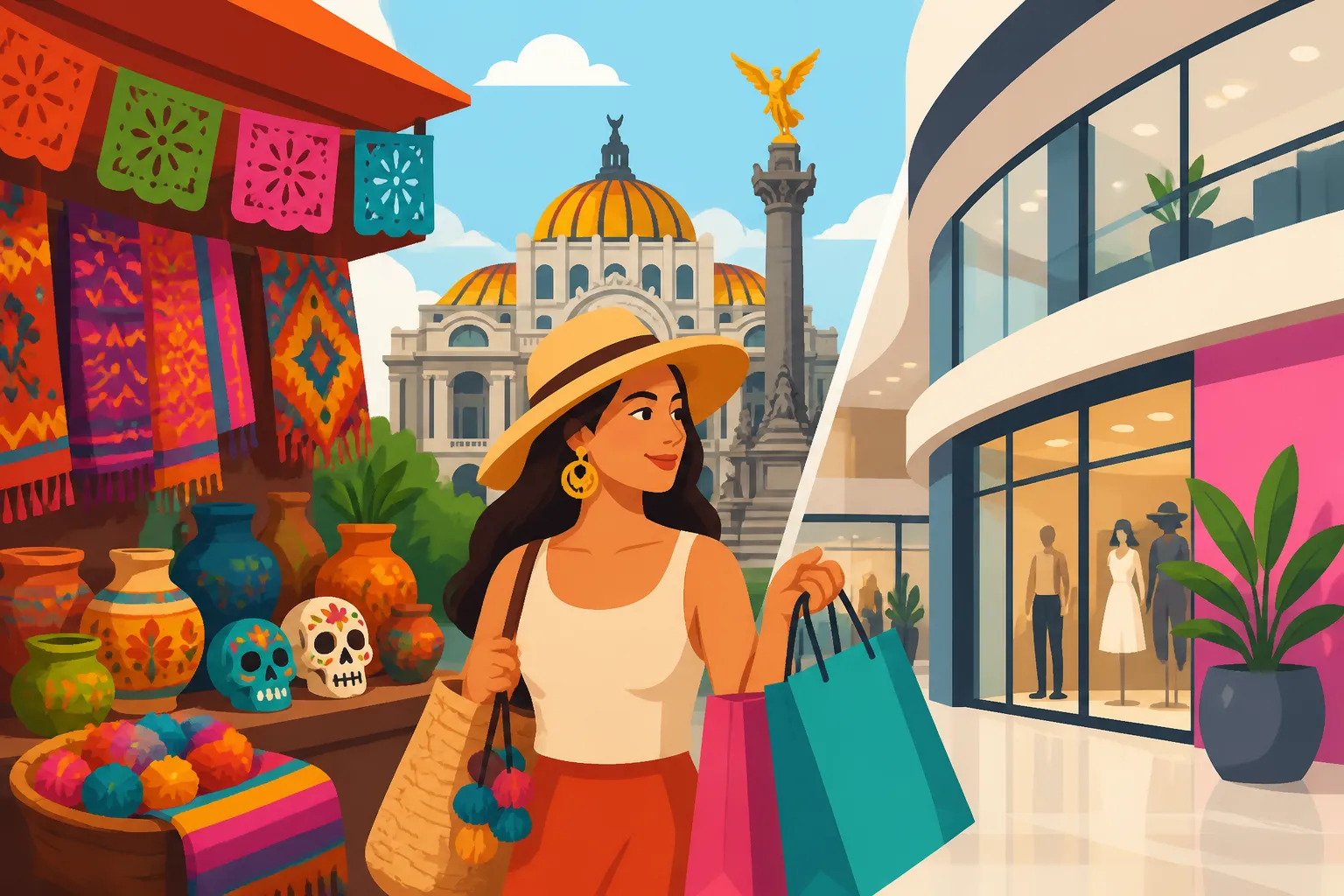
Shopping in Mexico City: Markets to Malls
Many newcomers to Mexico City feel paralyzed by the sheer scale of the retail landscape. You might want a hand-woven rug, but you aren't sure if you're being overcharged at a boutique or if the "authentic" market you found is actually a tourist trap. This guide breaks down exactly where to go, how to haggle, and how to balance luxury malls with gritty local tianguis.
Disclosure: This post may contain affiliate links. We may earn a commission at no extra cost to you if you make a purchase through these links. Read full disclosure.
The Soul of the City: Traditional Mercados and Tianguis
Mexico City's heart beats in its markets. For the uninitiated, the distinction between a mercado and a tianguis is the first thing you need to learn. A mercado is a permanent, government-regulated building housing hundreds of stalls, while a tianguis is a nomadic, open-air street market that pops up on specific days of the week. Navigating these spaces requires a mix of patience and a sense of adventure, as they are often loud, crowded, and dizzying in their variety.
La Ciudadela: The Artisan’s Paradise
If you only have time for one market to find high-quality Mexican Crafts (Artesanías): What to Buy and Where, make it La Ciudadela. Located near the historic center, this is a permanent market specifically dedicated to folk art from every corner of the republic. Unlike the more chaotic food markets, La Ciudadela is organized and relatively easy to navigate. You’ll find everything from intricate Huichol beadwork and Oaxacan alebrijes to high-quality leather goods and Talavera pottery.
I always tell visitors that La Ciudadela is the best place to start because the vendors are accustomed to tourists, yet the prices remain fair. However, don't just buy the first thing you see. Walk the entire perimeter first. You’ll notice that while many stalls carry similar items, the quality of the painting on a ceramic skull or the weave of a hammock can vary wildly. This is where you can practice How to Bargain at a Mexican Market Politely. Remember that while a small discount is common, these are often handmade items that took weeks to produce; a respectful negotiation is better than aggressive low-balling.
Mercado de Coyoacán: Tradition Meets Bohemian
Coyoacán is famous for Frida Kahlo, but its central market is a masterpiece in its own right. It’s smaller and more intimate than the massive markets further north, making it a favorite for expats living in the southern part of the city. Here, the shopping experience is intertwined with the culinary one. You can browse for hand-painted plates or traditional textiles and then stop for some of the city's best tostadas in the center of the building.
The vibe here is distinctly "old Mexico" mixed with a bohemian flair. You’ll find stalls selling traditional costumes for children alongside vendors offering artisanal incense and silver jewelry. It’s an excellent spot for What Mexican Souvenirs Are Worth Buying? because it offers a mix of the practical and the decorative. If you are staying in a nearby neighborhood found through Booking.com, you can easily spend an entire morning here, moving from the market to the lush plazas outside.
Understanding Tianguis: The Pop-up Street Markets
Nothing compares to the energy of a neighborhood tianguis. These markets are essential for understanding Mexican Customs, Etiquette, and Social Life. They are where locals buy their weekly produce, but they are also treasure troves for second-hand clothing, antiques, and bizarre collectibles. The Tianguis de la Lagunilla on Sundays is perhaps the most famous, known for its sprawling antique section where you can find anything from 1950s cinema posters to colonial-era furniture.
Navigating a tianguis requires a different mindset. It is crowded, and you need to be aware of your surroundings. Check our guide on Safety in Mexico: What Expats Need to Know About Staying Safe for tips on keeping your belongings secure in crowded spaces. In a tianguis, cash is the absolute king. While some permanent market stalls are starting to accept cards, a street vendor under a pink tarp will almost certainly require pesos.
High-End Fashion and Modern Luxury Malls
While the markets represent the tradition of Mexico, the malls represent its soaring modern ambition. Mexico City has a massive middle and upper class, and the shopping malls here are some of the most luxurious in the world. For an expat, these malls offer a sense of familiarity and comfort, providing air-conditioned spaces with international brands like Zara, H&M, and high-end designers like Louis Vuitton.
Polanco’s Avenida Presidente Masaryk
Often referred to as the "Champs-Élysées of Mexico," Avenida Presidente Masaryk in the Polanco neighborhood is where you go for serious luxury. This isn't a mall in the traditional sense, but a wide, tree-lined boulevard featuring the flagship stores of global fashion houses. Shopping here is an experience in itself; the service is impeccable, and the streets are filled with the city’s elite.
Even if you aren't looking to drop thousands of dollars on a Gucci bag, walking Masaryk is a great way to see the modern side of the city. There are also several high-end Mexican boutiques that blend contemporary fashion with traditional indigenous motifs. After a long day of walking, you can stop at one of the many world-class restaurants nearby. If you are worried about getting your luxury purchases home safely, consider Taxis, Uber, and Ride-Hailing in Mexico rather than the metro to avoid drawing unnecessary attention.
Centro Santa Fe: The Goliath of Mexican Malls
If you want the "all-in-one" experience, you have to head to the western edge of the city to Centro Santa Fe. It is the largest shopping mall in Mexico and one of the largest in Latin America. It features over 500 stores, multiple department stores like El Palacio de Hierro and Liverpool, and even an indoor skating rink. For an expat, Santa Fe is the place to find those specific home goods or clothing brands that you can't find elsewhere in the country.
The sheer size of Santa Fe can be overwhelming. I suggest planning your visit for a weekday morning to avoid the massive weekend crowds. Because it is located in a business district quite far from the center, the best way to get there is via a ride-sharing app or a private tour booked through Viator. Once inside, you’ll find a wide range of prices, from affordable fast fashion to ultra-premium luxury sections. It’s also a very safe environment with plenty of private security.
Antara Fashion Hall: Open-Air Elegance
Antara Fashion Hall, located in the "Nuevo Polanco" area, offers a more curated and pleasant experience than the sprawling halls of Santa Fe. It is an open-air mall, allowing you to enjoy Mexico City’s famous year-round spring weather while you shop. The architecture is sleek and modern, focusing on high-street brands and upscale dining.
Antara is particularly popular in the evenings when the lighting creates a sophisticated atmosphere. It’s a great place to see and be seen. Because it is located near the Soumaya Museum and the Jumex Museum, you can easily combine a day of culture with a few hours of retail therapy. Many expats prefer Antara because it feels less like a maze and more like a high-end park with shops attached.
Navigating the Historic Center (Centro Histórico)
Shopping in the Centro Histórico is a completely different beast. It is where the city’s commerce began, and it remains the most chaotic and rewarding place to shop. The streets here are often organized by "guilds," meaning an entire street might sell nothing but lighting fixtures, while the next street sells only surgical supplies or musical instruments.
Specialized Streets: Knowing Where to Look
To shop successfully in the Centro, you need a map and a plan. For example, Calle Madero is a pedestrian-only thoroughfare packed with mainstream brands and jewelry stores. However, if you step off Madero and head to Calle Bolivar, you’ll find yourself in the heart of the music district. For those looking for traditional textiles or religious items, the area around the Zócalo is unmatched.
The prices in the Centro are usually the lowest in the city, but the environment is high-intensity. You will be dodging street performers, food vendors, and thousands of other shoppers. When buying here, it’s essential to understand Cash vs Card in Mexico: What Visitors Should Know. Most small shops in the Centro prefer cash, and if you use a card, they might try to add a 3% to 5% "commission" to the price, which is technically illegal but very common.
Casa de los Azulejos and Retail History
While in the Centro, you shouldn't miss the Casa de los Azulejos (House of Tiles). While it is now a Sanborns department store and restaurant, the building itself is a colonial masterpiece covered in blue and white tiles from Puebla. Shopping here is less about the items—which are standard department store fare—and more about the history. It’s a great place to pick up books, high-end chocolates, or basic pharmacy needs in a stunning setting.
Sanborns is a staple of Mexican life. For an expat, it’s a reliable place to find international magazines or a last-minute gift. The service is famously traditional, with waitresses dressed in "Adelita" style uniforms. It’s also a safe "home base" if you need to use a clean restroom or grab a coffee while navigating the madness of the surrounding streets.
| Shopping Destination | Best For | Price Range | Payment Style |
|---|---|---|---|
| La Ciudadela | Traditional Crafts | Mid-range | Cash Preferred / Some Cards |
| Avenida Masaryk | Designer Fashion | Luxury | Cards Accepted |
| Centro Santa Fe | Department Stores | All ranges | Cards Accepted |
| Lagunilla Market | Antiques/Curios | Budget to Mid | Cash Only |
| Roma/Condesa | Boutique/Art | Mid to High | Cards Accepted |
Art, Antiques, and Boutique Finds in Roma and Condesa
For those who find the malls too sterile and the markets too chaotic, the neighborhoods of Roma and Condesa offer the perfect middle ground. This area is the epicenter of the city's creative class, and the shopping reflects that. Here, you’ll find independent bookstores, art galleries, and boutiques owned by local designers.
Boutique Shopping in Roma Norte
Roma Norte is the place to discover the next generation of Mexican talent. Streets like Colima and Alvaro Obregón are lined with shops selling minimalist furniture, organic skincare, and avant-garde clothing. These stores often feel like small art galleries. You aren't just buying a product; you're buying a piece of the CDMX "cool" factor.
Many of these boutiques are housed in beautifully restored Porfirian-era mansions. Shopping here is leisurely. You can browse a curated selection of vinyl records, stop for a third-wave coffee, and then move on to a shop selling handmade leather shoes. Because this area is so popular with foreigners, the staff almost always speak English, making it one of the easiest places to shop if your Spanish is still a work in progress.
The Sunday Antiques Market at Lagunilla
While technically bordering the Centro, the Lagunilla Sunday market is the spiritual home for the Roma/Condesa crowd looking for vintage treasures. It is famous for its "tianguis de antigüedades." You’ll see young interior designers and seasoned collectors hunting for mid-century modern lamps, old vinyl, or religious relics.
This market requires a sharp eye. Not everything is a genuine antique, and some items are overpriced for the "hipster" market. However, if you know what you’re looking for, you can find incredible pieces to decorate your home. It’s also a social event; you’ll see people drinking micheladas while they browse. If you find a large piece of furniture you love, you can usually negotiate delivery with a local "flete" (mover) for a reasonable fee. For those coming from outside the city, you can check Busbud for regional bus connections to visit other craft hubs like Puebla or Taxco on a day trip.
Practical Tips for the Savvy Shopper
Shopping in a city of 22 million people requires more than just a credit card; it requires a strategy. From understanding when to tip to knowing how to get your purchases back to your apartment, a little bit of local knowledge goes a long way.
Cash, Cards, and Haggling Etiquette
As mentioned before, cash is essential for markets. However, even in malls, it’s good to have some pesos on hand. Always try to carry smaller denominations (20s, 50s, and 100s). Many vendors in markets like La Ciudadela will claim they don't have change for a 500-peso note to discourage you from asking for a lower price.
Haggling is an art form in Mexico. It should never be aggressive or mean-spirited. A good rule of thumb: if an item has a printed price tag, do not haggle. If the price is given verbally, you can usually ask, "¿Es lo menos?" (Is that the lowest?). Usually, you can get 10-15% off the initial price. Also, remember How Much Should You Tip in Mexico? if you are using a bagger at a grocery store or a porter at a high-end mall. A few pesos go a long way in showing appreciation for their help.
Safety and Logistics: Getting Your Goods Home
If you’re buying fragile items like ceramics or glass, ensure the vendor wraps them well. Many market vendors are experts at using old newspapers and cardboard to create "travel-proof" packaging. If you’ve gone on a shopping spree in the Centro, don't try to navigate the Getting Around Mexico City: Metro, Metrobús, and Apps with ten bags. The metro can be incredibly crowded, and you’ll be a prime target for pickpockets.
Instead, use a ride-sharing app or a radio taxi. These are safer and will drop you right at your door. If you are buying very large items, like a carved wooden chest or a large rug, most high-end vendors can arrange international shipping for you, though it will be expensive. For local moves, look for "Fletes" signs near markets; these are independent truck drivers who can move your items across the city for a flat fee. Just make sure to agree on the price before they load the truck!
Disclaimer
The information provided in this guide is for informational purposes only. While we strive to keep our content up to date, shopping locations, prices, and safety conditions in Mexico City can change rapidly. Always exercise personal judgment and follow local safety advice when exploring the city.