What’s the Best Region in Mexico for Beaches?
Choosing a beach in Mexico is harder than it looks because the country’s 6,000 miles of coastline offer vastly different worlds. Whether you want turquoise Caribbean waters or the rugged Pacific surf, this guide breaks down each region’s pros and cons to help you decide exactly where to plant your umbrella for your next getaway or permanent move.
Disclosure: This post may contain affiliate links. We may earn a commission at no extra cost to you if you make a purchase through these links. Read full disclosure.
The Caribbean Coast: The Jewel of the Riviera Maya
If you close your eyes and picture the "perfect" beach, you are likely envisioning the Caribbean coast of Mexico. This region, primarily located in the state of Quintana Roo, is world-famous for its powdery white sand that stays cool under your feet even in the midday sun. The water here is a striking palette of turquoise and cerulean, often so clear that you can see your toes while standing neck-deep. From the high-rise luxury of Cancun to the eco-chic ruins of Tulum, this coast offers a level of infrastructure that makes it incredibly easy for first-timers.
However, the Caribbean coast has faced significant challenges in recent years that every visitor or expat should know about. The primary frustration is the seasonal influx of sargassum, a brown seaweed that can blanket the beaches and turn the crystal-clear water into a murky soup. I have personally stood on a beach in Playa del Carmen where the smell of decaying seaweed was so strong it drove everyone indoors. This is why it is essential to learn How to Avoid Sargassum Seaweed on Mexico's Caribbean Coast before booking your flight. If you want to escape the seaweed entirely, heading to the islands is often the best bet. Places like Isla Mujeres, Cozumel, and Holbox: Mexico's Islands often have a "lee side" that remains pristine even when the mainland is struggling.
When planning your stay here, I always recommend checking Booking.com for properties that specifically mention daily beach cleaning services. The "Riviera Maya" vibe is generally more commercialized than other parts of Mexico. You will find world-class dining and high-end shopping, but you might also feel like you are in a "tourist bubble" if you don't venture off the main strips. For those moving here, the cost of living is higher, but the convenience of international airports and English-speaking services is a massive plus.
The Contrast of the Northern and Southern Caribbean
The northern part of the Caribbean coast, encompassing Cancun and the northern hotel zone, is built for high-octane tourism. It is where you go for all-inclusive resorts and massive shopping malls. As you move south toward Akumal and Tulum, the vibe shifts toward "boho-chic." Tulum, once a quiet backpacker haunt, is now a global hotspot for digital nomads and influencers. While beautiful, it has become incredibly expensive and occasionally lacks the infrastructure to handle its own popularity.
Further south lies the Costa Maya, specifically the town of Mahahual. This is the "old Caribbean" feel that many expats are looking for. It is much quieter, the water is calm thanks to the Mesoamerican Barrier Reef just offshore, and the pace of life slows to a crawl. If you are trying to decide which side of the country fits your personality, you might want to read our deep dive on Choosing Between Caribbean and Pacific Coast in Mexico to see where you truly belong.
The Pacific Central Coast: Jungle Meets the Sea
The Central Pacific coast, particularly the states of Jalisco and Nayarit, offers a completely different aesthetic. Instead of flat limestone plains and white sand, you have the Sierra Madre mountains tumbling directly into the ocean. The sand here is golden and slightly coarser, and the water is a deep, sapphire blue. This is the land of Puerto Vallarta and the Riviera Nayarit, and for many expats, this is the "real" Mexico.
Puerto Vallarta is perhaps the most beloved expat city in the country. It manages to maintain its colonial charm with cobblestone streets and a beautiful central cathedral while offering every modern amenity you could need. If you are considering a move, you should look into the Cost of Living in Puerto Vallarta: Budgeting for Beach Life to see how it stacks up against your home budget. One of the highlights of this region is the bay—Banderas Bay—which is one of the largest and deepest in the world. This makes it a haven for humpback whales during the winter months. I’ve spent many mornings sitting on a balcony with a coffee, watching whales breach just a few hundred yards from the shore.
Just north of Vallarta is the Riviera Nayarit, home to trendy towns like Sayulita and San Pancho. These are Sayulita and Bohemian Beach Towns in Mexico that attract surfers and those looking for a more relaxed, artistic atmosphere. Sayulita is famous for its "vibes," though it can get quite crowded and noisy during the peak season. To get between these towns, I often use Busbud to book local bus tickets, which is much more comfortable and reliable than trying to navigate the coastal highways in a rental car if you aren't used to Mexican driving habits.
Seasonal Weather and the Pacific Experience
The Pacific coast has a very distinct rainy season from June to October. While the Caribbean also gets rain, the Pacific storms are theatrical—huge lightning displays and torrential afternoon downpours that turn the jungle a vivid, electric green. It is humid, yes, but there is a certain magic to it.
The beaches here are also more varied. You can find "secret" coves accessible only by panga (small boat) like Yelapa, or long stretches of sand perfect for surfing. Unlike the Caribbean, the Pacific has more wave action. This makes it great for water sports but requires a bit more caution for swimmers. Always keep an eye out for red flags, as the undertow in certain areas can be quite powerful.
| Region | Sand Type | Water Clarity | Vibe | Best For |
|---|---|---|---|---|
| Caribbean | White, Fine | High (Turquoise) | Resort/Tourist | Swimming & Snorkeling |
| Central Pacific | Golden, Coarse | Medium (Blue) | Colonial/Modern | Expats & Whales |
| Baja Peninsula | Pale Gold/Rock | High (Deep Blue) | Desert/Luxury | Sport Fishing & Diving |
| Oaxaca Coast | Golden/Deep | Medium (Emerald) | Rustic/Boho | Surfing & Retreats |
Baja California Sur: Where the Desert Kisses the Ocean
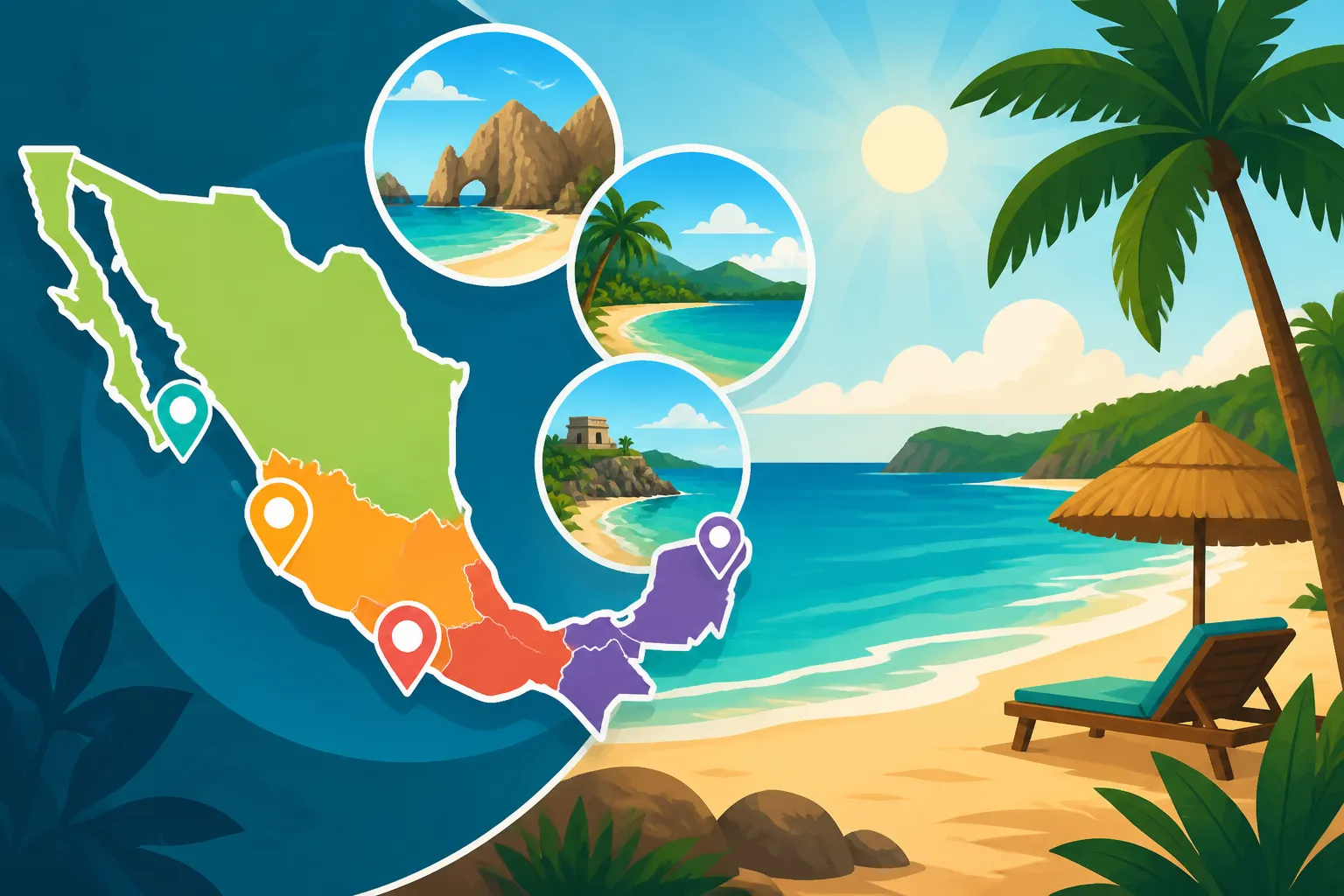
Baja California Sur is a land of extremes. It is a desert peninsula flanked by the Pacific Ocean on one side and the Sea of Cortez on the other. This creates a landscape unlike anywhere else in Mexico—think giant cardon cacti standing on cliffs overlooking turquoise bays. The "best" region for beaches in Baja really depends on whether you want the party atmosphere of Cabo San Lucas or the tranquil, wildlife-rich waters of La Paz.
In Los Cabos, you have the famous Arch of Cabo San Lucas, where the two seas meet. The beaches here are stunning but often unswimmable due to dangerous rogue waves and currents. However, Medano Beach is the hub of the action, filled with beach clubs and jet skis. For a more sophisticated experience, San Jose del Cabo offers a historic art district and beautiful boutique hotels. You can find more details in our guide to Los Cabos and Baja's Beach Towns.
If you prefer nature over nightclubs, you must head up to La Paz. Playa Balandra is frequently cited as the most beautiful beach in Mexico. It is a shallow, mushroom-shaped bay where you can walk hundreds of yards out and the water only reaches your knees. It is also one of the best places in the world to swim with whale sharks. I recommend using Viator to find reputable eco-tours for this, as they vet the operators to ensure they follow environmental regulations. The Sea of Cortez was famously called "the aquarium of the world" by Jacques Cousteau, and once you dip your mask under the surface, you’ll understand why.
Living the Baja Lifestyle
The climate in Baja is much drier than the rest of coastal Mexico. You won’t deal with the same jungle humidity, which is a major draw for many retirees. However, because it is a peninsula, many goods have to be shipped in, meaning the cost of living can be higher than in central Mexico. Water scarcity is also a real issue here. As a veteran expat, I always remind newcomers to ask: Is Tap Water Safe to Drink in Mexico? The answer is generally no, but in Baja, you have to be even more conscious of water conservation and quality.
The Oaxacan Coast: The Last Frontier
For those who find the Caribbean too crowded and the Pacific too "built up," the Oaxacan coast is the answer. This is the most rugged and rustic of the major beach regions. Towns like Puerto Escondido, Mazunte, and Huatulco offer a raw beauty that is increasingly hard to find.
Puerto Escondido is a world-class surfing destination. The Zicatela beach, known as the "Mexican Pipeline," is for experts only, but there are plenty of smaller coves like Playa Carrizalillo that are perfect for a swim. If you are planning a visit, check out How to Plan a Trip to Puerto Escondido for tips on where to stay and how to avoid the "surfer bro" crowds if that isn't your scene.
Mazunte and Zipolite (Mexico's only "legal" nude beach) are the epicenters of the "hippy-chic" movement. Life here is lived in a hammock. Infrastructure is basic—don't expect high-speed fiber internet in every café—and the roads can be a challenge. But the sunsets? They are arguably the best in the country. There is a ritual in Mazunte where everyone gathers on the cliffs of Punta Cometa to clap as the sun disappears into the ocean. It sounds cheesy, but after a week there, you’ll be clapping too.
Health and Safety on the Wild Coast
Because the Oaxacan coast is more remote, you need to be a bit more prepared. Medical facilities are not as advanced as those in Cancun or Puerto Vallarta. It is vital to carry a basic kit and follow Staying Healthy in Mexico: Essential Tips for Food, Water, and Preventive Care to avoid common stomach bugs. Additionally, while the area is generally welcoming, always stay updated on Safety in Mexico: What Expats Need to Know About Staying Safe as some rural roads are best avoided at night.
Which Region Should You Choose?
The "best" region is ultimately a reflection of your personal priorities. If you want the most beautiful water and don't mind the crowds, the Caribbean is your winner. If you want a balanced life with a strong expat community and beautiful sunsets, head to the Central Pacific. If you love the desert and marine life, Baja is calling. And if you want to escape modern life and reconnect with nature, Oaxaca is the place.
Mexico's coastline is vast and diverse. Don't feel pressured to pick just one right away. Many expats (including myself) spent a few months "slow-traveling" through different regions before deciding where to sign a long-term lease. Use platforms like Booking.com for short-term stays while you get the "feel" for a neighborhood. Each region has a distinct soul, and eventually, one of them will start to feel like home.
Disclaimer
The information provided in this guide is for informational purposes only and represents the personal experiences and research of the author. While we strive to provide accurate and up-to-date information regarding travel, safety, and living in Mexico, situations can change rapidly. Always consult official government websites and local authorities before making significant travel or residency decisions. We do not accept liability for any actions taken based on the content of this article.