Choosing Between Caribbean and Pacific Coast in Mexico
One of the most paralyzing decisions you will face when planning a move or a long-term trip to Mexico is choosing which ocean should be your backyard. Most people assume "a beach is a beach," but the reality is that the Caribbean and Pacific coasts are fundamentally different worlds. This guide resolves that conflict by providing a deep, expat-validated comparison of the lifestyle, costs, and environments of both shores.
Disclosure: This post may contain affiliate links. We may earn a commission at no extra cost to you if you make a purchase through these links. Read full disclosure.
The Great Mexican Coastline Debate: Understanding the Fundamentals
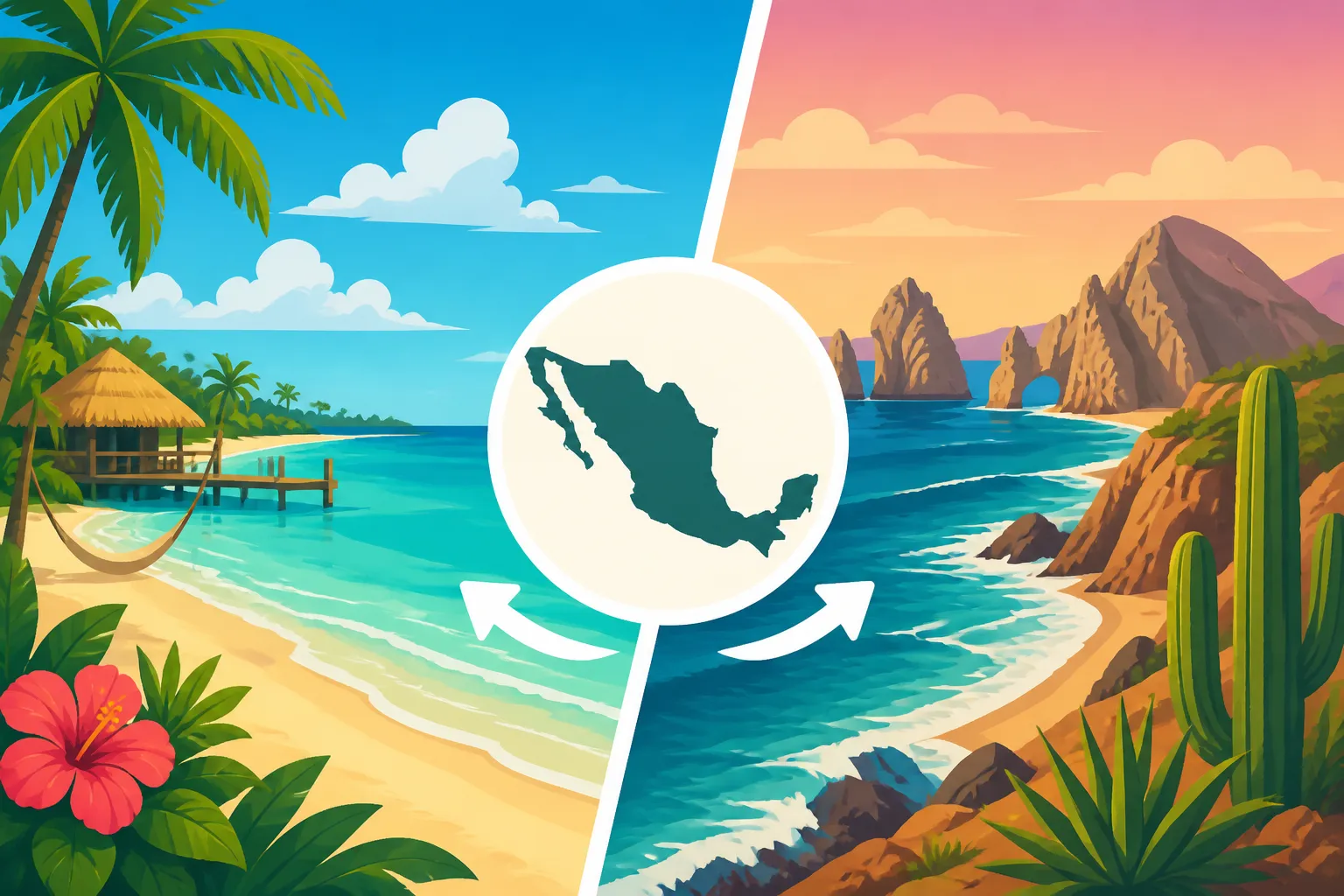
When I first arrived in Mexico, I made the classic mistake of thinking the entire country was a monolithic tropical paradise. I quickly learned that the "vibe" shifts dramatically depending on which side of the country you land on. The Caribbean side, primarily the state of Quintana Roo, is the postcard Mexico most people see in brochures. It is defined by its flat terrain, limestone base, and that impossible shade of turquoise water. On the other side, the Pacific coast stretches thousands of miles, offering everything from the desert landscapes of Baja to the lush, jungle-clad mountains of Puerto Vallarta and the rugged, surf-heavy shores of Oaxaca.
Choosing between them isn't just about the color of the water; it is about how you want to live your daily life. On the Caribbean coast, the sun rises over the ocean, giving you spectacular dawns but early shade in the afternoon. On the Pacific, you get the legendary "Golden Hour," where the sun sinks directly into the sea, turning the sky into a canvas of violet and orange. I have met expats who swear they could never live on the "wrong" side simply because they couldn't give up their specific sunset ritual.
The environmental differences also dictate your activities. If you are a fan of calm, bathtub-warm water where you can float for hours with a drink in your hand, the Caribbean is your clear winner. However, if you crave the energy of the crashing surf, the thrill of deep-sea fishing, or the sight of humpback whales breaching in the bay, the Pacific will call your name. It is a choice between serenity and power, between a manicured tropical aesthetic and a raw, untamed beauty.
Geography and Environment: Calm Turquoise vs. Powerful Blue
The geography of the Caribbean coast is remarkably consistent. It is part of the Yucatán Peninsula, a massive limestone shelf that is almost entirely flat. This means no mountains, but it also means the presence of cenotes—natural sinkholes filled with crystal-clear groundwater. These are unique to this region and provide a cool, mystical alternative to the salty sea. The water here is generally shallow and protected by the Mesoamerican Barrier Reef, the second-largest reef system in the world. This makes it a haven for snorkeling and diving, particularly in places like Cozumel.
In contrast, the Pacific coast is geologically diverse and often dramatic. In many areas, the Sierra Madre mountains tumble directly into the sea. This creates stunning vistas where you can stand on a cliffside and look down at hidden coves. The Pacific is much deeper and the currents are significantly stronger. This is not always a "swimming" ocean in the way the Caribbean is; many beaches on the Pacific side have dangerous undertows and "red flag" days where even strong swimmers should stay out. However, this power is exactly what attracts the surfing community to spots like Sayulita and Puerto Escondido.
When you are looking for a place to settle, consider how these environments affect your local travel. On the Caribbean side, How to Plan a Yucatán Road Trip is relatively easy because the roads are straight and flat. On the Pacific side, a "short" distance on a map can take hours because you are navigating winding mountain passes. I’ve spent many hours on buses booked through Busbud, watching the scenery change from jungle to cliffside, and while it's beautiful, it is a much more rugged experience than the highway driving in the East.
The Climate Factor: Humidity and Hurricane Seasons
Climate is perhaps the most "realistic" hurdle you will face as an expat. The Caribbean is tropical and humid year-round. From June to October, the humidity can be thick enough to feel like a physical weight. This is also when Is Hurricane Season a Problem for Visiting Mexico? becomes a very real question. The Caribbean is more susceptible to direct hits from major hurricanes, which can disrupt infrastructure and lead to high insurance premiums. I remember one season where we spent more time boarding up windows than enjoying the beach; it’s a factor you cannot ignore if you plan to own property.
The Pacific coast also has a rainy season, typically from June to October, but the character of the weather is different. In places like Puerto Vallarta, the rain usually comes in short, violent bursts in the late afternoon, leaving the mornings sunny and fresh. The "winter" months on the Pacific side (December to March) are often described as "perfect"—dry, sunny, and around 80 degrees Fahrenheit. The Caribbean stays warmer and more humid during these months, which some people love, but others find exhausting.
One specific issue the Caribbean has faced in recent years is "Sargassum"—massive mats of brown seaweed that wash up on the beaches. When this happens, that famous turquoise water turns brown and the smell of decaying vegetation can be overwhelming. The Pacific coast does not have this problem. If your dream of Mexico is strictly tied to a pristine beach view, you need to research the current sargassum trends before committing to the Caribbean.
Diving Into the Caribbean Coast: The Jewel of the Yucatán
The Caribbean coast, often referred to as the Riviera Maya, is the undisputed heavyweight of Mexican tourism. This region has been developed at a dizzying pace over the last thirty years, transforming from small fishing villages into a corridor of world-class resorts, high-end condos, and bustling cities. If you move here, you are moving into a region that is very "foreigner-friendly." English is spoken widely, and you will find every creature comfort you might miss from home, from high-speed fiber-optic internet to imported luxury goods at the local grocery stores.
Living here feels a bit like being in a "tropical bubble." The infrastructure is generally better than in most of Mexico. The main highway that runs from Cancún down to Tulum is well-maintained, and the public transportation, such as the ADO bus system, is exceptionally reliable. You can easily use Busbud to check schedules and book seats to explore the region without ever needing a car. However, this convenience comes with a trade-off: the Caribbean coast is often criticized for feeling "less like the real Mexico" and more like an extension of Florida or the Mediterranean.
For many expats, the draw is the sheer variety of water-based lifestyles. You can live in a high-rise in Cancún, a bohemian jungle villa in Tulum, or a quiet, laid-back community in Akumal. The proximity to the reef means that if you are a diver or a sailor, your weekends will be spent on the water. The social scene is also incredibly international. You are just as likely to meet someone from Italy, Argentina, or Canada as you are to meet a local Mexican.
The Aesthetic: White Sands and The Great Mayan Reef
The visual appeal of the Caribbean is its strongest selling point. The sand isn't just "white"; it is made of crushed coral, which means it doesn't get hot even in the midday sun. You can walk barefoot on the beach at 2:00 PM without burning your soles. This sand, combined with the shallow limestone bottom, reflects light in a way that creates that brilliant neon-blue water. It is a high-definition landscape that never seems to get old, provided the sargassum is at bay.
Beneath the surface, the Mesoamerican Barrier Reef provides a playground for nature lovers. I’ve spent countless mornings on tours found through Viator, swimming with sea turtles in Akumal or exploring the underwater statues at MUSA. The Caribbean side is also the gateway to the "cenote" world. These inland freshwater pools are part of a massive underground river system, and they offer a cooling, spiritual experience that you won't find anywhere else in the world.
However, the aesthetic is under pressure. Rapid development has led to concerns about water quality and the health of the reef. When Choosing Between Caribbean and Pacific Coast in Mexico, you have to weigh the beauty of the "now" against the environmental challenges of the future. The "Tulum vibe"—white linens, incense, and jungle parties—is iconic, but it is also increasingly expensive and crowded.
Top Destinations: From Cancún to Bacalar
The Caribbean coast is more than just one long beach; it is a series of distinct "hubs." Cancún is the gateway, a city of nearly a million people with a massive "Hotel Zone" and a more traditional "Centro." It offers the best shopping, hospitals, and air connectivity. If you need a major international airport nearby, Cancún is your base. Just an hour south is Playa del Carmen, which has a more European feel with its pedestrian-only Quinta Avenida. It is a favorite for digital nomads who want a mix of beach and city life.
Further south, you find Tulum, which has transitioned from a sleepy backpacker haunt to a high-priced influencer magnet. It still has some of the most beautiful beaches in the world, but the traffic and prices can be a major deterrent for long-term living. For a more "authentic" and affordable experience, many expats are looking at places like Bacalar. Known as the "Lagoon of Seven Colors," Bacalar isn't on the ocean, but its massive freshwater lagoon offers a Caribbean-like aesthetic with a much slower pace of life.
When deciding between these spots, it’s helpful to look at specific comparisons, like Which Is Better for a Beach Holiday: Cancún or Tulum? to understand the nuances of the local "vibe." Each town along this coast attracts a different crowd, so I always recommend spending a week in each before signing a long-term lease. You can easily find boutique stays on Booking.com to test the waters in each location.
Lifestyle and Infrastructure: Modern Luxuries and Mass Tourism
The infrastructure in the Riviera Maya is top-tier for Mexico. You will find massive shopping malls, international schools, and some of the best private hospitals in the country. This makes it a very "easy" place to live. If you are worried about the "culture shock" of moving to a developing country, the Caribbean coast provides a soft landing. You can still find your favorite brand of peanut butter at the local Chedraui Selecto, and your power is (mostly) stable.
The downside to this development is the "mass tourism" feel. During peak season (December through April), the crowds can be overwhelming. Popular sites like Chichén Itzá or the Tulum ruins can feel more like a theme park than a historical site. Learning How to Avoid the Crowds at Mexico's Top Sights is a survival skill here. You have to learn the "off-hours" and find the hidden spots that the tour buses don't reach.
The economy here is almost entirely based on the US Dollar and tourism. This means that Cost of Living by City in Mexico shows the Caribbean coast as one of the most expensive regions. Prices for rent, dining out, and services are often quoted in USD in places like Tulum. If you are living on a fixed pension or a tight budget, the "gringo pricing" of the Caribbean can be a significant frustration.
Exploring the Pacific Coast: Rugged Beauty and Soulful Sunsets
The Pacific coast is the "soul" of Mexico for many veteran expats. It is vast, varied, and generally feels more "Mexican" than the Caribbean. While the Caribbean is a narrow strip of development, the Pacific is thousands of miles of different cultures and landscapes. You have the "Gold Coast" of Mazatlán, the lush Bay of Banderas (Puerto Vallarta), the "Costa Alegre" with its secluded luxury, the surf-centric coast of Michoacán, and the artistic, rugged shores of Oaxaca.
Life on the Pacific is generally slower and more connected to the rhythms of nature. You don't move here for the white sand and turquoise water; you move here for the mountains, the sunsets, and the authenticity. The "Pacific Vibe" is less about "see and be seen" and more about "be and let be." It attracts a more eclectic crowd—artists, surfers, retirees who want to integrate into local communities, and travelers who prefer a "palapa" on the beach over a high-rise condo.
Infrastructure on the Pacific side varies wildly. Puerto Vallarta and Los Cabos are highly developed with all the modern amenities, but as soon as you move twenty minutes outside the city centers, you are in traditional Mexico. This means you might deal with more frequent power outages, unpaved roads, and a greater need for Spanish. For many of us, that is exactly why we love it. It feels like an adventure every day.
The Aesthetic: Golden Sands, Cliffs, and Surfer Vibes
The Pacific aesthetic is "Golden." The sand is typically a darker, golden-brown hue, and it can get very hot—you will definitely need flip-flops here. The water is a deep, powerful blue, and the waves are often spectacular. Watching the surf roll in while the sun sets behind the horizon is a daily spiritual practice for many residents. The presence of the mountains adds a vertical dimension to the landscape that the Caribbean lacks. Living on a hillside in Puerto Vallarta means you have a panoramic view of the entire bay, which is a view you simply cannot get in the flat Yucatán.
The flora and fauna are also more diverse. The Pacific is a major corridor for whale migration. Between December and March, you can often see humpback whales from your balcony. How to Go Whale Watching in Baja California or in the Bay of Banderas is a "must-do" for anyone living on this side. The inland areas are also much more varied, offering hiking trails through tropical dry forests or pine-topped mountains just a few hours away.
However, the Pacific is "wilder." The ocean is louder and more intimidating. You have to be more careful about where you swim. Many beaches have "shore break" that can knock an adult off their feet. This isn't a "swimming pool" ocean; it’s a living, breathing force. If you find peace in the sound of crashing waves, you will love it. If you prefer the silence of a lagoon, you might find it restless.
Top Destinations: Puerto Vallarta, Sayulita, and Oaxaca
Puerto Vallarta is the "grand dame" of the Pacific coast. It is a fully functional city that has managed to maintain its colonial charm, especially in the "Zona Romántica." It has a massive expat community and is known as one of the most LGBTQ-friendly destinations in the world. Just north of PV is the "Riviera Nayarit," which includes trendy spots like Sayulita (a "Pueblo Mágico" famous for surfing and bohemian vibes) and San Pancho.
Further south lies the Oaxacan coast, which is currently the "it" destination for those fleeing the over-commercialization of the Caribbean. Towns like Puerto Escondido, Mazunte, and Huatulco offer a much more raw, nature-focused lifestyle. Huatulco is unique because it consists of nine bays, many of which are protected national parks. Puerto Escondido is home to the "Mexican Pipeline," one of the most famous surf breaks in the world, and it has a gritty, cool energy that attracts a younger, more international crowd.
If you are looking for luxury and desert landscapes, Los Cabos at the tip of the Baja Peninsula is in a league of its own. It feels like a mix of Southern California and Mexico, with world-class golf courses and high-end dining. Use Booking.com to find a range of options, from the five-star resorts in Cabo to the eco-bungalows in Mazunte, to see which environment feels right for you.
Lifestyle and Infrastructure: Authentic Towns and Expansive Nature
The lifestyle on the Pacific is generally more integrated with local Mexican culture. In the Caribbean, tourists and locals often live in parallel universes. On the Pacific, you are more likely to live in a "Colonia" where your neighbor is a Mexican family that has lived there for generations. This leads to a richer cultural experience, but it also requires more patience and a greater effort to learn the language.
Infrastructure is the "wild card." In the major hubs, it is excellent. However, travel between coastal towns can be a challenge. While the ADO system dominates the East, the West relies on a mix of first-class buses and local "camiones." You can still use Busbud to book the major routes, but you will likely find yourself on more adventurous journeys. The roads can be narrow and prone to landslides during the rainy season.
Safety is a frequent topic of conversation for those Choosing Between Caribbean and Pacific Coast in Mexico. While most tourist and expat areas are safe, some states on the Pacific coast, like Michoacán or parts of Guerrero, have higher rates of "percieved" instability. It is important to stay updated on What's the Safest Region in Mexico for Tourists? and talk to people currently living on the ground rather than relying solely on old news reports.
Practical Comparisons for Expats and Long-Term Travelers
When it comes down to the "brass tacks" of moving, you have to look at your bank account and your logistical needs. The Caribbean and Pacific offer very different financial realities. Generally speaking, the Caribbean is more "dollarized." Because so much of the economy is tied to American and Canadian tourism, prices for everything from a margarita to a monthly rental are influenced by international markets.
The Pacific coast offers more opportunities for "local" living. While the high-end zones of Los Cabos or Punta Mita are as expensive as anything in the world, the "middle ground" on the Pacific is often more affordable than the Caribbean. You can still find a decent apartment in a safe, walkable neighborhood in Puerto Vallarta or Mazatlán for a price that would be impossible in Playa del Carmen.
| Feature | Caribbean Coast (Riviera Maya) | Pacific Coast (Various Regions) |
|---|---|---|
| Water Color | Bright Turquoise / Clear | Deep Blue / Variable |
| Sand Type | Fine White Coral (Stays Cool) | Golden / Volcanic (Gets Hot) |
| Wave Action | Very Calm (Protected by Reef) | Moderate to Heavy (Surfer’s Paradise) |
| Terrain | Flat Limestone (Cenotes) | Mountainous / Hilly (Vistas) |
| Primary Vibe | Modern, Resort-Heavy, International | Authentic, Rugged, Traditional |
| Sunrise/Sunset | Sunrise over the Ocean | Sunset over the Ocean |
| Hurricane Risk | High (Direct Hits Common) | Moderate (Usually Indirect) |
| Cost of Living | Higher (USD-focused) | Lower to Moderate (Peso-friendly) |
| Infrastructure | High (Excellent Roads & Hospitals) | Variable (Excellent in Hubs, Basic in Rural) |
Cost of Living and Budgeting: Comparing the Two Shores
The Cost of Living by City in Mexico is a moving target, especially with current inflation. However, the rule of thumb remains: the Caribbean is for those who want a "managed" experience and have the budget to pay for it. Rent in a "safe" area of Tulum can easily exceed $2,500 USD for a two-bedroom. In contrast, you can find a beautiful condo in Puerto Vallarta with a bay view for $1,500–$1,800 USD if you look outside the main tourist zones.
Dining out is another major difference. In the Caribbean, "street food" exists, but it’s often tucked away in the "pueblo" side of town. Most expats end up at restaurants where a meal costs $20–$30 USD. On the Pacific, the culture of the "Cenaduría" (local dinner spots) is much more prevalent. You can have an incredible meal of fish tacos or "Pozole" for a fraction of the price. If you want to know Is Street Food Safe to Eat in Mexico?, the answer is a resounding yes, provided you follow the "busy stall" rule, and it will be your best friend on the Pacific coast.
Utilities can also vary. In the Caribbean, the heat and humidity mean your air conditioning will be running 24/7 for six months of the year, leading to massive CFE (electricity) bills. On the Pacific, many people live without AC for most of the year, relying on the evening ocean breezes, which can save you hundreds of dollars a month.
Travel Logistics: Getting Around and Accessibility
If you plan to travel back to your home country frequently, the Caribbean is the winner. Cancún International Airport (CUN) is one of the best-connected airports in the world. You can get a direct flight to almost any major city in the US, Canada, or Europe. This ease of access is a major reason why the region is so popular.
On the Pacific side, you have several major airports—Puerto Vallarta (PVR), San José del Cabo (SJD), and Mazatlán (MZT)—but they generally have fewer direct international connections than Cancún. If you live in a place like Puerto Escondido, you will likely have to fly through Mexico City for most international trips. This adds time and cost to your travel.
Once you are on the ground, the Caribbean is much easier to navigate without a car. The flat terrain makes it bikeable, and the "Colectivo" (shared van) system is incredibly efficient. On the Pacific, the hills and winding roads make a car almost a necessity if you want to explore. If you do rent a car, I recommend using Viator to find reputable local agencies that include the necessary Mexican insurance.
Decision Matrix: Which Coast Suits Your Personality?
After years of living here and talking to hundreds of expats, I’ve noticed that people tend to "self-sort" into these regions based on their personality types. There is no "better" coast, only a "better for you" coast. The choice depends on what you value more: the perfection of the view or the depth of the experience.
If you are a person who loves the "new"—new buildings, new friends, new trends—and you want your life to feel like a permanent vacation with every luxury at your fingertips, the Caribbean is your place. If you are someone who values tradition, who wants to watch the sunset every night with a Pacifico in hand, and who doesn't mind a bit of grit and adventure, the Pacific will win your heart.
Best for Families and All-Inclusive Lovers
The Caribbean is the clear champion for families. The calm, shallow water is safe for children, and the sheer number of kid-friendly activities—from water parks like Xcaret to interactive aquariums—is staggering. The infrastructure also means that if your child gets sick, you have access to world-class pediatricians who speak English.
For those who love the "resort lifestyle," the Caribbean offers the highest concentration of high-end hotels and beach clubs in the world. You can live a very "curated" life here. You can book all your weekend adventures through Viator, have your groceries delivered, and never have to deal with the more "challenging" aspects of Mexican life if you don't want to.
Best for Digital Nomads and Solo Travelers
Playa del Carmen on the Caribbean side is the digital nomad capital of Mexico. The internet is fast, the coffee shops are plentiful, and the social scene is geared towards young, mobile professionals. However, Puerto Escondido on the Pacific side is rapidly catching up. It attracts a "cooler," more rugged nomad—people who work all morning and surf all afternoon.
Solo travelers often find the Pacific more welcoming. Because the communities are smaller and more integrated, it is easier to "break in" and meet locals and long-term residents. The Caribbean can sometimes feel a bit "transient"—people come and go so quickly that it can be hard to form deep, lasting bonds. On the Pacific, people tend to stay longer and invest more in their local social circles.
Best for Retirees and Nature Seekers
Retirees are split. Those who want a "maintenance-free" life with easy access to the US often choose the Caribbean or the developed parts of the Pacific like Puerto Vallarta. However, many retirees find the Pacific "Pueblos Mágicos" like Sayulita or the quiet bays of Huatulco to be more fulfilling. The pace is slower, the air feels cleaner, and the connection to nature is more profound.
Nature seekers will find beauty on both sides, but of different kinds. If you want to dive with whale sharks and explore underwater caves, go East. If you want to hike through jungles, watch whales from your balcony, and explore rugged coastlines where you are the only person on the beach, go West. I personally find the Pacific's "wildness" more life-affirming, but I still miss that Caribbean blue every now and then.
Travel & Culture Disclaimer
The information provided in this guide is based on personal experience and current travel trends in Mexico. Laws, safety conditions, and environmental factors like sargassum or hurricane patterns can change rapidly. This guide is intended for informational purposes only and does not constitute professional legal, financial, or real estate advice. Always conduct your own thorough research and consult with local experts before making significant life changes or travel commitments in Mexico.