Festivals, Concerts, and Events in Mexico
Every year, travelers fly into Oaxaca for Día de Muertos and find every decent room taken. Others buy concert tickets from a reseller in Mexico City and get turned away at the gate. Mexico’s event calendar is packed, but it punishes people who plan late or plan blind. This guide covers which festivals and concerts to plan around, how to book them, and how to enjoy them like someone who has done it before.
Disclosure: This post may contain affiliate links. We may earn a commission at no extra cost to you if you make a purchase through these links. Read full disclosure.
Mexico’s Festival Calendar at a Glance
My first full year in Mexico taught me that something is always being celebrated somewhere. It might be a saint’s day in a tiny village, a national holiday that shuts down banks, or a three-day music festival that takes over a racetrack. The table below is the cheat sheet I wish someone had given me. It covers the big recurring events by their usual timing. Exact dates move every year, so always confirm with the official organizer before you commit.
| Usual Timing | Event | Main Location | What to Lock In Early |
|---|---|---|---|
| February to March | Carnaval | Veracruz, Mazatlán, smaller towns | Waterfront hotels, parade seating |
| March or April | Semana Santa | Nationwide, especially Taxco and San Luis Potosí | Beach rooms, bus seats |
| Spring | Vive Latino | Mexico City | Festival passes |
| April to May | Feria Nacional de San Marcos | Aguascalientes | Central accommodation |
| July | Guelaguetza | Oaxaca City | Auditorium tickets, rooms |
| Late summer | International Mariachi Festival | Guadalajara | Concert tickets |
| September 15 to 16 | Independence and El Grito | Every main plaza | Restaurant balconies near the zócalo |
| October | Festival Internacional Cervantino | Guanajuato | Rooms, which go months ahead |
| Late October to November 2 | Día de Muertos | Oaxaca, Pátzcuaro, Mexico City, Mixquic | Rooms, guided cemetery visits |
| Autumn | Corona Capital | Mexico City | Festival passes, nearby hotels |
| December 12 | Día de la Virgen de Guadalupe | Basilica in Mexico City, nationwide | Patience, not reservations |
| December 16 to 24 | Las Posadas | Neighborhoods nationwide | Nothing; just get invited |
Why Timing Matters More Than You Think
Mexican festivals don’t just add a parade to an ordinary week. They change everything around them. During Semana Santa, half of Mexico City empties out toward the coast, and room rates in Acapulco, Puerto Vallarta, and the Riviera Maya jump with it. During Día de Muertos, Oaxaca’s historic center fills with domestic and international visitors at the same time. People who book a few weeks out end up in a guesthouse forty minutes away by taxi.
The frustrating part is that the “official” date is often only part of the event. Día de Muertos is formally November 1 and 2, but in Oaxaca the comparsas, market stalls, and altar-building start days earlier. Visitors who arrive on November 1 often feel they missed half of it. Cervantino runs for weeks, and Guanajuato’s narrow callejones handle crowds very differently on weekends than on weekdays.
National holidays also close banks, government offices, and some museums, which surprises a lot of newcomers. If you’re mixing festival travel with errands, read How to Plan Travel Around Mexican Holidays before you set your dates.
Reading the Calendar Like a Local
Locals don’t think of the year as a list of tourist events. They think in terms of the puente, the long weekend made when a holiday falls on a Monday or Friday. Puentes send families onto the highways and fill bus terminals. A small regional fiesta that happens to land on a puente can be more crowded than a famous one held midweek.
The other local habit worth copying is to ask around. Your landlord, your taxi driver, or the woman who sells you tortillas usually knows about the patron saint festival happening in the next town over. Those smaller celebrations often turn out to be the highlight of a trip. Hardly any of them show up on international listings. For more on finding them, see Local Fiestas and Patron Saint Festivals in Mexico.
Cultural and Religious Festivals Worth Planning Around
These are the events that tend to get people hooked on Mexico. They are also where expectations and reality clash most often, so it helps to know what you’re walking into.
Día de Muertos and Independence Day
Día de Muertos is the event everyone asks me about. It is also the most misunderstood one. It is not Mexican Halloween, and the big costumed parade in Mexico City is a fairly recent addition. The emotional core of the holiday is the family altar, the ofrenda, and the overnight vigils in cemeteries. In Oaxaca, those vigils happen in places like Xoxocotlán. Around Lake Pátzcuaro in Michoacán, families on Janitzio island light candles over their relatives’ graves. In San Andrés Mixquic, on the edge of Mexico City, the whole town turns into a candlelit memorial.
Picture your first night there. It’s cold, you’re surrounded by marigolds and copal smoke, and a family is quietly sharing tamales at a grave while a brass band plays nearby. It is moving, and it is very easy to behave badly in that setting without realizing it. For the practical side and the do’s and don’ts, start with Día de Muertos in Mexico: A Visitor’s Guide.
Independence celebrations are louder and much easier to join. On the night of September 15, the president performs El Grito from the National Palace balcony overlooking Mexico City’s zócalo. Governors and mayors repeat it in plazas across the country. Expect crowds, food stalls, flags everywhere, and fireworks overhead. In the capital, security checkpoints control access to the zócalo, and spots fill hours before midnight. Many residents watch from a smaller local plaza or a restaurant terrace instead. For a full explanation of the ceremony, see Mexican Independence Day and El Grito.
Semana Santa, Carnaval, and Las Posadas
Holy Week shows two very different sides of Mexico. One side is solemn. Taxco holds processions of hooded penitents. Iztapalapa in Mexico City stages a huge reenactment of the Passion. San Luis Potosí hosts a famous Procession of Silence. The other side is a national beach holiday, with every coastal town packed and loud. Decide which version you want before you book, because they barely overlap. For the religious and cultural side, see Semana Santa and Easter in Mexico. If you’re heading to the coast, Semana Santa in Mexico: Which Destinations Sell Out and When will help you avoid the worst of the crowds.
Carnaval, in the days before Lent, is Mexico’s party season. Veracruz and Mazatlán run the biggest celebrations, with parades, music, and very full malecón promenades. Smaller towns in Tlaxcala and Morelos hold their own versions with masked dancers and local traditions that go back centuries. If you only know the coastal parties, the highland carnavals are worth a look.
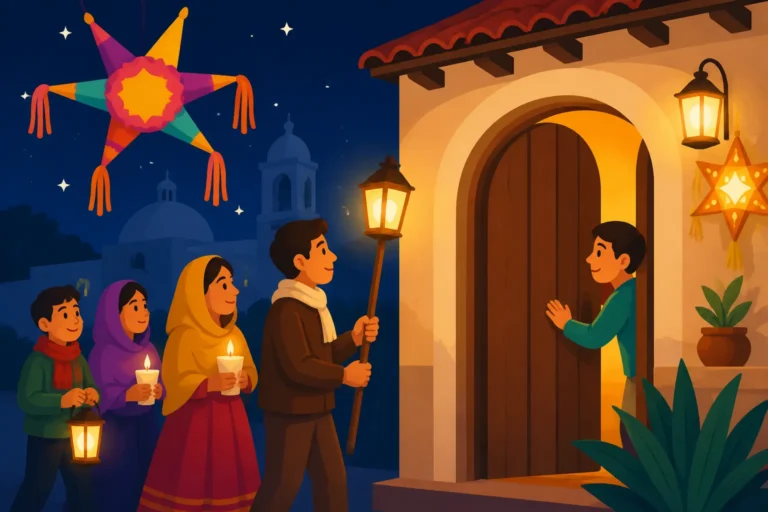
Las Posadas run from December 16 to 24 and are the most neighborly celebration of the year. Groups go from house to house singing and reenacting Mary and Joseph’s search for shelter, and the evening usually ends with a piñata and ponche, a hot fruit punch. You can’t buy a ticket to a posada. You get invited, usually by a neighbor, a coworker, or your kids’ school. If someone invites you, go. For more, see Christmas and Las Posadas in Mexico.
Regional Showcases: Guelaguetza and Cervantino
The Guelaguetza in Oaxaca is a celebration of the state’s many indigenous communities. Delegations from different regions perform traditional dances and toss gifts of fruit and goods to the audience. The main performances happen at the Auditorio Guelaguetza on Cerro del Fortín on the Mondays of late July. Free community events, parades, and food fairs fill the city for weeks around them. Seats in the paid sections sell out, so if the auditorium matters to you, watch the official state announcements closely.
Cervantino in Guanajuato is one of Latin America’s major performing arts festivals. It mixes theater, classical music, dance, and international acts in a city full of tunnels and steep staircases. Some performances are ticketed and some are free street events. The city is small, so rooms disappear early. Some visitors stay in León or San Miguel de Allende and travel in, but that means late-night transport after shows. Weigh the options using Guelaguetza, Cervantino, and Regional Festivals: Where to Base Yourself.
Concerts and Music Festivals in Mexico
Mexico City has become one of the busiest stops on international tour schedules. Many artists add several nights there and also play Guadalajara and Monterrey. Add a strong domestic scene of rock en español, regional Mexicano, cumbia, and electronic music, and you could fill every weekend.
The Big Festival Circuit
The best-known multi-day festivals mostly take place in the capital. Vive Latino focuses on Spanish-language rock and alternative music, and it has a loyal crowd that knows every lyric. Corona Capital draws more international indie and pop headliners. EDC Mexico is the big electronic event. Several of these are held at the Autódromo Hermanos Rodríguez, a racetrack complex in the east of the city. Guadalajara, Monterrey, and the beach destinations host their own festivals as well. Some of those are one-offs, so check that an event is actually being held again before you plan a trip around it.
Large-festival logistics in Mexico can surprise first-timers. Bag rules tend to be strict. Lockers and charging stations may need a separate purchase. Phone signal near the stages often collapses under the crowd. Most frustrating of all, getting home after the last set can take longer than the set itself. For a step-by-step on passes, packing, and exits, see How to Attend a Music Festival in Mexico.
Stadium Shows and Arena Concerts in Mexico City
For single-artist concerts, the main venues in Mexico City include the Auditorio Nacional on Paseo de la Reforma, the Palacio de los Deportes, Arena CDMX in the north, and the large stadium inside the Magdalena Mixhuca sports complex next to the racetrack. Each has its own transport situation.
Take a common scenario. You go to a stadium show with tens of thousands of other people and walk out after the encore expecting to call a ride. Surge pricing kicks in, the app shows no available drivers, and the nearby Metro stations are already packed. Experienced concertgoers plan their exit before the show starts. Some walk a few blocks away from the venue before trying to get a ride. Some pick a Metro line in advance. Others book a hotel close enough to walk back. If you’re staying in Roma or Condesa, the trip back from the eastern venues can take a long time on concert nights.
Live Music Beyond the Headliners
Some of Mexico’s best music is never on a festival poster. Mariachi is the obvious example. You can hire musicians by the song at Plaza Garibaldi in Mexico City, or hear them in their homeland at Guadalajara’s International Mariachi Festival. For more on venues, cantinas, and traditional styles, see Mariachi and Live Music in Mexico.
Beyond mariachi, look for son jarocho in Veracruz, banda in Sinaloa, marimba in Chiapas, and the free concerts many cities hold in their main plazas on weekend evenings. In the capital, small clubs and jazz bars around Roma, Juárez, and the Centro Histórico host live acts most nights. They work well alongside a night out, covered in Nightlife in Mexico City: Bars and Clubs. If you want a show that is half sport and half theater, Arena México’s lucha libre nights are a great choice. See Lucha Libre: Watching Mexican Wrestling as a Visitor.
Tickets, Logistics, and Getting There
This is the section where I’ve watched friends lose the most money and the most patience. The festivals themselves are wonderful. The paperwork and logistics around them are where things go wrong.
Buying Tickets Without Getting Burned
For most major concerts and festivals, the authorized seller is a single official platform, very often Ticketmaster in Mexico, along with the venue box office. Presales are often tied to particular bank cards. That annoys foreigners, who usually can’t take part until the general sale. Queues for popular artists can sell out the general sale fast, and the scalping market that follows is full of fake and duplicated tickets.
To protect yourself:
- Buy only from the official ticket seller named on the artist’s or festival’s own announcement, or from the venue box office.
- Check whether your ticket is digital, transferable, or tied to your name and ID. If it’s tied to you, carry the matching identification.
- Be very skeptical of anyone selling tickets on social media, in WhatsApp groups, or outside the venue, however convincing their screenshots look.
- Read the access rules ahead of time, including bag size, banned items, and whether re-entry is allowed.
- Keep your purchase confirmation email and know where the official customer service contact is in case the event changes.
Cultural festivals work differently. Most Día de Muertos, Posadas, and Independence events are free and open to the public. Ticketed elements such as Guelaguetza auditorium seats or Cervantino performances are usually sold through official state or festival channels. If you’d rather have someone else handle the cemetery visits, transport, and context on a night like Día de Muertos in Oaxaca, a guided tour booked through a platform like Viator can make sense. Compare the itinerary, group size, and cancellation terms against local operators before you choose.
Booking Rooms and Transport for Peak Weeks
For the high-demand events, which means Día de Muertos in Oaxaca and Pátzcuaro, Guelaguetza, Cervantino, and coastal Semana Santa, people who book months ahead get choices, and people who book weeks ahead take whatever is left. When I search on Booking.com for these weeks, I filter for free cancellation first. That lets me hold a decent room early and change plans later without losing money. Read the cancellation deadline carefully, because some properties tighten their terms during festival periods. If you’re targeting the Día de Muertos peak specifically, Dia de Muertos Accommodation: How Early Rooms Sell Out and What They Cost goes into detail on timing.
Ground transport also tightens up around big events and puentes. Intercity buses are the backbone of festival travel in Mexico. Oaxaca, Guanajuato, Pátzcuaro, and Aguascalientes are all well served by first-class and executive lines. Comparing routes and departure times on Busbud gives you a quick view of which companies run the trip you need, and then you can buy from the operator directly or through the platform. On the busiest dates, buy before you travel instead of at the terminal. For more on how the main lines differ, see Long-Distance Buses in Mexico: ADO and Premium Lines.
A practical plan for a festival weekend looks like this:
- Confirm this year’s official event dates with the organizer or state tourism office.
- Book refundable accommodation as early as possible, as close to the action as you can afford.
- Reserve intercity transport for your arrival and departure days.
- Buy any official tickets for ticketed performances.
- Plan your nightly route home from the main venue or cemetery before you go out.
- Leave one unplanned day, because the best moments at Mexican festivals are often the ones nobody scheduled.
Staying Safe and Respectful at Events
Most festivals and concerts I’ve been to in Mexico have been joyful and good-natured, with families, grandparents, and toddlers in the crowd. Still, a dense crowd is a dense crowd anywhere in the world, and a few habits make a real difference.
Crowds, Cash, and Getting Home
Pickpockets work big crowds everywhere, and Mexico’s are no exception. Use a front pocket or a cross-body bag, and carry only what you need for the night. Leave your passport in your room safe and carry a copy. Bring small bills and coins, because food stalls, bathroom attendants, and street vendors at festivals mostly work in cash and often can’t break large notes.
Getting home deserves as much planning as getting there. On nights like El Grito or the Día de Muertos parade, main avenues close, ride-hailing apps struggle, and taxis around the event raise their prices. Agree on a meeting point with your group in case phones die or lose signal. Leave a little earlier than everyone else if the late crowd stresses you out. For broader advice on crowds, scams, and nighttime transport, read Staying Safe in Mexico: Practical Tips for Travelers.
Etiquette at Sacred and Community Events
The respect question matters most at Día de Muertos and religious processions. In a cemetery, you are a guest at someone’s family gathering, sometimes their first since losing someone. Ask before photographing people or graves, never use flash, don’t step on or lean over graves, and keep your voice down. Dressing in skull makeup is common in cities, but at a quiet village vigil it can feel out of place. Pay attention to what the families around you are doing and follow their lead.
During Semana Santa processions, step aside for participants, don’t block the route for a photo, and dress modestly if you go into churches. At the Basilica of Guadalupe on December 12, many pilgrims have walked for days, and some approach on their knees. Treat that devotion the way you’d want your own faith treated.
The rule underneath all of this is simple. Mexican festivals are not staged for visitors. They are living traditions, and visitors are welcome to share them. If you arrive curious, a little prepared, and humble, people will invite you in, sometimes literally, with a plate of mole and a seat at the table.
Disclaimer
This article is for general informational purposes only and does not constitute professional advice. Laws, prices and regulations vary by location and change over time. Consult a qualified professional for guidance on your specific situation.