Lucha Libre: Watching Mexican Wrestling as a Visitor
Stepping into a Mexican wrestling arena for the first time can feel like walking into a fever dream of neon lights, high-flying acrobatics, and a level of crowd participation that borders on the theatrical. Many visitors struggle with knowing which arena is safe, how to buy legitimate tickets without getting overcharged, or simply understanding the unwritten rules of the ring. This guide serves as your veteran playbook for navigating the world of Lucha Libre, ensuring you experience the true soul of Mexican culture while avoiding the common pitfalls of the tourist trail.
Disclosure: This post may contain affiliate links. We may earn a commission at no extra cost to you if you make a purchase through these links. Read full disclosure.
The Cultural Significance of Lucha Libre
To the uninitiated, Lucha Libre might look like mere slapstick or choreographed violence. However, as someone who has spent years watching these matches from the front rows of Arena México, I can tell you it is a profound reflection of the Mexican psyche. It is a morality play, a circus, and a sporting event all rolled into one. Understanding the history of the sport allows you to appreciate why a grown man in a sequined cape is treated like a national hero.
The Sacred Symbolism of the Mask
The mask, or máscara, is the most sacred element of Lucha Libre. Its roots trace back to the Aztec and Mayan traditions of wearing masks to represent gods and animals during battle. When a Luchador puts on their mask, they are no longer an individual; they become a symbol. For many wrestlers, their true identity is a closely guarded secret, known only to their families and the wrestling commission.
In the ring, the ultimate high-stakes match is the Lucha de Apuestas (betting match), where wrestlers put their masks or their hair on the line. I once witnessed a veteran wrestler lose his mask after thirty years of anonymity. The atmosphere in the arena was somber, almost like a funeral. To lose one’s mask is to suffer the ultimate professional humiliation. As a visitor, if you buy a mask from the vendors outside, you aren't just buying a souvenir; you are participating in a tradition that spans nearly a century.
The Eternal Struggle between Rudos and Técnicos
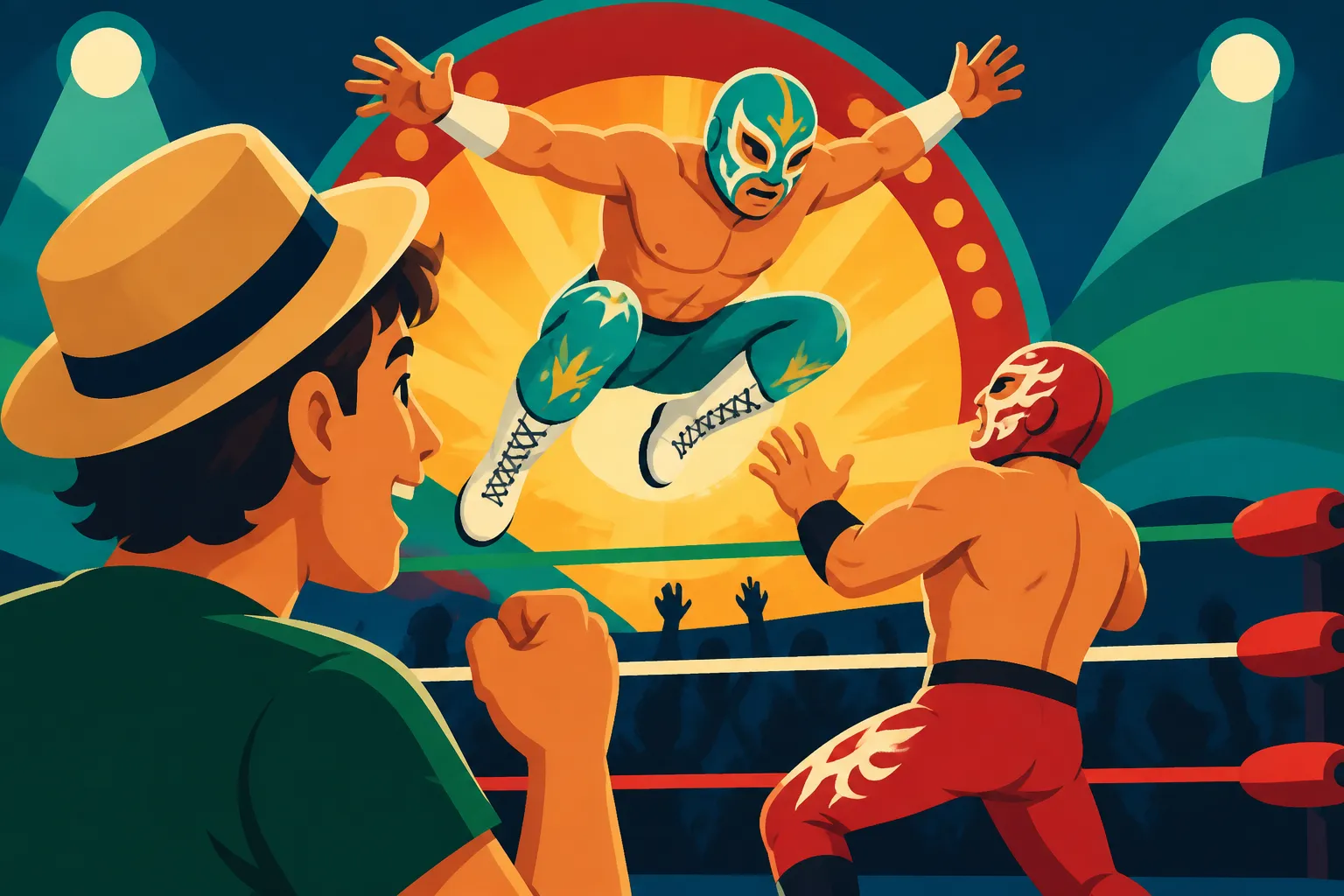
Every match is built on the narrative of good versus evil. The Técnicos are the "good guys." They follow the rules, use technical wrestling skills, and often perform high-flying, spectacular maneuvers. They are the heroes the children cheer for. On the opposite side are the Rudos, the "bad guys." They are brawlers who cheat, use illegal objects, and antagonize the crowd.
The beauty of Lucha Libre lies in how the crowd interacts with these archetypes. You might find yourself seated next to a grandmother who is screaming the most creative insults you’ve ever heard at a Rudo. This release of emotion is a vital part of the experience. Don't be afraid to pick a side; the energy of the room depends on it. If you want to brush up on the local lingo before shouting along, check out our guide on Mexican Spanish: Slang and Expressions for Visitors to help you understand what the fans are yelling.
Lucha Libre as a Family Legacy
In Mexico, wrestling is often a family business. Names like Blue Demon, El Santo, and Mil Máscaras have been passed down through generations. It is common to see a "Junior" or a "Hijo de" (Son of) taking up the mantle of a retired legend. This lineage creates a deep sense of loyalty among fans. You aren't just cheering for a wrestler; you are cheering for a dynasty.
When you attend a match, you’ll notice families with three generations of fans sitting together. This isn't an aggressive, "hooligan-style" environment. It is a community gathering. Understanding this legacy helps you see beyond the spandex and appreciate the technical artistry and physical sacrifice involved. These athletes train for years, and the injuries they sustain are very real, despite the predetermined nature of the outcomes.
Navigating the Arenas of Mexico City and Beyond
While Lucha Libre happens all over the country, the heart of the sport beats in Mexico City. Choosing the right venue determines the "flavor" of your evening. As an expat, I always tell my visiting friends that the experience in a massive, historic arena is vastly different from a gritty, neighborhood show.
Arena México The Cathedral of Lucha Libre
Located in the Doctores neighborhood, Arena México is the crown jewel of the sport. It is the largest and most prestigious venue, owned by the CMLL (Consejo Mundial de Lucha Libre), the world’s oldest professional wrestling promotion. If you want the "big show" experience—complete with giant LED screens, pyrotechnics, and a professional sound system—this is where you go.
The Friday night shows (Viernes Espectacular) are the highlight of the week. The production value is high, and you’ll see the biggest stars in the industry. Because of its size, it’s generally easier to get tickets here, but the front-row seats still sell out weeks in advance. When planning your visit, you can look for accommodation options on Booking.com to stay in nearby neighborhoods like Roma or Juárez, which are much safer than staying directly in Doctores.
Arena Coliseo The Historic Funnel
If Arena México is the Cathedral, Arena Coliseo is the old, atmospheric neighborhood church. Known as "El Embudo" (The Funnel) because of its circular shape and steep seating, it offers a much more intimate and intense experience. It was built in 1943 and feels like a step back in time.
The matches here are usually held on Saturday nights and are known for being a bit "rougher" and closer to the fans. The proximity to the ring means you can hear every slap, every grunt, and every insult. However, it is located in the Centro Histórico, in an area that can be quite sketchy at night. I highly recommend reading How to Use Uber and Ride-Hailing Safely in Mexico to ensure you have a secure ride waiting for you when the matches end, as wandering those streets late at night is not advised for visitors.
Regional Arenas and the "Independent" Scene
Beyond the capital, you can find incredible wrestling in cities like Puebla and Guadalajara. If you are traveling through the interior, you can use Busbud to book comfortable coach travel to these cities. Arena Puebla, for instance, has a fantastic Monday night show that is famous among locals.
There is also the "Indie" scene, which often takes place in smaller community centers or outdoor rings. These shows can be wilder, more experimental, and sometimes more violent (known as Lucha Extrema). While these are fascinating, they can be difficult for a first-time visitor to navigate without a local guide. For your first time, sticking to the established CMLL or AAA venues is usually the best move for both safety and production quality.
A Night at the Fights: What to Expect
A typical Lucha Libre event lasts about two and a half to three hours, consisting of five or six matches. Each match is usually a "best of three" falls (dos de tres caídas). The evening builds in intensity, starting with younger, up-and-coming wrestlers and ending with the main event featuring the biggest stars.
The Sensory Overload: Atmosphere and Noise
From the moment you pass the security checkpoint, your senses will be bombarded. The smell of popcorn and fried snacks fills the air, mixed with the shouting of vendors. The noise level inside the arena is immense. There is often a live band or a DJ playing loud music between sets, and the announcer’s voice booms over the speakers with dramatic flair.
The crowd participation is what makes the night. Unlike wrestling in the US or Japan, the Mexican crowd is a central part of the show. There are specific chants, often led by groups of dedicated fans in the cheaper seats. You’ll hear whistles that sound like musical notes—usually an insult aimed at the referee or a Rudo. It’s a great place to practice your listening skills, but be aware that Safety in Mexico: What Expats Need to Know About Staying Safe applies here too; keep your phone in your front pocket and be mindful of your belongings in the crowded concourses.
The Gastronomy of the Ring
You don't go to Lucha Libre for a salad. The food is part of the ritual. Vendors walk up and down the aisles carrying massive trays of snacks on their heads. You can get everything from papitas (potato chips drenched in lime and hot sauce) to dominos (hot dogs).
One of the highlights is the michelada—a large beer served in a plastic cup with a rim coated in chili powder and filled with lime juice and assorted sauces. It is an acquired taste, but it is the quintessential wrestling drink. If you’re hungry for something more substantial after the show, the streets outside are usually lined with taco stands. For tips on how to eat safely from these vendors, see our guide on Street Food in Mexico: Tacos, Tamales, and More.
The Intermissions and Merchandising
There aren’t long intermissions like in a theater, but there is a steady flow of action. Between matches, you’ll see the "Lucha Dancers" and promotional spots. This is also the time when vendors will try to sell you masks, capes, and action figures.
The masks sold inside the arena are usually of higher quality than the ones sold on the street, but they are also more expensive. If you want a "pro-grade" mask that you can actually wear without it falling apart, expect to pay a bit more. Many wrestlers also have their own stalls near the entrance where they sell autographed merchandise. This is a great way to support the athletes directly.
Practical Tips for a Smooth Visit
Logistics can be the most frustrating part of a Lucha Libre night. Dealing with ticket scalpers, finding the right entrance, and navigating the surrounding neighborhoods requires a bit of "street smarts."
Scoring Legitimate Tickets
You have three main options for tickets: Ticketmaster, the arena box office (taquilla), or a guided tour. Buying through Ticketmaster is the most secure way to ensure you have a seat, especially for the front rows (Ring Side). You can pick up your tickets at any "Will Call" location, including many major malls and grocery stores.
If you decide to buy at the box office on the night of the event, arrive at least an hour early. You will likely be approached by revendedores (scalpers). They will tell you the show is sold out or that they have better seats. Politely decline and head straight to the official window. If you prefer a stress-free experience that includes transportation and a guide who explains the rules, booking a tour through Viator is a very popular choice for expats and tourists alike.
Transportation and Arrival
Getting to Arena México is relatively easy via public transport. The metro stations Cuauhtémoc and Balderas are within walking distance. However, as a veteran expat, I usually advise visitors to take an Uber, especially for the return trip. The neighborhood surrounding the arena is not where you want to be wandering around looking for a bus stop after 10:00 PM.
If you do choose to take the metro, you can find more details in our article on Getting Around Mexico City: Metro, Metrobús, and Apps. If you are driving your own car, be prepared to pay "the guys with the buckets" (viene-vienes) to watch your car on the street, or better yet, find a secure, paid parking lot (estacionamiento) nearby.
Security and Prohibited Items
The security at Arena México is strict. You will be patted down, and your bags will be searched. Professional cameras with detachable lenses are strictly prohibited unless you have a media pass. Most arenas also ban "point-and-shoot" cameras, though cell phone photography is generally tolerated as long as you aren't filming the entire match.
Other prohibited items include:
- Large umbrellas
- Selfie sticks
- Outside food and drinks
- Pointed objects or "weapons" (even small pocket knives)
- Excessively large bags
| Ticket Section | Price Range (Approx. USD) | Experience Level |
|---|---|---|
| Ring Side (Rows 1-5) | $30 – $50 | Intense, you might get "landed on," best views. |
| Ring Numerado (Mid) | $15 – $25 | Great balance of view and price. |
| Preferente (Middle Tier) | $10 – $15 | Good for seeing the whole arena atmosphere. |
| Gradas (Top Tier) | $3 – $7 | Wildest crowd, furthest views, cheapest beer. |
Expat Advice: Do's and Don'ts
After years of taking visitors to the Lucha, I’ve compiled a list of "pro tips" that will help you blend in and have a better time. It’s the little things—like knowing how to tip or what to wear—that make the difference.
The Art of Tipping in the Arena
Tipping is an integral part of the service culture in Mexico. When the usher leads you to your seat and wipes it down with a rag, it is customary to give them a small tip (5 to 10 pesos). The same applies to the vendors who bring drinks to your seat. If you aren't sure about the local customs, our guide on Tipping in Mexico (Propina): When and How Much provides a comprehensive breakdown for all scenarios.
Also, keep small change on you. Using 500-peso bills to buy a 20-peso bag of chips is a headache for everyone involved. For advice on managing your cash and avoiding high bank fees, read Using ATMs in Mexico: Avoiding Fees and Staying Secure.
Dress Code and Comfort
There is no formal dress code for Lucha Libre. You’ll see people in everything from business suits to shorts and flip-flops. However, I recommend wearing comfortable, closed-toe shoes. The floors can get sticky with spilled beer, and you’ll likely be doing a fair amount of walking.
If you plan on heading out to a bar afterward, dress "smart casual." Lucha Libre is often the start of a long night out. You can find some great spots for a post-match drink in our guide to Nightlife in Mexico City: Bars and Clubs. Just remember to keep your mask in your bag when you enter more upscale establishments—some bars have rules against face coverings for security reasons.
Handling the Crowd and the Trash Talk
The insults shouted during Lucha Libre can be quite vulgar. It’s all part of the "theatrical release," but if you are sensitive to profanity, be prepared. As a visitor, you are unlikely to be the target of these insults unless you are wearing the jersey of a rival soccer team or acting particularly obnoxious.
If a wrestler comes near you or spills into the front row, stay seated and stay calm. They are professionals and will try to avoid hitting fans, but the action moves fast. If you are sitting in the front rows, be ready to move your legs if a Luchador comes flying over the ropes. It’s part of the thrill!
Beyond the Arena: The Lucha Lifestyle
If you fall in love with the sport, you’ll find that Lucha Libre extends far beyond the ring. Mexico City is full of hidden gems for the dedicated wrestling fan.
Mask Shopping and Training
For the best masks, head to the street markets. Outside Arena México on a Friday night, the stalls are endless. However, if you want something custom or professional-grade, look for specialized shops like "Deportes Martinez." They have been making masks for the legends for decades.
For those who are truly adventurous, some gyms offer "Lucha Fitness" classes or beginner wrestling workshops. It is a grueling workout and will give you a newfound respect for the athleticism required to perform a hurricanrana. Just make sure your travel insurance covers "extreme sports" before you try to dive off the turnbuckle!
Themed Cafes and Bars
There are several spots in the city where Lucha Libre is the permanent theme. "La Faena" is a historic bar in the Centro Histórico that is part bullfighting museum, part kitschy wrestling shrine. It’s a great place to grab a beer and look at old memorabilia.
There are also several taco shops where the owners are former wrestlers. These spots are often filled with photos of the "Golden Age" of Lucha. Eating a taco while sitting next to a retired legend (who may or may not be wearing his mask) is an experience you can only have in Mexico. To find more of these cultural highlights, explore our section on Colonial Towns and Pueblos Mágicos for other unique Mexican experiences.
Disclaimer
The information provided in this guide is for informational purposes only. While Lucha Libre is generally a safe and family-friendly activity, travel to certain areas of Mexico City and participation in large events carries inherent risks. Always check local safety advisories, use reputable transportation apps, and stay aware of your surroundings. We are not responsible for any incidents, injuries, or losses that may occur while following the advice in this article. Match schedules and ticket prices are subject to change by the promoters.