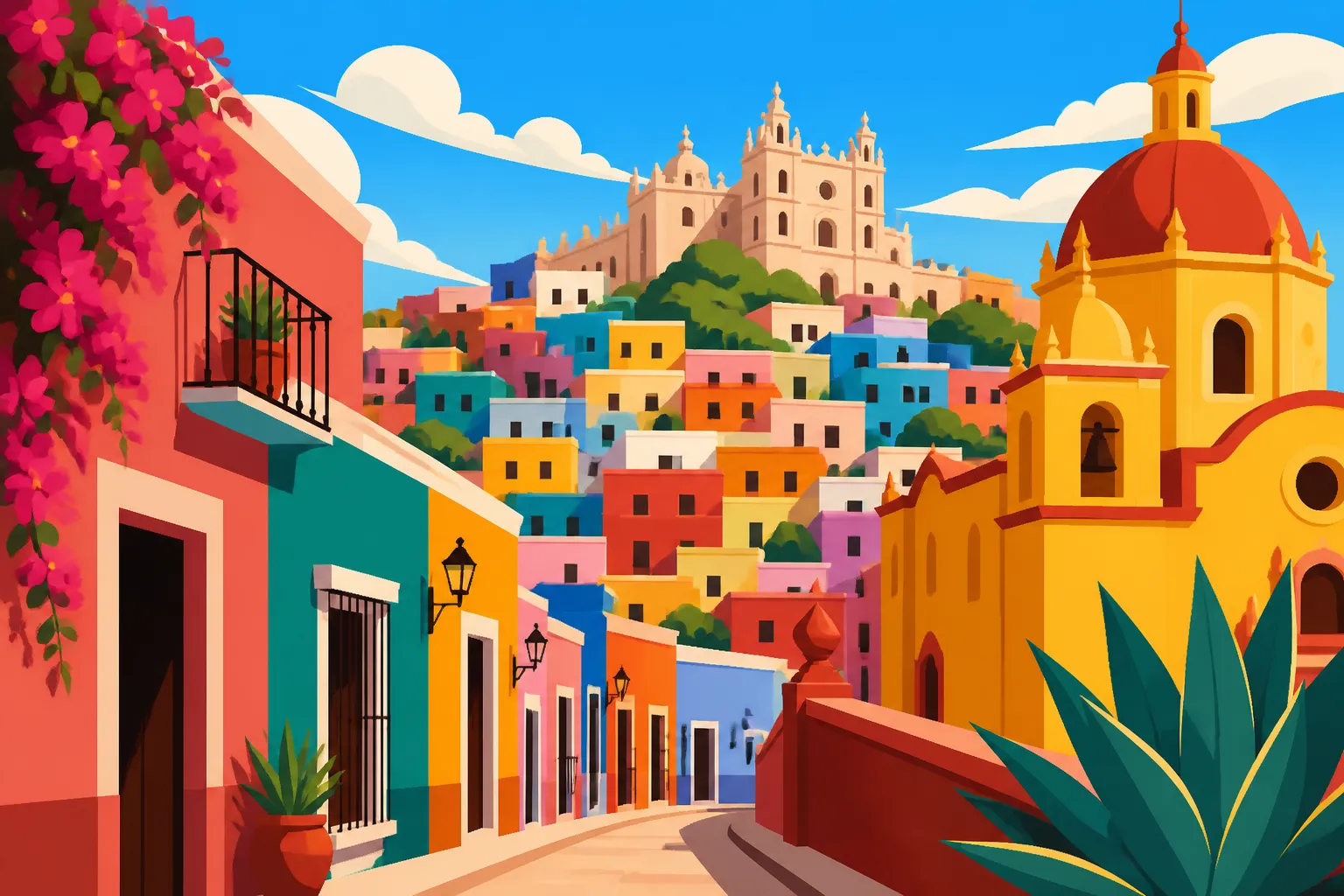
Guanajuato: Colorful Streets and History
Most visitors arrive in Guanajuato City expecting a simple colonial walk only to find themselves gasping for air on 45-degree inclines or hopelessly lost in a subterranean tunnel network. It is a city that defies GPS and logic, often leaving first-timers overwhelmed by its verticality. This guide solves the logistical nightmare of navigating Guanajuato, covering transport, neighborhoods, and essential cultural etiquette.
Disclosure: This post may contain affiliate links. We may earn a commission at no extra cost to you if you make a purchase through these links. Read full disclosure.
The Logistics of Getting to the Heart of Mexico
Guanajuato is not the kind of place where you just "show up" and figure it out on the fly. Because the city is built into a narrow canyon, space is at a premium and the layout is notoriously confusing. Most veterans of the Mexican highlands will tell you that the easiest way to arrive is by luxury bus. The Central de Autobuses is located a bit outside the main bowl of the city, and from there, you’ll need to take a taxi or a ride-share to get into the Centro.
If you are coming from Mexico City, Querétaro, or Guadalajara, checking schedules on Busbud is the most efficient way to see your options. I highly recommend opting for the "Ejecutivo" or "Plus" classes. These aren't just slightly better seats; they are massive reclining chairs with leg rests and individual screens, which makes the four-to-five-hour journey from the capital feel like a breeze. Trust me, after a few hours of navigating the winding mountain roads leading into the state of Guanajuato, you will be glad you aren't the one behind the wheel.
Arriving by Bus vs. Air
The nearest airport is the Bajío International Airport (BJX), located about 30 minutes away in Silao. While it’s convenient for international arrivals, it adds another layer of transport logistics. You will need to negotiate an authorized airport taxi, which can be pricey compared to local rates. Many expats prefer the bus system because it drops you closer to the action and allows you to see the changing landscape of the Bajío region. If you do choose to fly, make sure you have your transport to your hotel pre-arranged or be prepared to pay the premium for an airport cab.
For those considering a road trip, I have one word of advice: don't. Or at least, don't plan on driving inside the city. Guanajuato’s streets are often no wider than a compact car, and parking is an expensive, rare luxury. If you must drive to the region, look for How to Rent a Car in Mexico Without Overpaying for Insurance to ensure you are covered, but plan to leave that car in a long-term lot on the outskirts for the duration of your stay. The city is meant to be experienced on foot, despite the workout your calves will get.
Navigating the Central de Autobuses
When you step off the bus at the terminal, you’ll be greeted by a swarm of activity. Ignore the unofficial touts and head straight for the "Taxi Seguro" booth. You pay a fixed fare based on your destination zone, which saves you the stress of haggling while carrying luggage. It’s also a good time to familiarize yourself with How to Travel Between Cities in Mexico by Bus if Guanajuato is just one stop on a larger colonial tour. The terminal is clean and safe, but it’s quite a distance from the picturesque plazas you’ve seen in photos.
Once you are in the cab, you will likely experience your first transit through the tunnels. These were originally built to divert floodwaters but now serve as the city's primary traffic arteries. It’s a surreal experience—driving through hand-chipped stone caverns with bus stops and crosswalks underground. Just be aware that once you go underground, your phone’s GPS will likely stop working. This is why having your hotel’s address written down or saved offline is a non-negotiable for new arrivals.
The Tunnel System: A First-Timer’s Maze
The tunnels are Guanajuato's secret weapon against traffic congestion, but for the uninitiated, they are a labyrinth. There are dozens of entrances and exits, and if your driver misses one, you might end up on the completely opposite side of the canyon. As an expat who has lived here through several rainy seasons, I can tell you that the tunnels are also a fascinating piece of engineering. They allow the surface streets to remain largely pedestrian-only, which preserves the colonial atmosphere.
However, walking in the tunnels is generally not recommended for tourists. While there are sidewalks in some sections, the air quality isn't great due to exhaust, and the lighting can be dim. Stick to the surface streets for your strolls. If you are trying to reach a specific landmark, it is often faster to walk the "callejones" (alleys) than to take a car that has to navigate the one-way tunnel loop. Just keep in mind that the city is a bowl; almost every walk involves an incline.
Choosing Your Base in the Colonial Maze
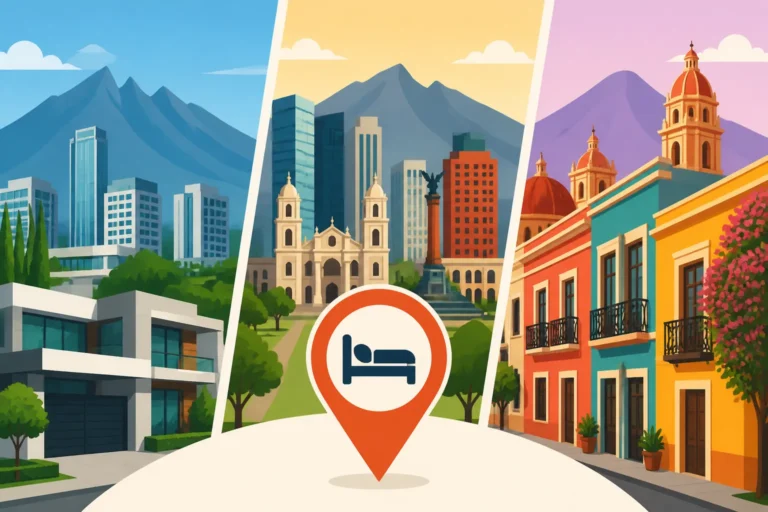
Where you stay in Guanajuato will fundamentally change your experience of the city. Because the topography is so extreme, a hotel that looks "close" on a flat map might actually be 300 stone steps above the main plaza. If you have mobility issues or just don't want to be drenched in sweat every time you return to your room, you need to be very strategic about your neighborhood choice.
I always suggest starting your search on Booking.com and filtering by "Centro Histórico" while carefully reading the reviews regarding "slopes" or "stairs." Many of the most beautiful boutique hotels are converted colonial mansions. They offer incredible character—think central courtyards, thick stone walls, and hand-painted tiles—but they rarely have elevators. If you’re carrying heavy bags, check if the hotel offers "botones" (bellhop) service to help you navigate the final stretch of the alleyway.
Staying in the Centro Histórico
Living or staying in the heart of the Centro means you are steps away from the Teatro Juárez and the Jardín Unión. This is the social epicenter of the city. During the day, it’s vibrant and colorful; at night, it’s a non-stop party of "callejoneadas" and live music. If you value being in the middle of the action, this is your spot. However, be warned: Guanajuato is a loud city. Between the church bells that start at 6:00 AM and the wandering musicians who play until midnight, silence is a rare commodity here.
If you are sensitive to noise, look for accommodations that are tucked a few blocks away from the main plazas. Places near the Plaza de San Fernando or the Plaza de la Paz offer a slightly more relaxed vibe while still being fundamentally central. You’ll also find more "local" cafes and bookstores in these pockets, away from the heavy tourist flow. For more on navigating the social nuances of these areas, check out Mexican Customs, Etiquette, and Social Life to help you blend in with the locals.
San Javier and Valenciana: The High Ground
For those looking for a quieter, more upscale experience, the neighborhoods of San Javier and Valenciana are located "arriba" (up) on the hillsides. These areas host some of the city's most luxurious hotels and offer panoramic views of the colorful houses spilling down the canyon walls. The air is a bit cooler here, and the streets are wider, making it easier for taxis to reach your front door.
The downside, of course, is that you are no longer in walking distance to the main attractions for most people. You will become very familiar with the local taxi drivers or the small green buses that ply the uphill routes. Valenciana is also home to the famous Templo de la Valenciana and the historic silver mines. If you choose this area, you're trading the convenience of the Centro for tranquility and better views. It’s a trade-off many long-term expats eventually make after the novelty of the noisy Centro wears off.
Practical Tips for Booking Accommodations
When booking, always ask about water pressure and heating. Even in Mexico, the highlands get surprisingly cold at night from November through February. Many older buildings lack central heating, relying instead on space heaters or thick blankets. Conversely, if you're visiting in May, ask about fans or air conditioning, though the thick stone walls of colonial buildings usually do a good job of keeping things cool during the day.
| Neighborhood | Vibe | Pros | Cons |
|---|---|---|---|
| Centro Histórico | Energetic/Classic | Walking distance to everything | Very noisy, steep stairs |
| San Fernando | Bohemian/Local | Great cafes, slightly quieter | Still busy during festivals |
| San Javier | Upscale/Quiet | Beautiful views, luxury hotels | Requires taxi/bus to reach Centro |
| La Presa | Residential/Green | Peaceful, near parks | Long walk to main attractions |
Immersion in History and Local Traditions
Guanajuato isn't just a pretty face; it’s the cradle of Mexican Independence. The history here is palpable, etched into the massive stone walls of the Alhóndiga de Granaditas. This grain storehouse turned fortress was the site of the first major victory of the insurgency against the Spanish in 1810. You can still see the hook marks on the corners of the building where the heads of the revolutionary leaders were once displayed as a warning. It’s a heavy piece of history that anchors the city’s identity.
To get the most out of these sites, I often suggest booking a walking tour through Viator. Having a guide who can explain the nuances of the "Pipila" legend—the local miner who strapped a stone to his back to reach the fortress doors under fire—makes the architecture come alive. Guanajuato is one of the premier Pueblos Mágicos: Mexico's Magic Towns Explained for a reason; its stories are as colorful as its facades.
The Alhóndiga de Granaditas and Independence
Today, the Alhóndiga serves as a world-class regional museum. It’s a must-visit for anyone who wants to understand why Mexicans are so fiercely proud of their history. The murals by José Chávez Morado inside the stairwells are breathtaking, depicting the struggle for liberty and the evolution of the Mexican identity. When you walk through the massive wooden doors, it’s easy to imagine the chaos of the battle that took place there over two centuries ago.
After your visit, take a moment to sit on the steps outside. This plaza often hosts events, particularly during the Festival Internacional Cervantino in October. It’s a great place to people-watch and absorb the gravity of the location. Just remember that if you’re visiting during a major holiday, you should look up Mexican Independence Day and El Grito to understand the specific celebrations that take over the city.
The Legend of the Callejón del Beso
No guide to Guanajuato is complete without mentioning the "Alley of the Kiss." This narrow passageway is so tight that the balconies on opposite sides almost touch. The legend tells of two ill-fated lovers, Ana and Carlos, who would lean across the gap to steal kisses until Ana’s father discovered them. Today, it’s a major tourist trap, but in a charming, quintessentially Mexican way.
If you’re traveling with a partner, the tradition says you must kiss on the third step to ensure seven years of happiness. Be prepared to wait in a short line, as this is one of the most photographed spots in the city. While it’s a bit kitschy, the surrounding alleys are actually quite beautiful and provide a great excuse to get lost in the "callejones." Just keep an eye on your surroundings and follow the tips in Street Safety: Tips for Avoiding Pickpockets and Scams in Mexico when you're in high-traffic tourist areas.
Callejoneadas: The Musical Heartbeat
As the sun sets, you will start to see groups of men dressed in 17th-century Spanish attire, carrying lutes and guitars. These are the "Estudiantinas," or student musical groups. They lead the "Callejoneadas"—walking tours through the alleys filled with music, jokes, and storytelling. It’s a tradition that dates back to the university’s influence on the city and is arguably the most unique thing to do in Guanajuato.
Participating in a Callejoneada is a rite of passage. You’ll be given a small ceramic jug (porrón) filled with juice or wine to sip as you follow the band through the winding stone paths. The energy is infectious, and it’s a great way to see parts of the city you might not find on your own. Note that the banter is all in Spanish, so even if you don't understand every joke, the music and the atmosphere are universal. It is customary to tip the performers at the end; you can consult Tipping in Mexico (Propina): When and How Much for guidance on what’s appropriate.
Flavors and Markets of Guanajuato
The culinary scene in Guanajuato is a mix of humble street food and sophisticated dining. Because it was historically a mining town, the food is often hearty and designed to sustain workers through long shifts. The most famous local dish is "Enchiladas Mineras"—tortillas folded over cheese and onions, topped with a mountain of diced carrots and potatoes that have been sautéed in the same chili oil as the enchiladas. It’s comfort food at its finest.
If you are looking for a more formal dining experience, there are several restaurants with rooftop terraces overlooking the Plaza de la Paz. These spots are perfect for a long lunch as you watch the light change on the Basilica. For those on a budget or looking for an authentic experience, the markets are where you should spend your time. Be sure to check Food and Water Safety in Mexico: Avoiding Illness before diving into the market stalls, although Guanajuato generally has high standards for its tourist-heavy areas.
Mercado Hidalgo: The Iron Palace of Food
The Mercado Hidalgo is a masterpiece of Porfirian-era architecture. Originally intended to be a train station, it was converted into a market in 1910. The high vaulted ceilings and ironwork give it a cathedral-like feel. Inside, you’ll find everything from fresh produce and "artesanías" to small fondas (eateries) serving daily specials.
I recommend heading to the second floor for a bird’s-eye view of the chaos below before grabbing a seat at one of the stalls. Look for "Carnitas" or "Pozole," and don't forget to try a "Guacamaya"—a spicy torta filled with chicharrón (pork rinds), avocado, and pico de gallo. It’s a local favorite that packs a punch. The market is also the best place to buy local candies, like "Charamuscas," which are often shaped like the city's famous mummies.
Fine Dining and Rooftop Terraces
As Guanajuato has grown in popularity with international tourists and expats, the "fine dining" scene has exploded. You can now find incredible contemporary Mexican cuisine that rivals what you’d find in Mexico City or San Miguel de Allende. Many of these restaurants are located in the upper floors of colonial buildings, offering views of the iconic yellow Basilica.
When dining at these more upscale establishments, you’ll find that many staff members speak English, but it’s always appreciated if you try a few phrases in Spanish. If you’re worried about the language barrier, Overcoming Language Barriers at the Doctor: Tips for Expats has some general advice on communication that applies to restaurants as well. Booking a table in advance is highly recommended, especially on weekends when the city is flooded with visitors from neighboring states.
Regional Specialties You Must Try
Beyond the enchiladas, you should look for "Cajeta" from nearby Celaya. This is a goat's milk caramel that is much richer and more complex than standard dulce de leche. You’ll see it used in crepes, on churros, or sold in small jars. Another highland staple is "Gorditas de Maíz Quebrado," which are thick corn pockets filled with various stews (guisados).
For a unique drink, try "Cebadina." It’s a bright red, fermented barley drink flavored with hibiscus and tamarind. Just before they serve it to you, they add a spoonful of baking soda, which makes it fizz up violently. You’re supposed to drink it while it’s bubbling to help with digestion—perfect after a heavy meal of minero-style enchiladas. It’s a quirky local tradition that you won’t find in many other parts of Mexico.
Essential Safety and Navigation for Expats and Tourists
Guanajuato is generally a very safe city, especially within the tourist zones of the Centro. However, its unique geography creates some specific safety concerns that you wouldn't face in a flat city like Mérida or Guadalajara. The "callejones" can be confusing, and some of the steeper ones can feel isolated after dark. As a rule of thumb, stay on the well-lit paths where you see other people walking.
If you ever feel lost or uncomfortable, the local "Policía Turística" are usually visible around the main plazas and are specifically trained to help visitors. They often speak some English and can point you back toward the Jardín Unión. For a broader overview of staying safe in the country, I always point people to Safety in Mexico: What Expats Need to Know About Staying Safe.
Walking the "Callejones" Safely
The beauty of Guanajuato is in its alleys, but some of them lead deep into residential hillsides where tourists rarely venture. While not necessarily dangerous, it’s easy to accidentally wander into someone’s backyard or end up in a dead end. During the day, feel free to explore, but at night, stick to the "callejoneada" routes or the main pedestrian streets like Juarez or Positos.
Also, be mindful of the pavement. The stones can be incredibly slippery when wet, and the "banquetas" (sidewalks) are often very narrow or non-existent in some sections. Wear sturdy shoes with good grip. Leave the heels at home; Guanajuato is the city where fashion takes a backseat to function. If you do take a tumble and need medical attention, it’s helpful to know Navigating Hospitals and Clinics in Mexico: An Expat’s Guide to Medical Care just in case.
Connectivity and Getting Around
Because of the tunnels and thick stone walls, cell signal in Guanajuato can be spotty. I highly recommend downloading the offline map of the city on Google Maps before you head out. This will at least give you a general sense of direction even when you lose GPS. Uber works in Guanajuato, but because of the tunnel system and the one-way nature of the streets, it can take a long time for a driver to reach you.
Often, flagging down a green-and-white local taxi is faster. Just make sure to agree on the price before you get in, as they do not use meters. If you are staying for a while and need more permanent connectivity, check out Getting a SIM Card in Mexico as a Foreigner to ensure you have a local data plan that works across the highlands.
Handling the Altitude and Hills
Guanajuato sits at approximately 2,000 meters (6,600 feet) above sea level. If you are coming from a sea-level location, you will feel the difference. Combine the altitude with the constant uphill walking, and you have a recipe for exhaustion. Take it slow for the first 48 hours. Drink plenty of water and avoid excessive alcohol until you’ve acclimated.
If you start to feel a persistent headache or dizziness, you might be experiencing mild altitude sickness. You can find more specific advice on this in Altitude Sickness in Mexico: Tips for Adjusting to High Elevations. Most people adjust within a couple of days, but the stairs will always be a challenge. Don't be ashamed to stop and "admire the view" every fifty steps—the locals do it too!
Disclaimer
This guide is for informational purposes only. Travel conditions, safety situations, and local regulations in Mexico can change rapidly. Always check with official government sources and local authorities before planning your trip. The author is an expat sharing personal experiences and does not provide legal, medical, or professional travel advice. Use your best judgment and stay aware of your surroundings at all times.