Volcano Hikes and Nevado de Toluca: Guided vs Independent Access
Nevado de Toluca looks like an easy day trip on a map. Then you meet a confusing access road, gate hours nobody explained, weather that turns by early afternoon, and air thin enough to make a short climb feel brutal. This guide compares going alone with booking a guided trip, so you can choose the option that fits your fitness, Spanish, and nerves.
Disclosure: This post may contain affiliate links. We may earn a commission at no extra cost to you if you make a purchase through these links. Read full disclosure.
Understanding Nevado de Toluca and Mexico’s Hikeable Volcanoes
I still remember my first attempt at Nevado de Toluca. I left Roma Norte late and assumed I could figure out the last stretch “when I got there.” I spent the morning lost on rural roads outside Toluca. I reached the crater just as the clouds closed in, and I turned around with a pounding headache and nothing to show for it. Many newcomers have a version of that story, and it comes from treating a high-altitude volcano like a city park.
What Makes Nevado de Toluca Special
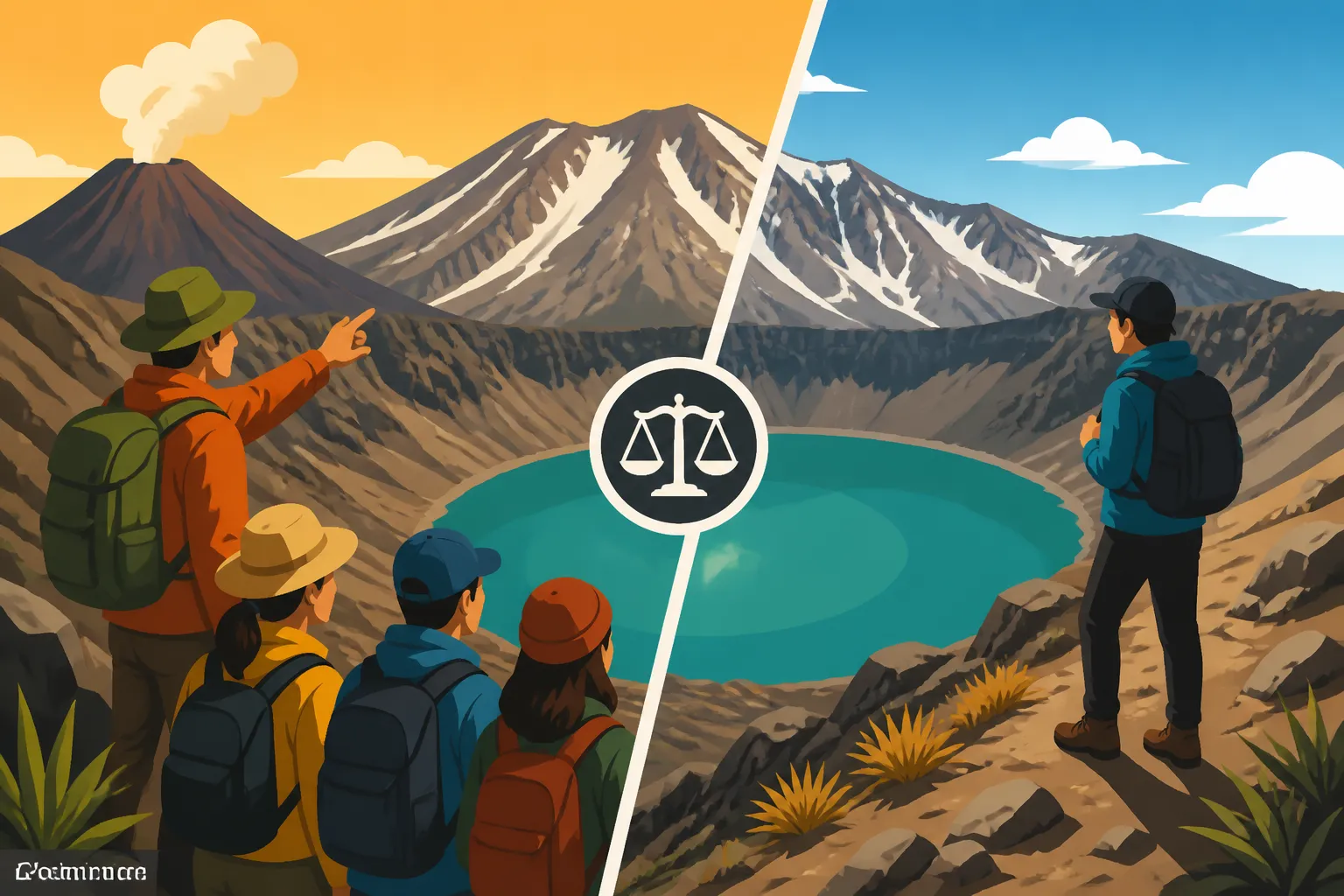
Nevado de Toluca, also known by its indigenous name Xinantécatl, is a dormant stratovolcano southwest of Toluca in the State of Mexico. Its summit rises well above 4,000 meters, which puts it among the highest peaks in the country. What makes it unusual is that you can get quite close to the crater by vehicle. Inside the crater sit two lakes, Laguna del Sol and Laguna de la Luna, ringed by jagged peaks including Pico del Fraile and Pico del Águila.
Easy access is both the appeal and the trap. Because you do not need to start from sea level, people underestimate it. You can step out of a car at an altitude higher than most North American and European ski resorts. Within minutes you may be walking across a frozen crater floor or climbing loose scree toward the rim. The views are spectacular, but your body has had no time to adjust.
The protected area is managed as a flora and fauna reserve. Access is regulated with gate hours, closures during heavy snow or fire risk, and rules about where private vehicles can go. These rules have shifted over the years. Before any trip, check the current access arrangements with the park authority or a recent operator listing.
Other Volcanoes You Can Hike in Central Mexico
Nevado de Toluca is usually the first volcano people try, but it is not the only one. Iztaccíhuatl, the “sleeping woman” east of Mexico City, is reached via Paso de Cortés in the Izta-Popo National Park. It needs a permit and is a much more serious mountaineering objective. La Malinche, on the border of Tlaxcala and Puebla, is a popular training peak. Most people start from the Malintzi vacation center area. Pico de Orizaba, the country’s highest peak, is a technical climb that requires glacier experience and is not a casual hike. Popocatépetl is closed to climbers because of ongoing volcanic activity.
For a broader overview of which peaks suit which experience levels, see Hiking and Volcanoes in Mexico. For a practical breakdown of gear and preparation, How to Climb or Hike a Volcano in Mexico goes deeper into the logistics.
Why Altitude Changes Everything
The biggest factor on any Mexican volcano is altitude, not distance. Living in Mexico City already puts you around 2,240 meters, which helps. Even so, jumping from that height to the crater rim of Nevado de Toluca in a single morning is a big leap. Headaches, nausea, dizziness, and a racing heart are common. In rare cases the symptoms become serious enough that you need to descend immediately.
Arriving from the coast or straight off a plane is a different situation from living in the highlands. If you are new to high elevations, read Altitude Sickness in Mexico: Tips for Adjusting to High Elevations before you commit to a summit plan. Residents of the capital can also get useful context from Living at High Altitude: Tips for Expats in Mexico City and Highland Areas.
Going Independent: How to Reach Nevado de Toluca on Your Own
Doing it yourself is entirely possible, and plenty of experienced hikers love the freedom. You set your own pace and leave when you want. You can also linger at the lakes without a group waiting. Independence means you own every piece of the logistics, though, and that includes what happens if something goes wrong.
Step-by-Step Independent Route
Here is the general sequence that independent visitors follow:
- Check the weather forecast for the summit area, not just Toluca city. Mountain conditions can differ completely from the valley.
- Confirm the park’s current opening status and gate hours. Closures for snow, ice, or fire risk happen without much warning.
- Leave Mexico City very early. If you drive, take the toll road toward Toluca. If you use public transport, catch an intercity bus from the Observatorio terminal (Terminal Poniente) to Toluca.
- From Toluca, head toward the highway that runs south toward Temascaltepec and Sultepec. Watch for the turnoff near the village of Raíces, which leads up toward the park.
- Continue up the access road to the authorized parking area. From there, follow the current arrangement to reach the crater zone, either on foot, by your own vehicle where allowed, or by local shuttle when one is running.
- Walk into the crater, visit the lakes, and decide on site whether conditions and your body allow any climb toward the rim or a peak.
- Start your descent with plenty of margin before the afternoon, when clouds, hail, and electrical storms commonly build up.
Each of these steps sounds simple until you are tired, cold, and trying to read a hand-painted sign in Spanish at a dirt junction.
The Real Advantages of Going Solo
The main benefit is control. If you are a strong hiker who has already acclimatized, you can move quickly and tackle a longer loop around the crater rim. You may even attempt Pico del Fraile without being held back by a group. You choose when to stop for photos, how long to stay at Laguna de la Luna, and whether to turn back early.
Going alone can also be cheaper. A single bus fare or a shared car with friends often costs less than a packaged excursion, especially if you split fuel and tolls. For residents who plan to return several times, learning the route once can pay off over many trips.
There is also a real sense of accomplishment. Working out the bus connections, chatting with a taxi driver in Raíces, and arriving at the crater under your own steam is the kind of experience that makes living in Mexico feel like your life rather than a vacation.
The Hidden Risks of Doing It Yourself
Picture this scenario. You and a friend take an early bus to Toluca, then a taxi to the park. The driver drops you off and you agree he will come back at a set time. By midday you are on the crater rim, one of you has a splitting headache, and a storm is rolling in. Your phone has no signal. The taxi may or may not return when promised. That is the realistic downside of an unstructured trip.
Phone signal around the summit can be patchy. Transport back down is not guaranteed, especially late in the day. If you drive, rural roads can be confusing, and fog can drop visibility to almost nothing. Language matters too. If you need help, you will be speaking Spanish with park staff or locals, not reading an English sign.
There is also the question of judgment. On a guided trip, someone experienced decides when to turn back. Alone, that decision falls on you, often when you are already oxygen-deprived and not thinking clearly.
Guided Volcano Tours and Why Viator Simplifies the Process
For many first-timers, a guided excursion turns Nevado de Toluca from a stressful logistics puzzle into a relaxed, memorable day. You can book directly with a local operator, but online booking platforms have become the easiest way for travelers and residents to compare options in one place. Viator is one of the most widely used of these platforms for Mexico excursions.
What a Guided Nevado de Toluca Trip Usually Includes
Most guided day trips follow a similar pattern. You are picked up in Mexico City, often from a central meeting point or your accommodation, early in the morning. The group drives to Toluca and on to the park entrance. The guide handles the access arrangements and leads the walk to the crater lakes. Some itineraries add a short climb toward the rim, depending on conditions and the group’s ability.
Guides often bring snacks and hot drinks. They know where the trail is icy and which route to take when the weather is unsettled. Many tours also stop on the way back for food in a nearby town, which is a pleasant way to recover. Inclusions vary by operator, so read each listing carefully rather than assuming meals, entry, or equipment are covered.
Listings on Viator generally spell out the pickup point, what is included, what is excluded, group size, and the difficulty level. That makes it far easier to compare offers side by side than chasing WhatsApp messages with several small operators.
How Booking Through Viator Works
Booking a volcano hike this way is straightforward:
- Search for Nevado de Toluca, or for a broader term such as volcano hike from Mexico City.
- Filter by date, duration, language, and type of tour, such as private or small group.
- Open several listings and compare the itinerary, inclusions, pickup arrangements, and fitness requirements.
- Read recent reviews closely, focusing on comments about guide quality, punctuality, and how the operator handled bad weather.
- Check the cancellation terms shown on the listing page, since policies differ from tour to tour.
- Book and pay through the platform, then watch for confirmation and the operator’s contact details.
- Message the operator ahead of time to confirm pickup details and ask any questions about altitude or fitness.
The cost structure is simple. You pay a per-person or per-group price set by the operator, and the platform handles the booking. Prices, inclusions, and cancellation rules vary by listing, so always check the current figures on the Viator page for the specific tour you want. For a broader look at platform pricing compared with booking locally, see Booking Tours in Mexico Online: Platform Prices vs Booking on the Ground.
Group Tours, Private Tours, and What to Watch For
Small-group tours are usually the most budget-friendly guided option. You share the van and the guide with other travelers. They suit solo travelers or couples who want company and do not mind a fixed pace. The downside is that the group moves at the speed of its slowest member, and if anyone struggles with altitude, the whole group may turn back.
Private tours cost more per person, but you get the whole day built around your needs. If you want to try Pico del Fraile, go at a gentle pace with a parent, or stop often for photography, a private guide is worth considering. Private vs Group Tours in Mexico: The Real Price Difference breaks down when the upgrade makes financial sense.
Language is another factor. If you need full English-language guidance, especially for safety briefings, confirm it before you pay. English-Speaking Guides in Mexico: How to Confirm Before Booking explains how to check without awkward surprises on the morning of the trip. Vetting the operator matters just as much. Tour Safety in Mexico: Vetting Operators and Reading Reviews Properly covers the warning signs to look for in reviews.
Guided or Independent: Making the Right Choice
There is no single right answer. The best choice depends on your experience, your Spanish, your acclimatization, and how much uncertainty you can tolerate on a mountain.
Side-by-Side Comparison
| Factor | Guided Tour via Viator | Independent Trip |
|---|---|---|
| Transport from Mexico City | Usually included with pickup | You arrange bus, taxi, or car |
| Navigating park access rules | Handled by the operator | You confirm gates, closures, and shuttles |
| Spanish needed | Minimal if you book an English-speaking guide | Helpful to essential |
| Safety decisions on the mountain | Experienced guide decides when to turn back | You decide, often while tired and affected by altitude |
| Flexibility of pace | Limited on group tours, high on private ones | Complete |
| Cost shape | Single upfront price per listing | Pay-as-you-go for transport and access |
| Cancellation | Terms shown on each listing | Usually no cost, but no refund on transport |
| Best for | First-timers, visitors, solo travelers, families | Acclimatized, experienced, Spanish-speaking hikers |
Who Should Go Guided and Who Can Go Solo
You should seriously consider a guided trip if you fall into any of these categories:
- This is your first high-altitude volcano.
- You arrived in Mexico within the past few days.
- Your Spanish is limited.
- You are traveling alone and do not want to rely on returning taxis.
- You are hiking with children, older relatives, or friends who do not hike often.
- You have only one day and cannot afford to lose it to wrong turns.
Independent access makes more sense if you live in the highlands and have acclimatized. It also suits you if you have hiked at altitude before, can read a weather forecast critically, speak functional Spanish, and either have your own car or are comfortable with backup transport plans. Many residents start with a guided trip, learn the layout of the park, and then return on their own.
Here is a scenario that shows the difference. Sarah, a remote worker living in Condesa, had been in Mexico City for six months and hiked often. She went independently with a friend, left at dawn, and had a perfect day at the lakes. Her parents, who visited from Ohio, had a different experience. They booked a small-group tour through Viator two days after arriving. Their guide noticed the father was struggling, kept him at the lake level instead of attempting the rim, and they still went home with stunning photos. Each visit was handled appropriately.
If you live in Mexico and plan to explore more peaks over time, Weekend Excursions for Residents: Using Tour Platforms When You Live Here has useful ideas for mixing guided and solo trips.
Preparation Checklist for Either Option
Whichever route you choose, preparation is what separates a magical day from a miserable one:
- Dress in layers, including a warm jacket, gloves, a hat, and a windproof outer shell, even if Mexico City is sunny.
- Wear proper hiking shoes with good grip for scree, mud, and ice.
- Pack plenty of water, high-energy snacks, sunscreen, and sunglasses, since UV exposure at altitude is intense.
- Carry cash in pesos for parking, shuttles, snacks, or bathrooms near the park entrance.
- Download offline maps before leaving the city.
- Tell someone where you are going and when you expect to be back.
- Start early and aim to be heading down before the afternoon weather builds.
- Turn back immediately if you develop worsening headache, confusion, or shortness of breath at rest.
Insurance deserves a moment of thought too. Some travel policies have specific clauses for high-altitude activities. Volcano Hiking and High-Altitude Trekking in Mexico: Altitude Clauses explains what to check in your policy wording before you climb.
Reading the Fine Print Before You Book
If you book a guided trip, a few details deserve a careful look. Check what happens if the park closes on your date because of snow or fire risk. Some operators reschedule, others refund, and some offer an alternative destination. The cancellation terms on the Viator listing are your reference point, so read them before paying. Cancellation Policies on Mexican Tours: What You Get Back and When explains how these policies tend to work in practice.
It is also worth comparing platforms if you have time. Viator vs GetYourGuide for Mexico: Coverage, Price, and Cancellation looks at how the two major booking sites differ for Mexican excursions. Finally, budget for a tip. Guides and drivers on volcano trips often start before dawn and work long, cold days, and a gratuity is customary. Tipping Guides and Drivers in Mexico: What’s Expected on a Booked Tour covers local norms.
For most first-time visitors, a well-reviewed guided excursion booked through Viator gives you the best chance of reaching the crater lakes safely. It also means you come down with good memories rather than a story about getting lost. Browse the current Nevado de Toluca listings on Viator, compare a few options, and pick the one that matches your pace. Once you know the mountain, you can always come back on your own.
Disclaimer
This article is for general informational purposes only and does not constitute professional advice. Laws, prices and regulations vary by location and change over time. Consult a qualified professional for guidance on your specific situation.