Small Town vs Big City Living in Mexico: Pros and Cons for Expats
Staring at a crowded, gridlocked intersection in Mexico City, I once desperately craved the quiet of a remote coastal village. Yet, a month later in a sleepy pueblo with no internet and frequent blackouts, I missed the capital’s chaotic efficiency. Deciding where to anchor yourself is an overwhelming struggle. This guide breaks down the harsh infrastructural and cultural realities of both environments to help you choose your ideal Mexican home.
Disclosure: This post may contain affiliate links. We may earn a commission at no extra cost to you if you make a purchase through these links. Read full disclosure.
The Daily Rhythm: Pace of Life and Culture Shock
When you cross the border, the sensory overload is immediate. However, the exact flavor of that culture shock differs drastically between the frantic, cosmopolitan energy of the metropolis and the fiercely traditional, deliberate pulse of rural Mexico. Understanding these initial emotional and physical hurdles is your first step toward successful integration.
The Relentless Hustle of the Megacity
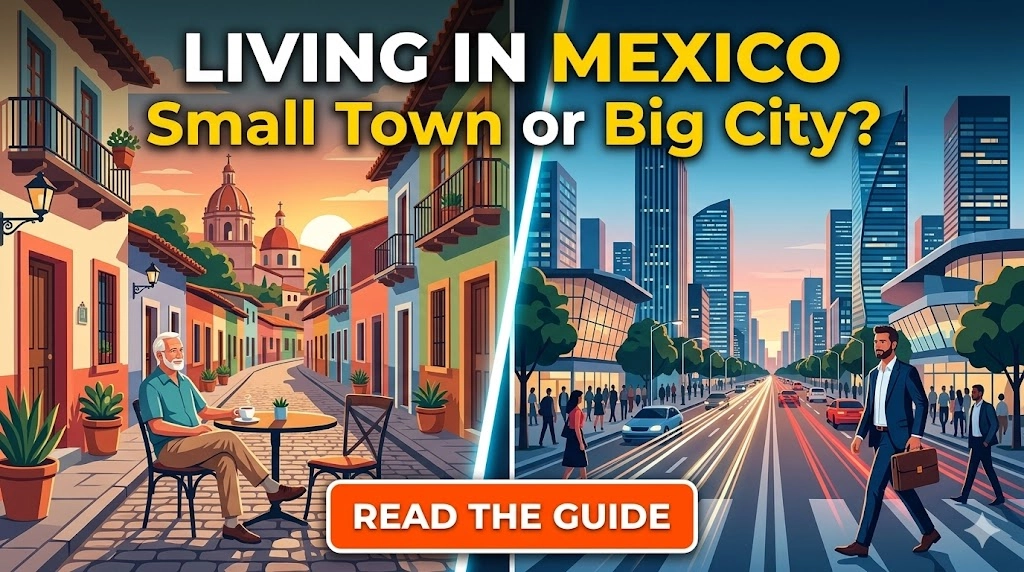
Mexico City (CDMX), Guadalajara, and Monterrey are sprawling, endless monsters of urban development. With metropolitan populations numbering in the millions, these cities operate on a relentlessly fast frequency that directly mimics the aggressive, unapologetic hustle of New York City, London, or Tokyo. People walk fast, the traffic literally never stops, and the sheer volume of humanity pressing in on you can feel deeply overwhelming during your first month. You will constantly battle noise pollution: the early morning gas trucks broadcasting over loudspeakers, the endless sirens, and the late-night parties echoing off concrete buildings.
However, this massive, overwhelming scale means these cities are places that never fully sleep. They offer endless global events, world-class concerts, and diverse cultural exhibitions at any given hour. You can find an underground techno club, a quiet jazz bar, or a 24-hour street taco stand within minutes of each other. The anonymity of the megacity is liberating for many expats, allowing you to completely reinvent yourself within its countless, diverse subcultures. You will never be bored, and the energy is infectious, but your nervous system will constantly be engaged.
The Mañana Culture of Small Pueblos
Conversely, life in a small Mexican town—whether it is a colonial jewel like Valladolid in the Yucatan or a sleepy surf village on the Oaxacan coast—forces you to surrender to an entirely different timeline. The pace is noticeably slower, far more deliberate, and heavily dictated by religious tradition and agrarian cycles. Sunday is fiercely respected as a quiet day of rest and family time, and many local businesses will simply close their doors. Your daily alarm clock will likely be a chorus of neighborhood roosters or the sudden explosion of celebratory fireworks at 5:00 AM for a local patron saint’s festival.
In a small pueblo, the infamous mañana culture is not a stereotype; it is the absolute, unbreakable law of the land. If you hire a plumber, a carpenter, or an electrician, they might show up tomorrow, next week, or not at all. You cannot force a fast-paced, North American expectation of efficiency onto a small Mexican town without driving yourself to the brink of insanity. You must learn to breathe, wait, and accept that things happen when they happen. This deceleration is exactly what many burnt-out expats are looking for, but it requires a massive, humbling psychological adjustment.
Finding Your Social Baseline
Choosing between the two depends entirely on your nervous system’s capacity for chaos versus your tolerance for extreme quiet. If you thrive on constant stimulation, endless networking opportunities, and the ability to order high-end sushi on UberEats at 2:00 AM, the big city will constantly fuel your energy.
If you prefer a community where you eventually learn the layout intimately, recognize the same vendors at your local mercado (open-air market) every single morning, and enjoy a highly predictable, relationship-based daily routine, a small town offers a much softer, more grounding landing. You must honestly assess whether the rustic charm of a slow, quiet life will eventually mutate into profound boredom and isolation after six months of living there.
Infrastructure, Utilities, and the Digital Reality
The romantic aesthetics of colonial architecture often mask the brutal reality of developing infrastructure. Your daily comfort and your ability to earn a living are directly tied to the physical grid of your chosen zip code.
Power Grids and Internet Reliability
For digital nomads and remote professionals, the reliability of your internet connection is a matter of absolute career survival. In the central neighborhoods of major cities favored by expats, high-speed fiber-optic internet from providers like Telmex, Izzi, and Totalplay is the absolute standard. You can easily secure residential speeds of 200 to 500 Mbps, making heavy video editing, software coding, and simultaneous Zoom calls completely effortless.
In small towns and rural villages, however, the digital infrastructure degrades rapidly. You might experience 20 Mbps on a good day, but during a tropical storm or peak tourist hours, it can drop to a highly unstable 3 Mbps with massive latency. Furthermore, the power grid managed by the national provider (CFE) is notoriously fragile in rural areas. A brief period of high wind or heavy rain can knock out the power for an entire neighborhood for days. You must absolutely invest in an Uninterruptible Power Supply (UPS) battery backup for your modem if you live outside the city limits. To master the tech strategies required to survive these outages, read Digital Nomads in Mexico: Remote Work Guide.
The Brutal Truth About Water and Plumbing
The physical plumbing infrastructure of your home varies wildly between these two environments. In a modern luxury high-rise in Guadalajara or Monterrey, you will enjoy pressurized water, modern water heaters, and municipal sewage systems that function flawlessly by North American standards.
In a small, 200-year-old colonial town, the plumbing is often ancient and highly fragile. You cannot flush toilet paper; it must be thrown in a designated bin to avoid catastrophic clogs. Water pressure is frequently reliant entirely on gravity from a rooftop tank (tinaco), meaning your morning shower might be a disappointing trickle unless you install a specialized pressurized pump. Furthermore, municipal water rationing (tandeo) is incredibly common in smaller towns, meaning water might only flow through the city pipes twice a week, requiring you to carefully manage your rooftop reserves. To understand the exact bureaucratic steps required to get your utilities stabilized, study Setting Up Utilities in Mexico: Electricity, Water, and Internet.
Cellular Connectivity on the Move
When you are moving between the bustling city and the quiet countryside, you will quickly discover massive cellular dead zones. Major cities boast excellent 5G coverage, but the sprawling highways connecting them to small rural towns are notorious for dropping signals entirely. If you break down on a rural road without a signal, you are highly vulnerable.
To guarantee you have the highest probability of catching a signal in a rural emergency, or simply navigating a small town’s unmarked dirt roads, you must have a reliable, localized data plan. By downloading an eSIM profile through Airalo before you even cross the city limits, you ensure your phone stays connected to Mexico’s strongest network, Telcel, which possesses the widest geographic reach. Having a dedicated Airalo data package is the ultimate digital safety blanket. If the Wi-Fi in your sleepy beach town completely collapses, you can instantly tether your laptop to your Airalo cellular connection and save your workday without missing a beat.
Cost of Living: The Expat Budget Divide
Mexico is no longer the dirt-cheap, budget paradise it was ten years ago. The massive influx of foreign capital, combined with a historically strong peso, has aggressively shifted the financial realities, creating a stark divide between urban and rural living costs.
Housing Costs and Gentrification Taxes
In major urban centers, rents in desirable neighborhoods have skyrocketed. Neighborhoods like Roma in CDMX or Providencia in Guadalajara have been heavily gentrified by remote workers, forcing expats to pay rates comparable to mid-sized American cities. A modern, furnished two-bedroom apartment in a big city can easily cost between $1,500 and $3,000 USD a month.
Small towns and rural villages remain significantly more affordable, offering the classic cost-of-living arbitrage many expats seek. You can often secure a beautiful, spacious home with a garden for a fraction of what you would pay in the metropolis. However, coastal beach towns are the massive exception; they are priced specifically for short-term vacationers and “snowbirds,” carrying a heavy “Gringo Tax.” If you choose an inland, authentic Mexican pueblo, your housing budget drops dramatically. To dive deeper into the wild realities of securing these leases and the dreaded Aval co-signer requirement, review Real Estate in Mexico: Renting vs Buying for Expats.
Groceries, Markets, and the Supply Chain
The daily cost of groceries in a big city is heavily dependent on your lifestyle inflation and where you choose to shop. If you shop exclusively at premium supermarkets like City Market or H-E-B for imported goods, organic kale, and French cheeses, your monthly food budget will skyrocket. However, big cities offer massive convenience, allowing you to purchase almost any global ingredient.
In a small town, you are entirely reliant on the local supply chain. Fresh produce at the local tianguis (street market) is astonishingly cheap, delicious, and seasonal, but specialty items are nonexistent. You will not find specific ergonomic desk chairs, premium nutritional supplements, or specific tech peripherals in a rural ferretería (hardware store). To bypass this retail isolation, veteran small-town expats rely entirely on Amazon Mexico. Utilizing the localized Amazon Mexico platform allows you to order everything you need to maintain your standard of living directly to your rural front door. Amazon Mexico bridges the gap between small-town charm and modern convenience, completely bypassing the nightmarish delays of international customs.
Transportation and Owning a Vehicle
In a big city like CDMX, you do not buy a car unless you absolutely must. The traffic is a grinding, unrelenting beast, parking is a nightmare, and the strict emission laws frequently limit the days you can legally drive. Instead, you rely entirely on the massive public transit network, Metro systems, and incredibly cheap Ubers to navigate your daily life safely.
If you live in a small town or a rural area, owning a vehicle becomes a strict necessity. There are no Ubers waiting to pick you up at 10:00 PM, and the local buses (peseros) stop running early. You will need a car to access larger supermarkets in the nearest big city, transport heavy items, and explore the surrounding regions. However, driving in rural Mexico means battling massive, unmarked speed bumps (topes) and avoiding driving at night due to safety hazards. To legally manage the income you are spending on these assets and understand the tax implications of living here long-term, read Taxes in Mexico for Expats: A Complete Guide to Income Tax and More.
Healthcare Access and Emergency Preparedness
Your physical health and ongoing medical maintenance are paramount to a successful relocation. The disparity in medical infrastructure is the single most critical factor differentiating city life from small-town living.
Elite Private Care in the Metropolis
Your proximity to world-class healthcare is a massive factor, especially for retirees or those managing chronic conditions. Big cities like Mexico City, Guadalajara, and Monterrey are home to the absolute apex of the Mexican private healthcare system. Elite, JCI-accredited facilities operate with clinical standards that frequently surpass hospitals in the United States, Canada, or the UK.
These massive urban medical campuses are staffed by leading specialists who trained internationally and speak fluent English. They possess the latest MRI machines, robotic surgery suites, and massive blood banks. If you live in these hubs, your access to elite, comprehensive, bilingual care is immediate. You can schedule a specialist appointment for the very next day.
The Reality of Rural Clinics
If you move to a sleepy, undiscovered mountain village or a remote surf town, your medical reality changes drastically. In an emergency, the local rural clinic can only offer basic stabilization. They often completely lack advanced diagnostic imaging, specialized trauma surgeons, and English-speaking staff.
In the event of a severe accident, such as a heart attack, a stroke, or a major fall, you will be put in an ambulance for a grueling, high-speed drive to the nearest major city, which could take hours over rough terrain. This terrifying delay in acute care is the hidden, dangerous cost of small-town living. To learn how to locate vetted, bilingual professionals before an emergency strikes, utilize the highly specific strategies detailed in Finding English-Speaking Doctors and Specialists in Mexico.
Building a Medical Safety Net
Regardless of whether you choose the booming metropolis or the quiet pueblo, you cannot rely on the Mexican public healthcare system (IMSS) for complex, catastrophic care. The public system is chronically underfunded, heavily backlogged, and operates exclusively in Spanish. Attempting to navigate a major medical crisis in a crowded public hospital is terrifying for a foreigner.
You must secure access to the elite private sector. However, private Mexican hospitals will mercilessly demand massive upfront credit card deposits—often thousands of dollars—before they will even admit you to the emergency room. You must secure robust international health coverage to guarantee you have VIP access to the best hospitals without draining your life savings. To compare how these policies operate, consult Choosing Private Health Insurance: Local Mexican Plans vs International Coverage. For the strict laws regarding importing your maintenance medications to a rural area, consult Pharmacies in Mexico: How to Get Medications OTC vs Prescription.
Comparing the Environments: Key Metrics
| Feature | Big City (CDMX, Guadalajara, Monterrey) | Small Town / Rural Pueblo |
| Pace of Life | Fast, high-energy, anonymous, noisy. | Slow, deliberate, relationship-based, quiet. |
| Cost of Living | High (especially housing and rent). | Low (unless located in a coastal tourist hub). |
| Healthcare | Immediate access to elite, JCI-accredited hospitals. | Basic clinics; hours away from major trauma centers. |
| Infrastructure | Fiber-optic internet, reliable utilities, Ubers. | Fragile power grids, spotty Wi-Fi, car dependency. |
| Community | Easy to stay in an English-speaking expat bubble. | Deep immersion; strictly requires speaking Spanish. |
Community Integration and Expat Bubbles
The size of your chosen city dictates how deeply you will integrate into the local culture and how much effort you must put into building a sustainable social circle.
Anonymity Versus Deep Integration
In a big city’s expat enclave, it is dangerously easy to live your entire life speaking only English, surrounded entirely by other transient foreigners. You can order your food in English, go to English-speaking yoga classes, and never engage with the local culture. This creates a highly shallow social circle that resets every six months as digital nomads move on, leaving you feeling isolated despite being surrounded by millions of people.
In a small town, you cannot hide in an expat bubble. The daily rhythm forces you to engage directly with the community. You must learn functional Spanish to negotiate with the mechanic, chat with the butcher, and navigate the local municipal office to pay your property taxes. This forced integration is terrifying at first, but it ultimately leads to a much richer, more authentic, and deeply fulfilling life abroad. You become a known entity in the community, not just a passing tourist.
Co-Living and Transitioning Smoothly
If the idea of jumping straight into a remote rural village is too intimidating, you need a transitional strategy. You should never sell your home and sign a blind 12-month lease in a Mexican town you have only visited on a one-week vacation. You must test the waters.
To bridge your arrival and instantly tap into a vetted, reliable community, veteran expats heavily utilize Selina. Booking a private room or a co-living suite at a Selina location in a mid-sized city or a coastal town for your first 30 days is a strategic masterclass in relocation logistics. Selina provides commercial-grade internet, built-in co-working spaces, and an inherently welcoming environment designed for global citizens. You can walk downstairs and instantly network with other remote workers who can recommend safe neighborhoods, warn you about fragile local power grids, and introduce you to trustworthy local landlords. It acts as the perfect, low-risk basecamp while you explore whether small-town life is truly for you.
Language Barriers and Daily Communication
Ultimately, the success of your relocation comes down to communication. In the big city, the barrier to entry is extremely low. You can easily find bilingual accountants, doctors, and real estate agents who cater specifically to the foreign market. You can survive with minimal Spanish.
In a small town, you must abandon your reliance on English. You will encounter local indigenous dialects, intense regional slang, and a complete lack of translated documents at the local government offices. You must embrace the discomfort of making mistakes in Spanish and looking foolish occasionally. By doing so, you show the locals that you respect their culture enough to try, which opens doors to profound friendships that superficial expats never experience.
Whether you choose the grinding, thrilling chaos of the megacity or the quiet, soulful rhythm of the pueblo, meticulous preparation is your greatest asset. If you are ready to start planning the financial reality of this massive move and navigating the initial visa bureaucracy, your absolute first stop must be Mexico Immigration Fees and Costs: Budgeting for Your Residency and How to Apply for Temporary Residency in Mexico: Step-by-Step.
References
Primary sources (official)
- Secretariat of Agrarian, Land, and Urban Development (SEDATU): The federal agency responsible for urban planning, rural land development, and national housing strategies across Mexico’s diverse topographies. https://www.gob.mx/sedatu
Other helpful sources
- International Living: A massive, highly trusted resource offering firsthand accounts of the cost of living, healthcare quality, and lifestyle differences between Mexican cities and hidden rural gems. https://internationalliving.com/best-places-live-mexico-u-s-expat/
- Mexperience: A comprehensive expat portal detailing the cultural nuances, climate challenges, and logistical realities of relocating away from the urban centers. https://www.mexperience.com/the-charms-and-compromises-of-living-in-the-mexican-countryside/
Disclaimer
The information provided in this guide is for educational, logistical, and informational purposes only and does not constitute formal immigration, legal, real estate, or medical advice. The cost of living, rental market prices, and infrastructure conditions in Mexican cities and rural towns are highly volatile and subject to rapid economic shifts. Always consult with a certified bilingual Mexican attorney or a registered immigration facilitator before signing long-term leases or executing financial transfers, and thoroughly verify your international health insurance coverage before relocating.