Moving to Mexico from South Africa and the Middle East: Route Options
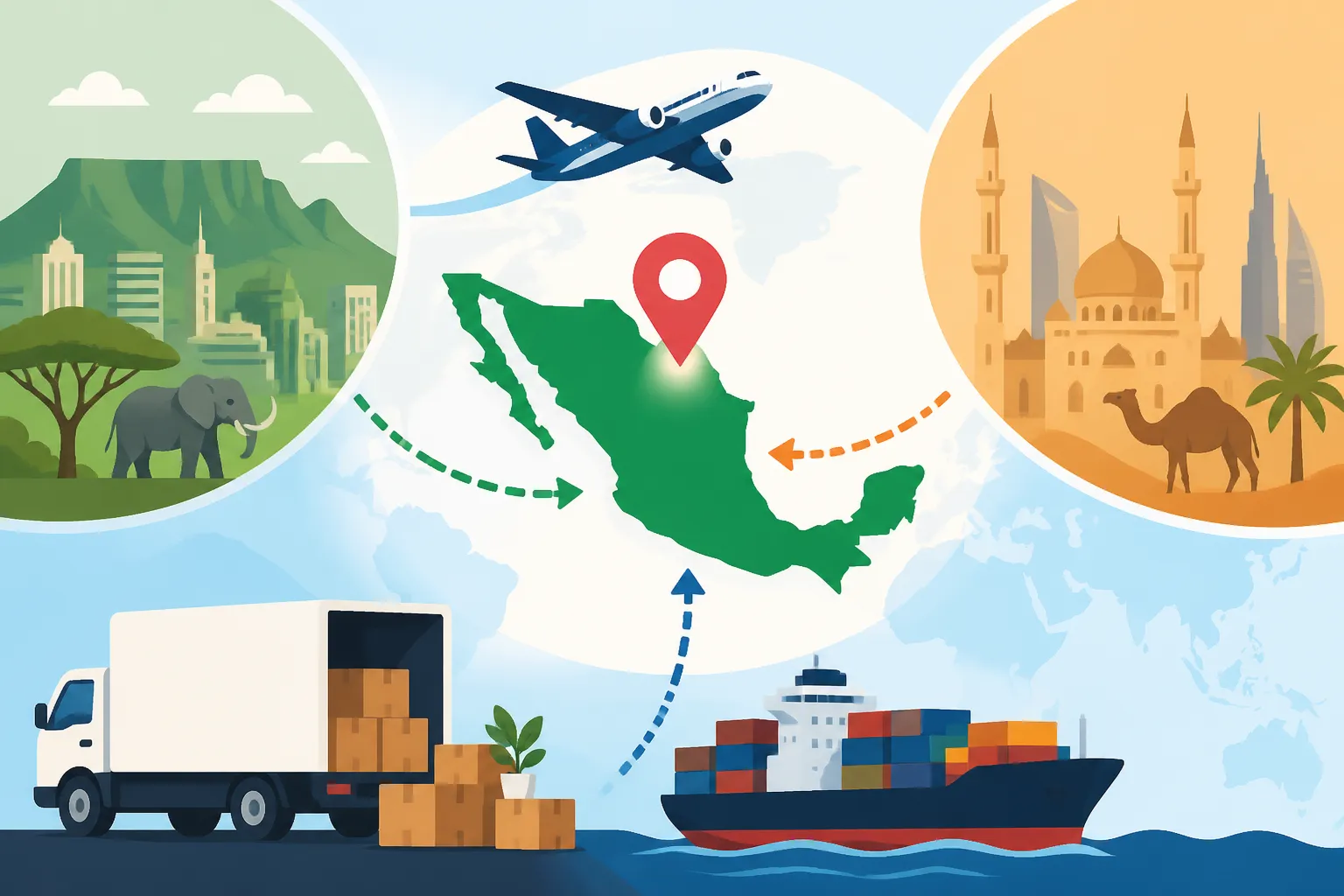
Moving to Mexico from a continent away, whether it's the bustling metropolises of the Middle East or the vibrant landscapes of South Africa, feels less like a relocation and more like an epic expedition. The sheer distance, the differing regulations, and the cultural leap can feel overwhelming before you even pack a single box. This guide is here to untangle that logistical nightmare, offering a realistic look at your route options and why partnering with a trusted international moving platform like Sirelo is your secret weapon for a smoother journey.
Disclosure: This post may contain affiliate links. We may earn a commission at no extra cost to you if you make a purchase through these links. Read full disclosure.
The Logistics Labyrinth: Why Moving Across Continents Is Different
Let's be honest, packing up your life and moving down the street is stressful enough. But when you're talking about putting an ocean (or two!) between your old life and your new one, the challenges multiply exponentially. This isn't just about finding a new apartment; it's about navigating a truly global process.
The Sheer Scale of Distance and Time
The first thing to grapple with is the colossal distance. Shipping your belongings from Johannesburg, Cape Town, Dubai, or Riyadh to a city like Mexico City or Guadalajara isn't a quick hop. We're talking about weeks, if not months, of transit time, primarily via ocean freight. This means you need to be strategic about what you bring, what you sell, and what you might buy when you arrive. You'll likely live out of suitcases for a while, even if you send your things by the quickest route. The reality check here is that you'll need patience in spades. Understanding the lead times for packing, loading, shipping, customs clearance, and final delivery is crucial for planning your move effectively.
Bureaucracy Beyond Borders: Customs and Import Duties
Every country has its own set of rules for what you can and cannot bring across its borders, and Mexico is no exception. What might be perfectly legal to own in South Africa or the UAE could be restricted or even prohibited here. Beyond that, the paperwork involved in importing household goods can be daunting. You're not just dealing with Mexican customs; you might also have export regulations from your home country. This is where many expats get tripped up, facing unexpected delays or exorbitant fees. A common frustration is the lack of clear, consistent information, which can lead to a lot of back-and-forth and last-minute scrambling. This complex administrative dance is precisely why getting professional assistance through a platform like Sirelo, which connects you with experienced movers, can save you immense headaches and potential costs.
Finding Reliable Movers for Such a Journey
This isn't a job for just any local moving company. You need specialists with experience in international relocations, particularly those familiar with the specific shipping lanes and customs procedures between your home region and Mexico. Imagine entrusting your entire household to a company that's never dealt with a menaje de casa (household goods declaration) or the specific port requirements in Veracruz. The horror stories are plentiful: damaged goods, items stuck in customs, unexpected surcharges. That's why due diligence is paramount. You need movers who can handle the entire journey, from packing your delicate items in your current home to unpacking them in your new Mexican abode. This is where resources like Sirelo become invaluable, allowing you to compare quotes and services from reputable international moving companies that understand the intricacies of these long-haul moves.
Route Options for Your Belongings: Sea vs. Air Cargo
When you're facing such a vast geographical distance, your primary options for moving your possessions boil down to two main categories: by sea or by air. Each has its own set of pros, cons, and budgetary implications.
Ocean Freight: The Cost-Effective, Patient Route
For most expats making a full relocation, shipping by sea is the most common and budget-friendly option for moving household goods. Your items will be loaded into large shipping containers, which then travel across the ocean.
- Full Container Load (FCL): If you have a large household or simply prefer to have your items securely in their own container, an FCL is your choice. You pay for the entire container, regardless of whether you fill it completely. This option often means faster transit times at sea, as your container isn't waiting for other people's goods. Your personal effects will get a dedicated container, minimizing handling.
- Less than Container Load (LCL): For smaller moves, an LCL is often more economical. Your items share container space with other people's shipments, meaning you only pay for the volume your goods occupy. The downside? LCL shipments can take longer due to consolidation, deconsolidation, and potential stops at multiple ports. This is a great option if you're not in a huge rush, perhaps if you plan to arrive in Mexico a month or two before your belongings.
Regardless of whether you choose FCL or LCL, the journey typically involves your goods being transported by truck to a port (like Durban or Jebel Ali), loaded onto a cargo ship, sailed across the Atlantic (and potentially through the Panama Canal if heading to Mexico's Pacific coast), arriving at a Mexican port such as Veracruz on the Gulf coast or Manzanillo on the Pacific. From there, they'll go through customs and then be trucked to your final destination. This entire process can take anywhere from 6 to 12 weeks, sometimes more, so planning ahead is absolutely critical. Comparing reputable ocean freight services is a key part of your planning, and Sirelo can help you secure competitive quotes from companies experienced in these long-distance moves.
Air Cargo: When Speed Is Non-Negotiable
If you absolutely need your belongings quickly, or if you're only bringing a few essential boxes, air cargo is the fastest option. However, it comes with a significantly higher price tag.
- Cost vs. Speed: Air freight costs are calculated by weight and volume, and they are exponentially higher than sea freight. Expect to pay several times more for air transport.
- What to Ship by Air: This route is best reserved for truly essential items you can't live without for several weeks: crucial work documents, specialized medical equipment, sentimental items that can't be replaced, or a small selection of clothing. It's definitely not the option for your entire furniture collection or extensive book library unless money is no object.
- Customs at Airports: Even with air cargo, your items will still go through Mexican customs, typically at major international airports like Mexico City International Airport (AICM) or Guadalajara International Airport (GDL). The clearance process can still take time, though usually faster than sea freight due to less volume.
While air freight offers speed, the cost often makes it impractical for a full household move. It's a niche solution for urgent needs, and a good international moving company can advise you on what items might be worth sending this way.
Hybrid Approaches and What to Prioritize
Many expats opt for a hybrid strategy:
- Air Freight Essentials, Sea Freight Bulk: You might fly with a few extra suitcases containing immediate necessities, ship a few critical boxes via air cargo (perhaps things you need for your first month), and send the rest of your life by sea. This balances speed for necessities with cost-effectiveness for the bulk.
- Prioritize Wisely: Before deciding, make a list of everything you own. Categorize items into "must-have immediately," "can wait a few weeks," and "can repurchase." This exercise will help you decide what goes where. Remember, the less you ship, the less it costs. Consider what's truly irreplaceable or expensive to replace in Mexico. For example, some electronics might be cheaper to buy new in Mexico than to ship.
When mapping out these options, a comprehensive moving platform like Sirelo helps you get detailed quotes for different scenarios, allowing you to compare and choose the most suitable and cost-effective method for your unique relocation.
Navigating Customs and Regulations in Mexico
The bureaucratic hoops you'll jump through in Mexico are often the most frustrating part of any international move, especially from distant shores. Getting this right is paramount to avoiding delays, fines, or even the confiscation of your belongings.
The Menaje de Casa: Your Key to Duty-Free Imports
This document, the Menaje de Casa (Household Goods Declaration), is absolutely crucial for any expat planning to import their used household goods into Mexico duty-free. Without it, you could face hefty taxes on everything you bring in. It essentially proves that the items you are importing are your personal property, not new goods for commercial sale.
- Where to Get It: You must apply for your menaje de casa at a Mexican consulate in your home country (South Africa or any country in the Middle East where Mexico has a consulate) before you move your household goods. You cannot get it once your goods have arrived in Mexico. This timing is critical.
- Requirements: You'll typically need your valid Mexican residency visa (Temporary or Permanent), a detailed inventory list of all items you plan to import (translated into Spanish, often by a certified translator), proof of residence in your home country for at least a year, and often a letter stating your intention to establish residency in Mexico. It's a meticulous process, requiring patience and attention to detail. Any discrepancy between your list and what arrives could cause issues.
- Validation: Once you have your menaje de casa from the consulate, it needs to be processed again by Mexican immigration (INM) once your goods arrive. This isn't a one-and-done piece of paper; it's part of a multi-stage process. Trustworthy international movers found through Sirelo will guide you through this, ensuring your documents are correctly prepared and submitted. Don't underestimate this step; it's the gatekeeper to a smooth customs experience. For more on the specifics, check out our guide on Customs Tips for New Residents: What You Can Bring When Moving to Mexico.
Prohibited and Restricted Items
Mexico has strict rules on what can and cannot enter the country. Ignorance is no excuse, and attempting to import prohibited items can lead to serious legal consequences or seizure.
- Firearms and Ammunition: Absolutely prohibited without highly specialized and difficult-to-obtain permits. Do not attempt to bring these into Mexico.
- Illicit Drugs: Mexico has very strict drug laws. Do not bring any illicit substances.
- Certain Agricultural Products: Seeds, plants, fresh fruits, vegetables, and certain meat products are often restricted to prevent the introduction of pests or diseases. If you must bring food items, ensure they are commercially packaged and sealed, and declare everything.
- Large Quantities of Alcohol or Tobacco: While small amounts for personal consumption are usually fine, large quantities can be subject to high import duties.
- Used Clothes/Shoes in Commercial Quantities: While your personal wardrobe is fine, large bales of used clothing or shoes could be considered commercial imports and subject to duties.
- Vehicles: Importing a vehicle has its own complex, separate regulations and is not covered by the menaje de casa. Research this extensively if you plan to bring a car.
Always declare everything honestly. When in doubt, leave it out, or consult with your chosen international mover. They are well-versed in these nuances.
The Role of a Customs Broker: An Indispensable Partner
For a move of this magnitude, especially from South Africa or the Middle East, a good customs broker isn't just helpful; they're practically mandatory. These professionals specialize in navigating the complex world of import and export regulations.
- Expert Knowledge: They understand the latest Mexican customs laws, tariffs, and required documentation. They can anticipate potential issues and prepare your paperwork correctly, minimizing delays.
- Liaison with Authorities: A customs broker acts as your representative with Mexican customs officials, speaking their language (both literally and figuratively) and streamlining the clearance process. This is particularly valuable if your Spanish isn't fluent.
- Problem Solvers: If any issues arise—a missing document, an item flagged for inspection—the customs broker is there to resolve it swiftly. Trying to handle these problems yourself from a distance, or even once you've arrived, can be incredibly stressful and time-consuming.
Many reputable international moving companies include customs brokerage services as part of their comprehensive package. When comparing services on a platform like Sirelo, inquire specifically about their customs clearance expertise and whether they provide a dedicated customs broker. This is a crucial component for ensuring your belongings make it into Mexico without a hitch. Dealing with Mexican bureaucracy can be challenging, but with the right help, you can streamline the process. You might find our article on Dealing with Bureaucracy in Mexico: Tips for Handling Paperwork and Appointments useful.
Choosing the Right International Mover
Selecting the right company for your move from South Africa or the Middle East to Mexico is perhaps the most critical decision you'll make in this entire process. This isn't just about finding someone to lift boxes; it's about entrusting your entire life's possessions to a partner who understands the intricacies of global logistics.
What to Look For in a Moving Company
When searching for an international mover, especially for a long-distance, cross-continental relocation, keep these key factors in mind:
- Experience with Mexico and Your Region: Look for companies that explicitly state experience with moves to and from Mexico, and ideally, your specific home country. They should be familiar with the shipping routes, the common customs challenges, and the network of local partners in Mexico.
- Door-to-Door Service: A true international mover should offer comprehensive door-to-door service. This means they handle everything from packing your items at your current home, arranging transport (sea or air), managing port logistics, customs clearance in Mexico, and final delivery to your new address. Avoid companies that only offer "port-to-port" unless you are comfortable handling all local logistics and customs yourself in both countries, which can be incredibly complex.
- Insurance Options: Accidents can happen, especially over vast distances. Ensure the company offers robust transit insurance that covers loss or damage. Understand the different types of coverage (e.g., total loss vs. all-risk) and what is included in your quote. Read the fine print!
- Professional Packing Services: International moves require specialized packing to protect items during long journeys and multiple handling points. Look for companies that use high-quality materials and trained packers.
- Clear Communication: Throughout this lengthy process, you'll want clear, consistent communication from your mover. Do they assign you a dedicated point of contact? Are they responsive to emails and calls? Language barriers can sometimes be an issue, so ensure there's a reliable channel for English communication.
- Accreditations and Affiliations: Check if the moving company is affiliated with international moving associations like FIDI (Fédération Internationale des Déménageurs Internationaux) or IAM (International Association of Movers). These affiliations often indicate adherence to quality standards and ethical practices.
- References and Reviews: Always ask for references from past clients who have made similar moves. Check online reviews, but take them with a grain of salt and look for patterns rather than isolated complaints.
Using a platform like Sirelo helps immensely in this regard. You can submit your moving details once and receive multiple quotes from pre-vetted international moving companies, making it easier to compare their services, experience, and pricing.
Getting Transparent Quotes: Avoiding Hidden Fees
One of the biggest pitfalls in international moving is hidden fees. A low initial quote can quickly balloon once surcharges, port fees, or unforeseen customs costs are added.
- All-Inclusive vs. Itemized: Request an all-inclusive, door-to-door quote. If that's not possible, ask for a highly itemized breakdown of every potential cost.
- What to Ask About:
- Port Fees and Terminal Handling Charges (THC): Often not included in basic quotes.
- Customs Duties and Taxes: While your menaje de casa should exempt you from most duties on used goods, there might be fees for new items or specific goods. Confirm this.
- Customs Broker Fees: Is the cost of the customs broker included?
- Drayage/Inland Transport: Costs for trucking from the port to your home in Mexico.
- Storage Fees: What happens if your goods arrive before you do, or if there's a customs delay? Ask about free storage periods and daily rates thereafter.
- Delivery Access: Will there be additional charges if your new home is difficult to access (e.g., narrow streets, high-rise apartment without a service elevator)?
- Unpacking and Debris Removal: Is this included?
Example Comparison Table for Moving Quotes:
| Feature | Mover A (Sirelo Partner) | Mover B (Independent) |
|---|---|---|
| Quote Type | Door-to-Door, Itemized | Port-to-Port |
| Base Price | $8,500 (LCL) | $6,000 (LCL) |
| Insurance | All-risk, 1.5% value | Basic, 0.5% value |
| Packing Service | Full packing included | Self-pack recommended |
| Customs Broker | Included | Separate fee ($500-1000 est.) |
| Port Fees | Included | Not included (est. $300-600) |
| Inland Delivery | Included (up to 50km) | Not included (est. $400-800) |
| Storage (Free) | 14 days | 5 days |
| Total Est. Cost | $8,627 | $7,200 – $8,400+ |
| Communication | Dedicated English agent | Email only, slow |
As you can see, Mover A, a reliable partner found through Sirelo, might seem more expensive initially, but their transparent, all-inclusive quote often means fewer nasty surprises down the line. Mover B's cheaper base price quickly adds up and still leaves you with more work and uncertainty. This is the kind of comparison that Sirelo facilitates, helping you find a truly comprehensive solution.
The Value of Peace of Mind
Ultimately, a move from South Africa or the Middle East to Mexico is a massive undertaking. The value of partnering with a mover who provides peace of mind cannot be overstated. A reliable company takes the logistical burden off your shoulders, allowing you to focus on other aspects of your relocation, like finding a place to live, getting your Mexico Temporary Resident Visa: Comprehensive Guide for Expats (2026 Update) sorted, or even just adjusting to the idea of a new life in Mexico.
Choosing an international mover isn't just about cost; it's about reliability, expertise, and support. Sirelo's network of vetted movers understands these challenges and is equipped to handle the complexities of such a long-distance relocation. By using a platform designed to simplify this search, you're investing in a smoother, less stressful transition to your exciting new life in Mexico. Don't forget that understanding the Cost of Living in Mexico: 2026 Comprehensive Guide is also crucial for your financial planning.
Disclaimer
Please note that immigration laws, customs regulations, and associated fees in Mexico are subject to change without prior notice. The information provided in this article is intended for general guidance only and does not constitute legal or professional advice. Always consult with a qualified immigration lawyer, customs broker, or the Mexican consulate in your current country of residence for the most current and accurate information pertaining to your specific situation.