Paying Predial and HOA Fees on a Mexican Property From Abroad
Your predial bill arrives while you are in Calgary or Chicago. The municipal portal rejects your foreign card. Your condo administrator wants a SPEI transfer with a reference number your home bank does not understand. Meanwhile, the January early-payment discount is slipping away. This guide shows you how to pay property tax and HOA fees from abroad without overpaying or missing deadlines.
Disclosure: This post may contain affiliate links. We may earn a commission at no extra cost to you if you make a purchase through these links. Read full disclosure.
Why Paying Mexican Property Bills From Overseas Feels So Hard
I have owned a small condo in Mexico for years while spending long stretches outside the country. The first time I tried to pay my predial from abroad, I spent an entire evening clicking through a municipal website that kept timing out. When it finally loaded the payment screen, it declined both of my cards. I ended up messaging a neighbor and paying him back later, which felt awkward and unsustainable.
If that sounds familiar, you are not disorganized. The system was built for people who live locally, bank locally, and can walk into a tesorería with cash.
What Predial Actually Is and Who Collects It
Predial is the annual property tax charged by the municipality where your property sits, not by the federal government. That one detail explains most of the chaos. Mexico has thousands of municipalities, and each runs its own portal, payment calendar, discount program and accepted payment methods. Paying predial in Mérida feels nothing like paying in Puerto Vallarta or Benito Juárez in Cancún.
Your bill is tied to an identifier usually called the clave catastral or cuenta predial. Some municipalities print it on the previous year’s receipt. Others only show it on your escritura or on documents from your notario. Without it, you cannot generate a payment, so finding it is step zero for anyone paying from abroad.
Many municipalities reward early payment. The discount typically runs in January and sometimes into February or March, with the deepest reduction for paying the whole year upfront. Seniors, retirees and people with disabilities can sometimes get extra reductions, but these programs often require an in-person visit with Mexican identification. For the full rules, see Property Taxes in Mexico: What Expats Need to Know About Predial.
How HOA Fees and Cuotas Work in Mexican Condos
If your property is in a condominium or a gated community, you also owe monthly maintenance fees, usually called cuotas de mantenimiento. They go to the building’s administración. That might be a professional management company, or it might be one hardworking resident with a spreadsheet and a WhatsApp group.
Cuotas are almost always collected by bank transfer to the administración’s Mexican account. They identify you by unit number, typed into the transfer’s concept or reference field. If that reference is missing or wrong, your payment can sit unmatched for weeks. Then you get a polite but firm message saying you are behind. Late cuotas can bring recargos, restricted amenity access, and real tension at the next asamblea. To budget for these costs, see HOA and Maintenance Fees: Budgeting for Gated Communities and Condos.
The Three Pain Points That Trip Up Absentee Owners
After talking with dozens of absentee owners, I keep hearing the same three frustrations:
- Card rejection. Many municipal portals and some bank gateways decline cards issued outside Mexico, or demand a Mexican-registered phone number for verification codes.
- Reference fields. Mexican transfers rely on a CLABE plus a payment reference or concept. Many home-country banks have no clean way to send a domestic peso payment with that reference attached.
- Hidden currency costs. When your bank converts dollars, Canadian dollars, pounds or euros into pesos, the exchange rate it uses can sit noticeably below the real market rate. The difference rarely appears as a “fee” on your statement.
The third one quietly costs the most. Suppose the real rate is 17 pesos per dollar and your bank gives you 16.5. On a $1,000 payment, you receive 16,500 pesos instead of 17,000. That 500-peso gap is about $29 lost on a single transfer. Repeat it every month for cuotas plus once a year for predial, and it adds up to real money for a cost you never chose.
Why Wise Is the Practical Answer for Peso Payments From Abroad
I resisted switching for a long time because my home bank felt “safe.” What changed my mind was comparing the peso amount that actually landed in my administrator’s account. Since moving my Mexican property payments to Wise, the process has gone from a stressful monthly chore to something I finish in a few minutes from my phone.
How a Wise Transfer to a Mexican CLABE Works
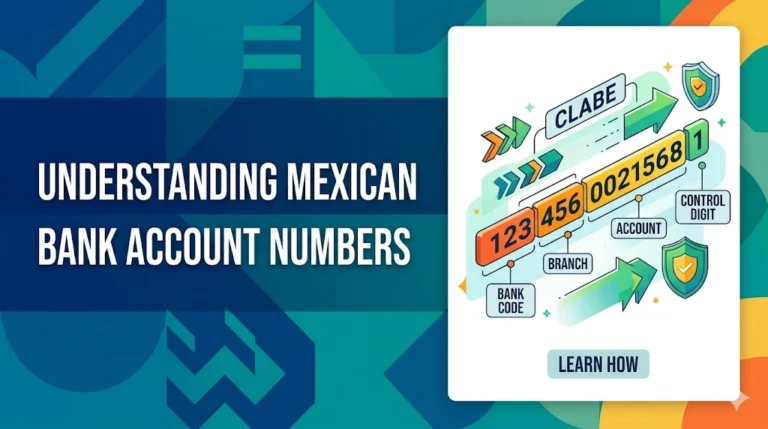
Wise lets you send money in pesos to a Mexican bank account identified by its 18-digit CLABE, the standard interbank account number used across Mexico. You fund the transfer from your home account or from a balance you hold in the Wise app. Wise converts the money and delivers pesos into the recipient’s Mexican account through the local transfer network.
From the recipient’s side, the money arrives like a domestic peso payment. That matters to a condo administrator, because they see pesos land in their account rather than a foreign wire. If you are new to the account number system, see What Is a CLABE and How Do You Use It? before your first payment.
The conversion uses the mid-market exchange rate, the rate you see on financial news sites. The fee is shown separately before you confirm. You see exactly how many pesos will arrive and what the service costs, with no markup buried in the rate. Fees vary by currency, amount and funding method, so check Wise’s own pricing page for current figures.
Where Wise Beats a Traditional Bank Wire
A traditional international wire usually involves several layers of cost: an outgoing fee from your bank, possible intermediary bank deductions, a receiving charge on the Mexican side, and an exchange-rate markup on top. For a large one-off transfer, some owners tolerate this. For recurring cuotas, it makes little sense.
I go through the line-by-line comparison in Wise vs Your US Bank’s Wire to Mexico: True Cost on 1,000 and 10,000 Dollars. The short version: transparency is the biggest advantage. When you see the pesos that will arrive before you hit send, you can pay an exact cuota amount instead of guessing and then sending a top-up when you come up short.
Holding a Peso Balance for Predictable Bills
One feature I lean on is holding a balance in Mexican pesos inside my Wise account. When the exchange rate looks reasonable, I convert a chunk of money into pesos and leave it there. Then I pay cuotas and predial from that balance as they come due, without worrying about where the rate is that particular week.
This is especially useful because predial is a lump sum due early in the year, often while you are dealing with holiday spending at home. Building a peso cushion over the autumn takes the January pressure off. For more on timing conversions, see Peso Volatility and Your Budget: Timing Conversions Without Guessing.
Step-by-Step: Paying Predial From Abroad
Every municipality is different, but the overall process is similar enough that you can follow one routine. Here is the sequence I use each year.
Step 1: Find Your Cuenta Predial and Municipal Portal
- Locate last year’s predial receipt, your escritura, or the closing documents your notario gave you. Look for the clave catastral or cuenta predial.
- Search for your municipality’s tesorería or finanzas website. Be careful with lookalike sites. Use the address linked from the official municipal government page.
- Find the predial consultation tool and enter your account number to see the current amount owed, any arrears, and whether an early-payment discount applies.
- Write down the exact amount and the deadline for the discount window.
If you bought through a fideicomiso, remember that the bank acting as trustee does not usually pay predial for you. The obligation sits with you as beneficiary. If the account still shows the previous owner’s name, contact the municipality or your notario before paying so the payment is credited correctly. For background, see Funding a Fideicomiso: How the Money Actually Moves at Closing.
Step 2: Generate a Payment Reference
Most modern municipal portals let you generate a formato de pago or línea de captura. This document contains a unique reference and lists the payment methods the municipality accepts. Common options include:
- Online card payment through the portal’s gateway
- SPEI bank transfer to a municipal account using the reference
- Payment at partner banks or convenience stores
- In-person payment at a tesorería window
Check the expiry date on the reference. Many expire at the end of the month or when the discount window closes. If you miss it, you will need to generate a new one, and the amount may change.
Step 3: Choose the Payment Route That Works From Abroad
This is where living outside Mexico gets complicated. Here are the realistic routes, in the order I recommend.
- SPEI with the reference. If the formato lists a CLABE and reference for interbank transfer, send pesos with Wise to that CLABE. Paste the reference exactly into the reference or concept field. This is the cleanest route and leaves a clear paper trail.
- Card on the portal. If the portal only accepts cards, try your card. Some gateways accept foreign-issued Visa or Mastercard debit cards and some do not. If the gateway offers to charge you in your home currency, decline and pay in pesos. For why, see Dynamic Currency Conversion at Mexican ATMs: The ‘Charge in Dollars’ Trap.
- Trusted local payer. If neither works, send pesos to a trusted property manager, administrator or friend with a Mexican account. They pay at a bank or OXXO on your behalf, using the formato you email them. Some formatos can be paid in cash at convenience stores. See Paying Bills at OXXO: A Handy Option for Expats in Mexico.
- In person on your next visit. As a last resort, pay at the tesorería when you are next in town. Only do this if the timing still fits the discount window and no penalties will build up.
Step 4: Get and Store Your Receipt
Do not consider predial paid until you have the official receipt, called a recibo oficial or comprobante de pago. It is usually downloadable from the portal a few days after payment is credited. Save it as a PDF, store it in cloud storage, and keep the Wise transfer confirmation alongside it.
These receipts matter more than they seem. When you eventually sell, the notario will ask for proof that predial is current, often as a certificate of no debt. Missing years mean delays at the closing table. In some places they also mean surcharges and fines that have been compounding quietly. For the domestic version of this process, see How to Pay Predial (Property Tax) in Mexico.
Step-by-Step: Paying HOA Cuotas Without Drama
Predial is a once-a-year headache. Cuotas are a monthly test of consistency. The goal is to make them so routine you barely think about them.
Setting Up Your Administración as a Recipient
- Ask your administrator for their bank details in writing: account holder name, bank, and 18-digit CLABE. Get these from an official channel, such as an email from the management company or a document shared at the assembly. Never trust a message from an unknown number.
- Confirm exactly what reference format they want, such as your tower and unit number, or a resident code they assign.
- Add the administración as a saved recipient in your Wise account, entering the CLABE carefully and checking that the account holder name matches.
- Send a first payment and ask the administrator to confirm they have matched it to your unit.
That last confirmation step saves enormous grief. Once one payment has been matched correctly, you know the recipient details and the reference format both work.
Scheduling Recurring Payments
Because cuotas are usually the same amount each month, set up a repeating payment or a calendar reminder a few days before the due date. Check the Wise app for its current scheduling options. Even if you prefer to send each payment by hand, a reminder plus a saved recipient turns the job into a two-minute task.
Some buildings offer a discount for paying several months or a full year upfront. If yours does, a single larger transfer from your peso balance can save money and reduce the risk of missed months while you travel. For more on how administrations handle payments and arrears, see How to Pay Maintenance Fees (Cuotas) in a Mexican Condo.
Watch Out for Changing Bank Details
Here is a scenario I have seen more than once. An owner receives a WhatsApp message saying “the administración has changed banks, please send this month’s cuota to this new CLABE.” It looks legitimate. It uses the building’s name and even references a recent assembly. The money goes to a fraudster.
Treat any change in payment details as suspicious until you have verified it through a second channel. Call the administrator, check the minutes of the assembly, or ask another owner. Mexican interbank transfers are fast and very hard to reverse. Building in that verification habit is the cheapest insurance you will ever buy.
Comparing Your Options for Paying From Abroad
There is no single perfect method for every bill in every municipality. This table shows how the main routes compare for predial and cuotas.
| Payment route | Exchange rate visibility | Works with CLABE and reference | Speed of arrival | Main risk |
|---|---|---|---|---|
| Wise transfer in pesos | Mid-market rate with fee shown upfront | Yes, reference can be added | Often fast, varies by funding method | Typing the CLABE or reference incorrectly |
| Home bank international wire | Rate markup often not shown clearly | Reference handling inconsistent | Can take several business days | Intermediary deductions shortening the peso amount |
| Foreign card on municipal portal | Depends on card issuer; currency conversion offers may add cost | Not applicable, paid directly | Instant if accepted | Card declined or verification code sent to a Mexican number |
| Trusted local payer | Depends on how you reimburse them | Yes, they pay with the formato | Depends on their availability | Relying on one person and informal records |
| Mexican bank account | No conversion if already funded in pesos | Yes, native support | Fast | Account upkeep, local requirements and the need to fund it |
When a Mexican Bank Account Still Makes Sense
If you spend several months a year in Mexico, have residency, and pay many local bills, a Mexican bank account can be very convenient. Some municipal portals and utilities work more smoothly with local cards. Even then, you still need to move money into that account from abroad. Many owners fund their Mexican account with a Wise transfer rather than a bank wire. For more, see SPEI and CLABE: How Bank Transfers Work in Mexico.
Keeping Records Your Notario and Accountant Will Accept
Whatever route you choose, keep a simple folder for each property with:
- Annual predial receipts and the formatos you paid against
- Monthly or annual cuota confirmations from the administración
- Transfer confirmations showing date, amount in pesos, and recipient
- Any correspondence about arrears, discounts, or changes in bank details
If you rent the property out, these records also help with your tax filings in Mexico and back home. You may need formal invoices from the administración or management company. See Facturas and Electronic Invoicing (CFDI) in Mexico. Snowbirds juggling accounts in two countries will also find practical routines in Snowbird Money Setup: Running US and Mexican Finances Six Months Apart.
Building a System You Can Run From Anywhere
The owners I know who never stress about these bills have built a simple system:
- They hold a peso balance large enough to cover a few months of cuotas plus the upcoming predial.
- They use saved, verified recipients for their administración.
- They set reminders for the predial discount window every December.
- They keep a trusted local contact as backup for municipalities that refuse foreign payments.
None of this requires living in Mexico full time. It just requires choosing tools that speak the local payment language. For me, the turning point was routing everything through Wise. I can see the real exchange rate, send pesos to a CLABE with the right reference, and keep a clean record of every payment. If you are tired of declined cards and mystery exchange losses, open a Wise account, add your administración as a recipient, and run one small test cuota this month. For broader advice on absentee ownership, from maintenance to emergency repairs, see Managing a Home in Mexico From Abroad.
Disclaimer
This article is for general informational purposes only and does not constitute professional advice. Laws, prices and regulations vary by location and change over time. Consult a qualified professional for guidance on your specific situation.