Moving to Mexico from France and Italy: Mediterranean Departure Ports
The idea of picking up your entire life from a charming European city in France or Italy and transplanting it to the vibrant, sun-drenched landscapes of Mexico can be thrilling, yet equally terrifying. The sheer scale of such an international move, particularly when it comes to shipping your cherished belongings across oceans from a Mediterranean departure port, often feels like a puzzle with missing pieces. This guide aims to demystify the complex logistics, helping you understand the process of moving your household goods and offering invaluable advice on securing reliable, efficient, and cost-effective services.
Disclosure: This post may contain affiliate links. We may earn a commission at no extra cost to you if you make a purchase through these links. Read full disclosure.
Navigating the Initial Hurdles: European Departures to Mexican Shores
Moving from one continent to another is never just about packing boxes; it's a monumental life change that begins long before your first item is loaded onto a ship. For those leaving the romance of France or the historical depth of Italy, the journey to Mexico presents unique challenges and exciting opportunities.
Understanding the Logistics from France and Italy
When you first start thinking about moving to Mexico from France or Italy, the distance alone can be overwhelming. You're not just crossing a border; you're traversing thousands of miles, multiple time zones, and diving headfirst into a vastly different culture. This isn't a quick hop across the channel; it requires meticulous planning, an understanding of international shipping regulations, and a healthy dose of patience.
The initial shock can be real. You might be dreaming of your new life in Mexico, imagining the tacos al pastor and lively fiestas, but the administrative reality of disentangling yourself from one country and re-establishing in another can be a steep learning curve. From canceling utility contracts in Nice or Florence to understanding Mexican customs duties, every step requires attention. This is where having a clear logistical plan, far beyond just booking a flight, becomes critical. You'll need to research visa requirements, assess your financial solvency, and understand the best way to get your personal effects from, say, Marseille or Genoa, all the way to a new home in Guadalajara or Mérida. This isn't something you can just wing.
Key Considerations for International Household Goods Shipping
Once you've wrapped your head around the bigger picture of your move, the nitty-gritty of shipping your household goods comes into focus. This isn't like moving down the street; every item needs to be accounted for and prepared for a long journey. The first step is to accurately assess the volume and weight of your belongings. Are you bringing an entire household of furniture, or just a few cherished boxes? This will largely determine your shipping method and cost.
For larger moves, often referred to as Full Container Load (FCL), you'll have an entire shipping container (typically 20-foot or 40-foot) dedicated to your belongings. This offers more security and usually faster transit times, as your container isn't waiting for other shipments to fill it. However, it's a more expensive option. If you're only sending a few rooms' worth of items, or even just some boxes, Less than Container Load (LCL) is usually more economical. With LCL, your goods are consolidated with other people's shipments in a shared container, meaning you only pay for the space your items occupy. The downside is that transit times can be longer due to the additional logistics of consolidation and deconsolidation at each end.
Beyond volume, proper packing is paramount for international transit. Tropical climates in Mexico, ocean humidity, and rough handling during loading and unloading mean your items need to be robustly packed. Professional moving companies specialize in export-grade packing, using specialized materials and techniques to protect your valuables. Skimping on this can lead to heartache down the line, so it's often worth investing in professional packing services. Imagine your antique Italian ceramic vase arriving in pieces – not a pretty thought!
Mediterranean Ports: Your Gateway to Mexico
When you're packing up your life in Europe, particularly from countries bordering the Mediterranean like France and Italy, your choice of departure port is a critical piece of the puzzle. This decision can impact everything from shipping costs and transit times to the overall ease of your move.
Major Departure Ports and Their Impact on Your Move
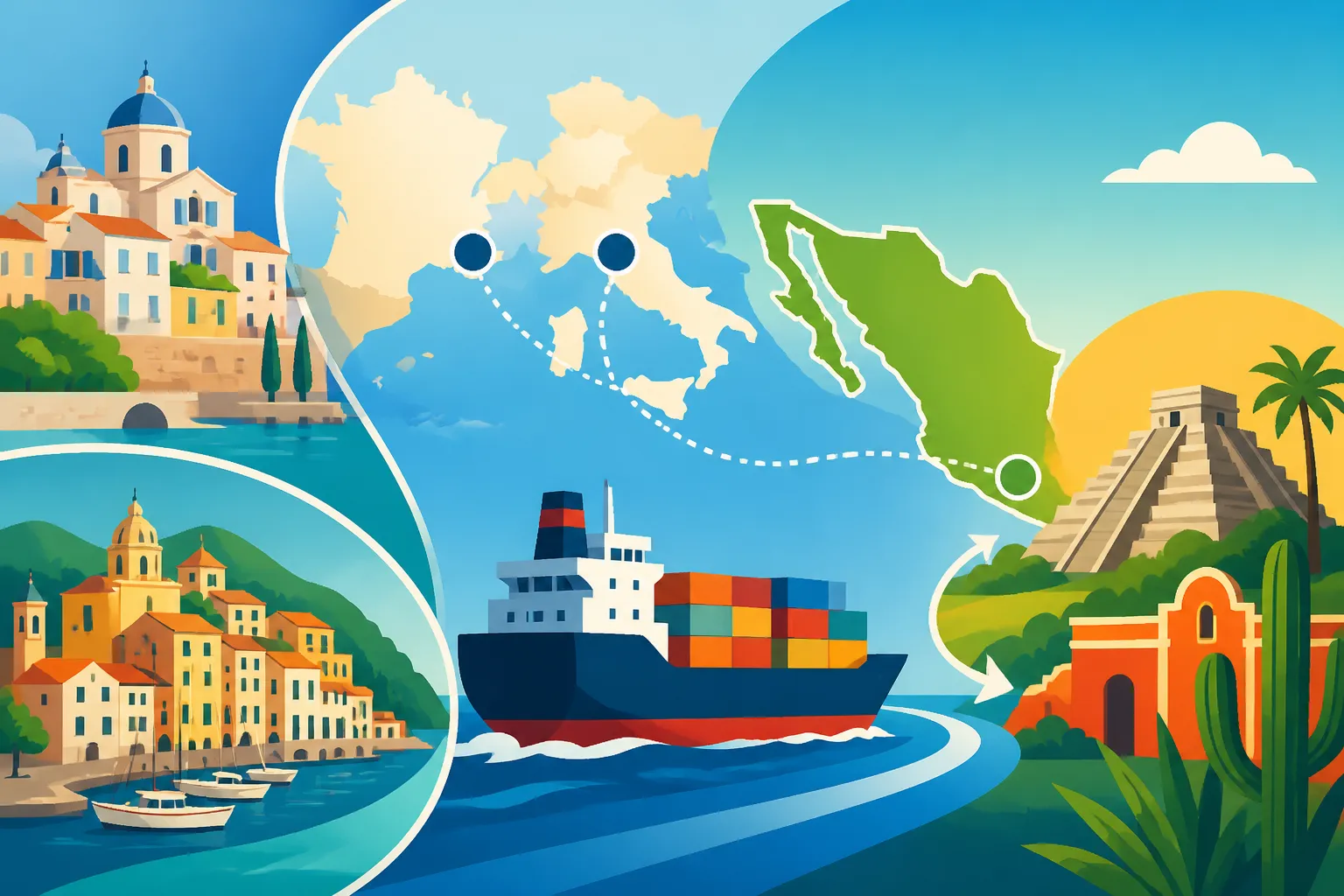
From France, while Le Havre on the Atlantic coast is a major international shipping hub, for those closer to the south, Marseille is the primary Mediterranean departure port. Marseille offers direct routes to major Mexican ports like Veracruz and Manzanillo, making it a convenient option for many French expats. In Italy, you have several excellent choices. Genoa is Italy's busiest port and a significant gateway for international cargo. Other key Mediterranean ports include Naples, a bustling port in the south, and Livorno in Tuscany, which is well-connected to central Italy.
Choosing the right port isn't just about proximity to your current home. It also depends on the shipping lines that operate from there, their frequency of sailings, and their connections to Mexican ports. A port with more frequent sailings, even if slightly further away, might mean a shorter wait time for your container to depart. Each port has its own logistical ecosystem, including various freight forwarders and customs agents, which can influence the efficiency of your shipment. For example, if you're residing in Milan, Genoa might be a more straightforward and cost-effective option than transporting your goods all the way to a northern European port.
Understanding Shipping Costs and Timelines
The cost of shipping your belongings from Europe to Mexico is a major concern for any expat. Several factors coalesce to determine the final price tag. Naturally, the volume and weight of your shipment are primary drivers; more stuff means more cost. The specific destination port in Mexico also matters. Veracruz, on the Gulf Coast, and Manzanillo, on the Pacific Coast, are Mexico's two largest and busiest ports for international cargo. Shipping to one might be cheaper or faster depending on the specific route and shipping line. The level of service you choose—door-to-port, port-to-door, or full door-to-door service which includes unpacking—will also affect the price.
Typical transit times from Mediterranean ports to Mexico can range from 4 to 8 weeks for ocean freight. This timeframe doesn't include the time needed for customs clearance on both ends, which can add another week or two. For instance, a container leaving Genoa might spend 5-6 weeks at sea before arriving at Veracruz, then another 1-2 weeks for customs processing and final delivery to your Mexican home. It's crucial to get realistic estimates from your moving company. Remember, these are just averages, and unforeseen delays can always happen, from port congestion to adverse weather conditions.
Be wary of hidden costs. Beyond the quoted shipping fee, you might encounter port handling charges, terminal fees, customs inspection fees, and even storage fees if your goods aren't cleared quickly. A reputable moving company will provide a detailed breakdown of all potential charges, but it’s still wise to budget an additional 10-15% for unexpected expenses. Understanding these potential pitfalls upfront helps you avoid financial surprises when your belongings finally reach Mexican soil.
Here's a simplified look at potential shipping scenarios:
| Factor | LCL (Less than Container Load) | FCL (Full Container Load) |
|---|---|---|
| Volume Suitability | Small to medium shipments (boxes, a few furniture pieces) | Large shipments (entire households) |
| Cost Efficiency | More economical for smaller volumes, pay only for space used | More expensive overall, but cost-effective per cubic meter for large volumes |
| Transit Time | Longer (consolidation/deconsolidation adds time), 6-10 weeks typically | Shorter (direct route), 4-8 weeks typically |
| Security | Goods mixed with others, though professionally packed | Dedicated container, generally higher security |
| Flexibility | Less flexible on departure dates, dependent on container filling | More control over departure dates |
| Ideal For | Expats sending essentials or partial households from Marseille, Naples | Families or those sending an entire home from Genoa, Livorno |
Streamlining Your Move with Expert Assistance and Platforms
Moving internationally, especially from a European country to Mexico, is a beast of a task. Trying to tackle it all on your own, particularly the shipping and customs aspects, is almost always a recipe for disaster. This is where professional help becomes not just an option, but a necessity.
The Indispensable Role of International Moving Companies
Let's be real: coordinating a cross-continental move by yourself from France or Italy to Mexico is a logistical nightmare. You're dealing with different legal systems, language barriers, complex customs regulations, and the sheer physical effort of packing, loading, and transporting goods over thousands of miles. Trying to navigate this solo often leads to costly mistakes, significant delays, and immense stress.
International moving companies offer a suite of services designed to handle every single detail for you. This includes professional packing using materials that can withstand ocean transit and varying climates, efficient loading and unloading, securing reliable ocean freight, and perhaps most crucially, navigating the labyrinthine customs procedures in both your departure country and Mexico. They can even arrange for temporary storage if your new home isn't ready. For instance, ensuring your fragile items are properly crated and that all necessary documentation for Mexico's Menaje de Casa (household goods import permit) is in order are tasks best left to professionals. Without them, you risk significant headaches, fines, or even having your cherished possessions stuck in a warehouse indefinitely.
Choosing the right company is paramount. You want a mover with extensive experience in international relocations, particularly to Mexico, and one that can handle departures from major Mediterranean ports like Genoa or Marseille. Look for companies with strong reviews, clear communication, and transparent pricing. Don't hesitate to ask for references or to inquire about their process for handling customs clearance in Mexico, which can be notoriously complex.
Harnessing Platforms Like Sirelo for Quotes and Services
This is where a powerful platform like Sirelo truly shines and becomes an invaluable asset for your move. Instead of spending countless hours researching individual moving companies, filling out repetitive forms, and sifting through dozens of websites, Sirelo simplifies the entire process. It acts as a bridge, connecting you directly with multiple vetted, reliable international moving companies that specialize in routes from France and Italy to Mexico.
Here’s how it works: You provide Sirelo with the details of your move – where you're moving from (say, Paris or Rome), your destination in Mexico (perhaps Cancún or Mexico City), the estimated volume of your goods, and your desired moving date. Sirelo then takes this information and, like a master matchmaker, finds reputable moving partners in its network who are best equipped to handle your specific needs. They will then reach out to you with personalized quotes. This not only saves you an enormous amount of time and effort but also provides you with a fantastic opportunity to compare offers side-by-side, ensuring you get the best value for your money.
By using Sirelo, you're not just getting quotes; you're gaining access to a curated list of professionals. This reduces the risk of choosing an unreliable mover and gives you peace of mind that your belongings are in good hands. Imagine the relief of seeing multiple, transparent quotes from trusted movers, allowing you to choose with confidence. Make your move smarter, not harder, by starting your search with Sirelo today. It's truly a game-changer for international relocations.
Essential Customs and Documentation for Mexico
Regardless of whether your goods sail from France or Italy, the Mexican customs process is a hurdle every expat must clear. The most critical document you'll need for importing your household goods duty-free is the Menaje de Casa. This literally translates to "house items" and allows you to bring your personal belongings into Mexico without paying import taxes, provided you are a temporary or permanent resident. To obtain this, you'll need to apply at a Mexican consulate in your home country (France or Italy) before your goods are shipped. This typically requires your valid Mexico Temporary Resident Visa: Comprehensive Guide for Expats (2026 Update) or permanent residency card, a detailed inventory of your household goods, proof of your former residence, and proof of your new address in Mexico.
Beyond the Menaje de Casa, you'll need your passport, your residency card, and a precise, itemized packing list translated into Spanish. Every box should be clearly labeled and correspond to your inventory. Mexican customs officials are thorough, and any discrepancies can lead to delays, additional fees, or even the confiscation of items. It’s imperative that your inventory is accurate and that prohibited items (like firearms, certain agricultural products, or excessive quantities of alcohol/tobacco) are not included. The reality of Mexican customs is that patience and meticulous preparation are your best friends. Even with all your ducks in a row, be prepared for potential inspections and a process that can feel slow at times. Having a professional moving company, especially one that has experience with Sirelo’s network, can significantly ease this burden, as they often have dedicated customs brokers on staff who speak the language and understand the local regulations.
Preparing for Life After the Boxes Arrive in Mexico
The journey from the Mediterranean to Mexico might be long, but the moment your household goods arrive is just the beginning of your new life. What happens next is about settling in and making Mexico home.
Receiving Your Shipment and Settling In
Once your container arrives at a Mexican port, such as Veracruz or Manzanillo, your chosen moving company will handle the customs clearance process, provided all your documentation, especially your Menaje de Casa, is in order. After clearance, your goods will be transferred from the port to your new residence. If you opted for a door-to-door service, the movers will deliver the items directly to your home, unload them, and often even assist with unpacking and basic furniture assembly. This is where the value of a comprehensive service truly pays off – you won't be struggling to move heavy boxes into your new place in the Mexican heat.
Upon receiving your shipment, it's crucial to inspect everything carefully before signing off. Check for any damage that may have occurred during transit and note it on the delivery receipt. While rare with reputable movers, accidents can happen, and having a record is essential for any potential insurance claims. Once your belongings are inside, the real work of making your new place feel like home begins. Prioritize unpacking essentials like bedding, kitchen items, and toiletries. Don’t rush the process; settling into a new home takes time, and embracing the slower pace of life in Mexico can start right here.
Beyond the Move: Integrating into Your New Mexican Life
With your household goods unpacked, you can finally shift your focus from logistics to integration. One of the first practical steps is getting your new home connected. Learning How to Set Up Electricity (CFE) in a Mexican Home, water, and gas services is essential. You'll also want to get connected online and on the go, so understanding Getting a SIM Card in Mexico (Telcel, AT&T, Movistar) will be high on your list. These might seem like small details, but they are crucial for comfortable living.
Beyond the practicalities, integrating into the local culture is key to a fulfilling expat experience. Seek out expat communities – often found through Facebook groups or local meetups – which can provide invaluable local advice and friendships. Learning Spanish, even basic phrases, will dramatically enhance your daily life and interactions. Mexican culture is rich and welcoming, but it has its nuances. Patience, an open mind, and a willingness to learn are your greatest assets. From understanding how to Renting a Home in Mexico: Complete Expat Guide to Leases, Deposits, and More to navigating Dealing with Bureaucracy in Mexico: Tips for Handling Paperwork and Appointments, every step you take builds your confidence and connection to your new home. Mexico offers an incredible life for those willing to embrace its rhythm, and with your belongings safely installed, you're ready to truly begin your adventure.
Disclaimer
Please note that while this guide offers comprehensive advice based on general expat experiences and current information, immigration laws, customs regulations, and service offerings in Mexico are subject to change. It is always recommended to consult official government sources, legal professionals, and your chosen moving company (like those found through Sirelo) for the most accurate and up-to-date information pertaining to your specific situation.