Identification in Mexico: What Can Expats Use for ID?
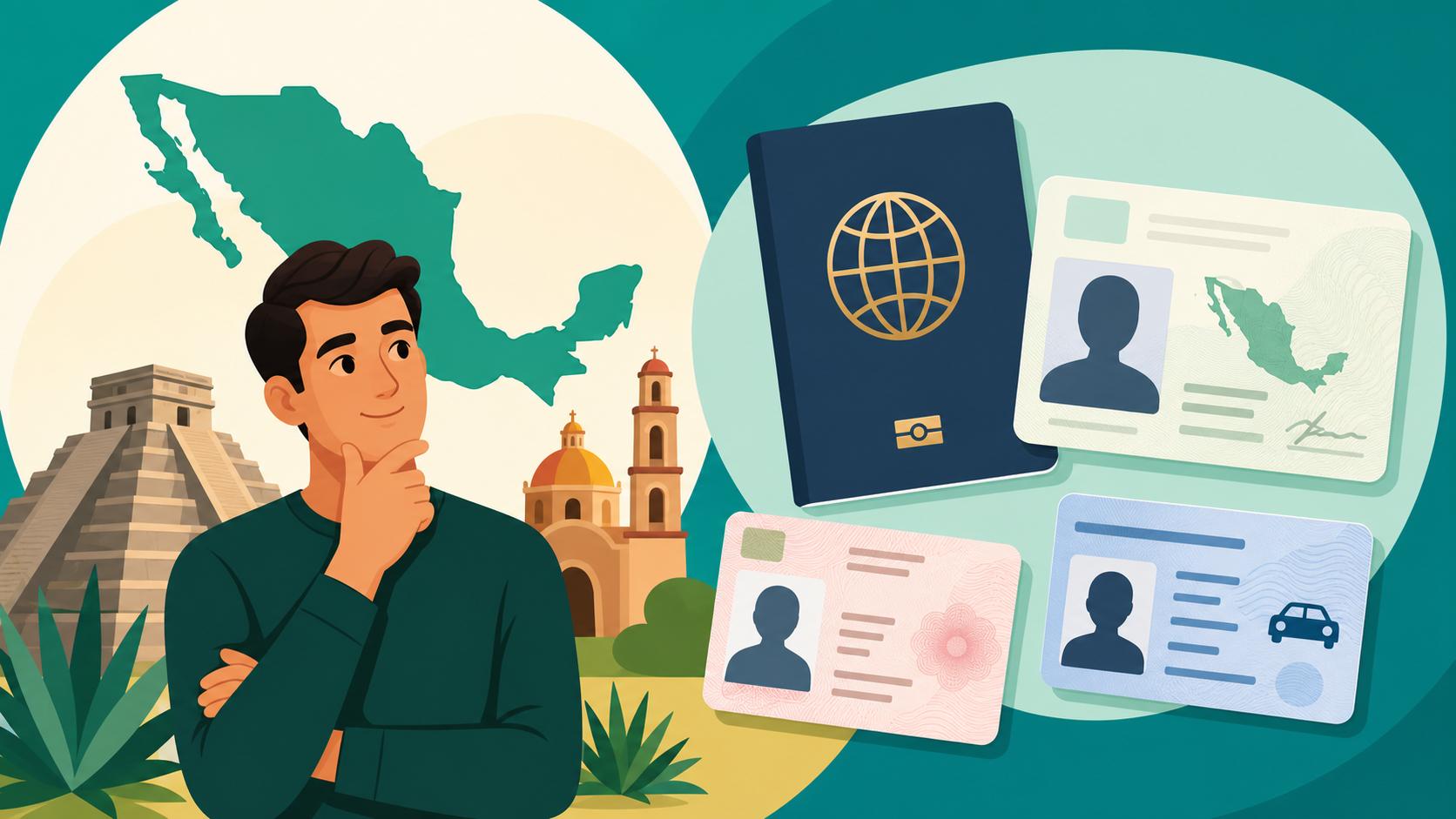
Few things trigger that cold, prickly sweat quite like reaching into your bag at a Mexican immigration checkpoint or a bank and realizing your passport isn't there. I’ve personally lived through the heart-stopping panic of misplacing my primary ID while navigating the streets of Guadalajara, and it’s a situation I wouldn’t wish on anyone. This guide solves the "identification dilemma" by detailing exactly which documents you can use for daily life in Mexico, what is legally required, and how to keep your original papers safe.
Disclosure: This post may contain affiliate links. We may earn a commission at no extra cost to you if you make a purchase through these links. Read full disclosure.
The Passport Problem: To Carry or Not to Carry
One of the first questions every expat asks is whether they need to carry their original passport at all times. Legally, the Mexican Migration Law (Ley de Migración) states that foreigners must be able to prove their legal status in the country upon request by authorities. However, carrying a physical passport while browsing a local tianguis or lounging at a beach club is a recipe for disaster. If you lose your passport, you aren't just looking at a trip to the embassy; you’re looking at a bureaucratic nightmare that can stall your residency process or prevent you from leaving the country.
In my years here, I have found that the most practical approach is to keep a high-quality color photocopy of your passport’s data page and your most recent entry stamp. Many expats also store a digital scan in a secure cloud folder. When you are staying at a Selina or other co-living spaces, they will usually ask for your original passport upon check-in, but once you are settled, that document belongs in a safe. For daily movements, the copy is often enough to satisfy curiosity, though it is not a formal legal substitute if you are stopped by INM (National Migration Institute) agents.
If you are just starting your journey, you might still be exploring The Ultimate Guide to Mexico's Visa and Residency Options (2027 Edition) to understand which status you will eventually hold. Until you have a residency card, your passport remains your only "true" ID. To keep it safe, many of us order high-quality waterproof document pouches from Amazon Mexico to ensure that even a sudden tropical downpour doesn't ruin those precious stamps.
The Residency Card: Your Golden Ticket in Mexico
Once you have completed your process at the local INM office, you will receive either a Residente Temporal or Residente Permanente card. This small plastic card is your most important piece of identification. It proves you have a legal right to be in the country and includes your CURP (Clave Única de Registro de Población), which is essential for almost every administrative task in Mexico.
Using Your Residency Card for Daily Transactions
Your residency card is widely accepted as a primary form of ID at banks, government offices, and when signing contracts. If you are Using ATMs in Mexico: Avoiding Fees and Staying Secure, you won't need to show ID, but if you need to go inside the bank to speak with a teller, the residency card is mandatory. In the eyes of most Mexican businesses, this card is as valid as a national INE card (the ID used by Mexican citizens).
I remember the first time I tried to pick up a package at the post office; they refused my foreign driver’s license but immediately accepted my Residente Temporal card. It’s worth noting that you should check the expiration date frequently. If you are on a temporary visa, you will likely need to follow the steps in the Mexico Temporary Resident Visa: Comprehensive Guide for Expats (2026 Update) to ensure your ID remains valid.
Protecting Your Physical Card
Because this card is so difficult to replace—requiring police reports and multiple trips to the INM—you should treat it like gold. While you are Settling in Mexico: Step-by-Step Guide to Your First 30 Days as an Expat, you’ll realize how often you are asked for it. I recommend carrying it in a dedicated RFID-blocking wallet. If you are traveling between cities, perhaps staying at different Selina locations across the country, keep the card on your person rather than in checked luggage.
The Mexican Driver’s License: The Practical Alternative
If you plan on living here long-term, getting a local driver’s license is one of the smartest "life hacks" for an expat. Why? Because it serves as a government-issued photo ID that is recognized nationwide but doesn’t carry the same catastrophic risk if lost as your residency card or passport. Most police officers and liquor stores will accept a Mexican driver's license without a second thought.
Why Every Expat Needs a Local License
When you have a local license, you can leave your residency card and passport safely at home. I’ve been pulled over at a routine sobriety checkpoint, and handing over a State of Jalisco driver’s license made the interaction significantly smoother than handing over a foreign passport. It signals to the officer that you are a resident who knows the local laws, rather than a transient tourist. You can find more details on the specific requirements in our guide on How to Obtain a Mexican Driver's License as a Resident (Visa Implications).
The Application Nuances
The process for getting a license varies by state. In some places, you might need to take a written exam (usually in Spanish) and a driving test. In others, it’s a matter of presenting your residency card, proof of address (comprobante de domicilio), and paying a fee. Regardless of the hurdle, having this secondary piece of ID is a massive relief. It allows you to navigate Living in Mexico: Cultural and Practical Guide for New Expats with much more confidence.
Secondary Documents: CURP and RFC
While they aren’t "photo IDs" in the traditional sense, the CURP and the RFC (Registro Federal de Contribuyentes) are vital pieces of identification for your "paper identity" in Mexico. You will find yourself printing out your CURP certificate more often than you ever thought possible.
| Document Type | Primary Use | Where to Get It |
|---|---|---|
| Passport | International travel, initial residency application | Your home country embassy |
| Residency Card | Proving legal stay, banking, legal contracts | INM (National Migration Institute) |
| Driver's License | Daily photo ID, driving, local domestic flights | State Transit Office (Secretaría de Transporte) |
| CURP | Vaccinations, school registration, health services | Online (RENAPO) |
| RFC | Tax identification, buying a car, opening a bank account | SAT (Tax Administration Service) |
| INAPAM | Senior discounts on buses, museums, and pharmacies | INAPAM local offices |
The Ubiquitous CURP
The CURP is a unique 18-character alphanumeric code assigned to both citizens and residents. You will need it to sign up for a gym membership, get a Mexican SIM card, or register for public health services. For a deep dive into how this number is constructed and how to download your official certificate, check out How to Get a CURP as a Foreigner: The Mexican ID Number Explained.
I always keep a PDF version of my CURP on my phone. Sometimes, having a reliable data connection is the difference between a quick transaction and a wasted afternoon. I often use an eSIM from Airalo to ensure I can access my cloud drive and pull up my CURP or residency card scans even when I'm away from home Wi-Fi.
The RFC and Financial ID
The RFC is your tax ID. Even if you aren't working for a Mexican company, you may need an RFC to open certain types of bank accounts or to sell property. If you have transitioned to Mexico Permanent Residency Explained: A Complete Guide (2027), getting your RFC should be high on your to-do list. It’s another layer of "officialdom" that makes you appear more settled and legitimate in the eyes of the Mexican bureaucracy.
Digital Identification and the Future of Expats
Mexico is slowly moving toward more digital integration. While we are not yet at the point where a digital ID is universally accepted in place of a physical residency card, having digital backups is an absolute necessity. I’ve had more than one occasion where a digital photo of my visa was enough to satisfy a minor administrative requirement when I’d forgotten my wallet at home.
Using apps to store your ID is becoming common among the digital nomad crowd. If you are hopping between co-working spaces or taking domestic flights, having your documents organized on your phone is a lifesaver. Just make sure your phone is protected with a strong password and biometric locks. For those of us who travel frequently, using an Airalo eSIM is the best way to keep that "digital wallet" accessible at all times without hunting for a local SIM card shop the moment you land in a new city like Cancun or Mexico City.
Practical Tips for Managing Your ID in Mexico
After several years of trial and error, I’ve developed a "tiered" system for identification that has saved me countless headaches:
- The Safe Tier: Your physical passport and your "Menaje de Casa" documents stay in a fireproof safe at home. They only come out for international travel or major immigration appointments.
- The Wallet Tier: Your Mexican driver's license and a color photocopy of your residency card (front and back) go in your wallet. Many people also carry their original residency card, but I only do so if I know I'm heading to a bank or a government office.
- The Digital Tier: Encrypted scans of everything—passport, residency card, entry stamps, CURP, and proof of address—are stored in a secure cloud folder (like Google Drive or Dropbox) and also kept as "offline" files on your smartphone.
- The Backup Tier: Give a copy of your documents to a trusted friend or family member back home, or leave a set in a secure location elsewhere in Mexico.
If you ever find yourself in a situation where you need to prove who you are and you've lost your physical documents, having that digital backup accessible via Airalo data will be the best investment you ever made.
What to Do If You Lose Your ID
If the worst happens and your residency card or passport is stolen, don't panic, but do act quickly. Your first stop must be the Ministerio Público to file a "denuncia" (police report). You will need this official report to get a replacement card from INM or a new passport from your embassy.
Without that report, the authorities cannot process a replacement, and you could be flagged for "overstaying" if your card was near its expiration. It’s a tedious process that involves a lot of waiting in line, but it’s the only way to restore your legal identity in Mexico. Make sure to have your digital scans ready to show the police, as it helps them fill out the report accurately.
Disclaimer
This article is for informational purposes only and does not constitute legal advice. Immigration laws and identification requirements in Mexico can change frequently. Always consult with a qualified immigration attorney or the official website of the Instituto Nacional de Migración (INM) for the most current regulations regarding foreigner identification and residency.