How to Find a Walk-In Clinic in Mexico
Waking up with a sudden fever or a nagging stomach bug in a foreign country can trigger an immediate sense of panic. I remember my first week in Mérida when a sudden bout of food poisoning left me curled in a ball, wondering if I needed to navigate a complex hospital system just for a basic check-up. This guide solves that stress by walking you through the incredibly accessible, efficient, and often surprisingly affordable ways to find a walk-in clinic in Mexico.
Disclosure: This post may contain affiliate links. We may earn a commission at no extra cost to you if you make a purchase through these links. Read full disclosure.
The Pharmacy Consultorio: Mexico's Best Kept Secret for Quick Care
If you are coming from the United States, Canada, or Europe, the idea of getting medical advice at a pharmacy might seem limited to a quick chat with a pharmacist. In Mexico, however, the "Consultorio" system is the backbone of primary care. Most major pharmacy chains have a small, private medical office attached to the side or located just inside the front doors. These are staffed by fully licensed, general practitioners who are there specifically to see walk-in patients for non-emergency issues.
Farmacias Similares and the Dr. Simi Experience
You cannot live in Mexico for more than twenty-four hours without seeing the dancing "Dr. Simi" mascot outside a pharmacy. While the branding is whimsical, Farmacias Similares is a powerhouse of accessible healthcare. Their consultorios are ubiquitous, found in almost every neighborhood from the high-end streets of Polanco to the smallest dusty pueblo.
When you arrive, you simply walk up to the medical window (usually separate from the pharmacy counter) and ask to see the doctor. There is rarely a formal appointment system; you simply take a seat in the waiting area. The cost is the biggest shock for most expats—consultations often range from 50 to 100 pesos (roughly $3 to $6 USD). These doctors are excellent for handling Traveler’s Diarrhea (Montezuma’s Revenge): Prevention and Treatment or a sudden respiratory infection. They will write you a "receta" (prescription) that you can fill immediately at the pharmacy next door.
Farmacias del Ahorro and Benavides
If you prefer a slightly more "corporate" and polished environment, Farmacias del Ahorro and Farmacias Benavides are excellent alternatives. These chains are usually located on main avenues and offer a very professional walk-in experience. Del Ahorro, in particular, often offers "Orientación Médica Gratuita," though a small voluntary tip or the expectation that you buy your meds there is common.
In these clinics, the doctors usually have access to basic diagnostic tools. They can check your blood pressure, listen to your lungs, and perform basic blood sugar tests. If you are worried about Staying Healthy in Mexico: Essential Tips for Food, Water, and Preventive Care, these clinics are your first line of defense for minor ailments. They are generally open from 9:00 AM to 8:00 PM, though some in larger cities operate 24/7. It is always wise to keep a digital copy of your medical history on your phone, as these clinics do not maintain long-term digital records for transient patients.
What to Expect During Your Visit
The process is refreshingly low-tech. You will likely be asked for your name, age, and any allergies. In a Farmacia Similares, you might sit on a white plastic chair in a small waiting room for 15 to 20 minutes. When it is your turn, you’ll enter a small, clean exam room. The doctor will perform a standard physical exam relevant to your complaint.
One thing that surprises many foreigners is the efficiency. You aren't there to discuss your life story; it is a clinical, "point-and-fix" interaction. The doctor will hand-write your prescription, and you’ll pay the fee directly to the doctor or at the pharmacy till. If you are managing a more complex situation, you might need help Finding English-Speaking Doctors and Specialists in Mexico, as pharmacy doctors typically speak only Spanish. However, for a simple ear infection or a skin rash, a translation app and basic gestures are usually enough to get the job done.
Private Urgent Care and Hospital Walk-Ins for More Serious Issues
Sometimes, a pharmacy booth isn't enough. If you suspect you have a broken bone, need stitches, or require IV fluids, you should skip the pharmacy and head to a private hospital or a dedicated urgent care clinic. Unlike public hospitals (IMSS), which can have long wait times, private facilities in Mexico function with impressive speed for those paying out-of-pocket or using private insurance.
Navigating the Urgencias Department
In Mexico, every major private hospital has an "Urgencias" (Emergency) department that functions much like an urgent care center in the US, but often better. You do not need an appointment. You simply walk into the emergency entrance and present your ID. Places like Private Hospitals in Mexico: Hospital Ángeles and Major Networks are top-tier facilities where you will find state-of-the-art equipment.
The triage process is standard: a nurse will check your vitals and determine the urgency of your case. For expats, this is often the best route if you have a high-end insurance plan like Cigna Global. These hospitals are accustomed to dealing with international providers. Even if your issue isn't a life-or-death emergency, the Urgencias department can handle lab work, X-rays, and ultrasounds on the spot, which a pharmacy clinic cannot do.
Specialized Walk-In Clinics and Clinicas
Beyond the giant hospital networks, many cities have "Clínicas" which are smaller, privately-owned medical centers. These are often specialized or offer a middle ground between a pharmacy and a full-scale hospital. In tourist hubs like Playa del Carmen or Puerto Vallarta, you will see many clinics with signs in English saying "Tourist Medical Clinic."
While these are convenient, be aware that they often charge "tourist prices." A consultation that costs 100 pesos at a local pharmacy might cost $50 to $100 USD at a tourist-facing clinic. However, the trade-off is that the staff will almost certainly speak English, and they can often coordinate directly with travel insurance providers like SafetyWing. These clinics are great for non-life-threatening but urgent issues like a deep cut from a coral reef or a severe allergic reaction.
Practical Tools and Language Tips for Your Clinic Visit
Finding the clinic is only half the battle; communicating your needs is the other. Even if your Spanish is limited to "Hola" and "Gracias," you can navigate the Mexican medical system with a few smart tools and a bit of preparation.
How to Find the Closest Option Using Digital Tools
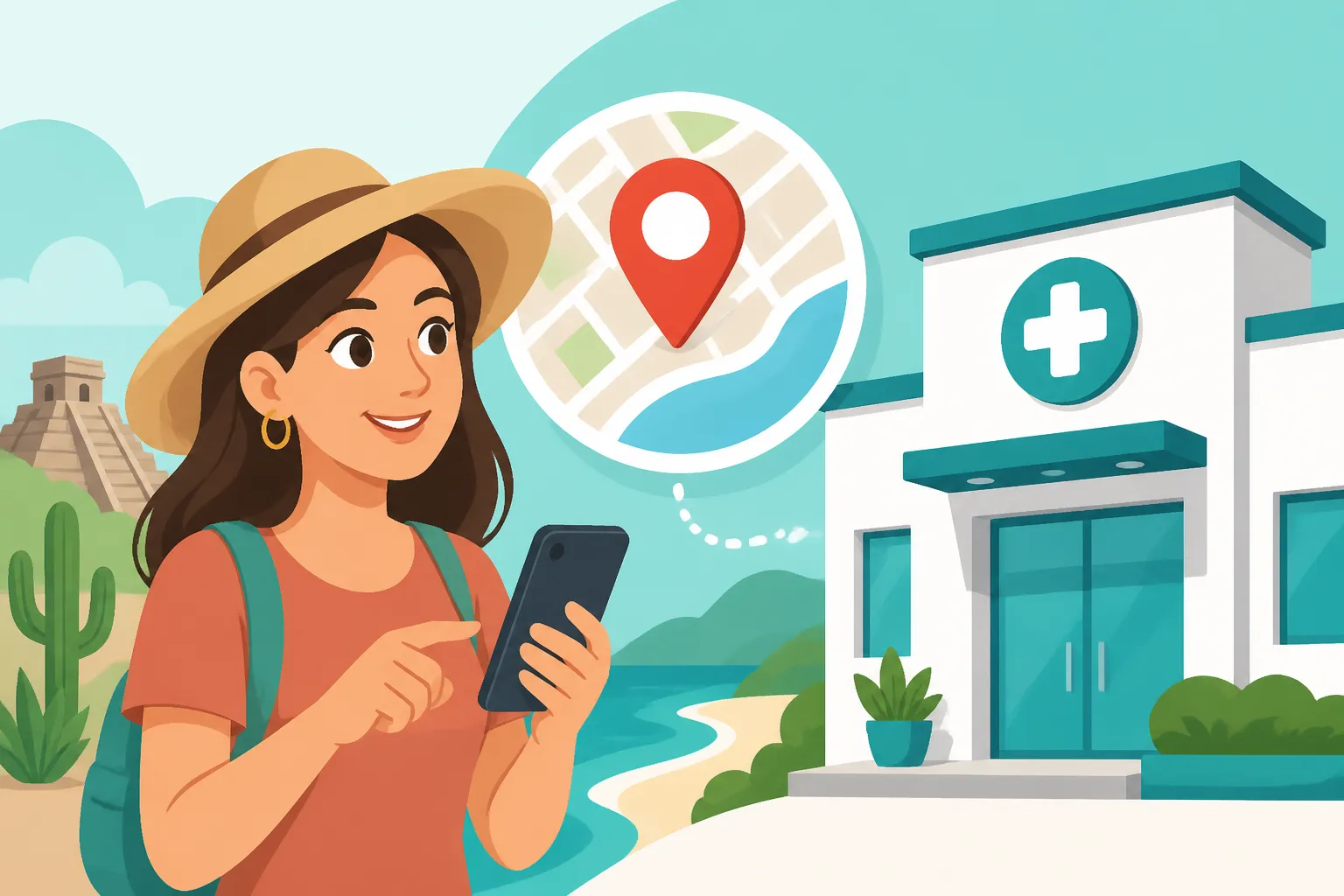
Google Maps is your best friend in Mexico. However, you need to use the right search terms to get the best results. If you search for "Walk-in clinic," you might only get high-priced tourist centers. Instead, try searching for these terms:
- Consultorio Médico: This will show you all the small doctor offices, including those attached to pharmacies.
- Farmacia con Consultorio: This specifically targets pharmacies that have a doctor on-site.
- Urgencias: This will show you the nearest emergency rooms.
- Cruz Roja: This is the Red Cross. They provide 24/7 emergency and urgent care services for a very low donation-based fee.
Once you find a location, check the "Photos" section on Google Maps. Locals often post pictures of the price list and the hours of operation posted on the door. This is a great way to verify the Healthcare Costs in Mexico: Doctor Visits, Hospital Stays, and Surgery Expenses before you even leave your house.
Breaking the Language Barrier Without a Translator
Unless you are in a major expat enclave, the doctor at the local walk-in clinic likely won't speak much English. I recommend downloading a Spanish medical dictionary app or using the "Conversation" mode on Google Translate. Before you go, write down a few key phrases or use a guide on Pharmacy Spanish: Phrases to Help You Buy Medicine in Mexico.
Common phrases you might need:
- Me duele aquí: It hurts here (point to the area).
- Tengo fiebre: I have a fever.
- Tengo mucha diarrea: I have a lot of diarrhea.
- ¿Es una receta?: Is this a prescription?
- Soy alérgico a…: I am allergic to…
The doctors are generally very patient with foreigners. They see it all, and they are used to interpreting "Spanglish" and hand gestures. If the situation is more serious and you cannot communicate, you may need to look into Medical Emergencies in Mexico: What Expats Should Know and Prepare to find a facility that guarantees English-speaking staff.
Costs, Payment, and Insurance Logistics
One of the most confusing aspects of Mexican healthcare for newcomers is the "pay-first" culture. Even with the best insurance, you should expect to handle small clinic visits with cash or a local debit card.
| Facility Type | Average Cost (MXN) | Best For | Payment Method |
|---|---|---|---|
| Pharmacy Consultorio | $50 – $150 | Flu, stomach bugs, minor infections | Cash only |
| Red Cross (Cruz Roja) | $200 – $500 | Stitches, minor trauma, stabilizing | Cash / Donation |
| Private Urgent Care | $800 – $2,500 | Severe pain, IV fluids, diagnostic tests | Cash / Credit Card |
| Private Hospital ER | $3,000+ | Life-threatening issues, fractures | Credit Card / Insurance |
Paying Out-of-Pocket vs. Using Insurance
For most walk-in visits at a pharmacy, the cost is so low that it isn't worth the paperwork to file an insurance claim. You will pay the doctor directly in cash. Make sure you have small bills, as many "consultorios" do not carry much change for a 500-peso note.
However, for visits to private hospitals or clinics where costs can climb into the thousands of pesos, you will want your insurance details ready. If you are a digital nomad, a plan like SafetyWing is excellent for these unexpected "hiccups." They generally operate on a reimbursement model for clinic visits, meaning you pay the bill, get a "factura" (official tax invoice), and then submit it online for a refund.
Understanding Your Coverage with SafetyWing and Cigna Global
For long-term residents and expats, having a robust plan like Cigna Global is a game-changer. These plans often have direct billing arrangements with major hospital networks like Hospital Ángeles or Star Médica. This means if you walk into the Urgencias department, you can show your card, and the hospital will coordinate the payment with the insurer, potentially saving you from a massive out-of-pocket hit.
Always ask for a "factura" if you intend to claim the expense. A simple receipt (nota) is often not enough for insurance companies or for Mexican tax purposes. You will need to provide your RFC (tax ID) if you have one, or just ask for a generic factura if you are a tourist. If your situation involves Calling an Ambulance in Mexico: How Emergency Services Operate, be prepared that the ambulance service and the clinic/hospital are often billed separately.
It is also vital to know the local limitations. For instance, if you are wondering Is Tap Water Safe to Drink in Mexico?, the answer is usually no, and the resulting stomach issues are the number one reason expats seek out walk-in clinics. Having a local doctor you trust for these routine issues makes your life in Mexico much smoother and less stressful.
Disclaimer
This article is for informational purposes only and does not constitute medical or legal advice. Healthcare regulations and facility availability in Mexico are subject to change. Always consult with a qualified medical professional or your insurance provider regarding your specific health needs and coverage. In a life-threatening emergency, always dial 911 immediately.