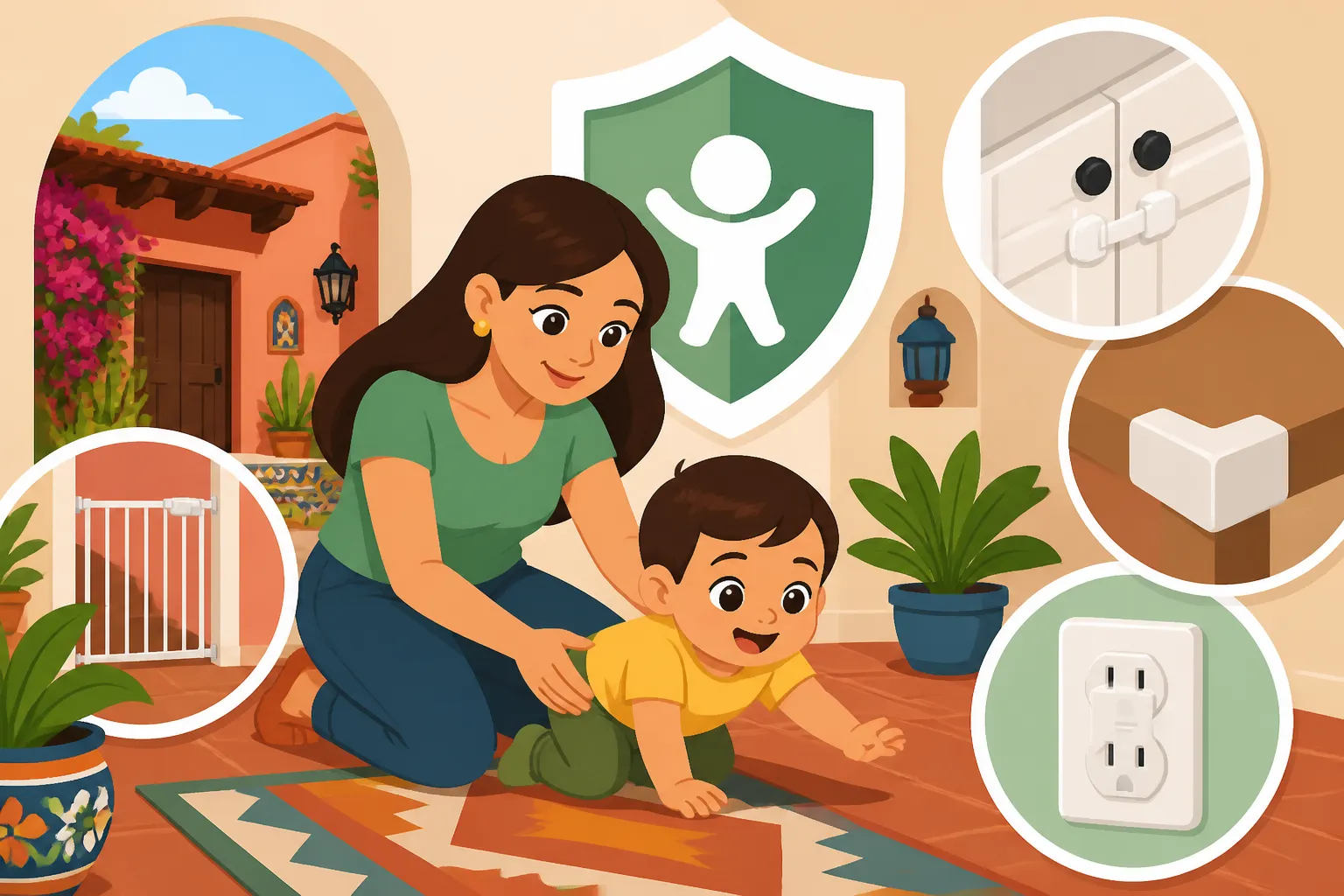
How to Childproof a Home in Mexico
Walking into your dream colonial home in Mérida or a sleek condo in Polanco, you quickly realize that the aesthetic of Mexican architecture is often a toddler’s obstacle course. I remember the first time my son tried to crawl on our polished marble floor; it was like a scene from a slapstick comedy, but with much higher stakes and a lot of tears. This guide solves the specific, often-overlooked challenges of childproofing a home in Mexico, covering everything from concrete walls to open-air stairwells.
Disclosure: This post may contain affiliate links. We may earn a commission at no extra cost to you if you make a purchase through these links. Read full disclosure.
Navigating the Architectural Quirks of Mexican Homes
The first thing most expats notice is that Mexican homes are built to last, usually out of concrete, brick, and stone. While this is great for durability and keeping the house cool in the summer, it presents a unique set of hazards for small children. Unlike the drywall and carpeted floors common in many Western countries, the surfaces here are unforgiving. A simple tumble that might result in a bruise on a wooden floor can lead to a significant injury on a saltillo tile or marble surface.
The Battle Against Tile and Stone Floors
In Mexico, tile is king. Whether it is beautiful hand-painted Talavera or modern porcelain, it is everywhere—including the bedrooms. The main issue for parents isn't just the hardness; it’s the slipperiness. Mexican households often have a culture of daily mopping (trapear), which keeps the home smelling like Fabuloso but creates a skating rink for a child in socks.
To manage this, you need to go beyond basic rugs. Standard rug pads often slide on highly polished Mexican floors. I highly recommend using heavy-duty, felt-and-rubber combination pads. For high-traffic areas like the living room, consider interlocking foam mats, but be aware that the heat in coastal regions can sometimes make the cheaper foam versions "off-gas" a plastic smell. Look for high-quality, non-toxic EVA foam. If you are staying at a Selina property while scouting for your long-term rental, you’ll notice they often use area rugs to soften their industrial-chic floors; take a page from their book and prioritize soft zones immediately.
Balconies, Roof Terraces, and Open Railings
One of the most terrifying sights for an expat parent is the Mexican "barandal" or railing. Many older homes and even modern "minimalist" apartments feature railings with horizontal bars (which act as a ladder) or vertical gaps wide enough for a small child to slip through. Because building codes in Mexico are often more "suggestive" than strictly enforced regarding gap width, you cannot assume a railing is safe just because the building is new.
The solution here is rarely aesthetic, but it is essential: safety netting. In cities like Mexico City or Guadalajara, you can find professional companies that install high-tension nylon netting (malla de seguridad) specifically for balconies and windows. It’s nearly invisible from a distance but can support the weight of an adult. If you are DIY-ing it, avoid the cheap bird netting from the hardware store; it won't hold up against the intense Mexican sun and will become brittle within months. This is a critical step in Safety in Mexico: What Expats Need to Know About Staying Safe because home safety starts with the structure itself.
Concrete Walls and the Furniture Anchoring Struggle
In most U.S. or Canadian homes, you find a stud in the wall, screw in a bracket, and your dresser is secure. In Mexico, you are almost always dealing with solid concrete or hollow "block." This means you cannot simply use the plastic wall anchors that come in the box with your IKEA furniture. They will pull right out of the crumbly mortar.
To properly anchor heavy furniture—which is a must in a country prone to tremors—you need a hammer drill and "taquetes" (expansion anchors) made of high-quality lead or heavy-duty plastic. If you used a service like Sirelo to ship your heavy heirloom furniture down, don't let the movers leave until you've identified which pieces are top-heavy. Anchoring is not just about curious climbers; it's about Earthquake Preparedness: Safety Tips for Expats in Seismic Zones. A heavy "ropero" (freestanding closet) is a common feature in Mexican homes without built-in closets, and these are notorious tipping hazards.
Essential Safety Upgrades for the Mexican Kitchen and Bathroom
The heart of the Mexican home is the kitchen, but it's also where some of the most foreign hazards live. From the way gas is delivered to how we drink water, the "standard" childproofing kit you brought from home might not fit the local hardware.
Managing Gas Stoves and Stationary Tanks
Most Mexican homes run on propane, either delivered via a "tanque estacionario" on the roof or via individual cylinders (cilindros). Many older stoves do not have "click-to-ignite" safety features, meaning if a toddler turns a knob, the gas flows freely without a flame. Even on newer stoves, the knobs are often at the perfect height for a three-year-old to reach.
You can buy knob covers locally at stores like Home Depot or Liverpool, but they don't always fit the oversized, rugged knobs found on industrial-style Mexican stoves like Mabe or Koblenz. Always check for the smell of mercaptan (the "rotten egg" smell added to gas). Because many kitchen layouts in Mexico are "open air" or have laundry rooms attached to the kitchen with open "zotehuelas," drafts can blow out pilot lights. It is vital to teach children that the kitchen is a "no-play zone" and to understand Household Quirks in Mexico: Water Cisterns, Gas Tanks, and More to keep the whole family safe from leaks.
The Heavy Garrafón Dilemma
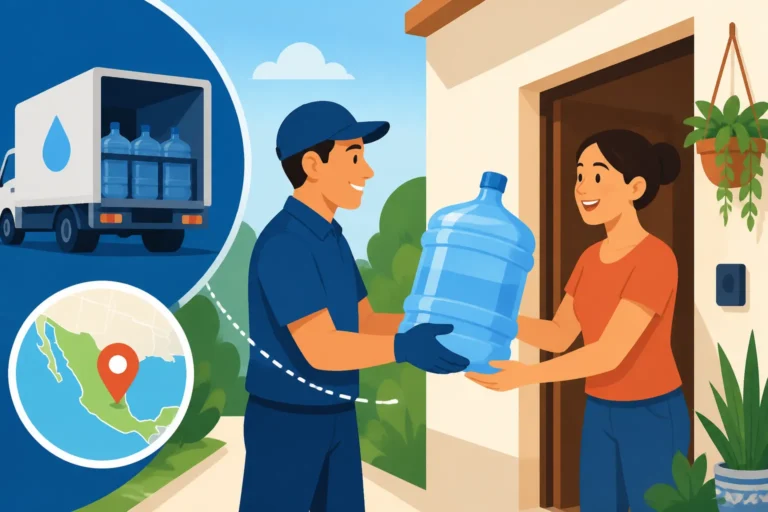
Since the tap water isn't potable, almost every expat home has "garrafones"—those 20-liter (5-gallon) plastic water jugs. These are incredibly heavy and, when placed on a standard ceramic or wooden "dispensador" (stand), they are top-heavy. A toddler pulling on the tap can easily pull the entire 40+ pound rig down onto themselves.
The best childproofing move here is to ditch the floor stand. Install a hidden electric pump that sits on top of the jug inside a cupboard, or use a countertop ceramic crock pushed far back out of reach. If you must use a stand, it must be tethered to the wall with the concrete anchors we discussed earlier. Keeping your water source secure is just as important as Staying Healthy in Mexico: Essential Tips for Food, Water, and Preventive Care.
Bathroom Hazards: Boilers and Hot Water
In Mexico, hot water is often provided by a "boiler" (water heater) located in a laundry area or even inside the bathroom itself. Older "piloto" models have an open flame. If your child is wandering near the laundry area, they can easily reach the temperature dial or the flame access door.
Furthermore, hot water temperatures in Mexico aren't always regulated by a master mixing valve. The water coming out of the "calentador" can be scaldingly hot—much hotter than what is standard in modern U.S. plumbing. Always test the water before your child gets in the "tina" (though many Mexican homes only have showers). Installing a simple plastic latch on the bathroom door, placed high up out of reach, is often more effective than trying to childproof the individual plumbing fixtures which may have non-standard shapes.
Finding Safety Supplies and Services in Mexico
One of the frustrations of being a new expat is not knowing where to buy specific safety gear. While you might be tempted to order everything on Amazon, there are local nuances to where you get the best equipment.
Where to Source High-Quality Safety Gates and Latches
While "tianguis" (street markets) are great for produce and Shopping, Markets, and Mexican Crafts, they are not the place for safety gear. You want brands that meet international standards.
- Home Depot Mexico: This is your best bet for heavy-duty hardware, concrete anchors, and basic safety gates.
- Amazon Mexico: They carry a wide range of international brands like Munchkin and Safety 1st, which are often unavailable in physical stores.
- Specialty Baby Stores: Shops like "Bebé Mundo" or the baby section of high-end department stores like "El Palacio de Hierro" carry premium gates that are more aesthetically pleasing for those beautiful colonial hallways.
Make sure you have your Airalo eSIM active so you can navigate to these stores in a new city without getting lost. I’ve spent many hours in the car searching for a specific "ferretería" only to realize the store I needed was three blocks the other way.
Hiring Local Help for Installation
If the idea of drilling into concrete fills you with dread, you are not alone. In Mexico, hiring a "maestro" (a skilled handyman) is very common and affordable. However, you must be the supervisor. A local handyman might not understand why you want a shelf anchored "just in case" if it feels sturdy to him.
Explain that it is for "seguridad de niños" (child safety). You can find reliable help through expat Facebook groups or by asking your neighbors. If you are still in the process of moving, ask your Sirelo coordinator if they have recommendations for "armadores" (furniture assemblers) who are familiar with child-safety anchoring. Knowing How Much Should You Pay Domestic Help in Mexico? will help you budget for these small but vital jobs.
| Feature | Typical Mexican Home Hazard | Recommended Solution |
|---|---|---|
| Floors | Slippery tile, marble, or polished concrete | Large area rugs with non-slip pads or EVA foam mats |
| Walls | Solid concrete/block (hard to anchor) | Use expansion "taquetes" and a hammer drill for all heavy furniture |
| Windows | Low sills, no screens, or fragile glass | Professional "malla de seguridad" (safety netting) |
| Stairs | Open risers or wide-gap wrought iron railings | Perspex/Plexiglass shields or custom safety netting |
| Utilities | Exposed gas lines and water "boilers" | High-mounted door latches to restrict access to laundry zones |
Cultural Nuances of Parenting and Safety in Mexico
Finally, it’s important to address the "village." In Mexico, family is central, and you will likely find that people are much more relaxed about safety than you might be used to. This can be a source of "expat stress."
Navigating the "Abuela" and Nanny Factor
If you hire a "niñera" (nanny) or have local friends over, they might leave doors open or be surprised by your strict "no-climbing" rules. It is a cultural difference, not a lack of care. Mexican culture tends to be very "hands-on," where someone is always watching the child, whereas Western childproofing is often designed to make the environment safe for "independent exploration."
Communication is key. If you have a housekeeper or nanny, walk them through the safety features. Explain why the gate must stay latched. If you are looking for medical support for any accidents that do happen, ensure you have already looked into Pediatric Care in Mexico: Healthcare for Expat Children. It is also wise to keep a list of Emergency Numbers in Mexico: How to Call Police, Fire, or Ambulance on the fridge in both Spanish and English for any caregivers.
The Benefit of the "Cerrada" or Gated Community
If you are still choosing a home, many expat families find that living in a "fraccionamiento" or "privada" (gated community) provides an extra layer of safety. These areas often have slower traffic and communal parks where the childproofing is already somewhat managed. This can take some of the pressure off making your individual home a fortress.
However, even in a gated community, the internal house risks remain the same. Whether you are in a high-rise in Santa Fe or a villa in Sayulita, the "concrete and tile" reality of Mexico requires a proactive approach. By combining international safety gear with local installation expertise, you can create a space where your kids can enjoy the vibrant Mexican lifestyle as much as you do. Don't forget that Healthcare in Mexico: Complete Guide for Expats (Public vs Private) is your safety net should your home childproofing ever meet its match in a determined toddler.
Disclaimer
This guide is for informational purposes only and is based on personal expat experiences and general safety recommendations. Building codes, available products, and safety standards in Mexico can vary significantly by region and property type. Always consult with professional installers for safety netting or structural modifications, and speak with a qualified pediatrician regarding specific safety concerns for your child's developmental stage. Use of any third-party brands mentioned is at the reader's discretion.