Beaches and Coastal Mexico: Caribbean and Pacific
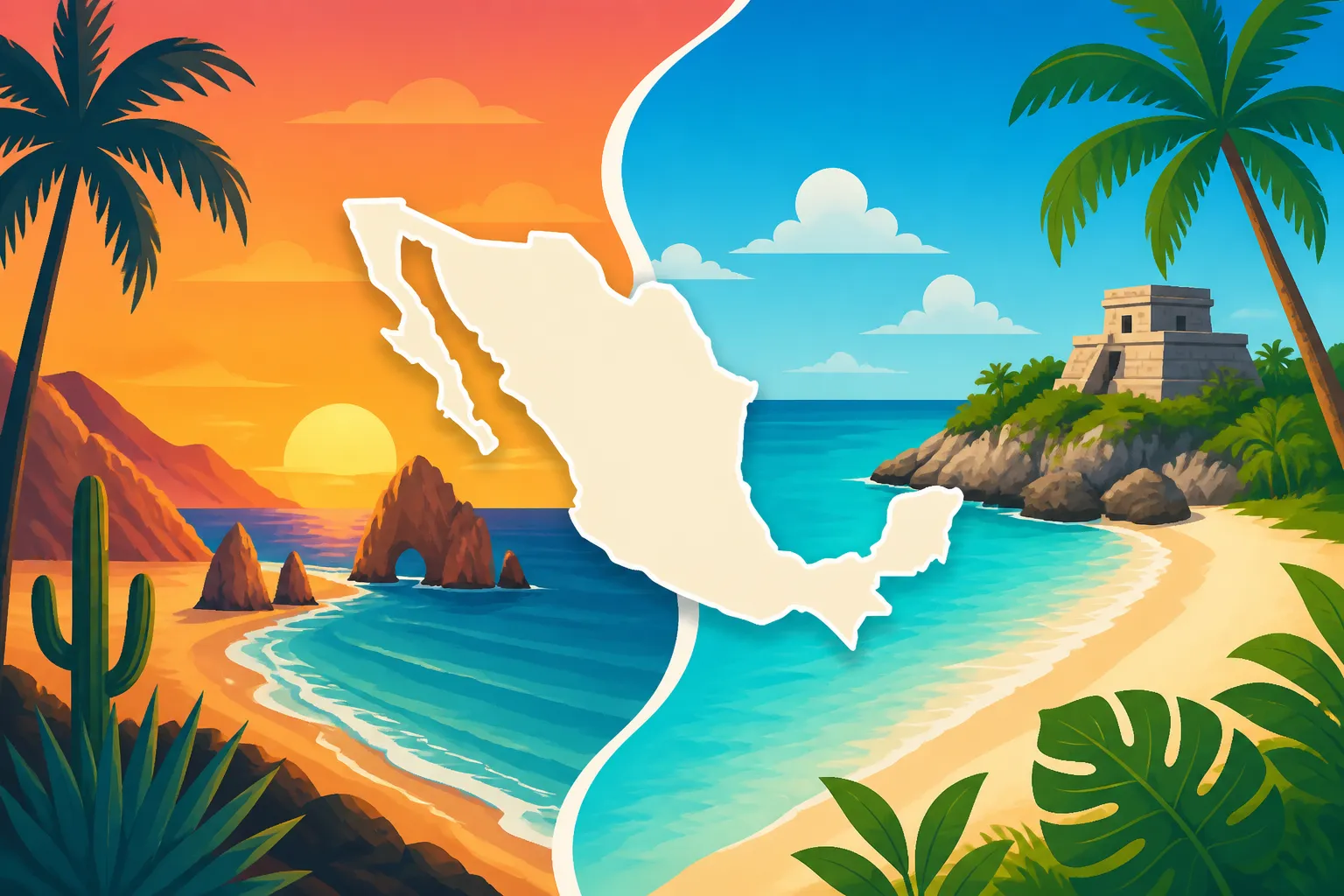
Deciding between Mexico’s Caribbean and Pacific coasts is one of the most common dilemmas for visitors and prospective expats. With thousands of miles of shoreline offering completely distinct vibes, water conditions, local cultures, and overall lifestyles, making the wrong choice can lead to wasted budget and unmet expectations. This comprehensive guide breaks down both coastlines so you can find your ideal beach destination.
Disclosure: This post may contain affiliate links. We may earn a commission at no extra cost to you if you make a purchase through these links. Read full disclosure.
Deciphering Mexicos Two Coasts: Caribbean vs Pacific Vibe and Geography
The Turquoise Allure of the Mexican Caribbean
The Mexican Caribbean, situated along the eastern rim of the Yucatán Peninsula in the state of Quintana Roo, is world-famous for a reason. The water here displays shades of blue that seem almost digitally altered, shifting from crystalline pale turquoise near the shoreline to deep navy out toward the Mesoamerican Barrier Reef. The sand is composed of pulverized coral, meaning it stays relatively cool underfoot even during the hottest tropical afternoons. When I first stepped onto the beaches of Quintana Roo, the sheer visual impact of the landscape was unforgettable.
Beyond the visuals, the atmosphere along the Caribbean coast is heavily defined by international tourism infrastructure. The topography is flat, dominated by lush jungle that meets flat stretches of white beach. Because of this geography, the water is generally calm, shallow, and warm year-round, making it a dream for casual swimmers, wading families, and snorkeling enthusiasts. However, this accessibility means you will share these shores with millions of other travelers, requiring a bit of planning if you want to escape the mega-resort crowds.
The lifestyle on the Caribbean side tends to feel fast-paced in the major tourist nodes and decidedly bohemian in the smaller pockets. It is an environment built for convenience, where high-end beach clubs, English-speaking service staff, and international amenities sit right next to pristine nature reserves. Choosing this coast means choosing easy connectivity, warm ocean waters, and a vibrant, international social scene.
The Wild Ocean and Sunset Magic of the Pacific Coast
Crossing over to the Pacific Coast reveals an entirely different country. Stretching down from the desert landscapes of Baja California Sur all the way to the lush, mountainous jungle of Oaxaca, Mexico’s Pacific shoreline is rugged, expansive, and dramatic. Here, the Sierra Madre mountains crash directly into the sea, creating dramatic cliffs, hidden coves, and sweeping bays framed by dense tropical forests or desert cacti.
The ocean itself feels vastly more powerful on the Pacific side. The water is darker, deeper, and subject to real tide cycles, heavy swells, and energetic waves. Water temperatures vary widely: while southern Pacific beaches stay warm, northern Pacific waters near Baja can feel crisp and refreshing, requiring a wetsuit for extended surfing sessions in the winter. What the Pacific lacks in crystalline, swimming-pool-like waters, it makes up for with raw natural beauty and unmatched ocean sunsets where the sun sinks straight into the horizon every evening.
Culturally, the Pacific coast feels deeply rooted in traditional Mexican coastal life. While places like Los Cabos or Puerto Vallarta feature world-class luxury, the surrounding towns maintain the rhythm of traditional fishing villages and surfing haunts. Life moves to the cadence of the tides, and the expat communities here often skew toward surfers, artists, and retirees looking for an authentic local atmosphere rather than an all-inclusive resort bubble.
Key Climate Water Temperature and Seasonal Differences
Understanding the microclimates of both coasts is essential before booking a trip or signing a long-term lease. The Caribbean coast experiences a classic tropical savanna climate. It is warm to hot year-round with high humidity levels that rarely drop. The ocean temperature on the Caribbean side remains exceptionally stable, floating comfortably warm in both winter and summer. Rainy season runs roughly from June through October, coinciding with the Atlantic hurricane season, bringing short, heavy tropical downpours that clear up quickly.
The Pacific coast covers a vast geographical area, meaning its climate varies considerably depending on your latitude. Northern Pacific areas, including the Baja Peninsula, feature a dry, desert-maritime climate with hot summers, cool winter nights, and minimal rainfall. As you head south toward Jalisco, Nayarit, and Oaxaca, the climate shifts to a tropical wet-and-dry zone. Pacific water temperatures drop notably during the winter months in the north, while staying tropical in the south.
When comparing your options, considering climate preferences is crucial. Those who thrive in soft, tropical ocean waters and do not mind humidity will fall in love with the East Coast. If you prefer lower humidity, cooler evening breezes, dramatic coastal landscapes, and real ocean waves, the West Coast will likely win your heart. For a deeper breakdown of choosing between these environments, check out our guide on Choosing Between Caribbean and Pacific Coast in Mexico.
The Mexican Caribbean: Exploring the Riviera Maya and Beyond
Cancún Playa del Carmen and Tulum: Resort Hubs vs Bohemian Hideaways
The northern stretch of the Mexican Caribbean is dominated by three main destinations, each offering a distinct lifestyle. Cancún is the powerhouse of the region, famous for its Hotel Zone—a long spit of sand lined with high-rise luxury resorts, world-class dining, and high-energy nightlife. Beyond the tourist strip lies Cancún Downtown (El Centro), where locals and long-term expats live in leafy residential neighborhoods, shopping at local markets and dining at neighborhood taquerías.
An hour south lies Playa del Carmen, a coastal city that transformed from a quiet fishing village into a bustling international hub. Playa is famous for its pedestrian-only thoroughfare, Quinta Avenida (Fifth Avenue), which runs parallel to the beach for miles. It is packed with restaurants, bars, boutique shops, and co-working spaces. Playa del Carmen is particularly popular among digital nomads and younger expats because it offers a walkable urban environment directly on the beach, eliminating the need for a car.
Further south sits Tulum, known worldwide for its eco-chic aesthetics, wellness retreats, and bohemian atmosphere. Tulum is split into two primary areas: the Pueblo (town center) and the Zona Hotelera (beach strip). While Tulum offers stunning beach clubs, yoga studios, and high-end dining set against the jungle, it has also faced challenges with rapid development and rising costs. Navigating the beach strip can be chaotic during peak season, but its iconic white-sand beaches and jungle vibe remain a magnetic pull for visitors worldwide.
Island Escapes: Cozumel Isla Mujeres and Isla Holbox
Off the coast of the Yucatán Peninsula lie three distinct islands, each offering a retreat from the mainland hustle. Isla Mujeres is located just a short ferry ride from Cancún. Known for Playa Norte—consisting of shallow, crystal-clear water where you can wade out hundreds of yards—Isla Mujeres offers a relaxed atmosphere where golf carts are the primary mode of transportation. It is a favorite for day-trippers and expats seeking island living close to big-city conveniences.
Cozumel, situated opposite Playa del Carmen, is world-renowned among scuba divers. The island lies adjacent to the Arrecifes de Cozumel National Park, offering world-class drift diving along vibrant coral walls. While the western side of Cozumel accommodates cruise ships and features calm water, the undeveloped eastern side is wild, windswept, and lined with rustic beach bars powered by solar energy. It is a peaceful, community-oriented island that appeals to retirees and underwater enthusiasts.
To the north lies Isla Holbox, a car-free paradise situated where the Gulf of Mexico meets the Caribbean. Holbox is characterized by unpaved sand streets, colorful street art, shallow waters, and a laid-back lifestyle. Visitors ride bicycles or golf carts, spend afternoons in water hammocks, and take seasonal tours to swim with whale sharks. If you plan to explore these mainland and island destinations, planning your itinerary with Best Day Trips From Cancún and the Riviera Maya will help you maximize your time.
The Southern Treasures: Mahahual and Bacalar Lagoon
Moving south toward the Belize border brings you to the quiet, less-developed reaches of Quintana Roo. Mahahual is a small coastal village that serves as the gateway to the Banco Chinchorro biosphere reserve, the largest coral atoll in the Northern Hemisphere. Outside of days when cruise ships dock at its port, Mahahual remains a sleepy beach town where life centers around a pedestrian boardwalk, wooden dive shops, and quiet palapa restaurants serving fresh ceviche.
Inland from the ocean lies Bacalar, often called the “Lagoon of Seven Colors.” While technically a freshwater lagoon rather than the ocean, Bacalar is an integral part of the Caribbean coastal ecosystem. The lagoon features varying depths and white calcium-rich soil beneath the water, creating a mesmerizing spectrum of blues ranging from pale turquoise to deep cobalt.
Bacalar offers a peaceful alternative to the busy oceanfront hubs. Motorized boats are strictly regulated to protect the fragile stromatolites—ancient living rock formations—making kayaking, stand-up paddleboarding, and sailing the preferred ways to explore. It is an idyllic haven for travelers seeking pristine natural beauty and a slower rhythm of life.
| Coastal Region | Water Conditions | Topography & Scenery | Ideal For |
|---|---|---|---|
| Mexican Caribbean | Warm, calm, shallow, | Flat jungle, white | Swimming, snorkeling, |
| (Riviera Maya) | bright turquoise | coral sand beaches | resort convenience |
| Baja Peninsula | Cool to warm, clear, | Arid desert, dramatic | Marine life tours, |
| (Pacific/Cortez) | heavy swells (Pacific) | rock formations | surfing, luxury stays |
| Pacific Central | Warm, active waves, | Lush mountains, deep | Surfing, expat living, |
| (Nayarit/Jalisco) | ideal for swimming | golden sand bays | cultural immersion |
| Pacific South | Warm, powerful waves, | Jagged coastline, | Surfing, eco-travel, |
| (Oaxaca Coast) | strong surf breaks | secluded golden coves | relaxed beach towns |
The Pacific Coast: From Baja Sur to the Bays of Huatulco
Baja California Sur: Los Cabos Todos Santos and La Paz
At the southern tip of the Baja Peninsula, Baja California Sur offers a striking contrast where the arid desert meets the deep blue sea. Los Cabos consists of two distinct towns connected by a resort corridor: Cabo San Lucas and San José del Cabo. Cabo San Lucas is high-energy, packed with luxury marinas, nightlife, and world-class sportfishing. San José del Cabo offers a quieter, traditional Mexican colonial atmosphere with a thriving Thursday night art walk, farm-to-table dining, and historic architecture.
An hour north on the Pacific side lies Todos Santos, an officially designated Pueblo Mágico known for its historic sugar mill past, vibrant art galleries, and nearby surf breaks like Playa Cerritos. The town attracts artists, surfers, and organic farmers who take advantage of the unique microclimate created by the nearby Sierra de la Laguna mountains. The beaches here are spectacular, framed by rolling desert dunes and pounding surf.
On the eastern side of the peninsula along the Sea of Cortez lies La Paz, the state capital. Known for its gorgeous seafront promenade (Malecón), La Paz offers access to Isla Espíritu Santo and the shallow, crystal-clear waters of Balandra Beach. The ocean here is calm and rich in marine life, offering opportunities to swim alongside whale sharks and sea lions in protected waters.
The Riviera Nayarit and Puerto Vallarta’s Banderas Bay
Nestled in one of the world’s largest natural bays, Puerto Vallarta combines authentic Mexican charm with sophisticated tourist infrastructure. Framed by the lush Sierra Madre mountains, the city features cobblestone streets, tile-roofed buildings, and the famous Malecón boardwalk. Neighborhoods like the Zona Romántica offer vibrant nightlife, LGBTQ-friendly venues, and an established expat community, while areas further north feature modern condos and marina amenities. To get a better sense of long-term costs in this area, review our article on the Cost of Living in Puerto Vallarta: Budgeting for Beach Life.
Stretching north from Puerto Vallarta into the state of Nayarit is the Riviera Nayarit, a collection of coastal towns each offering a unique personality. Nuevo Vallarta features planned resort complexes and long, flat beaches. Further north, Sayulita is a world-famous surf town known for its bohemian energy, colorful flags, bustling markets, and lively nightlife.
Just a short drive from Sayulita lies San Pancho (San Francisco), which offers a quieter, community-focused alternative. San Pancho features a wide golden-sand beach, community cultural centers, and a relaxed pace of life. Further up the coast, quiet towns like Chacala and Lo de Marcos offer glimpses of traditional, slow-paced Mexican beach living away from heavy resort development. You can explore more about these coastal options in our dedicated guide to Puerto Vallarta and the Riviera Nayarit.
Oaxaca’s Emerald Coast: Puerto Escondido and Huatulco
Further south along the Pacific coast lies Oaxaca’s Emerald Coast, famous for its dramatic scenery, exceptional surf, and sustainable tourism focus. Puerto Escondido is the anchor of this region, renowned internationally for Zicatela Beach, home to the “Mexican Pipeline”—a world-class beach break that attracts professional surfers from around the globe. While Zicatela is reserved for expert swimmers and surfers, neighboring coves like Playa Carrizalillo offer calm, emerald waters perfect for swimming and beginner surf lessons.
South of Puerto Escondido lie smaller, bohemian beach villages like Mazunte and Zipolite. Mazunte is famous for the National Turtle Center and its laid-back, eco-conscious community focused on holistic living and yoga. Zipolite is uniquely famous for hosting Mexico’s only official clothing-optional beach, maintaining a counter-cultural, open-minded atmosphere where sunset drum circles and rustic beachfront cabañas are the norm.
At the southern end of the Oaxacan coastline sits Huatulco (Bahías de Huatulco). Designed with environmental sustainability in mind, Huatulco features nine master-planned bays encompassing dozens of pristine beaches. Much of the surrounding area is protected as a National Park, preventing overdevelopment and preserving pristine coral reefs and tropical dry forests. Huatulco appeals to families and retirees seeking clean, quiet beaches, eco-resorts, and modern infrastructure set within protected nature. Learn more in our overview of Oaxaca’s Pacific Beaches: Puerto Escondido and Huatulco.
Logistical Realities: Transportation Safety and Seasonality
Navigating Coastal Transit Buses and Regional Flights
Getting around Mexico’s coastal regions is surprisingly straightforward once you understand the local transportation systems. In the Mexican Caribbean, the highway network connecting Cancún down through Playa del Carmen to Tulum and Chetumal is modern and well-maintained. Comfortable long-distance buses operated by ADO run frequently between airport hubs, city centers, and regional attractions. When planning longer overland journeys between coastal towns, platforms like Busbud allow you to easily compare schedules and secure tickets in advance.
For local short-distance trips along the Caribbean highway, white passenger vans known as colectivos run continuously. They are an affordable, authentic way to jump between beaches, cenotes, and small towns. You simply stand by the highway, flag one down, and pay a small cash fee in pesos upon disembarking. For first-time visitors arriving at the main airport, our guide on How to Get From Cancún Airport to Playa del Carmen or Tulum breaks down every ground transport option step by step.
On the Pacific Coast, geography plays a bigger role in transit. While cities like Puerto Vallarta and Los Cabos have busy international airports, smaller towns along Nayarit or Oaxaca require a combination of regional flights and mountain highway drives. Buses operated by lines like Primera Plus or ETN offer comfortable travel between major Pacific hubs. If you plan to rent a vehicle to explore remote surf spots or isolated bays, make sure you understand mandatory local coverage rules by reviewing How to Rent a Car in Mexico Without Overpaying for Insurance.
Understanding Sargassum Hurricanes and Sea Conditions
Coastal living comes with natural phenomena that every traveler and expat must factor into their plans. On the Caribbean coast, sargassum—a species of brown macroalgae—has become a seasonal consideration in recent years. Driven by changing oceanic currents and water temperatures, influxes of sargassum can wash ashore along exposed Atlantic-facing beaches, primarily between late spring and early autumn.
When sargassum accumulates, it can discolor the turquoise water and emit a strong smell as it decomposes on the sand. Local municipalities and hotels deploy barriers and cleaning crews daily, but conditions vary by wind direction and precise beach location. West-facing islands like Isla Mujeres or protected bays like Bacalar remain virtually immune to sargassum. To manage your expectations, refer to our detailed guide on How to Avoid Sargassum Seaweed on Mexico’s Caribbean Coast.
Both the Caribbean and Pacific coasts are subject to the Eastern Pacific and Atlantic hurricane seasons, which run officially from June 1 to November 30, with peak activity typically occurring between August and October. While direct hurricane strikes are relatively rare in any single town, tropical storms bring heavy rains, temporary power disruptions, and rough seas. Understanding these seasonal patterns allows you to plan trips during optimal weather windows or prepare your home if living here long-term.
Beach Safety Rip Currents and Ocean Etiquette
Ocean safety protocols differ significantly between the two coasts, primarily due to underwater topography and swell patterns. The Caribbean coast generally features gentle, shallow waters protected by offshore coral reefs. However, open stretches of beach during windy conditions can still experience strong longshore currents. Flag systems are posted prominently near resort areas: green means safe, yellow cautions swimmers, red signals dangerous conditions, and black indicates the beach is strictly closed.
The Pacific Ocean demands a higher level of respect and ocean awareness. The heavy, open-ocean swells that make the West Coast a world-class surfing destination also generate powerful shorebreaks and rip currents. Beaches like Zicatela in Puerto Escondido or Solmar Beach in Cabo San Lucas feature severe shorebreaks and undertows where swimming is extremely hazardous even for experienced athletes. Always swim in designated coves, pay close attention to flag warnings, and ask local lifeguards about current conditions before stepping into the water.
When enjoying any Mexican beach, following local ocean etiquette ensures safety and preserves marine ecosystems. Always use reef-safe, biodegradable sunscreen to protect delicate coral reefs and sea life. Give nesting sea turtles and emerging hatchlings plenty of space—many beaches feature protected turtle camps where volunteer organizations collect eggs to safeguard them from poachers and predators. For a complete safety breakdown, read our guide on Beach Safety 101: How to Read Warning Flags and Stay Safe in the Ocean.
Accommodation and Living Options along the Shoreline
All Inclusives Boutique Hotels and Long Term Vacation Rentals
Accommodation styles along Mexico’s coastlines cater to every travel style and housing budget. In major resort destinations like Cancún, Los Cabos, and Nuevo Vallarta, sprawling all-inclusive resorts offer complete convenience. These properties bundle rooms, meals, drinks, and entertainment into a single price, making them popular for stress-free vacations. However, staying entirely within a resort bubble can limit your exposure to authentic Mexican culture and local culinary experiences.
For travelers seeking a more personalized connection to their surroundings, boutique hotels and eco-posadas are abundant in destinations like Tulum, Todos Santos, and San Pancho. These properties often focus on local design, sustainable practices, and intimate hospitality, placing you right in the heart of small-town coastal life. When comparing lodging options or booking short-term stays across various coastal towns, checking inventory on Booking.com provides a comprehensive view of guest ratings, locations, and flexible booking policies.
If you are planning an extended stay or transitioning into expat life, long-term vacation rentals and traditional leases are widely available. Furnished apartments and beachfront condos can be found through local real estate groups, online portals, and word-of-mouth recommendations. Renting short-term for a month or two upon arrival allows you to explore different neighborhoods, test internet speeds, and evaluate noise levels before committing to a long-term contract.
Expat Beach Hubs for Long Term Settling
For foreign residents looking to make Mexico’s coastlines their permanent or seasonal home, several established expat hubs offer supportive communities, reliable infrastructure, and high quality of life. On the Caribbean side, Playa del Carmen and Puerto Morelos are long-standing favorites. Playa offers a fast-paced urban beach lifestyle with modern healthcare facilities, international supermarkets, and active expat social networks. Puerto Morelos, situated just north of Playa, provides a much quieter, traditional fishing-town environment with a close-knit community of artists, retirees, and families.
On the Pacific coast, Puerto Vallarta and its surrounding communities along Banderas Bay represent one of the oldest, most established expat communities in Mexico. The city offers bilingual medical services, familiar shopping conveniences, an international airport, and a rich cultural scene. Across the bay in Nayarit, towns like Bucerías and Sayulita attract retirees and younger remote workers, offering a blend of coastal relaxation and active social calendars.
In the north, Los Cabos and La Paz attract those who love marine sports, golfing, and desert-meets-ocean scenery. La Paz is favored by retirees and cruisers looking for a peaceful, authentic Mexican city setting, while Los Cabos appeals to those desiring high-end luxury, gated communities, and quick flight connections back to North America.
Balancing Tourist Prices with Local Market Living
One of the key adjustments for anyone moving to or spending extended time in Mexico’s beach towns is managing the dual economy that exists between tourist zones and local neighborhoods. Beachfront avenues, resort corridors, and high-end tourist streets command prices comparable to major Western cities for dining, drinks, and imported goods. If you eat exclusively at beach clubs and international restaurants, your cost of living will reflect boutique resort pricing.
Living affordably along the coast requires adopting local habits. Stepping just a few blocks away from the main tourist strips reveals local mercados, neighborhood butcher shops, fruit stands, and family-run taquerías where prices are quoted in pesos for local residents. Shopping at local markets yields fresh tropical produce, local cheeses, and seafood caught that morning at a fraction of supermarket prices.
Utility management is another crucial factor in coastal budgeting. Electricity costs in Mexico are tiered: light usage is subsidized, but exceeding threshold limits triggers a higher rate tariff (DAC). Running air conditioning units continuously in hot, humid coastal climates can lead to shockingly high monthly power bills. Experienced coastal expats rely on ceiling fans, cross-ventilation, and targeted air conditioning use at night to keep electricity costs manageable.
Coastal Activities and Cultural Experiences
Diving Snorkeling and Marine Life Encounters
Mexico’s oceans host incredible marine biodiversity, offering world-class experiences for underwater enthusiasts. The Mexican Caribbean forms part of the Mesoamerican Barrier Reef System, the second-largest reef system in the world. Coral gardens, underwater caverns (cenotes), and shipwrecks provide habitats for sea turtles, nurse sharks, spotted eagle rays, and hundreds of tropical fish species. Cozumel stands out as a premier drift-diving hub, while Akumal offers shallow bays where visitors can swim alongside wild sea turtles in their natural feeding grounds.
The Pacific Ocean, famously named “The Aquarium of the World” by Jacques Cousteau—specifically referring to the Sea of Cortez—delivers big-animal marine encounters. In La Paz, visitors can swim alongside gentle whale sharks in shallow waters or snorkel with sea lion pups at Los Islotes. offshore from Cabo San Lucas and Puerto Vallarta, thousands of humpback whales migrate annually between December and April to mate and give birth in warm coastal bays, creating spectacular whale-watching opportunities from shore or charter boats.
For certified scuba divers and marine enthusiasts, exploring both coasts provides completely distinct adventures. The Caribbean delivers warm water, incredible visibility, and vibrant coral formations, while the Pacific offers pelagic encounters with mantas, sharks, and migrating cetaceans. To discover more about top dive sites and snorkeling conditions across the country, check out our guide to Snorkeling and Diving on Mexico’s Coasts.
Surfing Water Sports and Eco Adventures
For action-sports enthusiasts, the Pacific Coast is an undisputed paradise. From northern Baja down to the Guatemalan border, the Pacific shoreline features hundreds of surf breaks catering to every skill level. Beginners can catch gentle rolling waves at Playa Cerritos in Baja or Punta de Mita in Nayarit, while intermediate surfers frequent the long point breaks of Sayulita and San Pancho. Advanced surfers head to Zicatela Beach in Puerto Escondido to challenge world-famous heavy barrels.
Beyond traditional surfing, coastal water sports thrive across the country. The steady winds along the northern coast of the Yucatán Peninsula make El Cuyo a top spot for kitesurfing. The calm, warm waters of Banderas Bay and the Sea of Cortez provide perfect conditions for stand-up paddleboarding, sea kayaking, and windsurfing against dramatic coastal backdrops.
Eco-adventures are deeply integrated into coastal tourism. In the Caribbean, swimming in freshwater cenotes—natural limestone sinkholes filled with crystal-clear groundwater—offers a unique inland water experience surrounded by jungle vines. Along both coasts, canopy zip-line tours, ATV jungle trails, and guided kayak trips through coastal mangrove estuaries showcase Mexico’s rich biodiversity beyond the sand. If you want to book excursions, boat charters, or eco-tours with vetted local guides, platforms like Viator allow you to compare guest reviews and secure bookings seamlessly.
Coastal Culinary Traditions and Fresh Seafood Markets
Food along Mexico’s coastlines reflects regional agriculture, local catches, and centuries of culinary tradition. Caribbean coastal cuisine blends Mayan ingredients with regional spices and fruit flavors. Signature dishes include tikin xic—whole fish marinated in earthy achiote paste and sour orange, wrapped in banana leaves, and grilled over open charcoal—alongside fresh conch ceviche, habanero-spiked salsas, and tropical fruit smoothies.
Pacific coastal food is celebrated for its fresh, clean seafood preparations. In Sinaloa, Nayarit, and Jalisco, aguachile is a beloved regional staple featuring raw shrimp cured in fresh lime juice blended with chilies, cilantro, and cucumber, served with crispy tostadas. Charcoal-grilled fish a la talla—split whole fish coated in red chili paste on one side and green herb sauce on the other—is an iconic beachside dish served under palapa roofs along the Oaxacan and Guerrero shorelines.
Visiting local seafood markets (pescaderías) in the early morning is an essential experience for anyone living along the coast. Watching local fishermen pull their pangas onto the sand and bring in fresh catches of red snapper, mahi-mahi, tuna, and octopus gives you an authentic connection to the local food culture. Preparing fresh seafood at home using local ingredients is one of the distinct pleasures of coastal life in Mexico.
Coastal Comparison Guide and Decision Framework
At a Glance Coastline Comparison
To help synthesize the differences between Mexico’s two distinct coastal worlds, the following table breaks down key characteristics across geography, lifestyle, ocean conditions, and cost structures:
| Feature / Metric | Mexican Caribbean (Quintana Roo) | Mexican Pacific (Baja, Nayarit, Oaxaca) |
|---|---|---|
| Primary Vibe | International resort, eco-chic, high-energy | Rugged, surfing-centric, traditional Mexican |
| Ocean Color & Clarity | Bright turquoise, crystal-clear, high visibility | Deep blue, emerald green, variable visibility |
| Water Temperature | Warm year-round | Varies; cool in northern winter, warm south |
| Wave Action & Swimming | Very calm, shallow, gentle wade-in beaches | Energetic waves, powerful surf breaks, heavy tides |
| Coastal Landscape | Flat jungle terrain, white pulverized coral sand | Sierra Madre mountains meet sea, golden sand |
| Expat Community | Large, international, digital nomad heavy | Established retirees, surfers, artists, seasonal residents |
| Dominant Activities | Snorkeling, cenote diving, beach clubs | Surfing, whale watching, sportfishing, hiking |
| Primary Environmental Factor | Seasonal sargassum influxes (spring/summer) | Strong rip currents and shorebreak waves |
Matching Your Lifestyle and Travel Goals to the Right Coast
Selecting your ideal coastal destination comes down to aligning your personal priorities with the realities of each shore. If your idea of paradise involves floating in warm, transparent blue water, relaxing at upscale beach clubs with DJ sets, enjoying international dining, and having access to quick airport connections, the Mexican Caribbean is designed for you. It excels at delivering vibrant energy, easy luxury, and water conditions that suit casual swimmers and snorkelers.
Conversely, if you are drawn to dramatic mountain scenery, stunning ocean sunsets, active surf breaks, deep-sea fishing, and towns that retain a strong sense of traditional Mexican heritage, the Pacific Coast is calling. It suits travelers and expats who appreciate raw natural beauty, lower humidity, and a community rhythm connected to nature and ocean swells.
Many long-term expats eventually find that their preferences evolve after spending time in both regions. Spending a season on the Caribbean side to enjoy the turquoise waters, followed by a stay on the Pacific side to experience its coastal mountain charm, is a wonderful way to discover which coastline feels like home.
Essential Packing and Preparation Checklist for Coastal Living
Preparing for a stay along Mexico’s coastlines requires a few specialized items to ensure comfort and safety in tropical environments. Whether visiting for two weeks or relocating permanently, consider these essentials:
- Sun Protection: Mineral-based, reef-safe sunscreen (required in protected marine parks), wide-brimmed hats, UV-blocking sunglasses, and long-sleeved rash guards for extended water activities.
- Footwear: Sturdy water shoes for rocky entry points or cenotes, breathable sandals for everyday walking, and comfortable hiking shoes if exploring coastal mountain trails.
- Electronics & Power Protection: Quality surge protectors to shield sensitive electronics from voltage fluctuations during coastal summer storms, plus portable power banks.
- Insect & Climate Gear: Eco-friendly insect repellent for dusk mosquito activity, lightweight dry bags to protect gear during boat trips, and breathable linen or moisture-wicking clothing to handle heat and humidity.
- Health & Cash Necessities: Essential personal medications brought in original labeled containers, rehydration salt packets for high-heat adjustment, and a secure way to carry cash in pesos for small local vendors and beach parking fees.
Equipped with a realistic understanding of both coastlines, you can choose your destination with confidence and enjoy everything Mexico’s coastal worlds have to offer.
Disclaimer
This article is for general informational purposes only and does not constitute professional advice. Laws, prices and regulations vary by location and change over time. Consult a qualified professional for guidance on your specific situation.