Moving to Mexico from Chile and Peru: Pacific-Side Shipping
Moving your entire life across continents is one of those monumental tasks that can feel utterly overwhelming. If you're planning to relocate from Chile or Peru to Mexico, you're not just changing countries; you're orchestrating a complex logistical ballet that stretches across the vast Pacific. This guide is here to walk you through the nitty-gritty of Pacific-side shipping, helping you understand the process, tackle the challenges, and ultimately, get your precious belongings safely to your new home in Mexico.
Disclosure: This post may contain affiliate links. We may earn a commission at no extra cost to you if you make a purchase through these links. Read full disclosure.
The Unique Challenge of Moving to Mexico from Chile and Peru
Let's be honest, moving from one side of the world to another isn't for the faint of heart. It's a journey fraught with paperwork, packing woes, and the general anxiety of the unknown. When you're eyeing Mexico from the southern Pacific coast of South America, you're looking at a specific set of challenges that require careful planning and, more importantly, the right support.
Why "Pacific-Side Shipping" is Your Reality
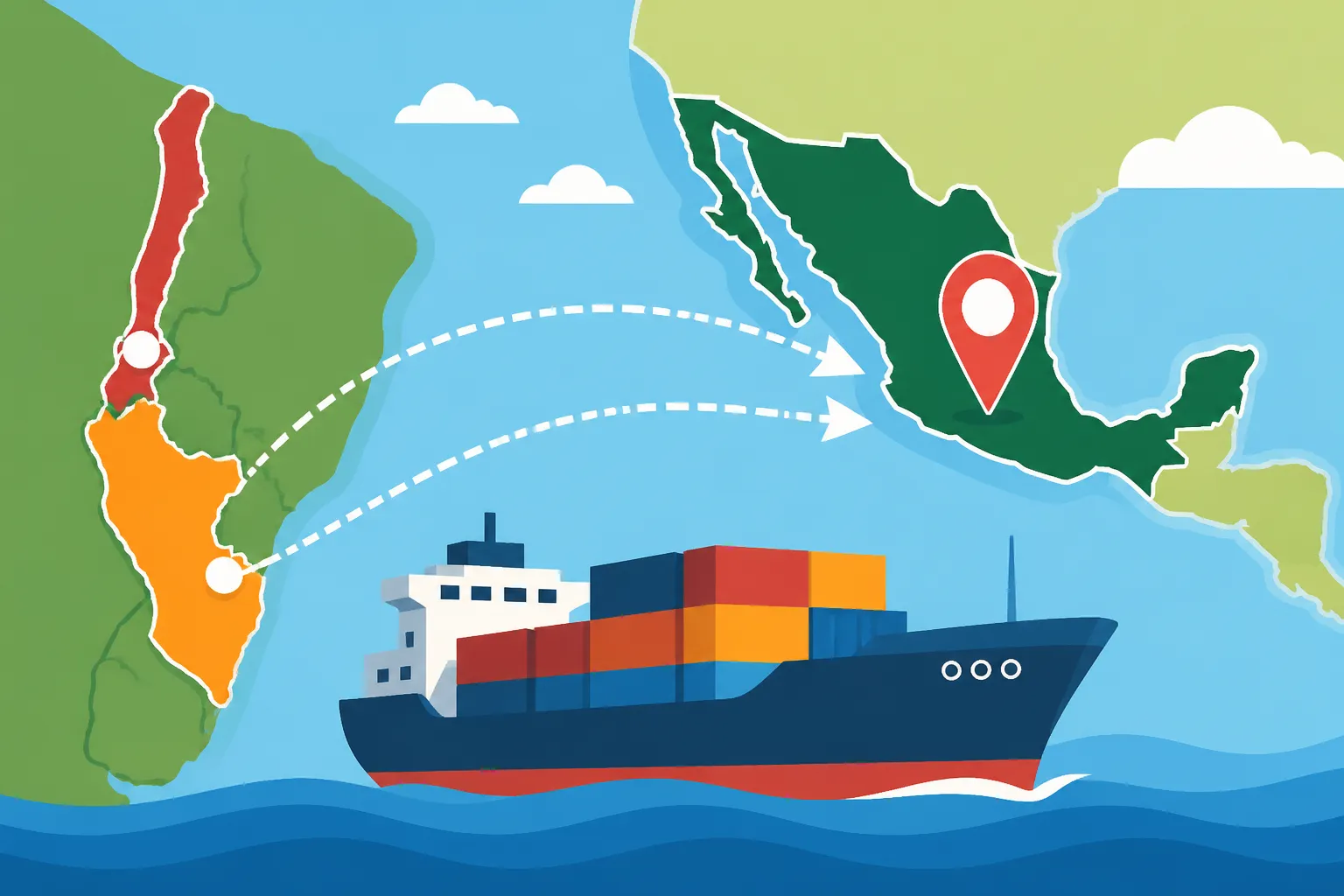
For those coming from countries like Chile or Peru, the most logical and often cost-effective route for shipping household goods to Mexico is via the Pacific Ocean. This isn't just a geographical fact; it dictates everything from your choice of port to the transit times and the logistics companies available. Forget about land routes or quick hops across the Atlantic; your belongings will be making a sea journey, likely departing from major ports such as Valparaíso or San Antonio in Chile, or Callao in Peru, and arriving in Mexican Pacific ports like Manzanillo, Colima, or Lázaro Cárdenas, Michoacán.
This route offers the benefit of direct maritime links, avoiding the longer, more complicated routes that might involve transshipment through other continents. However, it also means you'll need to be acutely aware of shipping schedules, potential delays due to weather or port congestion, and the specific regulations that govern freight traffic between these nations. I've heard countless stories from expats who thought all international shipping was the same, only to be surprised by the nuances of this particular corridor. It’s critical to partner with someone who understands these regional specificities.
Common Worries and What to Expect
It’s completely normal to feel a surge of anxiety when contemplating sending your most cherished possessions halfway across the world. Will they arrive safely? Will they be damaged? What about customs? These are universal expat fears, amplified when dealing with international waters and different legal systems. From Chile or Peru, you're likely concerned about the sheer distance and the time it will take. You're probably also wondering about the cost, which can be a significant factor.
Expect a process that requires patience and meticulous organization. You'll be dealing with multiple points of contact, from your chosen moving company to customs brokers and potentially even immigration officials. It’s not just about packing boxes; it's about managing expectations, understanding timelines, and having a contingency plan for when things inevitably don't go exactly as planned. Trust me, I've learned that flexibility is your best friend when navigating bureaucracy in Mexico and beyond. Having a reliable partner can transform this daunting task into a manageable one.
Navigating the Logistics: Your Shipping Options
When it comes to getting your possessions from South America to Mexico, you generally have two main logistical choices: sea freight and air cargo. Each has its pros and cons, especially when considering the significant distance and cost implications.
Sea Freight: The Most Common Route
Sea freight is, without a doubt, the workhorse of international relocation for most expats. It's significantly more economical for larger shipments, making it the go-to option if you're bringing furniture, appliances, or a substantial volume of household goods. Your items will be packed into shipping containers, which are then loaded onto cargo vessels.
You'll typically choose between two main options for sea freight:
- Full Container Load (FCL): This means you rent an entire container (usually 20-foot or 40-foot) for your exclusive use. It's faster than LCL because there's no consolidation time, and your goods aren't mixed with anyone else's, reducing handling and potential for damage. If you have a whole house to move, this is probably your best bet.
- Less than Container Load (LCL): If you don't have enough stuff to fill an entire container, your belongings will be consolidated with other shipments heading to the same destination. This is a more budget-friendly option for smaller moves, but it often involves longer transit times due to the consolidation and deconsolidation process at both ends. It also means more handling, so ensure your items are robustly packed.
The journey from, say, Callao to Manzanillo can take anywhere from 10-25 days on the water, not including the time for packing, loading, customs clearance at origin, and unloading and customs clearance at the destination. So, realistically, budget 4-8 weeks from door-to-door. This gives you plenty of time to get settled in your new rental, perhaps finding some excellent options through our guide on Renting a Home in Mexico: Complete Expat Guide to Leases, Deposits, and More.
Air Cargo: When Speed is Essential
If you're in a hurry, or if you only have a few critical items that absolutely must arrive quickly, air cargo is your solution. Think important documents, essential medical supplies, or high-value, small items you can't live without for weeks. The trade-off, however, is cost. Air freight is substantially more expensive than sea freight, often by a factor of three to five times or even more, depending on the weight and volume.
Air shipments usually arrive within 3-7 days from airport-to-airport, again, not including packing and customs clearance. This can be a lifesaver for certain situations, but for a full household move, it’s usually prohibitive. Many expats use a combination: sea freight for the bulk of their belongings and air cargo for a few "first-week" essentials.
Finding Reputable Movers with Sirelo
This is where you absolutely cannot cut corners. Choosing the right international moving company is paramount. You need a company that specializes in international moves, has experience with the Chile/Peru-to-Mexico route, and, ideally, offers door-to-door service, managing everything from packing at your old home to delivering to your new one. This includes navigating origin and destination customs.
Here’s where a platform like Sirelo becomes your hero. Instead of sifting through countless individual moving company websites and trying to decipher complex quotes, Sirelo streamlines the process. You can submit your moving details once, and Sirelo will connect you with multiple pre-vetted international moving companies that serve your specific route. This allows you to compare quotes side-by-side, read reviews from other expats, and make an informed decision without the headache of endless individual inquiries.
Using Sirelo means you’re tapping into a network of professional movers who understand the intricacies of international relocation. They can advise you on everything from packing materials to insurance options, and, crucially, the necessary documentation for Mexican customs. Don't underestimate the value of transparency and comparison when selecting a service as critical as this. Many movers listed on Sirelo will have direct experience with Latin American logistics, which is invaluable. They’re designed to make your move as stress-free as possible, ensuring you get competitive pricing and reliable service.
Consider this table comparing the two primary shipping methods:
| Feature | Sea Freight | Air Cargo |
|---|---|---|
| Cost | Most economical for large volumes | Significantly more expensive |
| Transit Time | Longer (4-8 weeks door-to-door, including customs) | Faster (3-7 days airport-to-airport, excluding customs) |
| Volume/Weight | Best for large household goods & furniture | Best for small, urgent, or high-value items |
| Flexibility | Less flexible with schedules | More flexible, frequent departures |
| Carbon Footprint | Lower | Higher |
| Ideal Use Case | Full home moves, non-urgent items | Critical documents, immediate essentials |
Customs, Documentation, and the Menaje de Casa
Ah, customs. The word alone is enough to send shivers down an expat’s spine. Yet, understanding and meticulously preparing for Mexican customs is perhaps the most critical part of your Pacific-side shipping journey. Failing to do so can lead to costly delays, fines, or even the seizure of your belongings.
Understanding Mexican Customs Regulations
Mexico, like any sovereign nation, has strict rules about what can and cannot enter the country, and under what conditions. The main goal here is to import your personal household goods without paying exorbitant taxes. For this, your resident visa is key. If you're moving to Mexico with a temporary or permanent resident visa (check out The Ultimate Guide to Mexico's Visa and Residency Options (2027 Edition) for more on this), you are generally eligible to import your used household goods duty-free.
However, "duty-free" doesn't mean "paperwork-free." You'll need to demonstrate that the items you're bringing are indeed personal effects you’ve owned and used for a certain period (usually at least six months) and are not new items intended for sale. This is where your detailed packing list becomes a legal document, not just a guide for unpacking. Be prepared for scrutiny, especially if you have a lot of electronics or brand-new looking items.
The Importance of the Menaje de Casa
The Menaje de Casa (Household Goods Certificate) is your golden ticket for importing your personal belongings into Mexico duty-free. This is a certificate issued by a Mexican Consulate in your country of origin (Chile or Peru, in your case) that verifies your status as a new resident and lists all the items you are bringing with you.
The process for obtaining a Menaje de Casa typically involves:
- Gathering Documents: This will include your valid Mexican resident visa (temporary or permanent), passport, proof of address in your home country, and crucially, an itemized list of all your household goods. This list needs to be incredibly detailed, describing each item, its approximate value, and quantity. Don't just write "kitchen items"; specify "pots, pans, dishes (set of 6), coffee maker."
- Consulate Appointment: You’ll need to make an appointment at the Mexican Consulate nearest you in Chile or Peru. Be prepared for a formal interview and the consular staff meticulously reviewing your documentation. It’s a bureaucratic step, but absolutely essential.
- Timing: You typically need to apply for your Menaje de Casa within six months of receiving your resident visa, and then import your goods within six months of the certificate's issuance. Don't let these deadlines pass you by!
Without a properly executed Menaje de Casa, you risk paying significant import duties on everything you bring, or worse, having items held indefinitely at the port. This is why most international moving companies, like those found through Sirelo, will emphasize this document as a non-negotiable part of your relocation strategy. They’ll likely guide you through the requirements, helping you prepare the detailed list needed. For further insight into customs regulations, take a look at our Customs Tips for New Residents: What You Can Bring When Moving to Mexico guide.
Dealing with Duties and Prohibited Items
Even with a Menaje de Casa, there are items that are either subject to duties or outright prohibited.
- Prohibited Items: This list is fairly standard and includes illegal drugs, firearms, explosives, toxic substances, and certain agricultural products or animal products without specific permits. Mexico is also strict on certain types of plants and seeds.
- Restricted Items: Some items, like new electronics, large quantities of alcohol, or excessive amounts of certain goods (e.g., more than one of the same appliance if clearly new), might be subject to duties even if they're on your Menaje de Casa. Vehicles (cars, motorcycles) are a whole different beast and have their own complex import processes, usually requiring separate permits and duties unless you're a temporary resident, in which case a Temporary Import Permit (TIP) is needed for your foreign-plated car.
A reputable moving company will clarify these details. If you have any doubt about a specific item, declare it. Attempting to conceal items will only complicate matters and can lead to severe penalties. Honesty is always the best policy when it comes to Mexican customs, and it’s something the professionals connected via Sirelo can thoroughly explain. They often have customs brokers on their team or as partners who live and breathe these regulations.
Practical Steps for a Smooth Relocation Journey
Once you’ve got your head around the main logistics and legalities, it’s time to focus on the practicalities of getting your life packed up and moving across the Pacific. This isn't just about throwing things in boxes; it's about strategic preparation and smart decision-making.
Preparing Your Belongings for International Transit
Proper packing for an international move is vastly different from a local one. Your items will be subjected to significant handling, potentially long storage periods, and varying environmental conditions (humidity, temperature changes).
Here are key considerations:
- Professional Packing: If your budget allows, invest in professional packing services from your moving company. They use specialized materials and techniques designed for international transit, reducing the risk of damage. If you do it yourself, use robust, double-walled boxes, plenty of packing paper, bubble wrap, and clearly label every box with its contents and the room it belongs in.
- Inventory is King: Your detailed inventory for the Menaje de Casa isn't just for customs; it's your lifeline. Take photos or even a video of high-value items before they’re packed. This is crucial for insurance claims if anything goes amiss.
- Disassembly and Reassembly: For furniture, discuss with your mover whether they offer disassembly and reassembly services. This can save you a huge headache upon arrival.
- Essentials Box: Pack a separate "essentials" box or two that will travel with you on the plane or arrive via air cargo. This should contain immediate necessities: medications (check Bringing Prescription Medications from Home: Rules and Tips for Expats), a few changes of clothes, important documents, basic toiletries, and anything you absolutely can't do without for a few weeks. Think about making a Building a First Aid Kit: Essential Medical Supplies for Expats in Mexico to bring with you too.
- Valuables: Never ship extremely valuable items (jewelry, sentimental documents, expensive cameras, laptops) via sea or air cargo. Carry them with you as hand luggage.
Remember, the movers found through Sirelo are experts in this. Don't hesitate to ask them for their specific packing recommendations for fragile items or unique possessions. Their experience will be invaluable.
Tracking Your Shipment and Post-Arrival Tips
The waiting game after your shipment departs can be agonizing. Most reputable moving companies will provide you with a tracking number or access to a portal where you can monitor your container's journey across the Pacific. Stay in regular communication with your moving coordinator.
Once your shipment arrives at a Mexican port (like Manzanillo or Lázaro Cárdenas), the real local work begins:
- Customs Clearance: Your moving company’s local agent or customs broker will handle the clearance process. They will submit your Menaje de Casa and other required documents to Mexican customs. This phase can take several days to a week or more, depending on port congestion and the thoroughness of the inspection.
- Delivery and Unpacking: Once cleared, your goods will be loaded onto a truck for delivery to your new home. Ensure you or a trusted representative are present for delivery. Inspect all boxes and items for visible damage before signing off on the delivery. Note any issues on the delivery receipt.
- Insurance Claims: If you opted for moving insurance (highly recommended!), this is when you’d initiate a claim if anything was damaged or lost. Having that detailed inventory and photos will be critical.
It’s a process, but with a good moving company like those you can find on Sirelo, you'll have a guide every step of the way. They often provide real-time updates and proactive communication, minimizing your stress during the final stages of transit.
Settling In After Your Goods Arrive
Once your belongings are safely in your new Mexican abode, the true work of settling in begins. While your moving company handles the heavy lifting, you'll be busy with all the other elements of making Mexico home. This includes figuring out local utilities—electricity, water, and gas—which can be a new experience in itself. Our guide to Home Utilities in Mexico: Setting Up Electricity, Water, Gas, and Internet can be incredibly helpful here.
Beyond the physical unpacking, there’s the emotional and administrative unpacking. You’ll need to understand the local banking system, which is quite different from what you might be used to in Chile or Peru. Our article, Do You Need a Mexican Bank Account or Can You Rely on Your Home Bank?, offers excellent insights. Don't forget that you'll eventually need a local tax ID, an RFC, for many financial and administrative tasks, as explained in Do You Need an RFC Number? Why a Tax ID Matters for Expats' Finances.
Embrace the journey. The initial stress of the move will eventually give way to the excitement of exploring your new surroundings, perhaps even discovering charming spots that our Cost of Living in Mexico: 2026 Comprehensive Guide can help you budget for. Finding reliable information and support through platforms like Sirelo for your move, and then through comprehensive guides like these, will be your biggest asset in transforming a daunting relocation into a successful new chapter.
Disclaimer
Please remember that immigration laws, customs regulations, and financial requirements in Mexico can change frequently. While this guide is based on the most current information available, it is always best to consult directly with a qualified immigration lawyer, customs broker, or the Mexican Consulate in your country of origin for the latest and most personalized advice for your specific situation.