How to Visit Chichén Itzá Without the Crowds
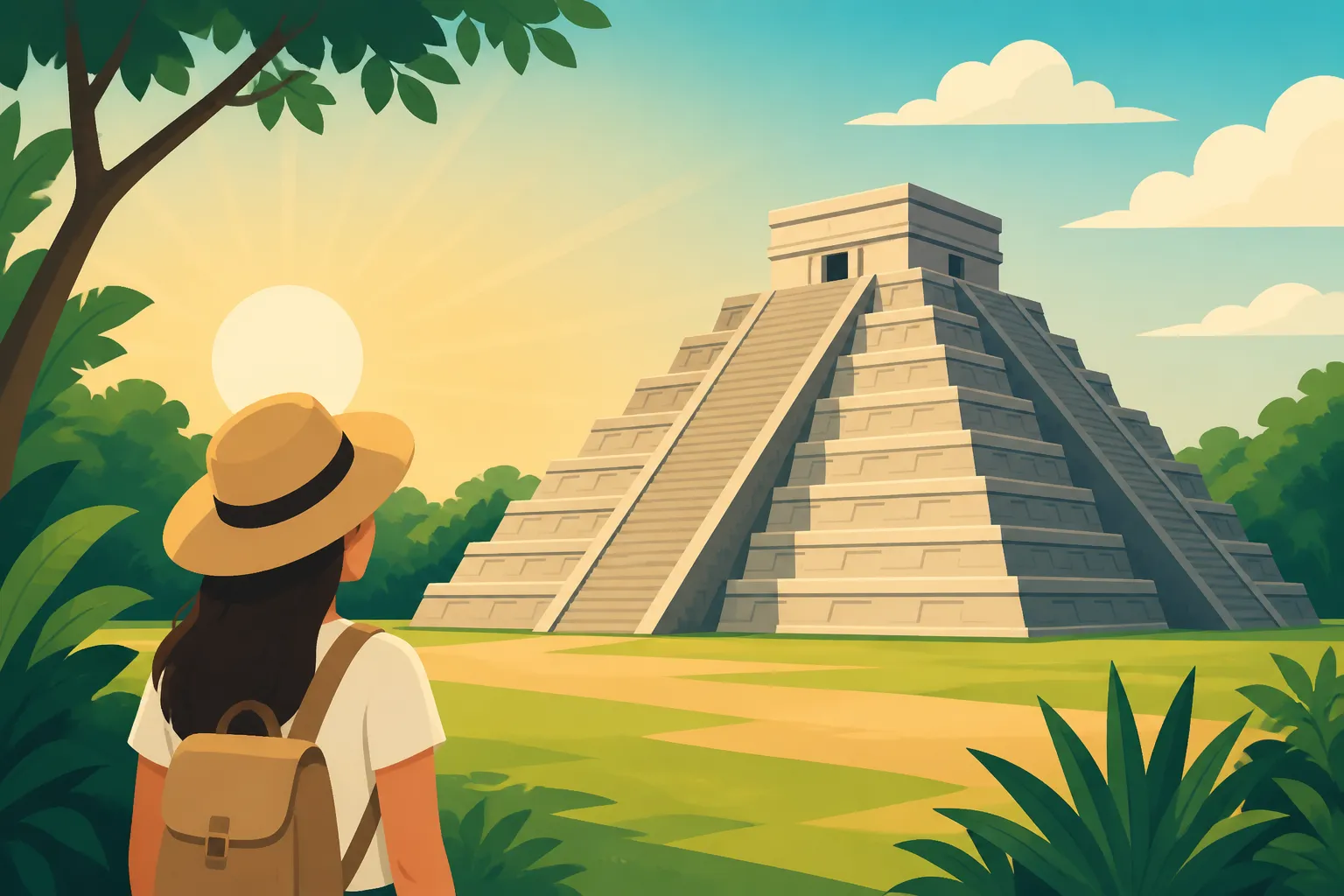
Picture this: you finally reach El Castillo, phone raised, and your photo is mostly selfie sticks, umbrellas and a vendor’s whistle that sounds like a jaguar roar. Chichén Itzá deserves better than that. This guide shows you how to time your visit, where to sleep and how to move through the site so you get those quiet, goosebump moments.
Disclosure: This post may contain affiliate links. We may earn a commission at no extra cost to you if you make a purchase through these links. Read full disclosure.
Why Chichén Itzá Gets So Crowded and When the Crush Happens
The first time I visited Chichén Itzá, I made the classic mistake of joining a big all-day tour from Cancún. I spent hours on a coach, arrived at the hottest part of the day and shuffled through the site behind thousands of other people. I still remember standing near the Great Ball Court, sweaty and irritated, wondering why everyone called this place magical. Once I moved to the Yucatán and started going back on my own terms, it became one of my favorite places in Mexico. Crowds here follow a predictable pattern, and once you understand it you can work around it.
The Daily Tour Bus Wave
Most visitors come from the Caribbean coast. Cancún, Playa del Carmen and Tulum send a steady stream of tour coaches west along the highway every morning. Those coaches leave the coast early, make a breakfast or souvenir stop, and roll into the parking lot from mid to late morning. From then until mid-afternoon, the main plaza around El Castillo, also called the Temple of Kukulcán, is at its busiest.
The vendors follow the same rhythm. Hundreds of artisans sell wooden masks, carved calendars, embroidered textiles and those jaguar-call whistles along the walkways. Many are still unpacking and setting up stalls when the gates first open. If you arrive in that window, you walk paths that are close to empty, and the soundtrack is birds instead of sales pitches.
A smaller second dip comes in the late afternoon, when the big groups head back to their buses for the long drive to the coast. The light is softer, the stone turns golden and the plaza thins out again. The catch is that heat builds all day and you have less time before closing. Late afternoon works well as a second visit or a fallback. The opening hour is still the best time to come.
Seasons, Holidays, and the Equinox Effect
Time of year matters almost as much as time of day. Holiday periods for North Americans and Europeans overlap with Mexican school holidays, and that combination fills the site. Below is how I think about the calendar after years of watching the parking lot fill and empty.
| Season | Months | Crowd Level | What to Expect |
|---|---|---|---|
| Peak | Mid-December to Easter, plus July and August | Highest | Winter sun-seekers, spring break, Semana Santa and Mexican summer holidays all stack up. Arriving at opening is essential. |
| Shoulder | Late April to June, and November to mid-December | Moderate | Fewer coaches, hotter weather in May and June, pleasant temperatures from November. Early arrival still pays off. |
| Low | September and October | Lowest | Heavy afternoon rain is common and it is hurricane season, but mornings can be blissfully quiet. Keep plans flexible. |
There is one big exception to the low-season calm. On the spring and autumn equinoxes, sunlight casts a serpent-shaped shadow down the northern staircase of El Castillo, and people travel from all over to see it. The March equinox falls in peak season and the September equinox falls in low season. Either way, those few days around each equinox are the most crowded of the year, regardless of season. If you want quiet, avoid them. If you want the serpent, accept that you will be sharing it with a very large crowd.
Weekends and Mexican public holidays also bring more domestic visitors, especially families from Mérida and nearby towns. Sundays in particular can be lively. If your schedule allows, go on a Tuesday, Wednesday or Thursday. For a wider look at the region’s weather and holiday calendar, see What’s the Best Time to Visit the Yucatán?.
Choosing Your Base: Sleep Close, Arrive First
The most important decision you will make about crowds is where you sleep the night before. If your starting point is two or three hours away, you cannot realistically beat the coaches. If you are twenty minutes away, you can be at the gate with your coffee before most tour groups have finished breakfast.
Overnighting in Pisté or Near the Ruins
Pisté is the small town right next to Chichén Itzá. It is not glamorous. There is a main road, a handful of taquerías, some modest hotels and plenty of tour buses passing through. Its big advantage is that you can roll out of bed and be at the entrance within minutes. Along the road toward the site there are also a few long-established hotels set in gardens close to the archaeological zone. Some of them advertise convenient walking access to an entrance. Policies change, so ask the hotel directly how guests reach the site and whether that route opens at the same time as the main gate.
Here is a scenario I recommend to friends who visit. Drive from the coast in the afternoon, check into a hotel near Pisté, swim in the pool, have dinner and go to bed early. The next morning, you are first in line, you see El Castillo with almost no one around, and you are back at your hotel for a late breakfast while the coaches are still arriving. Staying overnight costs you an afternoon, but you get the site at its emptiest in return.
If the evening sound-and-light show is running during your stay, sleeping nearby also lets you see the pyramid lit up at night without facing a long drive back in the dark. Check the official schedule locally, because show dates and formats change.
Valladolid as the Sweet-Spot Base
If Pisté feels too quiet, Valladolid is my favorite compromise. It is a colorful colonial city with a lovely main square, the San Bernardino convent, excellent regional food and a cenote, Zací, right in town. The drive to Chichén Itzá takes roughly 40 to 50 minutes, so you can still leave in the dark and arrive before opening.
What I love about using Valladolid as a base is that the rest of your trip improves too. Ek Balam, a smaller ruin where you can often still climb parts of the structures, is a short drive north. There are cenotes in every direction. In the evenings you can wander the Calzada de los Frailes and eat cochinita pibil or a lomitos de Valladolid plate instead of a tourist buffet. When I compare listings on Booking.com for this kind of trip, I filter for a small boutique hotel or casona in the historic center with secure parking, because street parking near the square fills up quickly.
For neighborhoods and hotel styles, see Where to Stay in Valladolid and Izamal: Yucatan Inland Towns. For a full guide to the city itself, see How to Visit Valladolid in the Yucatán.
Mérida, Cancún, and the Riviera Maya
Many people live in or vacation in Mérida, Cancún, Playa del Carmen or Tulum and want to visit Chichén Itzá as a day trip. That is possible, but your strategy has to change. From Mérida, it is roughly a two-hour drive. From Cancún, plan on about two and a half to three hours. Tulum and Playa del Carmen are in a similar range depending on the route you take.
One quirk helps travelers coming from the coast. Quintana Roo, where Cancún and Tulum are, runs an hour ahead of Yucatán state, where Chichén Itzá is. If you leave Cancún at dawn, you gain an hour as you cross the state line. A very early start from the coast can still get you there around opening time. People do miss this, so double-check that your phone has switched time zones, or you may think you are running late when you are actually early.
| Base | Approximate Drive to Chichén Itzá | Can You Beat the Coaches? | Best Strategy |
|---|---|---|---|
| Pisté and nearby hotels | A few minutes | Easily | Be at the gate at opening, leave by late morning |
| Valladolid | About 40 to 50 minutes | Yes | Leave before sunrise, combine with cenotes and Ek Balam |
| Mérida | About 2 hours | Possible with a very early start | Leave in the dark or stay one night near the site |
| Cancún | About 2.5 to 3 hours | Difficult, but the time zone change helps | Use the extra hour, or overnight in Valladolid |
| Playa del Carmen or Tulum | About 2.5 to 3 hours | Difficult | Overnight inland, or choose a late afternoon visit |
If you live on the coast and are planning this as a long day out, see How to Visit Chichén Itzá From the Riviera Maya.
Getting There Before Everyone Else
Once your base is set, the next question is how you will physically get to the gate early. Each option has its own frustrations, and I have experienced most of them.
Driving Yourself on the Toll Road
Driving gives you the most control, and it is how I usually go. The main route is the toll highway 180D, the cuota, which connects Cancún and Mérida and has an exit for Chichén Itzá and Pisté. The toll road is fast, smooth and well maintained, but service stations are far apart. Fill up before you get on, and carry cash for the toll booths. Card acceptance varies, and you do not want to discover that at a booth with a line of cars behind you.
The free road, the libre, runs through small Maya villages full of topes, the speed bumps that will scrape your rental car’s undercarriage if you are not paying attention. It is scenic and much slower. In the pre-dawn dark, I stick to the cuota every time. Driving through villages before sunrise means people, bicycles, dogs and unmarked topes appearing out of nowhere.
Practical things that help on the morning of your visit:
- Load your offline maps the night before, because signal can drop between towns.
- Leave a buffer for the parking lot, which has a separate fee from the site entrance.
- Keep a hat, water and sunscreen in the car rather than in your suitcase.
- Take a photo of where you parked. The lot gets packed by midday and every white sedan looks the same.
If you want to build Chichén Itzá into a larger driving loop, see How to Plan a Yucatán Road Trip.
Buses and Colectivos
If you are not driving, buses can still get you there early, though you have less flexibility. ADO and its partner lines run services to Chichén Itzá from Mérida, Valladolid, Cancún and other towns. The catch is that the most convenient departure from a distant city may still put you at the site in the middle of the coach wave. From Valladolid, the shorter distance means an early bus arrives in good time.
I usually check schedules on the ADO website or app, and sometimes compare routes on Busbud when I want to see different operators side by side, especially on less obvious connections. Schedules change by season, so confirm the return times before you go. Missing the last bus back is a frustrating way to end the day. For step-by-step help with booking, see How to Buy ADO Bus Tickets in Mexico.
From Valladolid there are also colectivos, shared vans that leave from the center once they fill up. They are cheap, frequent through the morning and used by locals heading to work at the site and in Pisté. Ask at your hotel where the current pickup point is, because these spots move. Colectivos are less predictable than buses at dawn, but they are a great budget option once the morning routine gets going.
Taxis are another option from Valladolid. You can negotiate a round trip with waiting time. Agree on the price, the departure time and how long the driver will wait before you set off, and make sure you both understand the same thing. A short conversation the night before makes the morning much smoother.
Early-Access and Small-Group Tours
Not every tour is a crowded coach. Some operators run small-group or private trips timed for opening, often leaving from Valladolid or Mérida rather than from the coast. Some combine an early arrival at the ruins with a cenote swim afterward. When I browse on Viator, I read the itinerary carefully and look for three things: the actual departure city, the stated arrival time at the site, and the maximum group size. A tour that says “early” but leaves Cancún at the same time as everyone else will still drop you into the midday crowd.
Ask whether the guide is a licensed site guide or whether you will hire one at the entrance. Licensed guides wait near the entrance and can be hired on the spot. A good one can steer you away from the busiest areas while sharing stories about Maya astronomy and the ball game. A private guide at opening time is one of the best experiences you can have at Chichén Itzá.
Some platforms and operators also sell special early-entry or extended-access experiences when the site allows them. These come and go, so check directly and read the cancellation terms. For a deeper comparison, see Chichen Itza Tours Compared: Group, Private, and Early-Access Options. For how early-entry ticketing works at Mexican archaeological sites in general, see Skip-the-Line and Early-Entry Tickets at Mexican Archaeological Sites.
A Crowd-Dodging Route Inside the Site
Arriving early is half the battle. The other half is using that quiet first hour wisely. I have watched people arrive first, then spend forty minutes in the gift shop or wait for an entire group to be ticketed together, and lose their advantage before they reach the pyramid.
Your First Hour Game Plan
Chichén Itzá is big, flat and spread out, and most of the shade is under trees along the paths rather than in the open plazas. This is the order that has worked for me again and again:
- Have your ticket sorted and your bag light before the gate opens. Large bags, tripods and drones may be restricted, so leave anything you do not need in the car or at your hotel.
- Walk straight to El Castillo without stopping. The path from the main entrance opens directly onto the great plaza, and this is your best chance for clear photos of the pyramid.
- Take photos from several angles. The northern face with its serpent heads, the restored side and the less-restored side all look very different, and each is worth a few minutes while the plaza is empty.
- Head to the Great Ball Court next. It is the largest in Mesoamerica, and the acoustics are remarkable when it is quiet. Clap once at one end and listen for the echo. Study the carved panels along the walls before any groups gather there.
- Visit the Temple of the Warriors and the Group of a Thousand Columns while the light is still soft. The rows of columns photograph beautifully early in the morning.
- Walk south to El Caracol, the observatory, and the Las Monjas complex. Many visitors on short tours never get this far, so this area often stays calm well into the morning.
- Finish with the walk north along the sacbé, the old white road, to the Sacred Cenote. It is shaded and atmospheric, and a good place to slow down as the crowds start to build behind you.
By the time you loop back toward the plaza, the coaches will usually be arriving. That is when I head for the exit, quite happy with my morning.
Heat, Vendors, and Pacing Yourself
Even in the cooler months, the sun at Chichén Itzá is intense. The great plaza is open stone and grass, with little shelter. I have seen visitors from colder countries go pale and dizzy by late morning because they underestimated it. Bring more water than you think you need, wear a wide-brimmed hat, and use sunscreen before you arrive, not after you feel your neck burning. For more on staying safe in the Yucatán heat, see Heat Stroke and Sunburn: Preventative Care in Mexico’s Hot Climate.
On the vendors: they are local people, many from surrounding Maya communities, earning a living. A polite “no, gracias” with a smile is enough, and nobody will chase you. If you do want to buy something, it is often more relaxed to do it on your way out, once you have finished exploring. Some of the carved pieces and embroidery are genuinely beautiful. Haggling is normal, but keep it friendly and fair.
Restrooms are near the entrance and the main facilities. Go before you head deep into the site, because there are few options once you are out by El Caracol. A small snack in your bag also helps. Hunger and heat together make everyone grumpy, and that includes me.
Pairing Your Visit With Quieter Sites and Cenotes
One way to enjoy Chichén Itzá more is to avoid making it your whole day. Finish by late morning, then go somewhere peaceful. Cenote Ik Kil is very close and famous for the vines hanging into its round opening. Because it is close, it fills up at midday with the same tour groups, so I prefer going just after it opens or skipping it. Quieter choices include Cenote Yokdzonot, a community-run cenote a short drive west, and the cenotes around Valladolid, such as Saamal, Oxman and the Dzitnup pair. For more options, see How to Take a Cenote Day Trip in the Yucatán.
If you love ruins but hate crowds, give the region’s other sites a day too. Ek Balam, near Valladolid, has a remarkably well-preserved stucco facade at the top of its Acropolis. The Puuc sites south of Mérida, including Uxmal and Kabah, are elegant and often far emptier than Chichén Itzá. I have stood almost alone in front of the Pyramid of the Magician at Uxmal on a weekday morning. For a full plan, see How to Visit Uxmal and the Puuc Route in the Yucatán.
A sample two-day plan I often suggest to visiting friends looks like this:
- Day one: drive inland, explore Valladolid in the afternoon, swim at Cenote Zací and have an early dinner near the main square.
- Day two, dawn: leave for Chichén Itzá, arrive at opening and follow the route above.
- Day two, late morning: swim at a quieter cenote such as Yokdzonot and eat lunch in a local restaurant on the way.
- Day two, afternoon: either return to the coast, remembering that you lose an hour to the time zone change on the drive east, or continue west toward Mérida for the next leg of your trip.
If this is your first visit and you want the history, the main structures and ticket basics explained in more detail, see How to Visit Chichén Itzá as a Visitor.
Chichén Itzá is one of those places that can feel overwhelming or unforgettable depending on how you plan it. Sleep close, arrive at opening, walk straight to the pyramid, and leave the midday crowds to someone else. The quiet morning view of El Castillo is worth the alarm clock.
Disclaimer
This article is for general informational purposes only and does not constitute professional advice. Laws, prices and regulations vary by location and change over time. Consult a qualified professional for guidance on your specific situation.