How to Ask for the Bill in a Mexican Restaurant
The first time I sat in a lovely little fonda in Coyoacán waiting for my bill, I waited forty-five minutes. Nobody was ignoring me. In Mexico, the waiter will almost never bring the check until you ask, because rushing you out would be rude. This guide explains how to ask, what to say, and how payment, splitting and tipping work.
Disclosure: This post may contain affiliate links. We may earn a commission at no extra cost to you if you make a purchase through these links. Read full disclosure.
Why the Bill Never Arrives on Its Own
Lingering Is the Point
If you come from a place where the check lands on the table with your last bite, the Mexican approach can feel like being forgotten. It is the opposite. Bringing the bill unasked suggests the restaurant wants your table back, and in most Mexican restaurants that is bad manners. The sobremesa, the time spent chatting after the meal, is a real part of eating here. Families can sit for an hour after the plates are cleared on a Sunday afternoon.
So the waiter, often called the mesero, waits for your signal. Once you understand this, the long pause stops feeling like neglect and starts feeling like hospitality. It also explains why you rarely feel pressured to order dessert or leave. For the wider picture of how Mexicans pace a day, Mexican Time and Daily Rhythm for Visitors is worth a read.
When Timing Actually Matters
The relaxed pace is lovely until you have somewhere to be. If you are catching an evening ADO coach you booked through Busbud, or you are meeting a guide for a night tour, ask for the bill earlier than feels natural. Ask while you are still finishing your main course. That gives the waiter time to print the check, bring a card terminal and process payment without you sprinting to the terminal.
Meal timing affects this too. The main meal, the comida, often happens in mid-afternoon, and that is when restaurants are busiest and staff are stretched thin. What Time Do Mexicans Eat Lunch and Dinner? covers the schedule in more detail so you can plan around the rush.
The Exact Phrases and Gestures to Use
Getting the Waiter’s Attention
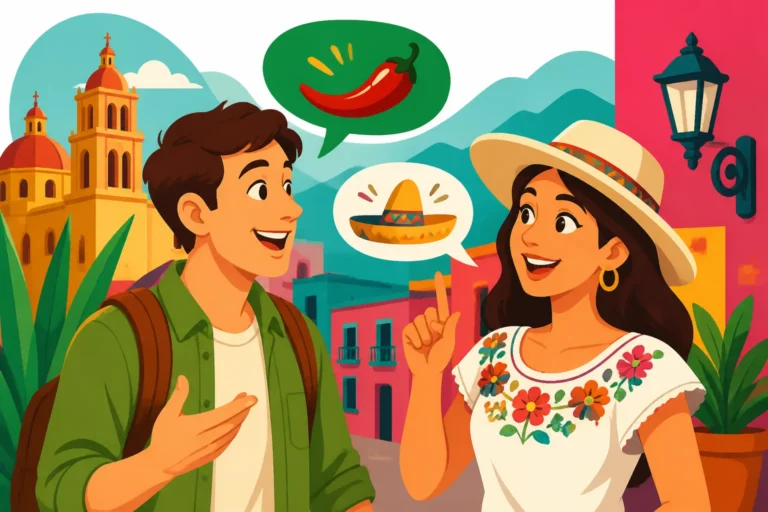
Before you can ask for anything, you need to catch someone’s eye. Snapping your fingers or whistling is rude. Shouting across the room is also out. Instead, make eye contact and raise a hand slightly, or say “Disculpe” (excuse me) as they pass. You will hear locals call younger waiters “joven” (young man) or “señorita”. These are perfectly normal and polite in Mexico, even for staff who are not especially young.
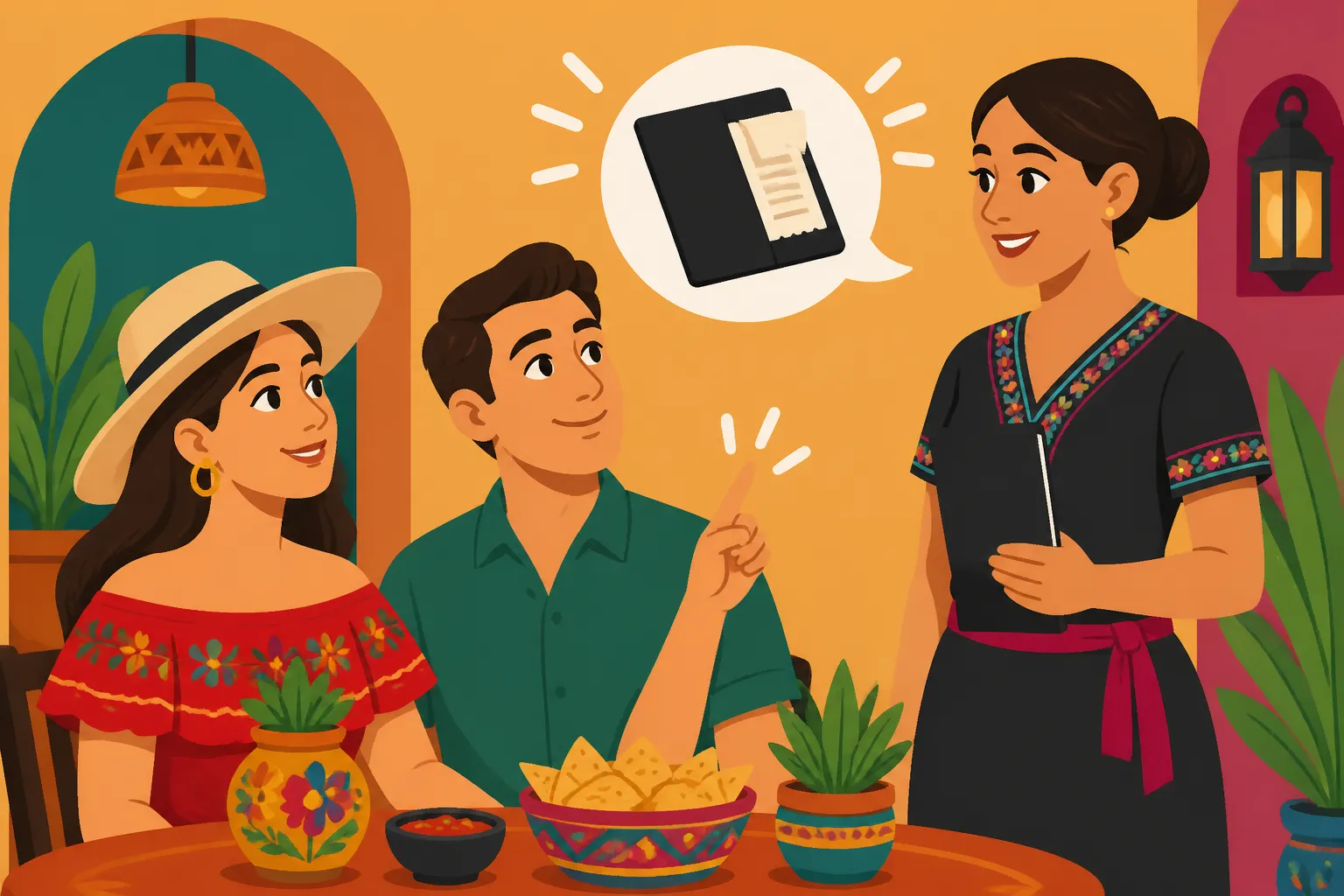
Then there is the gesture almost every Mexican uses: you catch the waiter’s eye and pretend to sign your name in the air with an invisible pen. It works in loud cantinas, across crowded terraces and when your Spanish deserts you. It is universally understood and not considered rude at all.
The Words That Work Best
“La cuenta, por favor” is the textbook phrase and is always correct. In everyday Mexican Spanish, though, you will hear softer versions that sound more natural. “¿Me trae la cuenta, por favor?” means “Could you bring me the bill?” The very Mexican “¿Nos regala la cuenta?” literally means “Will you gift us the bill?” Nobody is asking for a free meal. It is simply a warm, polite way of asking, and it often earns a smile.
Using the formal “usted” form with waiters is the safe default. Polite Spanish in Mexico: Usted vs Tú for Visitors explains why. If you want to build a wider restaurant vocabulary, Ordering Food and Drinks in Spanish in Mexico pairs nicely with this guide.
| Situation | What to Say | Meaning |
|---|---|---|
| Asking for the bill | La cuenta, por favor | The bill, please |
| A friendlier version | ¿Nos regala la cuenta? | Could you bring us the bill? |
| At a taco stand | ¿Cuánto le debo? | How much do I owe you? |
| Paying by card | ¿Aceptan tarjeta? | Do you take cards? |
| Splitting the bill | ¿Nos lo divide, por favor? | Can you split it for us? |
| Separate checks | Cuentas separadas, por favor | Separate bills, please |
| Checking for service charge | ¿Ya incluye la propina? | Is the tip already included? |
| Asking for a tax invoice | ¿Me puede dar factura? | Can you give me an invoice? |
How Paying Works in Different Kinds of Places
Sit-Down Restaurants and Fondas
In a full-service restaurant, the waiter usually brings the check in a small folder or on a tray. Look it over before paying. Make sure every dish is yours and check whether a service line, often marked “servicio”, has been added. This happens more often in tourist-heavy areas such as Cancún’s Hotel Zone or Playa del Carmen’s Quinta Avenida. Tipping in Mexico is voluntary, so a pre-added service charge should be clearly shown, and you are entitled to ask about it.
At a fonda serving comida corrida, the set menu of soup, rice, a main course and an agua fresca, the process is the same but more casual. Sometimes the owner simply tells you the total out loud. What Is a Comida Corrida and How Does It Work? walks you through what is typically included so you know what you are paying for.
Taquerías, Street Stalls and Markets
Taco stands flip the restaurant logic. Often nobody writes anything down. You eat, and when you are done, you tell the taquero what you had. You might say “Fueron cuatro de pastor y un refresco” (it was four al pastor and a soda) and then ask “¿Cuánto le debo?” The honor system is real and works remarkably well. Some busier taquerías have a separate caja (cash register) where you pay on your way out instead.
Market food stalls and many street vendors are cash-only, and small bills are hugely appreciated. Arriving with a large note at a stand that has just opened can leave the vendor scrambling for change. How to Order at a Taquería in Mexico covers the ordering side in detail.
Cantinas, Hotels and Guided Food Tours
Traditional cantinas sometimes serve free botanas (snacks) with drinks. The bill reflects only the drinks, so it can look surprisingly small for how much food arrived. It is still polite to tip generously for that hospitality. Some cantinas keep a running tab you settle at the end. Others want payment per round, so watch what the regulars do.
If you are staying at a hotel you booked on Booking.com, the on-site restaurant may let you sign the bill to your room. Confirm your room number is written clearly, and check the folio at checkout to make sure each meal shows up correctly.
On a street food tour booked through Viator, tastings are usually prepaid. Extra drinks or dishes you order on your own are your responsibility, though. Ask the guide whether a stop is included before you order a second round. Street Food Tours in Mexico City: What a Guide Adds Over Wandering explains what these tours typically cover.
Cards, Cash, Splitting and Tipping
Paying by Card the Safe Way
Card acceptance is widespread in mid-range and upscale restaurants in cities. Small places may be cash-only, so ask “¿Aceptan tarjeta?” before you order if you are short on pesos. When you pay by card, the waiter should bring a portable terminal to your table. This is standard practice, and you should keep your card in sight. If someone wants to carry it away to a back room, politely ask for the terminal instead: “¿Me trae la terminal, por favor?”
The terminal may ask whether you want to pay in pesos or in your home currency. Choosing pesos is generally the better choice, because the conversion offered at the terminal tends to favor the merchant. Some terminals also prompt you to add a tip on screen, which is convenient if you are low on cash. For a broader look at when to carry cash, see Cash vs Card in Mexico: What Visitors Should Know.
Splitting the Bill With a Group
Group dining is common, and most restaurants handle splits without fuss if you ask clearly. Here is the smoothest way to do it.
- Tell the waiter early, ideally when ordering, that you will want separate bills: “Vamos a pagar por separado.”
- When asking for the check, say “¿Nos lo divide, por favor?” for an even split, or name who had what for itemized checks.
- If several people are paying by card, tell the waiter how many cards and how much goes on each.
- Decide as a group how you will tip, so one person is not left covering everyone’s propina.
- Check each slip before signing, since multi-card splits are where mistakes creep in.
Busy weekend lunches can make itemized splits slow. In that case, one person paying and the others settling up by bank transfer or cash is often faster and kinder to the staff.
Tipping and Getting a Factura
Tips are voluntary but strongly customary in sit-down restaurants, and many servers rely on them. Leaving cash on the table is common, and so is adding the tip on the card terminal. Tip in pesos rather than foreign coins, which waiters cannot exchange. For norms around how much to leave, see Tipping in Mexico (Propina): When and How Much. If you are worried about the etiquette of skipping it, Is It Rude Not to Tip in Mexico? covers that question directly.
Business travelers and residents who need an official tax invoice should say so when asking for the bill: “¿Me puede dar factura?” Many restaurants print a receipt with a QR code or web address where you request the factura yourself within a set period. Others will ask for your tax details on the spot. How to Request a Factura From a Mexican Business explains the details you will need to have ready.
Once you have the phrases, the gesture and a sense of the rhythm, asking for the bill becomes one of those small moments that make you feel at home here. Take your time over that last coffee. When you are ready, just pick up your invisible pen.
Disclaimer
This article is for general informational purposes only and does not constitute professional advice. Laws, prices and regulations vary by location and change over time. Consult a qualified professional for guidance on your specific situation.