How to Pay Your CFE Electricity Bill in Mexico
One of the most heart-sinking moments in Mexico is coming home to find your ceiling fans silent and your refrigerator leaking because you missed a CFE payment by exactly one day. I remember my first month in Querétaro, staring at a dark living room because I didn't realize the bill had been tucked into the gate a week prior. This guide solves the labyrinth of paying your electricity bill so you never have to face a "corte" again.
Disclosure: This post may contain affiliate links. We may earn a commission at no extra cost to you if you make a purchase through these links. Read full disclosure.
Navigating the CFE Billing Cycle in Mexico
The Comisión Federal de Electricidad, or CFE, is the state-owned utility company that provides power to nearly every corner of Mexico. For most expats, the first hurdle is simply understanding when and how the bill arrives. Unlike many countries where monthly billing is the standard, CFE traditionally operates on a bimestral (two-month) cycle. This means you only get a bill every 60 days, which makes it incredibly easy to forget if you aren't tracking it on a calendar.
When you are first Settling in Mexico: Step-by-Step Guide to Your First 30 Days as an Expat, the physical paper bill, known as the "recibo," is your most important document. It usually arrives a week or two before the "fecha límite" (due date). It is often just jammed into a crack in your front gate or left under the door. If you are staying at a place like Selina while you look for long-term housing, you won’t have to worry about this, but the moment you sign a private lease, the responsibility shifts to you.
The billing periods can be confusing because the "periodo de consumo" listed on the bill might end several weeks before the bill is actually generated. This delay is why many new residents are surprised by a high bill in July for electricity they used during a heatwave in May. Understanding this lag is crucial for your personal budgeting, especially if you are monitoring the Cost of Living in Mexico: 2026 Comprehensive Guide to keep your expenses in check.
Deciphering the Recibo de Luz
To the uninitiated, the CFE bill looks like a chaotic mess of numbers, bar codes, and graphs. However, there are three specific pieces of information you need to find immediately. The first is the "Total a Pagar," which is clearly marked in a large font. The second is the "Fecha Límite de Pago," which is the drop-dead date for your payment. In Mexico, CFE is notorious for cutting power the very next morning after this date passes.
The third and most vital piece of information is your "Número de Servicio." This is a long string of digits that identifies your specific connection. You will need this number for every single payment method, whether you are paying at an ATM, through an app, or at a grocery store. If you have just moved in and are still How to Find a Rental in Mexico: Portals and Process, make sure your landlord provides you with a copy of the previous bill so you have this number on hand.
You will also notice a section called "Lectura Actual" and "Lectura Anterior." CFE workers still physically walk the streets to read meters. If your meter is behind a locked gate and they can’t see it, they will "estimate" your usage based on previous months. This often leads to massive overcharges or undercharges that catch up with you later. It’s a good habit to ensure your meter is visible from the street or to learn How to Set Up Electricity (CFE) in a Mexican Home properly with an external-facing meter box.
The Most Convenient Option: The CFE Contigo App
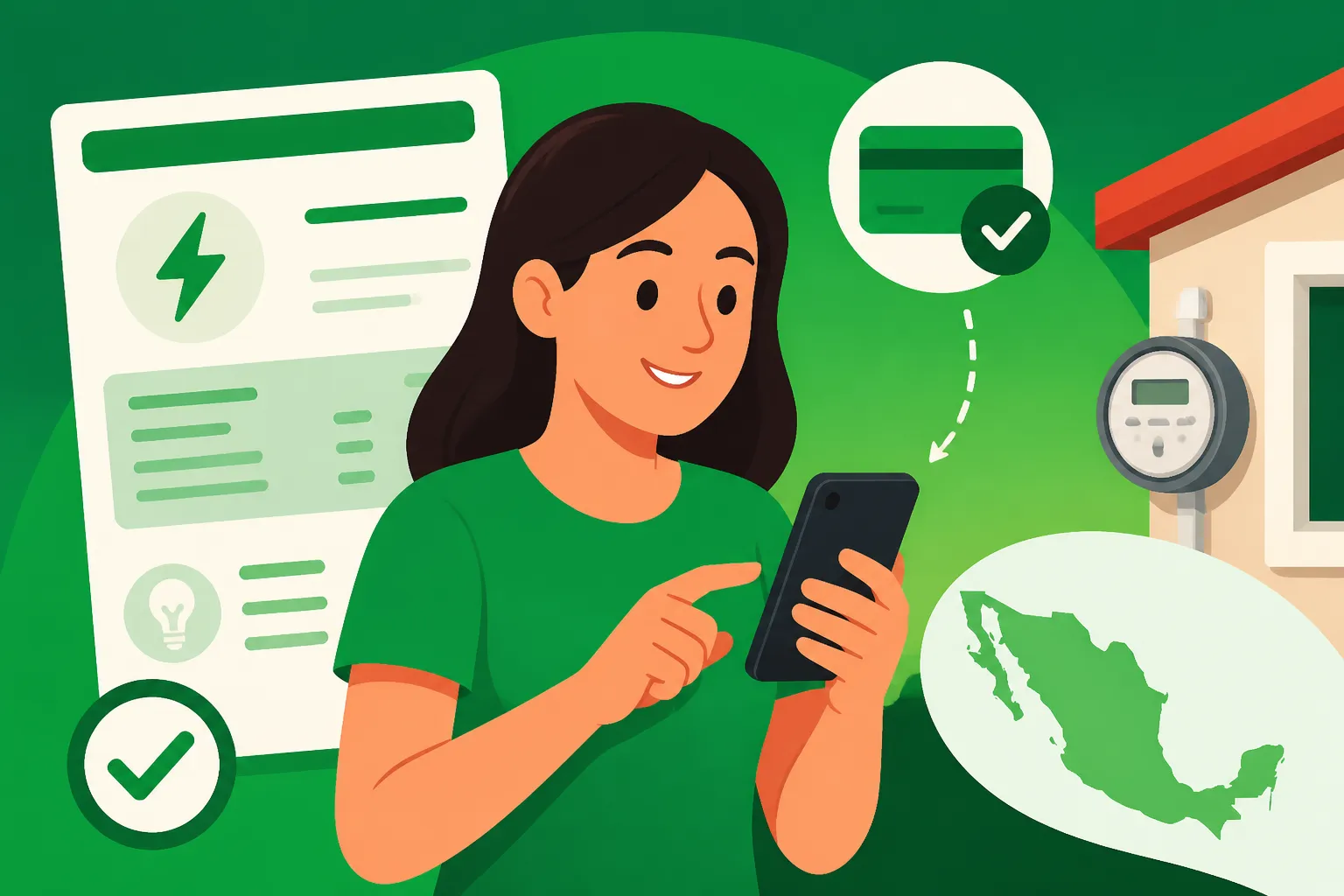
For most tech-savvy expats, the CFE Contigo app is a lifesaver. It allows you to check your balance, download your receipts in PDF format, and pay using a credit or debit card. To set it up, you’ll need to create an account and link your service number. The app is mostly in Spanish, so having a basic grasp of the language or a translation tool is helpful.
One common frustration with the app is that it occasionally rejects foreign credit cards. While some people have success with premium travel cards, many find that a local account is necessary for a smooth transaction. If you are still in the process of Banking in Mexico: Complete Guide for Foreigners, you might find that your home country card works one month and fails the next without explanation.
To ensure you can always access the app even when your home internet is spotty, it’s a great idea to have a reliable mobile data plan. Using an eSIM from a provider like Airalo can give you the data you need to pay your bills while sitting in a cafe or traveling between cities. The app also features a map of nearby payment centers, which is incredibly useful if the digital payment fails and you need to find a physical location quickly.
Paying in Person at CFEMáticos and Banks
If you prefer the "boots on the ground" approach or if the app is being temperamental, you can use a CFEMático. These are automated kiosks located at CFE offices. They are usually open 24/7, though I wouldn't recommend visiting one in a secluded area late at night. You simply scan the barcode on your bill or type in your service number, insert your cash or card, and the machine spits out a receipt.
A word of warning: these machines often do not give change. If your bill is 482 pesos and you put in a 500-peso note, the machine will likely credit the remaining 18 pesos to your next billing cycle rather than handing you coins. It’s a small quirk that can be annoying if you aren't prepared with smaller denominations.
You can also pay your bill at most major banks in Mexico. However, this often involves standing in a "ventanilla" line, which can take anywhere from twenty minutes to an hour depending on the time of day. If you are managing your Digital Nomad Life in Mexico: Remote Work Guide for 2026, you likely don't have an hour to waste at the bank. Most people only use the bank option if they are already there for other business or if they are struggling with the automated machines.
Using Convenience Stores and Supermarkets
Perhaps the most "Mexican" way to pay your bill is at your local OXXO, 7-Eleven, or supermarket like Chedraui or Soriana. Paying Bills at OXXO: A Handy Option for Expats in Mexico is a ritual for many residents. You simply hand the clerk your bill, they scan it, you pay the amount plus a small "comisión" (usually around 10 to 15 pesos), and you’re done.
The major advantage here is the sheer number of these stores; there is an OXXO on almost every corner in urban Mexico. However, there is a catch. Most convenience stores cannot accept payment if the bill is even one day past the due date. Once that "fecha límite" has expired, the barcode becomes "inválido" in their system, and you are forced to go directly to a CFE office to pay.
| Payment Method | Convenience | Reliability | Processing Time |
|---|---|---|---|
| CFE Contigo App | High | Medium (Card dependent) | Instant |
| CFEMático (Kiosk) | Medium | High | Instant |
| OXXO / 7-Eleven | High | High (Before due date) | 24-48 Hours |
| Online Banking (SPEI) | Medium | High | 24 Hours |
| Supermarkets | Medium | High | 24-48 Hours |
Dealing with the Dreaded "Corte" and Reconnection
If you miss your payment and the power is cut, do not panic, but do act quickly. The first thing to know is that paying the bill after the cut-off does not automatically trigger a reconnection. You must pay the outstanding balance plus a "reconexión" fee. Once the payment is registered in the CFE system, you typically have to wait between 24 and 48 hours for a technician to come out and flip the switch or replace the fuse.
During this time, you will realize how much you rely on electricity for everything from hot water (if you have an electric igniter) to your Internet and Mobile Providers in Mexico (Telmex, Totalplay, izzi) connection. In some cases, you can call the CFE emergency line at 071 to report your payment and expedite the process, but this requires patience and a fair amount of Spanish.
It is also worth noting that in some older neighborhoods, the "corte" is physical—meaning they remove a piece of hardware from your meter. If you try to bypass this yourself, you risk massive fines and criminal charges. Always follow the official channels for reconnection. If you are having trouble communicating, check our guide on Emergency Numbers in Mexico: How to Call Police, Fire, or Ambulance for tips on reaching the right authorities.
Administrative Hurdles and Name Changes
When you first move into a home, the CFE bill will likely be in the name of the landlord or the previous owner. For most renters, this is perfectly fine, and you can pay the bill without ever changing the name. In fact, many landlords prefer you leave the name as is to avoid the administrative headache of switching it back when you leave. You should verify this in your Understanding Mexican Rental Contracts: Key Terms and Tenant Rights before attempting any changes.
However, if you have purchased a home and used a service like Sirelo to move your life across borders, you will want the bill in your name. This is often a requirement for using the bill as a "comprobante de domicilio" (proof of address), which is needed for everything from opening a bank account to getting a Mexican driver's license. To change the name, you must visit a CFE office with your property deed or rental contract, your residency card, and a copy of your ID.
The process of changing a name or starting a new contract can be slow. You might be told to come back tomorrow because the "system is down" or because you are missing a specific photocopy. This is just part of the experience of living in Mexico. Stay patient, be polite, and always bring two copies of every document you think you might need.
Practical Tips for Reducing Your Bill
Electricity in Mexico is subsidized, but only up to a certain point. CFE uses a tiered pricing system. As long as you stay within the "Consumo Básico" and "Consumo Intermedio" tiers, your bill will be very low. However, if you exceed a certain threshold, you are moved into the "DAC" (Doméstica de Alto Consumo) rate. The DAC rate removes all subsidies, and your bill can easily quadruple overnight.
To avoid the DAC rate, be mindful of high-draw appliances. Air conditioning is the biggest culprit in coastal areas, while electric space heaters can spike your bill in the highlands during winter. Many expats find that switching to LED bulbs and being diligent about turning off lights helps, but the real savings come from managing your AC usage. If you are planning a move and are worried about these costs, researching the Health Insurance in Mexico: How Expats Can Get Coverage (2027) or other fixed costs can help you see where your budget can be adjusted to accommodate a higher "luz" bill.
Lastly, always keep your receipts. Whether it's a digital confirmation or a thermal paper slip from an OXXO, store them in a folder or a dedicated email label. If there is ever a dispute about a payment, CFE will require you to prove you paid. Having that "comprobante" is your only shield against an accidental service interruption.
Disclaimer
The information provided in this guide is for informational purposes only and is based on personal experiences and general administrative practices in Mexico as of 2026. Utility regulations and payment procedures can change without notice. Always verify current requirements directly with the Comisión Federal de Electricidad (CFE) or a qualified legal professional in Mexico.