Living at Lake Chapala and Ajijic: Retiree Guide
Finding the perfect retirement haven often feels like a high-stakes gamble where you trade your social circle for a lower cost of living. When I first landed in Jalisco, I was terrified that my lack of Spanish and the complex local bureaucracy would leave me isolated in a beautiful but confusing bubble. This guide breaks down everything you need to know to transition smoothly to Lake Chapala and Ajijic without the typical newcomer's stress.
Disclosure: This post may contain affiliate links. We may earn a commission at no extra cost to you if you make a purchase through these links. Read full disclosure.
The Allure of Lake Chapala: Why Retirees Are Flocking to Jalisco
For decades, the lakeside region has served as a magnet for retirees from the United States, Canada, and Europe. It is not just about the proximity to an international airport or the lower cost of living; it is about a sense of belonging that is hard to find in the modern, fast-paced world. However, the transition isn't always a walk in the park. You will deal with cobblestone streets that are hell on your knees and a local pace of life that can be frustratingly slow when you are trying to get a plumber to show up.
The Microclimate Myth vs. Reality
Many brochures claim Lake Chapala has the "second-best climate in the world." While the weather is undeniably spectacular, especially compared to a Canadian winter or a Texan summer, it is important to be realistic. From November to March, the days are bright and sunny, but the nights can get surprisingly chilly. I remember my first winter here; I didn't think I’d need a space heater in Mexico, but there I was, shivering in a stone house designed to keep heat out.
During the "rainy season" from June to September, the landscape transforms into a lush green paradise. The rain usually falls at night, accompanied by dramatic lightning shows over the lake. However, this season also brings humidity and the "seasonal insects" that every expat eventually learns to live with. Understanding the Weather and Climate Considerations When Choosing Where to Live in Mexico is vital before you sign a long-term lease.
The Lakeside Community Culture
What truly sets Ajijic and Chapala apart is the infrastructure of the expat community. The Lake Chapala Society (LCS) is a cornerstone of life here, offering everything from library services to help with immigration paperwork. You are never truly alone. If you have a niche hobby—be it birdwatching, bridge, or community theater—there is already a group for it.
But here is the "I've-been-there" truth: it is very easy to fall into an "expat bubble" and never interact with your Mexican neighbors. This can lead to a shallow experience of the country. Validating the frustration of the language barrier is important, but even a little effort goes a long way. The locals are incredibly patient, but they appreciate it when you don't expect them to speak English in their own country. For more on navigating these social waters, check out Mexican Etiquette and Customs: Do's and Don'ts for New Expats.
Navigating the Housing Market in Ajijic and Chapala
The housing market here is unique. You won't find many "For Rent" signs on Zillow or traditional western portals. Instead, much of the best inventory moves through word-of-mouth or local Facebook groups. The frustration of trying to find a reliable landlord is a rite of passage for every retiree.
Renting vs. Buying: The Eternal Expat Dilemma
I always tell newcomers: rent for at least a year before you even think about buying. The lakeside has dozens of micro-neighborhoods, each with its own "personality." A house that looks like a dream in January might be at the bottom of a steep, slippery hill in July, or right next to a plaza that hosts loud fireworks every night during a two-week festival.
If you are just landing and need a base of operations while you scout, staying at a place like Selina in nearby Guadalajara or finding a short-term spot in Ajijic can give you the breathing room you need. When you are ready to move your life down, using a service like Sirelo can help you compare international moving companies to ensure your heirlooms actually make it across the border in one piece. For a deeper dive into the legalities, read Renting a Home in Mexico: Complete Expat Guide to Leases, Deposits, and More.
Neighborhood Deep Dive: From Ajijic to San Antonio Tlayacapan
Ajijic is the "heart" of the expat scene, famous for its murals and walkable village center. However, it is also the most expensive and the noisiest. If you prefer a bit more space and lower prices, look toward Chapala proper. It feels more like a traditional Mexican town and has a beautiful malecon (boardwalk).
Then there is San Antonio Tlayacapan, nestled right between the two. It has become a favorite for those who want to be close to the "action" of Ajijic but want a more authentic neighborhood feel. Each area has its quirks—San Juan Cosala is known for its thermal springs, while Upper Ajijic offers stunning lake views at the cost of very steep walks. You can find more details in our Best Places to Live in Mexico for Expats (2027 Edition).
| Neighborhood | Vibe | Walkability | Price Range |
|---|---|---|---|
| Ajijic Centro | Artistic, Busy, Expat-heavy | High | $$$ |
| Chapala Centro | Traditional, Authentic, Bustling | High | $$ |
| San Antonio | Quiet, Transitional, Balanced | Medium | $$ |
| La Floresta | Upscale, Gated feel, Leafy | Medium | $$$$ |
| San Juan Cosala | Relaxed, Natural Springs | Low | $ |
Cost of Living and Financial Realities
One of the biggest draws to the lakeside is the promise of a "champagne lifestyle on a beer budget." While this is still largely true, inflation and the "super peso" have changed the math in recent years. You need to be smart about how you manage your funds.
Monthly Budget Breakdown for Retirees
Your biggest expense will be rent. A comfortable, two-bedroom home in a decent area will run you anywhere from $1,200 to $2,500 USD per month. If you are willing to live further out or in a more "local" style house, you can find gems for under $900. Utilities are generally low, but electricity (CFE) can spike if you use air conditioning or electric heaters.
Dining out is where you really save. You can grab a world-class meal for $15, or a plate of incredible street tacos for $4. Many retirees find that they can live very well on $2,500 to $3,000 a month, including a part-time housekeeper and gardener. For a more granular look at the numbers, see our guide on the Cost of Living in Lake Chapala: Budgeting in a Retirement Haven.
Managing Taxes and Banking Logistics
Bureaucracy is where the "empathetic expat" in me has to warn you: the SAT (Mexico's tax authority) and local banks can be a nightmare. Opening a bank account often requires a residency card and a lot of patience. Many retirees rely on their home-country Charles Schwab or Fidelity accounts, using local ATMs to withdraw pesos as needed.
You should also be aware of the RFC (tax ID) requirements, which are becoming increasingly necessary even for simple things like setting up a high-speed internet contract or buying a car. We break down the complexities of the system in our Taxes in Mexico for Expats: A Complete Guide to Income Tax and More.
Healthcare and Wellness in the Lakeside Region
For many retirees, healthcare is the top priority. The good news is that the quality of care in the Lake Chapala area is excellent, with many doctors speaking fluent English and having trained in the US or Europe.
Accessing Local Clinics and Specialists
In Ajijic and Chapala, you have access to several small hospitals and numerous specialized clinics. For major surgeries or specialized oncology, the world-class hospitals of Guadalajara are only 45 to 60 minutes away. This proximity is a lifesaver. I've had friends who were rushed to Guadalajara in an ambulance, and the level of care they received was on par with, or better than, what they would have received in a crowded US city.
Local pharmacies are also a revelation. You can often get a consultation with a doctor right at the pharmacy for a few dollars. However, you must understand the rules for prescriptions, especially for controlled substances. Check out Pharmacies in Mexico: How to Get Medications (OTC vs Prescription) for the latest 2026 regulations.
Insurance Options for Seniors
Navigating insurance as a senior in Mexico can be tricky. If you are over 65, getting a new private policy can be expensive or even impossible if you have pre-existing conditions. Many expats choose to "self-insure" for minor issues while keeping a high-deductible international plan for catastrophes.
Some residents also opt for IMSS, the national public health system. While it is affordable, the wait times and bureaucracy can be daunting for those who don't speak fluent Spanish. We compare these options extensively in Healthcare for Retirees in Mexico and Health Insurance in Mexico: How Expats Can Get Coverage (2027).
The Logistics of Moving and Setting Up Life
The physical act of moving your life across a border is the most stressful part of the journey. Between customs brokers and the dreaded "Menaje de Casa" (household goods import permit), it is easy to feel overwhelmed.
Shipping Your Life: Customs and Moving Companies
If you are bringing a lot of furniture, you will need a specialized mover who understands Mexican customs. This is another area where Sirelo can be a great resource for vetting international movers. Many people realize halfway through the process that it is actually cheaper to sell everything at home and buy new furniture in Mexico.
Tonalá, a town on the outskirts of Guadalajara, is one of the world's best furniture and craft hubs. You can furnish an entire villa with hand-carved wood and hand-painted tiles for a fraction of what you would pay at a big-box store in the US. For more on what is worth bringing, see Moving to Mexico: What to Pack and What to Buy Locally.
Staying Connected: SIM Cards and Internet
The moment you cross the border, you need to stay connected. I always recommend using Airalo to grab a quick eSIM for your first few days. It saves you from the frantic search for a Telcel store the second you land. Once you are settled, you can look into local providers like Telmex or Totalplay.
High-speed fiber optic internet is now available in most of the Lakeside area, which is great for retirees who spend their time streaming or video-calling family. However, outages do happen, especially during the rainy season. Understanding how to navigate Internet and Mobile Phone Plans in Mexico: Staying Connected as an Expat will save you many headaches.
Social Integration and Overcoming the Language Barrier
The most successful retirees at Lake Chapala are those who dive into the community. It is easy to sit on your terrace and admire the view, but the magic happens when you get involved.
Expat Clubs and Community Involvement
As mentioned, the Lake Chapala Society is the "front door" for most newcomers. Beyond that, there are theater groups like the Lakeside Little Theatre and various animal rescues that always need volunteers. Giving back to the local community is the best way to bridge the gap between being a "tourist who stays" and a true resident.
Participating in local traditions, like the Day of the Dead or the various town saint festivals, will enrich your life in ways you can't imagine. It also helps to understand the Mexican Etiquette and Customs: Do's and Don'ts for New Expats so you can be a respectful guest in your new home.
Spanish for Seniors: How Much Do You Really Need?
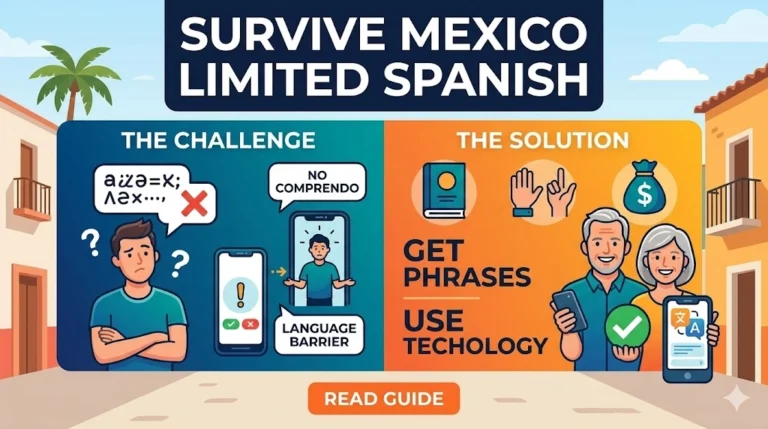
You can "survive" at the lake with zero Spanish. You can shop, eat, and see a doctor entirely in English. But you will be living a "cardboard" version of Mexico. Learning even basic phrases opens doors. When you can ask your neighbor about their family or joke with the woman selling tamales, the country truly opens up to you.
Don't let the fear of being "too old to learn" stop you. There are dozens of Spanish schools in Ajijic tailored specifically for seniors. For tips on how to start, check out Learning Spanish in Mexico: Top Tips and Resources for Expats.
Disclaimer
This guide is intended for informational purposes only. The administrative rules, financial requirements for residency, and healthcare regulations in Mexico are subject to frequent changes by the Mexican government and the Instituto Nacional de Migración (INM). While we strive to provide the most accurate and up-to-date information for 2026, always consult with a certified immigration attorney or a professional financial advisor before making significant life changes or moving large sums of money. Life in Mexico requires patience and a willingness to adapt to local laws and customs that may differ significantly from your home country.