Home Security in Mexico: Practical Tips for Expats
One of the biggest hurdles to feeling truly at home in Mexico is that nagging voice in the back of your head every time you hear a stray dog bark or a door creak at 2:00 AM. I remember my first month in Querétaro, jumping at every firework, convinced it was something more sinister. This guide provides the realistic, boots-on-the-ground strategies you need to secure your sanctuary and finally sleep soundly.
Disclosure: This post may contain affiliate links. We may earn a commission at no extra cost to you if you make a purchase through these links. Read full disclosure.
Understanding the Security Landscape in Your New Home
When you first arrive in Mexico, the visual cues of security can be jarring. You will see high walls topped with broken glass, electric fences, and heavy steel bars on windows even in the nicest parts of town. For many of us coming from the US, Canada, or Europe, this looks like a war zone. But here is the reality: it is often more about tradition and proactive prevention than an active threat level. Most crime in residential areas is opportunistic. If a house looks like a "hard target," a petty thief will simply move on to the next block.
Understanding the difference between perception and reality is the first step toward peace of mind. You aren't living in a fortress because the neighborhood is dangerous; you are living in a fortress so that it stays safe. I’ve learned that the most effective security isn't just about the locks on your door, but the relationships you build with the people on your street. A well-placed "Buenos días" to the local shopkeeper or the guy who washes cars on your block does more for your safety than a thousand-dollar alarm system ever could.
Safety in Mexico: What Expats Need to Know About Staying Safe is a great starting point for understanding the broader context of national safety, but home security is a hyper-local game. You need to know which streets in your colonia have the best lighting and which ones are known for "cristalazos" (smash-and-grabs). This local knowledge is your primary shield.
Choosing a Neighborhood with Safety in Mind
Your security journey starts long before you sign a lease or a purchase agreement. The layout of the neighborhood determines 80% of your daily risk profile. In Mexico, we generally choose between three types of living environments: the fraccionamiento (gated community), the traditional colonia, and the high-rise apartment building. Each offers a completely different security experience, and what works for a retiree in San Miguel de Allende might not work for a digital nomad in Mexico City.
The Fraccionamiento Experience
Gated communities, or fraccionamientos, are the gold standard for many expats. These areas are enclosed by walls and have a controlled entry point, usually manned by a vigilante (security guard). When you move into a gated community, you are paying for "controlled access." This means anyone entering who doesn't live there must show ID and be cleared by a resident. It’s a massive deterrent for opportunistic crime.
However, not all fraccionamientos are created equal. Some have 24/7 armed guards, while others just have a guy with a clipboard and a gate that stays open half the time. Before moving in, spend some time watching the gate. Do the guards actually check IDs? Do they call the residents? If you are moving your belongings from abroad, using a reputable service like Sirelo can help you navigate the logistics of getting a moving truck through these tight security gates without a headache. They understand the documentation required to prove you belong there, which is a common sticking point with overzealous guards.
Traditional Colonias and Urban Living
If you prefer the charm of a colonial center or a bustling neighborhood like Roma or Condesa, you won't have a gate. Instead, you have "street eyes." In these areas, safety is a communal effort. You’ll notice that many houses have a velador—a night watchman who patrols a specific block. Residents chip in a few pesos a week to pay his salary. It’s an old-school system, but it works because he knows exactly who belongs on that street and who doesn't.
When scouting these neighborhoods, look for signs of a "Vecinos Vigilantes" program. These are neighborhood watch groups that are often very active on WhatsApp. If you see signs with a large eye or a whistle on the walls, it means the neighbors are organized. Living in Mexico City: An Expat's Guide to Neighborhoods and Lifestyle offers deep dives into which of these traditional neighborhoods offer the best balance of culture and security.
High-Rise Apartments and Condos
For many, the simplest path to security is the "Lock and Leave" lifestyle of a high-rise. These buildings usually have a lobby with a portero (doorman) who acts as a concierge and security guard. The higher you go, the less you have to worry about ground-level intrusions. This is the preferred route for many digital nomads who might stay at a place like Selina when they first arrive. Selina locations are specifically designed with security in mind, offering a safe home base while you scout for a more permanent apartment. It allows you to test out the neighborhood’s vibe without committing to a long-term lease in an area that might feel "off" after dark.
Hardening the Physical Structure of Your Home
Once you have picked your spot, it is time to look at the "hard" security features. In Mexico, we talk about "layers." The goal is to make it so inconvenient to enter your home that nobody bothers trying.
The Essential Role of Rejas
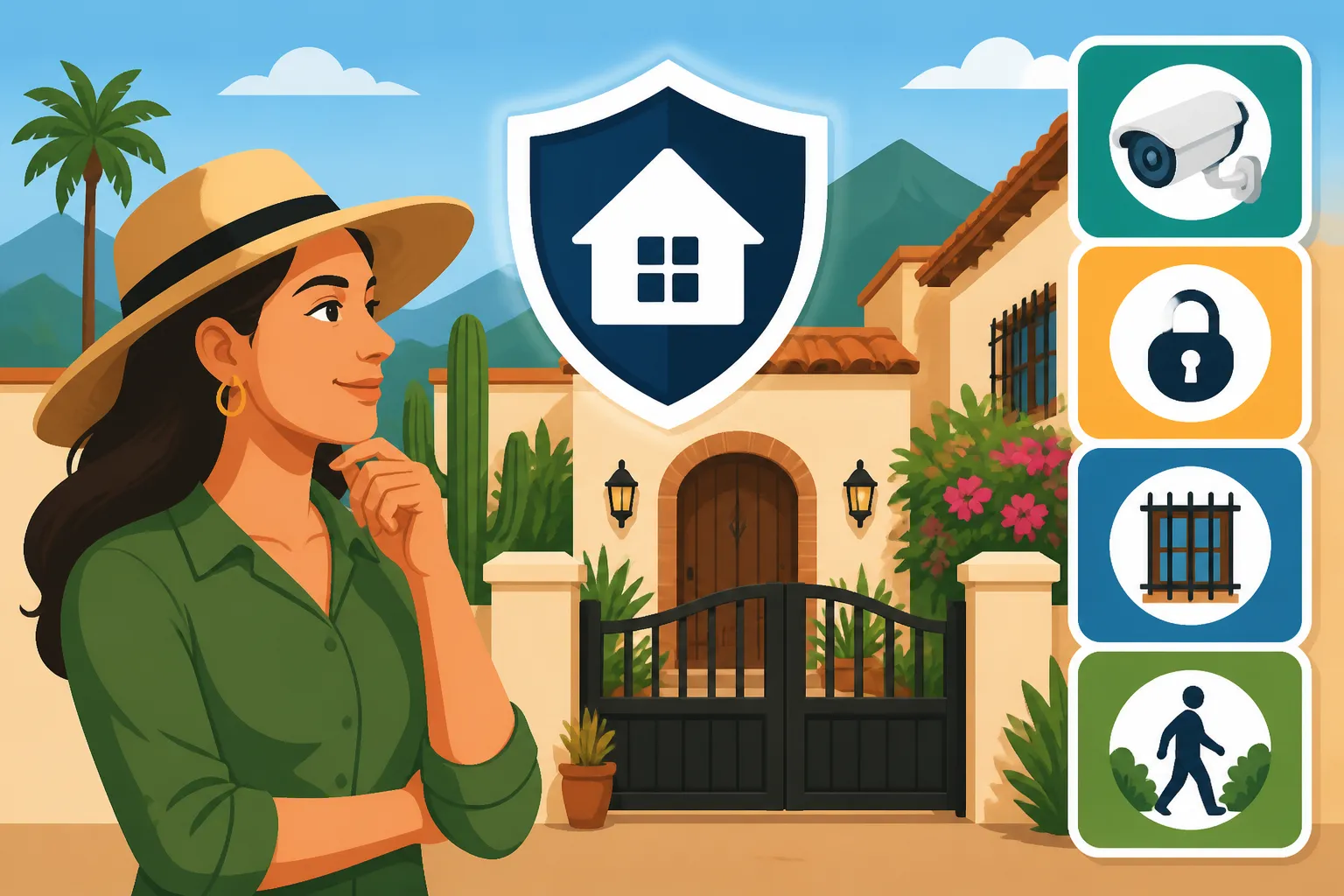
You will notice that almost every ground-floor window in Mexico is covered by rejas (iron bars). To the uninitiated, it looks like a prison. To the veteran expat, it looks like a good night's sleep. If your rental doesn't have them, ask the landlord to install them or move on. They are the single most effective deterrent against the most common type of crime: the quick "in and out" burglary.
There is an art to rejas. You want them to be bolted deep into the structural concrete, not just the plaster. Many modern designs are actually quite beautiful, incorporating scrollwork or geometric patterns that add to the colonial aesthetic rather than detracting from it. For a deeper look at these physical requirements, check out Home Security in Mexico: Tips for Securing Your House or Apartment.
Gates, Walls, and the Concertina
If you have a standalone house, your perimeter wall is your first line of defense. In many parts of Mexico, it is common to see "concertina" (razor wire) or electric fencing along the top of these walls. While it might feel aggressive, it prevents "wall jumping," which is a common tactic for reaching second-story windows that might not have bars.
Another very Mexican security feature is the portón (main gate). If you have a driveway, an automated gate is a massive security upgrade. It allows you to enter and exit your vehicle without ever stepping out onto the street, which is the moment you are most vulnerable to a carjacking or a "follow-home" robbery.
Lighting and Smart Technology
The "smart home" revolution has reached Mexico in a big way. Ring doorbells, Nest cameras, and motion-activated floodlights are now widely available at places like Home Depot or Costco. Lighting is your best friend. A dark entryway is an invitation. I always recommend installing LED motion lights in every "dead zone" around your property—those side alleys or back patios where someone could linger unseen.
Cameras are also a huge psychological deterrent. Even if they aren't monitored 24/7, the presence of a camera tells a potential intruder that this resident is tech-savvy and proactive. Most importantly, these systems allow you to check on your home from your phone while you are traveling back to your home country or exploring another state.
Connectivity and Digital Safety
We often forget that home security is as much about your internet connection as it is about your front door. If your Wi-Fi goes down, your smart cameras and alarm systems are useless.
Redundant Connectivity
In Mexico, power outages or fiber-optic lines being cut during street work are common occurrences. To keep your security system online, you need a backup. I always keep a secondary data source ready. Using a service like Airalo allows you to have a backup eSIM active on a secondary device or a mobile hotspot. If your home internet fails, you can quickly bridge your security hub to an Airalo data plan to ensure your cameras keep uploading to the cloud. This redundancy is vital for those of us who travel frequently and rely on remote monitoring.
Securing Your Home Network
Since you likely have several IoT (Internet of Things) devices like cameras and smart locks, your home network needs to be robust. Change the default passwords on your router immediately. Use a VPN if you are accessing your home security feed from public Wi-Fi while sitting in a cafe or a co-working space. Hackers in Mexico are just as sophisticated as anywhere else, and an unsecured camera feed is a roadmap for someone looking to see when you are home and when you aren't.
The Human Element: WhatsApp Groups and Neighbors
The most powerful security tool in Mexico isn't made of steel or silicon; it’s made of people. The "Vecinos" WhatsApp group is a staple of Mexican life. These groups are used for everything from complaining about loud music to reporting suspicious vehicles.
Joining the Vecinos Group
As soon as you move in, ask your neighbors or the building administrator to add you to the neighborhood WhatsApp group. Even if your Spanish is a work in progress, you can use translation tools to follow along. You will see messages like "Camioneta blanca sospechosa en la calle 5" (Suspicious white truck on 5th street). This real-time intelligence is invaluable.
Being part of this group also helps you distinguish between normal neighborhood noise and an actual emergency. For instance, if you hear shouting, the group might quickly clarify that it's just a heated football match on TV. If you do find yourself in a situation where you need professional help, having a list of Emergency Numbers in Mexico: How to Call Police, Fire, or Ambulance saved in your phone is non-negotiable.
Hiring Domestic Help Safely
Most expats in Mexico eventually hire a maid, a gardener, or a handyman. While this is one of the perks of living here, it also introduces a "trusted insider" into your security perimeter. Always ask for "cartas de recomendación" (letters of recommendation) from previous employers and actually call them.
It is common practice in Mexico to ask for a copy of their "identificación oficial" (usually an INE card) and a "comprobante de domicilio" (utility bill showing where they live). This isn't being rude; it's a standard formality that any local professional will expect. Building a good relationship with your domestic staff—paying them well and treating them with respect—creates a loyal ally who will keep an eye on your home when you aren't there.
Practical Logistics: Moving and Temporary Stays
If you are currently in the planning stages of your move, how you handle the transition period can impact your long-term security.
Safe Moving with Sirelo
When you are shipping your life's work across an international border, the risk of theft or loss is at its highest. I’ve heard horror stories of people hiring "budget" movers only to have their truck "disappear" between the border and their new home. Using a platform like Sirelo allows you to compare verified, international moving companies that have proven track records in Mexico. They understand the "safe routes" and how to handle the "menaje de casa" (household goods) customs process without attracting unwanted attention. It’s worth the extra investment to know your belongings are being tracked and insured by professionals.
Landing Safely at Selina
If your permanent home isn't ready yet, don't just pick a random Airbnb in an area you don't know. Choosing a reputable brand like Selina for your first few weeks gives you a secure, managed environment. Selina properties are accustomed to hosting foreigners and have established security protocols, which allows you to focus on your Residency and Visa Requirements for 2026 without worrying about whether your laptop is safe in your room.
Comparing Security Options for Expats
| Feature | Gated Community (Fraccionamiento) | Traditional Neighborhood (Colonia) | High-Rise Apartment |
|---|---|---|---|
| Primary Defense | Perimeter wall & Guards | Neighbors & Bars (Rejas) | Lobby Security & Height |
| Privacy Level | High | Medium | Medium to High |
| Cost | High (Monthly HOA fees) | Low (Voluntary tips/fees) | Medium (Maintenance fees) |
| Social Security | WhatsApp & Security Desk | Vecinos & Local Shops | Portero & Building Chat |
| Risk of Theft | Low (Internal theft possible) | Moderate (Opportunistic) | Very Low |
| Ease of Entry | Difficult for visitors | Easy for visitors | Controlled |
Dealing with the Unexpected
No matter how many bars you put on your windows, things can still happen. The key is knowing how to react. In some cases, you might encounter a minor issue with local authorities. It’s important to understand the cultural nuances of these interactions. For instance, Dealing with Corruption: Should Expats Pay “Mordida” (Bribes)? is a controversial but necessary topic to understand. While it usually applies to traffic stops, knowing your rights and how to navigate these situations calmly will prevent a small problem from escalating.
Similarly, if you are driving your car to your new home, you need to be aware of the rules of the road to avoid being targeted for a quick shakedown. Is It Safe to Drive at Night in Mexico? Road Safety Tips for Expats and What to Do If You’re Pulled Over by Police in Mexico are essential reading for anyone who plans to be mobile. Your home security extends to the perimeter of your daily life, and that includes your vehicle.
Long-Term Maintenance of Your Security
Security isn't a "set it and forget it" task. Over time, locks rust in the coastal humidity, lightbulbs burn out, and your relationship with the neighborhood watch can fade if you don't participate.
- Test Your Alarms: Once a month, ensure your sensors are still communicating with your hub.
- Trim Your Greenery: Don't let your beautiful bougainvillea become a hiding spot for someone trying to pry open a window. Keep trees and bushes trimmed away from your walls and entryways.
- Rotate Your Codes: If you use a keypad for your gate or front door, change the code every few months, especially after you’ve had work done on the house.
- Stay Connected: Keep that Airalo data plan topped up so you’re never "blind" during a power outage.
- Be a Good Neighbor: If you see a package left out at your neighbor's house, offer to tuck it behind their gate. They will do the same for you. In Mexico, solidarity is the best security system money can't buy.
Ultimately, living in Mexico requires a shift in mindset. You move from a "default trust" model to a "proactive awareness" model. It doesn't mean you have to live in fear; it just means you are being a responsible member of your community. Once you have your rejas installed, your cameras synced, and your neighbors on speed dial, you’ll find that Mexico is a place where you can feel incredibly safe and welcomed.
Disclaimer regarding health and safety
This article is for informational purposes only and does not constitute professional legal or security advice. Security situations in Mexico can change rapidly and vary significantly by region and neighborhood. Always consult with local experts, official government travel advisories, and reputable security firms before making decisions regarding your personal safety or property. The author and publisher are not responsible for any loss or damage resulting from the use of this information.