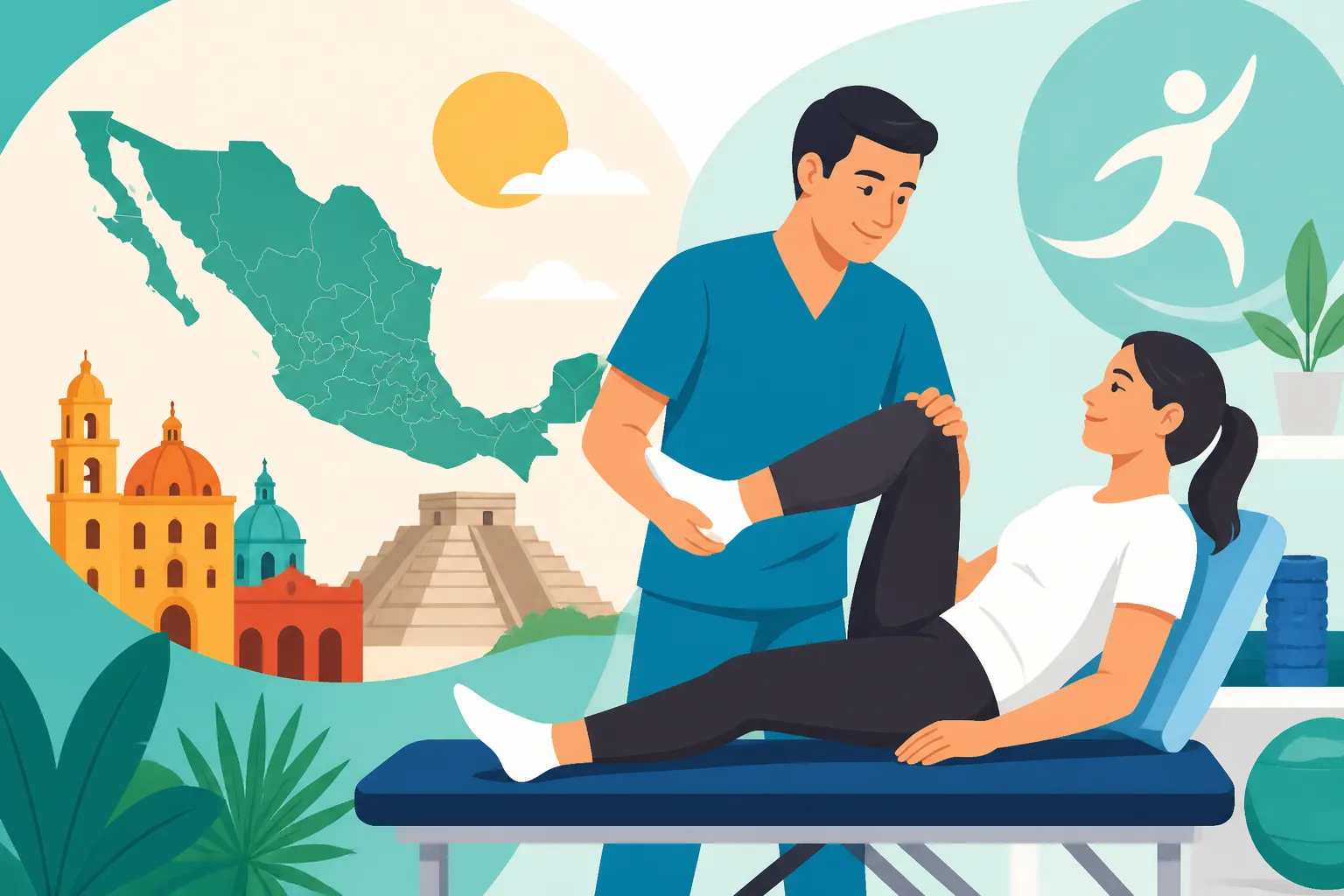
How to Get Physical Therapy in Mexico
Finding quality physical therapy in a new country can feel like navigating a maze while you are already in pain. I remember the sheer panic I felt when I tweaked my lower back moving a heavy water garrafón up two flights of stairs in my Querétaro apartment. This guide explains how to find, vet, and pay for physical therapists in Mexico so you can focus on healing instead of paperwork.
Disclosure: This post may contain affiliate links. We may earn a commission at no extra cost to you if you make a purchase through these links. Read full disclosure.
Understanding the Physical Therapy Landscape in Mexico
In Mexico, the field of physical therapy has seen immense professionalization over the last two decades. While you might still see signs for "sobadores" in smaller neighborhoods, these are traditional healers rather than licensed medical professionals. For medical-grade rehabilitation, you are looking for a "Fisioterapeuta." These professionals usually hold a university degree in physiotherapy and are required to have a "Cédula Profesional," which is their official license to practice. When you start your search, checking for this credential is your first line of defense in ensuring you are receiving evidence-based care.
The way clinics operate here might be a bit different from what you are used to in the U.S., Canada, or Europe. You will find large, state-of-the-art rehabilitation centers in major cities like Mexico City, Monterrey, and Guadalajara, but many of the most talented therapists operate out of smaller, specialized boutique clinics or even offer home visits. This flexibility is a hallmark of Healthcare in Mexico: Complete Guide for Expats (Public vs Private), where personal attention often takes precedence over the rigid scheduling found in larger northern systems.
It is also worth noting that many physical therapists in Mexico specialize early in their careers. You can find experts specifically for sports medicine, geriatric care, pediatric neuro-rehabilitation, or post-surgical recovery. If you have recently undergone a procedure, it is quite common for your orthopedic surgeon to have a preferred team of therapists they work with closely. This integrated approach is one of the many Healthcare Quality: Mexico vs Your Home Country – A Comparison factors that often surprises newcomers who expect a more fragmented system.
How to Find a Quality Physical Therapist in Your Area
Your first step should always be the digital "word of mouth" that defines the expat experience. Local Facebook groups for your specific city or neighborhood are goldmines for recommendations. However, do not just take the first recommendation you see. Ask specifically if the therapist speaks English if your Spanish is still a work in progress, and ask about their specific experience with your type of injury. People in the expat community are usually very eager to share their "miracle worker" stories, which can help you narrow down a list of candidates.
Another highly effective tool is Doctoralia, a website and app that is essentially the "Yelp" for medical professionals in Mexico. You can filter by specialty, location, and insurance accepted. Many therapists on Doctoralia have extensive profiles listing their education, certifications, and, most importantly, patient reviews. Reading through these reviews can give you a sense of their "bedside manner" and whether they take a manual therapy approach or rely more on machines. For more tips on vetting professionals, check out Finding English-Speaking Doctors and Specialists in Mexico.
If you prefer a more formal route, major private hospitals like Hospital Ángeles, Star Médica, or ABC Medical Center have dedicated physical therapy departments. While these may be slightly more expensive than a private stand-alone clinic, they offer the peace of mind of high-level hospital accreditation. You can find more about these facilities in our guide on Navigating Hospitals and Clinics in Mexico: An Expat’s Guide to Medical Care. Often, these hospital-based therapists have access to more expensive equipment like hydrotherapy pools or advanced shockwave therapy machines that smaller clinics might lack.
The Cost of Physical Therapy What to Expect Out of Pocket
One of the greatest reliefs for expats is the affordability of specialized care. While a session in the U.S. might easily run $150 to $250 without insurance, you will find that Healthcare Costs in Mexico: Doctor Visits, Hospital Stays, and Surgery Expenses are significantly lower. On average, a 60-minute private physical therapy session in a major city will cost between $600 and $1,200 MXN (roughly $35 to $70 USD). In smaller towns or for therapists just starting their practice, you might find rates as low as $400 MXN.
Many clinics offer "paquetes" or bundles. If you know you need ten sessions for a post-op recovery, buying them upfront can often save you 15% to 20%. It is always worth asking, "Tiene algún descuento por un paquete de varias sesiones?" (Do you have a discount for a bundle of several sessions?). Most clinics accept credit cards, but smaller independent therapists might prefer cash or a bank transfer via SPEI. Understanding How to Make a SPEI Transfer in Mexico is an essential skill for any expat managing recurring medical bills.
| Type of Facility | Estimated Cost (MXN) | Best For |
|---|---|---|
| Private Boutique Clinic | $600 – $1,000 | Personalized care, manual therapy |
| Major Private Hospital | $900 – $1,500 | Post-surgical, advanced equipment |
| Home Visit (Domicilio) | $800 – $1,300 | Mobility issues, convenience |
| Public (IMSS/ISSSTE) | Low/Included | Residents on a strict budget |
Home visits, known as "terapia física a domicilio," are incredibly common and surprisingly affordable. For an extra $200 or $300 MXN, the therapist will bring their portable table, tens machines, and exercise equipment directly to your living room. This is a godsend if you are dealing with acute pain or mobility issues and want to avoid a bumpy Uber ride across town. Just keep in mind that you should always verify the total cost including the travel fee before they arrive.
Navigating Insurance Coverage for Rehab and PT
If you have international health insurance, your physical therapy might be fully or partially covered, but the process requires some foresight. Most Mexican clinics operate on a "pay and reclaim" basis for outpatient services like PT. This means you pay the clinic directly and then submit your receipts to your insurance provider for reimbursement. For this to work, you must request a "factura" (a formal tax receipt) rather than a simple paper "nota." You can read more about this in How to Request a Factura From a Mexican Business.
For long-term expats, a plan from Cigna Global is often a preferred choice because they are very familiar with the Mexican medical system and their reimbursement processes are relatively streamlined. If you are using Cigna Global, make sure to have your therapist fill out a medical necessity form or provide a "remisión" (referral) from a general doctor or specialist. Most insurance companies require a doctor's signature stating that the PT is medically necessary before they will approve the claim.
If you are a digital nomad or a shorter-term traveler, SafetyWing provides an excellent safety net for unexpected injuries. If you slip on a cobblestone street in San Miguel de Allende and need a few sessions to get back on your feet, SafetyWing can help cover those costs as part of their travel medical insurance. Always check your specific policy limits, as some plans have a cap on the number of sessions or a maximum dollar amount per session. For more details on these options, see our analysis of Choosing Private Health Insurance: Local Mexican Plans vs International Coverage.
What a Typical Physical Therapy Session Looks Like in Mexico
The first session is almost always an "evaluación." The therapist will spend a significant amount of time talking to you about your medical history, your lifestyle, and your goals. This isn't just a formality; Mexican healthcare tends to be very relationship-based. Don't be surprised if the therapist asks about your work-from-home setup or your stress levels. They are looking for the root cause of the issue. This initial consult is a great time to evaluate their communication style. If you have any concerns about understanding them, you might want to look at our tips on Overcoming Language Barriers at the Doctor: Tips for Expats.
A standard session usually lasts about 50 to 60 minutes. It often begins with "calor" (heat packs) or "electroestimulación" (TENS) to relax the muscles. Then comes the manual therapy. This is where the skill of the therapist really shines. Unlike some high-volume clinics in other countries where a therapist might juggle three patients at once, in a private Mexican clinic, you usually have the therapist's undivided attention for the entire hour. They will perform mobilizations, stretches, and deep tissue work that can be intense but highly effective.
The final part of the session usually involves "ejercicios" (exercises). The therapist will guide you through specific movements to strengthen the area and prevent re-injury. They will likely send you home with a list of exercises to do. In the modern Mexican clinic, it is very common for them to send you videos of these exercises via WhatsApp so you don't forget the proper form. This high level of personal follow-up is one of the reasons many expats find Healthcare in Mexico City: Top Hospitals and Clinics for Expats to be superior to what they left behind.
Overcoming the Language Barrier During Recovery
While many physical therapists in major expat hubs speak excellent English, you may find a "miracle worker" who only speaks Spanish. Don't let that discourage you. Physical therapy is a very visual and tactile profession. You can get a long way with basic phrases and a translation app. Knowing words like "dolor" (pain), "fuerte" (strong), "suave" (soft/gentle), and "hormigueo" (tingling) will help you communicate your sensations during the treatment.
If you are worried about technical explanations, you can always ask the therapist to write down their diagnosis or the names of the muscles involved. You can then look these up at your leisure. Most therapists are happy to use a mix of Spanish and English medical terms, which are often quite similar anyway (e.g., "inflamación" and "inflammation"). If you find yourself in a situation where you need more complex medical help, our guide on Medical Emergencies in Mexico: What Expats Should Know and Prepare can help you navigate the broader system.
Remember that being a "good patient" in Mexico involves a bit of social etiquette. Greetings are important. A "Buenos días" and a "Cómo está?" go a long way in building a rapport with your therapist. This relationship is key to your recovery. If they feel you are invested in the process and respectful of their expertise, they will often go above and beyond to fit you into a busy schedule or check in on your progress between appointments. This cultural nuance is a big part of Living in Mexico: Cultural and Practical Guide for New Expats.
Important Considerations for Post-Op and Specialized Care
If you are in Mexico specifically for Medical Tourism in Mexico: What to Know Before You Go, your physical therapy plan should be established before you even have your surgery. Rehabilitation is often the most overlooked part of the medical tourism journey. You need to ensure that your therapist in Mexico can coordinate with your surgeon, even if that surgeon is back in your home country. Ask for a digital copy of your surgical report and any specific "protocolo de rehabilitación" (rehab protocol) your doctor wants you to follow.
For those managing chronic conditions, consistency is everything. Finding a clinic that is easy to get to—ideally within walking distance or a short drive—will increase the likelihood that you stick to your schedule. Mexico's traffic can be legendary, and the last thing you want to do after a session of manual therapy is sit in two hours of gridlock. If you are still deciding where to settle, our guide on the Best Places to Live in Mexico for Expats (2027 Edition) includes information on the infrastructure and medical accessibility of various popular regions.
Finally, always keep a folder (physical or digital) of your progress notes and any "placas" (X-rays) or "resonancias" (MRIs) you have had. In Mexico, you are the owner of your medical records. Doctors and therapists will give you the physical films or a CD/link to your scans. It is your responsibility to bring these to your appointments. This puts a bit more "trámite" or bureaucracy on your shoulders, but it also gives you total control over your care and the ability to seek a second opinion easily if you aren't seeing the results you expected.
Disclaimer
The information provided in this article is for informational purposes only and does not constitute medical, legal, or financial advice. Always consult with a qualified healthcare professional regarding any medical condition or treatment. Prices and regulations mentioned are subject to change and may vary by region. If you are experiencing a medical emergency, please call 911 or visit the nearest emergency room immediately.