Travel Insurance vs Local Insurance: Do Expats Need Both?
Relocating to Mexico requires careful healthcare planning. Deciding between travel insurance, local Mexican health coverage, or comprehensive international plans can be confusing. This guide breaks down the benefits, limitations, and strategic overlaps of each option to protect your health abroad.
Disclosure: This post may contain affiliate links. We may earn a commission at no extra cost to you if you make a purchase through these links. Read full disclosure.
Understanding Travel Insurance for Mexico
When preparing for a move or an extended stay in Mexico, many foreigners instinctively purchase travel insurance. It is heavily marketed, easily accessible online, and provides an immediate sense of security. However, treating a travel policy as a substitute for actual healthcare is a dangerous misconception that can leave expatriates highly vulnerable during a medical crisis.
The Scope and Limitations of Travel Policies
Travel insurance is fundamentally designed as a short-term safety net. Its primary purpose is to protect you against acute, unforeseen travel hiccups and sudden medical emergencies while you are on a temporary vacation. A standard travel policy will cover the costs if you break your leg hiking in Oaxaca, contract severe food poisoning in Mexico City, or need immediate hospitalization following a traffic accident. It patches you up, stabilizes your condition, and ensures you do not go bankrupt from a sudden, catastrophic event.
However, the limitations of travel insurance become glaringly obvious the moment you attempt to use it for ongoing health management. Travel policies operate on a strict “treat and return” philosophy. They categorically exclude routine medical care, preventative check-ups, specialist consultations for non-urgent issues, and prescription refills. If you develop a persistent cough, require physical therapy after an injury, or need routine blood work to monitor your cholesterol, a travel insurance provider will deny the claim, stating that these issues can wait until you return to your home country.
Furthermore, travel policies are notoriously strict regarding pre-existing conditions. If you have a known history of asthma and suffer an attack due to the altitude or pollution in central Mexico, your travel insurance will likely refuse to cover the hospital visit. Understanding these severe limitations is the first step in realizing why a long-term residency requires a completely different approach to medical coverage, a concept detailed further in our overview of Healthcare in Mexico: Complete Guide for Expats Public vs Private.
Emergency Medical Evacuation and Repatriation
One of the most valuable components of a premium travel insurance policy is the inclusion of emergency medical evacuation and repatriation. Mexico boasts excellent private hospitals in its major cities, but if you are living in a remote beach town in Baja California or a secluded mountain village in Chiapas, access to specialized, life-saving trauma care might be hours away. In a severe emergency, such as a major stroke or a complex spinal injury, local facilities may simply lack the equipment to treat you effectively.
In these extreme scenarios, an evacuation clause covers the astronomical cost of an air ambulance to transport you to the nearest capable medical center, whether that is in Mexico City or across the border in Texas or California. Without this coverage, a private medical flight can easily cost upwards of fifty thousand dollars out of pocket. For expats exploring rural areas, this specific benefit is an absolute necessity.
However, once you are stabilized, the “repatriation” clause kicks in. The insurance company’s ultimate goal is to transport you back to your home country’s healthcare system as soon as you are medically fit to fly, thereby ending their financial liability. If your entire life, home, and family are now in Mexico, being forced to return to a country where you no longer reside just to receive ongoing care is a logistical nightmare. For more insights on how these scenarios unfold, review Medical Evacuation Insurance: Do Expats in Mexico Need Airlift Coverage.
Ideal Scenarios for Short Term Coverage
Despite its limitations for permanent residents, travel insurance remains the perfect tool for specific, short-term scenarios. If you are a digital nomad spending three months in Playa del Carmen, a tourist exploring the Yucatán Peninsula for a few weeks, or a prospective expat on a scouting trip to evaluate different neighborhoods, a robust travel policy is exactly what you need. It provides the necessary catastrophic protection without locking you into an annual premium.
Travel insurance is also highly useful during the “gap period” of a permanent relocation. When you first arrive in Mexico, it takes time to secure your residency visa, open a bank account, and navigate the local insurance market. A ninety-day travel policy serves as a reliable bridge, ensuring you are protected against accidents while you settle in and research your long-term healthcare options.
During this transitional phase, expats often pay for minor ailments out of pocket at local pharmacies. Because routine medications and doctor consultations are quite affordable in Mexico, combining a high-deductible travel policy for emergencies with out-of-pocket cash payments for daily needs is a financially sound strategy for the first few months. You can easily manage these daily health expenses by using international transfer services like Wise to convert your home currency to Pesos at favorable rates, ensuring you always have cash on hand for local clinics.

Navigating Local Mexican Health Insurance
Once an expat decides to make Mexico their permanent or semi-permanent home, the reliance on travel insurance must shift toward local healthcare integration. Mexico offers a bifurcated system, allowing foreign residents to choose between the public state-run infrastructure and the private commercial insurance market, each with its own distinct rules, benefits, and severe restrictions.
The Public System IMSS and Its Capabilities
The Instituto Mexicano del Seguro Social is the backbone of Mexico’s public healthcare system. Expats who obtain temporary or permanent residency can apply for voluntary incorporation into the IMSS system. By paying an annual fee—which is calculated based on age and typically ranges from roughly four hundred to nine hundred US dollars per year—expats gain access to public clinics, hospitals, and subsidized medications across the country.
For expats on a strict, fixed income, IMSS provides an essential, affordable safety net. The coverage is theoretically comprehensive, including doctor visits, surgeries, hospital stays, and prescription drugs. However, the reality of utilizing the IMSS system requires immense patience and cultural adaptation. Public clinics are chronically underfunded and severely overcrowded. Wait times for non-emergency specialist appointments or elective surgeries can stretch into many months, and the administrative bureaucracy is entirely in Spanish.
Furthermore, IMSS hospitals operate with a highly clinical, no-frills approach. You will share recovery rooms with multiple patients, and family members are generally barred from visiting outside of very strict, limited hours. While the doctors are highly capable, the environment is far removed from the comfort of private care. For a thorough understanding of how to navigate this specific bureaucracy, reading Public Healthcare in Mexico: IMSS and IMSS Bienestar Explained for Expats is highly recommended before paying the voluntary enrollment fees.
Private Mexican Health Insurance Gastos Medicos Mayores
The vast majority of expats who can afford it opt entirely out of the public system and rely on Mexico’s exceptional private healthcare sector. To protect against the high costs of private surgeries and extended hospitalizations, they purchase local private health insurance, known as Seguro de Gastos Médicos Mayores (Major Medical Expense Insurance). Policies from local providers like GNP, Monterrey New York Life, or AXA Mexico offer access to top-tier, luxury private hospitals featuring private suites, cutting-edge technology, and bilingual staff.
Local private policies are primarily designed as catastrophic coverage. They are built to protect your life savings if you develop cancer, require a heart bypass, or suffer a severe trauma. They usually feature high deductibles and coinsurance requirements. Crucially, they are not designed for everyday, routine care. A standard Mexican private policy will generally not cover a trip to the doctor for a sinus infection, nor will it pay for routine blood work or annual physicals. Expats are expected to pay for these minor, routine expenses entirely out of pocket.
When using a local private policy, you must also be aware of geographical limitations. These plans are inherently domestic. While some offer a small “emergency abroad” rider that provides limited stabilization if you suffer an accident while visiting the United States, they absolutely will not cover planned treatments, ongoing therapies, or extended hospital stays outside of Mexican borders. For a deeper dive into how these local policies operate, review Choosing Private Health Insurance: Local Mexican Plans vs International Coverage.
Pre Existing Conditions and Age Restrictions Locally
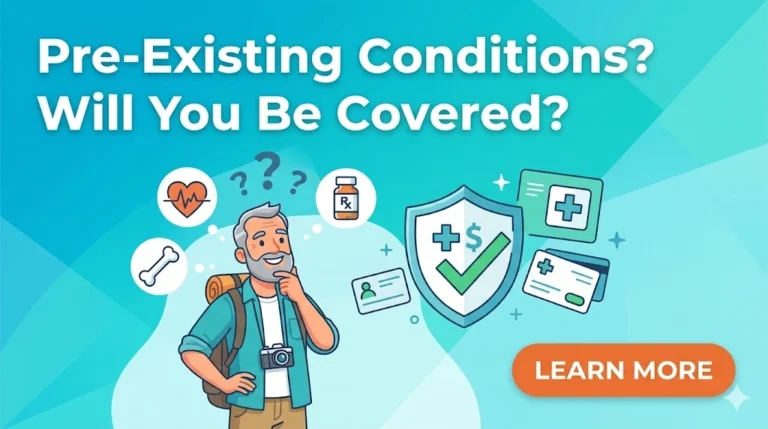
The most significant barrier to securing local Mexican private health insurance is the industry’s incredibly strict stance on age and medical history. Unlike the United States, where the Affordable Care Act mandates the acceptance of pre-existing conditions, Mexican insurance companies operate as strictly for-profit risk managers. If you attempt to buy a new policy and declare a pre-existing condition like diabetes, hypertension, or a previous cancer diagnosis, the insurer will almost certainly impose a permanent exclusion for that specific illness, or they may deny your application entirely.
Age is an equally brutal factor. Most local Mexican insurers refuse to issue new private policies to anyone over the age of 64. If you are retiring to Mexico at age 66 and have never held a Mexican policy before, the local private insurance market is essentially closed to you. Even if you secure a policy at age 60, the annual premiums will increase exponentially as you age, often becoming prohibitively expensive by the time you reach your late seventies.
For older expats or those with complex medical histories, this reality requires alternative planning. Many choose to self-insure, keeping a large cash reserve specifically designated for medical emergencies, while utilizing the public IMSS system for cheaper, routine medications (if they can pass the IMSS medical questionnaire, which also excludes certain severe pre-existing conditions). To understand exactly how your medical history will impact your options, please refer to Pre-Existing Conditions: Will Mexican Health Insurance Cover You.
Comparative Analysis: Travel, Local, and International
For expats who find travel insurance too limited and local Mexican policies too restrictive regarding age or global portability, a third option exists: International Health Insurance. By comparing these three distinct pillars of coverage side-by-side, expats can determine exactly which financial vehicle aligns with their health needs and lifestyle.
Cost Breakdown and Premium Comparisons
Budgeting for healthcare requires understanding the vastly different premium structures of each insurance type. Travel insurance is calculated by the day or the month, making it cheap for short trips but economically inefficient for years of residency. Local Mexican policies offer affordable premiums for young, healthy individuals but aggressively scale up in cost as the insured ages. Premium international plans are generally the most expensive upfront but offer the widest safety net and the most comprehensive, global benefits.
The following table provides a generalized comparison of how these three coverage types operate financially and logistically for an expat living in Mexico.
| Feature | Short-Term Travel Insurance | Local Mexican Private (Gastos Médicos Mayores) | Premium International Health Insurance |
| Primary Purpose | Acute emergencies, trip cancellations, lost luggage. | Catastrophic surgeries and major illnesses within Mexico. | Comprehensive, ongoing global health management. |
| Routine & Preventative Care | Never covered. Strictly excluded. | Rarely covered. Strictly for major medical events. | Frequently covered depending on the chosen module. |
| Geographic Coverage | Valid only during the specific dates of travel. | Valid only within Mexico (minor emergency riders abroad). | Valid globally, often allowing planned care in the US/Canada. |
| Age Limits for New Policies | Often up to age 80+, but premiums spike heavily. | Extremely difficult to obtain after age 64. | Flexible, though premiums scale with age. |
| Emergency Evacuation | Highly comprehensive. Will repatriate you to your home country. | Not standard. Relies on local Mexican hospital networks. | Comprehensive. Evacuates to the nearest global center of excellence. |
When managing the payments for these various premiums, especially if you are paying an international provider in Euros or US Dollars while earning Pesos, or vice versa, currency conversion fees can quietly drain your budget. Utilizing financial platforms like Wise allows expats to pay their insurance premiums across borders with minimal conversion fees, ensuring that your healthcare budget remains efficient and intact.
Coverage Depths and Deductible Structures
The depth of coverage is where international plans truly separate themselves from both travel and local policies. An international policy from a globally recognized provider like Cigna Global is built specifically for the expatriate lifestyle. Unlike a local Mexican policy that only kicks in during a major catastrophe, a comprehensive Cigna Global plan can be customized to include outpatient care, specialist visits, routine dental work, and vision exams.
Deductible structures also vary wildly. Local Mexican policies often use a complex system involving a deductible plus a coinsurance percentage (often 10%), meaning you continue to pay a portion of the bill even after the deductible is met. International plans generally offer a cleaner structure: once your annual deductible is met, the plan covers 100% of eligible expenses up to the policy limit.
Furthermore, international plans offer true portability. If you live in Puerto Vallarta but are diagnosed with a complex, rare oncology issue, an international plan allows you to fly to Houston or Toronto to receive specialized treatment from world-renowned experts, with the insurance covering the planned medical care. A local Mexican policy would categorically deny any claims for planned treatment outside of Mexico. For a detailed look at how to secure top-tier local care without leaving the country, you can read Finding English-Speaking Doctors and Specialists in Mexico.
Pros and Cons of Stacking Policies
Some expats attempt to “stack” policies to create the ultimate safety net, though this strategy requires careful financial balancing. A common approach is to enroll in the public IMSS system for extremely cheap, basic medications and routine clinic visits, while simultaneously holding a high-deductible international or local private policy to cover major surgeries at luxury hospitals.
The pro of this strategy is comprehensive coverage: you have the public system for minor, everyday issues and the private system for life-threatening emergencies. The con is the bureaucratic headache of managing two entirely different healthcare systems. If you need a private surgery, your private insurer will not accept diagnostic tests performed at an IMSS clinic; you will have to pay to have them redone privately.
Another common but flawed strategy is trying to endlessly chain together travel insurance policies by doing “visa runs” across the border. While this might seem cheap, it is highly dangerous. If you develop a chronic condition during month three of a travel policy, that condition will be permanently excluded as a pre-existing condition when you buy your next sequential travel policy for month four. Travel insurance reset buttons wipe away continuous coverage, making it a terrible strategy for long-term health security.
Strategic Scenarios for Expats and Nomads
Healthcare is deeply personal, and there is no single insurance strategy that fits every expat in Mexico. The right choice depends entirely on how much time you spend in the country, your financial resources, and your long-term life plans. By examining a few common expat scenarios, you can identify the strategy that best aligns with your specific situation.
The Snowbird Strategy: Six Months in Mexico
“Snowbirds” are retirees, primarily from the United States and Canada, who spend the harsh winter months living in warm Mexican enclaves like Lake Chapala, Los Cabos, or Mérida, and return to their home countries for the summer. For this demographic, buying a local Mexican private policy makes very little sense, as they are only in the country for half the year, and they are often aged out of the local market anyway.
For Canadian snowbirds, their provincial healthcare will cover them when they return home, but it provides virtually zero coverage while they are in Mexico. For these individuals, purchasing a robust, six-month comprehensive travel medical insurance policy is usually the most cost-effective strategy. It protects them against sudden heart attacks or falls while in Mexico and provides the crucial evacuation coverage needed to fly them back to a Canadian hospital if long-term care is required.
U.S. snowbirds face a different challenge. Medicare does not cover medical expenses outside of U.S. borders. Therefore, a U.S. retiree in Mexico must maintain their Medicare Part B premiums back home while utilizing out-of-pocket cash or a dedicated travel medical policy while residing in Mexico. The goal is stabilization in Mexico and immediate repatriation to the U.S. to utilize their Medicare benefits for any necessary surgeries or long-term recoveries.
The Permanent Resident: Complete Relocation
If you have sold your home, obtained permanent residency, and moved to Mexico full-time, treating your life like an extended vacation is no longer viable. Travel insurance is entirely inadequate for your needs. You must integrate into the system for the long haul.
Younger expats in their thirties or forties who are generally healthy often opt for a local Mexican Gastos Médicos Mayores policy. The premiums at this age are very affordable, and the policy provides excellent protection against severe accidents or sudden illnesses. Because they live in Mexico permanently, the lack of global portability is less of an issue; they are perfectly happy receiving their surgical care in a high-quality hospital in Mexico City or Guadalajara.
However, expats who want the ultimate peace of mind, or those who travel frequently for international business, overwhelmingly prefer comprehensive global plans. A policy from Cigna Global ensures that whether they are living in their Mexican home, visiting family in Europe, or attending a conference in Asia, their health coverage remains seamless, continuous, and uncompromising. This level of protection allows expats to focus entirely on enjoying their new lifestyle rather than worrying about healthcare logistics.
Managing Daily Healthcare Costs and Supplements
Regardless of whether you choose a local catastrophic plan or a premium international policy, you will inevitably deal with daily, out-of-pocket health expenses. The beauty of the Mexican healthcare system is that routine care is highly accessible and remarkably affordable. A consultation with a bilingual specialist often costs less than fifty US dollars, and generic medications for blood pressure or cholesterol are incredibly cheap.
Because insurance is rarely used for these minor expenses, expats must budget for them directly. Many expats utilize multi-currency accounts like Wise to easily transfer their pension or remote salary into local Pesos, ensuring they avoid credit card surcharges when paying cash at local neighborhood clinics or independent pharmacies. Understanding exactly how to navigate these local apothecaries is a vital skill, which you can learn more about in Pharmacies in Mexico: How to Get Medications OTC vs Prescription.
Furthermore, maintaining your health abroad often involves preventative holistic care that insurance policies simply ignore. The stress of moving, adjusting to new municipal water systems, and changing diets can take a toll on an expat’s immune system. To combat this, many foreign residents rely on platforms like iHerb to order high-quality, trusted international brands of daily multivitamins, specific strains of probiotics to protect their gut health, and specialized supplements that are difficult or impossible to find in standard Mexican supermarkets. By combining affordable local medical care with reliable international wellness products from iHerb, expats can build a robust, customized health routine that keeps them thriving in their new Mexican home.
References
Primary sources (official)
- U.S. Department of State – Mexico Travel Advisory and Health Information: https://travel.state.gov/en/international-travel/travel-advisories/mexico.html
Other helpful sources
- Allianz Care – International Health Insurance vs Travel Insurance: https://www.allianzcare.com/en/about-us/blog/the-difference-between-international-health-and-travel-insurance.html
- Expat Insurance – Travel Insurance vs Health Insurance Guide: https://www.expatinsurance.com/articles/travel-insurance-vs-health-insurance
Disclaimer
The information provided in this article is for educational and informational purposes only and does not constitute medical, legal, or financial advice. Insurance regulations, policy terms, and healthcare costs in Mexico are subject to frequent changes. Always consult directly with a licensed insurance broker or a qualified financial advisor to thoroughly review policy documents, understand specific exclusions, and select the coverage that best suits your personal health needs and legal residency status abroad.