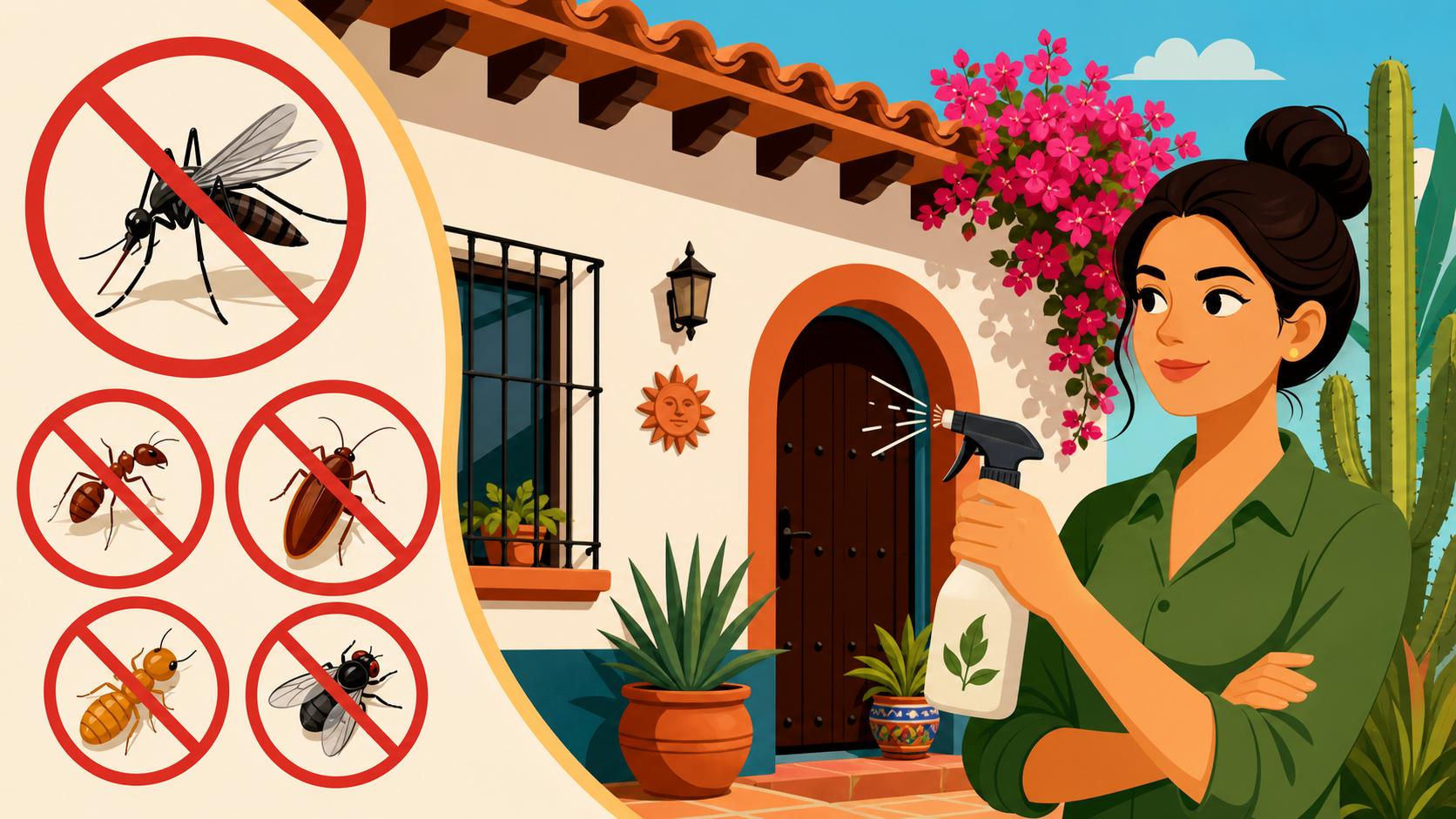
Dealing with Insects and Pests in Your Mexican Home
Waking up to find a disciplined line of tiny ants invading your morning coffee or discovering a "cucaracha" the size of a credit card in your shower can make the Mexican dream feel like a bit of a nightmare. I remember my first month in Mérida, thinking I had a clean house, only to realize the local insects didn't care about my standards—they had their own agenda. This guide solves the mystery of how to manage, prevent, and eliminate the most common household pests you will encounter while living in Mexico.
Disclosure: This post may contain affiliate links. We may earn a commission at no extra cost to you if you make a purchase through these links. Read full disclosure.
Identifying Common Household Pests in Mexico
Before you can fight back, you need to know exactly who you are dealing with. Mexico is one of the most biodiverse countries on the planet, and unfortunately, that diversity extends right into your living room. The pests here are often larger, faster, and more resilient than what you might be used to in colder climates.
The Ubiquitous Mexican Ants
Ants, or "hormigas," are arguably the most persistent roommates you will have. In many regions, you’ll encounter the tiny "sugar ants" that seem to materialize the moment a single grain of sugar hits the counter. However, there are also "hormigas locas" (crazy ants) that move erratically and in massive numbers, and in more tropical areas, larger leaf-cutter or stinging ants might find their way into your garden or ground-floor rooms.
The frustration with ants in Mexico is that they don't just stay in the kitchen. I’ve found them inside laptop keyboards, nesting in electrical outlets, and even inside sealed jars that I thought were airtight. Because many Mexican homes are built with concrete and block, ants often travel through the small fissures or along the electrical conduit inside the walls. Understanding this helps you realize that a surface-level spray is rarely enough; you have to find the point of entry, which is often a tiny gap in the window frame or a space where a pipe enters the wall.
Cockroaches: The Uninvited Heavyweights
In Mexico, "cucarachas" come in two main varieties that every expat should know. First, there is the large American cockroach, often called a "palmetto bug" in the Southern US. These are the giants that can fly. They typically live in the sewer systems or gardens and enter your home looking for water or a cool place to hide. Seeing one of these doesn't necessarily mean your house is dirty; it often just means there’s a gap under your door or an open drain.
The second type is the smaller German cockroach. These are the ones that signify an infestation. They love to hide behind the fridge, inside the hinges of your kitchen cabinets, and near the motor of your microwave. If you see these during the day, you likely have a colony that needs professional intervention. When you are first Settling in Mexico: Step-by-Step Guide to Your First 30 Days as an Expat, one of your top priorities should be a deep inspection of the kitchen cabinets for the tell-tale tiny black specks that indicate cockroach activity.
Scorpions and Spiders: Safety First
Depending on where you live—especially in the Bajío region (like San Miguel de Allende or Querétaro) or the Pacific coast—scorpions, or "alacranes," are a reality of life. Most household scorpions in Mexico are not lethal to healthy adults, but their sting is incredibly painful and can cause numbness or allergic reactions. They love dark, cool, tight spaces, which unfortunately includes the inside of your shoes, the folds of your curtains, or under a pile of laundry on the floor.
Spiders are also common, including the brown recluse and the black widow (viuda negra). While most spiders you see will be harmless cellar spiders, it is crucial to learn the markings of the dangerous ones. I always recommend that new residents include a high-quality flashlight in their Building a First Aid Kit: Essential Medical Supplies for Expat Children or for themselves, specifically for checking dark corners and shoes before putting them on.
Prevention Strategies and Natural Deterrents
Living in a tropical or semi-arid environment means your prevention game must be top-notch. You cannot treat a Mexican home like a sealed "bubble" the way you might an apartment in Toronto or London. Because many homes have indoor-outdoor living designs, you have to be proactive about creating barriers.
Securing Your Home’s Perimeter
The first step in pest control is physical exclusion. Look at the bottom of your exterior doors. If you can see light coming through, a scorpion or a large cockroach can easily walk right in. Installing "guardapolvos" (door sweeps) is a cheap and effective way to block the main highway into your home. You can find high-quality rubber or brush sweeps on Amazon Mexico that are much more durable than the cheap foam ones often found in local hardware stores.
Window screens, or "mosquiteros," are another essential. In many older Mexican homes, screens are either missing or have significant gaps. If your rental doesn't have them, it is worth the investment to have a local "aluminero" (aluminum worker) custom-build frames for your windows. This is the single best defense against mosquitoes, which is vital for Staying Healthy in Mexico: Essential Tips for Food, Water, and Preventive Care and avoiding illnesses like Dengue or Zika.
Kitchen Hygiene and Food Storage
In the land of eternal spring, food spoils and attracts pests at lightning speed. The "I'll do the dishes in the morning" habit is one you need to break immediately. A single dirty plate in the sink is an invitation for an ant scout to call the entire colony. I’ve learned the hard way that even "sealed" cereal boxes are no match for Mexican pests.
The solution is to move everything into glass or heavy-duty plastic containers with silicone seals. If you are staying at a Selina or another co-living space, you'll notice they often have strict labeling and storage rules—this isn't just for organization; it's to prevent a building-wide pest breakout. Even your trash can needs a tight-fitting lid, and you should aim to take the organic waste out to the street bin every single night.
Managing Humidity and Standing Water
Pests aren't just looking for food; they are desperately seeking water. Leaky pipes under the sink or a dripping shower head create a micro-climate that cockroaches and mosquitoes love. Ensure your Home Utilities in Mexico: Setting Up Electricity, Water, Gas, and Internet are all in good working order. If you have a "tinaco" (water tank) on your roof, make sure the lid is securely fastened so it doesn't become a massive breeding ground for mosquitoes.
Another local tip is to check your "coladeras" (floor drains). In Mexican construction, floor drains are common in bathrooms and kitchens. If the U-trap dries out because you haven't used that shower in a week, cockroaches will climb up from the sewer lines. Pouring a bit of water (and perhaps a splash of floor cleaner like Fabuloso) down every drain once a week keeps the barrier intact.
Professional Help and Over-the-Counter Solutions
Sometimes, despite your best efforts, the pests win a round. When that happens, you need to know what tools are available in the local market and when it is time to call in the professionals.
Hiring a Professional Fumigator
In Mexico, "fumigación" is a standard part of home maintenance. It is very common for expats to have their homes professionally sprayed every three to six months. The cost is surprisingly affordable, usually ranging from 600 to 1,500 pesos depending on the size of the home and the region. Professional exterminators use specialized chemicals that are often more effective against the local species than the "off-the-shelf" cans.
When hiring a professional, ask if they use "gel" for the kitchen cabinets (which is safer than spraying near food) and ensure they spray the "registros" (the sewer access points) outside your house. If you are struggling to find a reputable service due to the language barrier, using an app like Airalo to stay connected and translate reviews on Google Maps or local Facebook groups can be a lifesaver. Most reputable companies will offer a 3-month guarantee on their work.
Essential Supplies for Your Pest Control Kit
For day-to-day battles, you should keep a few specific items in your cupboard. For ants, "Terro" brand liquid baits (often available on Amazon Mexico) are the gold standard because they allow the ants to take the poison back to the queen. For cockroaches, the "Combat" or "Maxforce" gels are far superior to the aerosol sprays, which often just scatter the bugs into the walls.
| Pest Type | Recommended Intervention | Frequency |
|---|---|---|
| Ants | Liquid bait stations and sealing cracks | As needed / Monthly check |
| Cockroaches | Gel baits in cabinets and drain covers | Every 3 months |
| Scorpions | Sticky traps in dark corners and door sweeps | Seasonal (Spring/Summer) |
| Mosquitoes | Electric vaporizers and window screens | Daily / Permanent |
| Termites | Professional wood treatment | Annual inspection |
Don't forget the "biolife" approach either. Many expats swear by keeping a few "geckos" (cuijas) around. These small, translucent lizards are harmless to humans and eat their weight in mosquitoes and small moths every night. In Mexico, a gecko in the house is often considered good luck—or at least a free, eco-friendly pest control service.
Dealing with Pests in Temporary or Rental Housing
If you are just arriving and staying in a short-term rental or an Airbnb, you have less control over the physical structure of the building. However, you can still protect yourself. Pests are one of the most common complaints for those Renting a Home in Mexico: Complete Expat Guide to Leases, Deposits, and More.
Moving Into a New Space
Before you even bring your suitcases inside a new rental, do a "pest walkthrough." Check under the sinks for leaks and look for the "musty" smell of cockroaches. If you see signs of an infestation, ask the landlord to have the place "fumigado" before you move in. It is much easier to treat an empty house than one filled with your belongings.
If you are staying in a more rustic area or a beach town, accept that some level of insect interaction is inevitable. The goal isn't necessarily 100% elimination—which is nearly impossible in the tropics—but rather management and prevention of the dangerous or truly invasive species. If you encounter Mosquito-Borne Illnesses (Dengue, Zika): Precautions for Expats in your neighborhood, be extra vigilant with your screens and repellents.
By staying proactive and understanding that pest control in Mexico is a marathon, not a sprint, you can keep your home a sanctuary. It takes a bit of a "boots-on-the-ground" mentality, but once you have your systems in place—the door sweeps, the glass jars, and the quarterly fumigation—the insects will become a minor footnote in your Mexican adventure rather than the main story.
Disclaimer
This guide is for informational purposes only. I am an expat sharing personal experiences and general advice. Pest control chemicals can be toxic; always follow manufacturer instructions and consider hiring licensed professionals. For medical emergencies involving stings or bites, please consult a healthcare professional in Mexico immediately.