Earthquake Preparedness: Safety Tips for Expats in Seismic Zones
The sound of the Alerta Sísmica—that low-frequency, oscillating siren that echoes through the streets of Mexico City and Oaxaca—is a sound no expat ever forgets. I remember my first week in the capital when the alarm went off; I stood frozen in my kitchen, heart hammering, completely unsure if I had seconds or minutes to react. This guide is designed to replace that paralyzing uncertainty with a clear, battle-tested plan so you can navigate Mexico’s seismic zones with confidence and safety.
Disclosure: This post may contain affiliate links. We may earn a commission at no extra cost to you if you make a purchase through these links. Read full disclosure.
Understanding the Seismic Reality in Mexico
Living in Mexico means accepting that the ground beneath you is dynamic. The country sits atop five tectonic plates, making it one of the most seismically active regions in the world. While this sounds intimidating, the local culture is deeply rooted in preparedness, and as an expat, your first step is understanding the infrastructure designed to protect you.
The Science of the Shake and Local Infrastructure
Mexico’s geography is a double-edged sword. While the mountainous terrain is beautiful, the subduction of the Cocos Plate beneath the North American Plate creates frequent tremors. If you are living in a place like Mexico City, the challenge is amplified by the fact that much of the city is built on an ancient lakebed. This soft soil acts like a bowl of jelly, magnifying the seismic waves of even distant earthquakes. When researching Living in Mexico City: An Expat's Guide to Neighborhoods and Lifestyle, you’ll find that certain areas, like Roma and Condesa, feel shakes more intensely than neighborhoods built on volcanic rock, such as San Angel or Tlalpan.
The Seismic Alert System SASMEX
Mexico is home to one of the world's most sophisticated early warning systems. SASMEX uses sensors along the Pacific coast to detect the initial P-waves of an earthquake. Because these waves travel faster than the destructive S-waves, the system can trigger sirens in major cities before the shaking starts. Depending on the epicenter, you might have anywhere from 20 to 120 seconds of lead time. This isn't just a "heads up"; it is your window of opportunity to execute your safety plan. You will hear these sirens from tall poles on the street, but you should also ensure your building has a local receiver.
Seismic Culture and Local Drills
In Mexico, earthquake drills (simulacros) are taken very seriously. Every September 19th—the anniversary of both the devastating 1985 and 2017 quakes—the entire country participates in a massive national drill. People evacuate offices, schools, and homes with practiced efficiency. As a newcomer, don't just watch from the sidelines. Participate. Observe how your neighbors move and where they gather. Understanding the "no corro, no grito, no empujo" (don't run, don't scream, don't push) mantra is essential for staying calm and keeping others safe during a real event.
Essential Preparation Before the Ground Shakes
Preparation is the difference between controlled action and chaotic panic. In my experience, most expats wait until their first "big one" to start thinking about a survival kit, but the best time to prepare is the day you sign your lease.
Creating Your Mochila de Emergencia
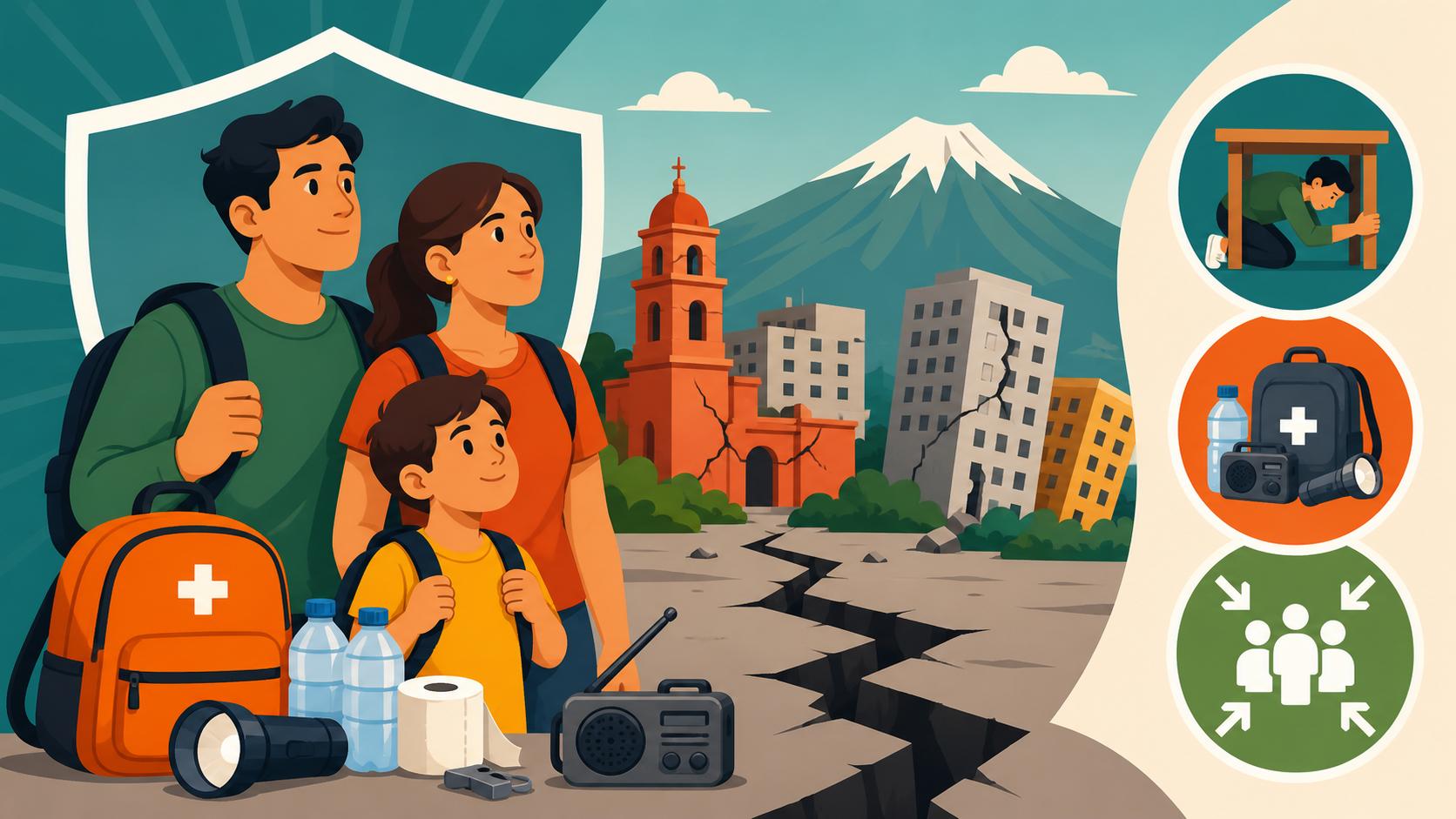
In Mexico, the emergency go-bag is known as the "Mochila de Emergencia." This should be a sturdy backpack kept near your front door. It needs to contain enough supplies for at least 72 hours. Key items include a gallon of water per person, non-perishable food, a manual can opener, a flashlight with extra batteries, and a basic medical kit. You can easily find high-quality tactical backpacks and solar-powered chargers on Amazon Mexico to build out your kit without having to hunt through local hardware stores. Don't forget a physical copy of your residency documents, a stash of pesos in small denominations, and any specific medications you or your family require.
Securing Your Home and Utilities
Mexican homes often feature heavy tiled floors, large windows, and unanchored wardrobes. During a quake, these become significant hazards. Take a weekend to walk through your home and identify "falling risks." Use earthquake straps to secure tall bookshelves and appliances to the walls. In many parts of Mexico, gas for cooking and hot water is stored in large tanks (tanques estacionarios) on the roof or delivered in cylinders. Ensure these tanks are securely fastened. If a pipe breaks during a quake, the risk of fire is high. Knowing how to quickly shut off your gas and water valves is just as important as knowing where to hide. If you are Renting a Home in Mexico: Complete Expat Guide to Leases, Deposits, and More, ask your landlord to show you these shut-off points during your initial walkthrough.
Communication and Digital Readiness
When a significant earthquake hits, local cellular networks often jam within minutes as everyone tries to call their loved ones. To stay connected, I highly recommend having a backup data plan. Using a service like Airalo to keep a secondary eSIM active can be a lifesaver, as it may allow you to hop onto a different network or use data-heavy messaging apps like WhatsApp when standard calling fails. Additionally, download the "911 CDMX" app if you are in the capital; it provides a digital seismic alert that often triggers on your phone simultaneously with the street sirens. Make a plan with your family for a designated "meeting point" outside your neighborhood in case you are separated and unable to communicate.
What to Do During an Earthquake
The seconds during a tremor feel like minutes. Your actions during this window depend heavily on where you are located and the type of structure you are in.
The Evacuation vs Stay Put Rule
In Mexico, the rule of thumb is generally based on which floor you are on. If you are on the ground floor or the second floor, your goal is to evacuate immediately upon hearing the Alerta Sísmica. You have enough time to reach the street and move away from buildings and power lines. However, if you are on the third floor or higher, the official advice from Protección Civil is usually to stay put. Attempting to run down several flights of stairs while the building is swaying is incredibly dangerous and often leads to falls or being hit by falling debris in the stairwell.
Finding Your Zona de Menor Riesgo
If you cannot evacuate, you must identify the "Zone of Lesser Risk" within your apartment. Look for structural columns or load-bearing walls. Contrary to what many of us were taught in the US or Canada, the "Triangle of Life" theory is controversial; the safest bet is still to "Drop, Cover, and Hold On" under a sturdy piece of furniture like a heavy dining table. Stay away from windows, mirrors, and hanging light fixtures. In many Mexican apartments, the bathroom is actually a reinforced area due to the density of plumbing and smaller wall spans, making it a viable secondary shelter if you can't reach a table.
| Location | Action to Take | Primary Hazard |
|---|---|---|
| Ground / 1st Floor | Evacuate to an open area immediately. | Falling building facades. |
| 3rd Floor or Higher | Stay put; find a structural column. | Stairs collapsing or losing balance. |
| Driving a Car | Pull over away from bridges and poles. | Power lines and falling debris. |
| In a Public Plaza | Move to the center, away from buildings. | Shattering glass from skyscrapers. |
Navigating Public Spaces and Crowds
If you are out in the city, perhaps exploring Living in Oaxaca City: Culture and Lifestyle Tips for Expats, and the alarm sounds, look for the green and white signs that say "Zona de Seguridad." These are pre-designated safe spots in parks and plazas. If you are in a crowded area like a mall or a cinema, the biggest danger is often the crowd itself. Resist the urge to join a stampede toward the exits. Move toward the walls and cover your head. Once the shaking stops, exit in an orderly fashion, keeping an eye out for broken glass and fallen cables.
After the Shaking Stops
The period immediately following an earthquake is critical. Even if your building seems fine, there are hidden dangers that require a methodical approach.
Structural and Utility Inspections
Before you settle back into your home, perform a "walk-around" inspection. Check for "X" shaped cracks in the walls, which can indicate structural stress. Vertical or horizontal hairline cracks in the plaster are common and usually not dangerous, but diagonal cracks that go through the brick or concrete are a major red flag. Most importantly, smell for gas. Mexico’s gas infrastructure is susceptible to leaks after a shake. If you smell even a faint scent of sulfur, turn off the main valve, open all windows, and do not flip any light switches, as a small spark can trigger an explosion. Review your Medical Emergencies in Mexico: What Expats Should Know and Prepare plan to ensure you have local contact numbers for emergency services and gas technicians ready.
Community Support and Staying Informed
In the aftermath, information is your most valuable asset. Listen to the radio or check official Twitter (X) accounts like @SismologicoMX for magnitude updates and epicenter locations. If your home feels unsafe or your internet is down, seeking out a community hub can provide much-needed stability. Locations like Selina often have robust infrastructure and can serve as a great place to regain your footing, connect with other expats, and use reliable Wi-Fi to update your family. It's during these times that the expat community in Mexico really shines; don't be afraid to check on your neighbors, especially the elderly, as this is a core part of Living in Mexico: Cultural and Practical Guide for New Expats.
Long-Term Emotional and Financial Recovery
A major earthquake can be traumatic, and "phantom quakes"—the sensation that the ground is moving when it isn't—are a common psychological response for weeks afterward. If you find yourself struggling, look into Mental Health Resources: Finding English-Speaking Therapists in Mexico to talk through the experience. On the financial side, ensure your home is protected. Many expats assume their HOA covers everything, but you should verify this by reading up on Homeowners and Renters Insurance in Mexico: Do You Need It?. Having a specific earthquake policy can save you from total loss in the rare event of a catastrophic quake.
Managing Supplies and Ongoing Readiness
Earthquake preparedness isn't a one-and-done task; it requires a seasonal check-in to ensure your supplies are fresh and your plan is still relevant.
Maintaining Your Emergency Kit
Every six months, perhaps during the change of seasons, go through your emergency bag. Replace the water, check expiration dates on canned goods, and test your flashlight batteries. It is also a good time to update your Building a First Aid Kit: Essential Medical Supplies for Expats in Mexico with fresh bandages and antiseptic. I often use these check-ins to see if any new gadgets could make life easier; for example, I recently added a high-capacity power bank I found on Amazon Mexico that can jump-start a car and charge three phones, which provides immense peace of mind.
Updating Emergency Contacts
As you settle further into your life abroad, your network will change. Make sure your emergency contact list includes your current landlord, a local friend who speaks fluent Spanish, and the nearest embassy or consulate. Keep a physical copy of Emergency Numbers in Mexico: How to Call Police, Fire, or Ambulance in your wallet and taped inside your go-bag. If you have moved to a new neighborhood, re-identify your local evacuation zones, as a plan for a high-rise in Polanco will look very different from a plan for a colonial house in Mérida or a beachfront condo in Puerto Vallarta.
Staying Healthy in High-Stress Times
Post-earthquake environments can sometimes lead to issues with water contamination if pipes are damaged. It is vital to continue Staying Healthy in Mexico: Essential Tips for Food, Water, and Preventive Care by only consuming bottled or deeply filtered water after a major seismic event until the city or your landlord confirms the local lines are intact. Taking care of your physical health ensures you have the stamina to deal with the logistical hurdles that follow a significant tremor, such as navigating detours or dealing with temporary power outages.
Earthquake Safety Disclaimer
This guide is intended for informational purposes only and does not replace the official guidance provided by the Mexican government or civil protection agencies. Seismic events are unpredictable and vary in intensity. Always prioritize the instructions of local authorities and Protección Civil during an emergency. The author and this website are not liable for any injuries or damages resulting from the use of this information or the actions taken during a seismic event. For the most accurate and up-to-date local safety protocols, please consult the official website of the Servicio Sismológico Nacional.