Why Do Many Places in Mexico Prefer Cash?
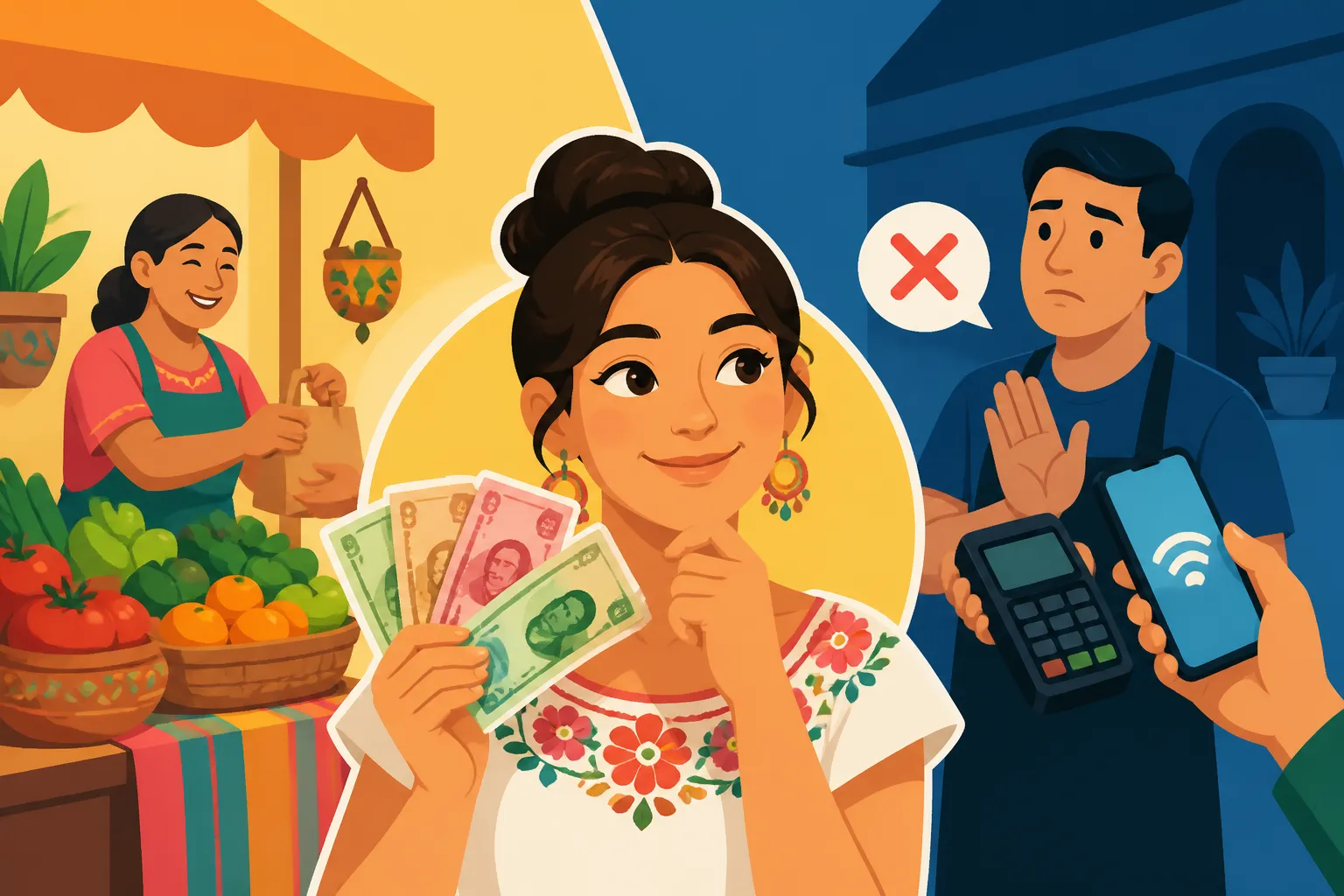
Oh, the classic "cash vs. card" dance in Mexico! It's a rite of passage for every expat, isn't it? You arrive, expecting your trusty credit card to be your best friend, only to find yourself scrambling for pesos more often than you anticipated. This isn't just a quirk; there are deep-seated cultural, economic, and practical reasons why many places here still very much prefer cash. This guide will help you understand why and, more importantly, how to navigate Mexico's cash-heavy economy like a seasoned local.
Disclosure: This post may contain affiliate links. We may earn a commission at no extra cost to you if you make a purchase through these links. Read full disclosure.
The Cultural Underpinnings of Mexico’s Cash Preference
When you first arrive in Mexico, it can feel a bit like stepping back in time in some aspects, especially regarding financial transactions. While major cities and tourist zones are rapidly modernizing, the ingrained preference for physical money runs deep, stemming from a mix of historical factors and the very structure of local commerce.
Historical Norms and Trust in Cash
For generations, cash has been the undisputed king in Mexico. Before widespread banking and digital payment systems became even remotely accessible, cash was the only way to transact. This created a strong cultural norm around physical money, where its presence signifies immediate value and undisputed payment. For many older generations, and even for those in more remote areas, banks are still viewed with a degree of skepticism or simply as an unnecessary middleman. They've seen economic shifts, currency devaluations, and simply prefer the tangible security of holding their earnings in their hand.
Moreover, the process of opening a bank account in Mexico, especially for smaller vendors or individuals with limited formal documentation, can be cumbersome. The bureaucratic hurdles, even for citizens, can be daunting, leading many to operate entirely outside the traditional banking system. This historical reliance, coupled with the slow penetration of banking services into all segments of society, has cemented cash as the most trusted and universally accepted form of payment.
Informal Economy and Smaller Businesses
Mexico has a robust informal economy, a vibrant ecosystem of street vendors, small market stalls, family-run tienditas (corner stores), and service providers who operate without formal registration. While this informal sector provides livelihoods for millions and offers incredible value to consumers, it thrives on cash transactions. Imagine a bustling tianguis (traditional open-air market) – hundreds of vendors selling everything from fresh produce to handmade crafts. Asking these vendors to accept card payments would introduce a layer of complexity and cost that simply doesn't fit their operational model.
These small businesses often have very tight margins. Every peso counts, and avoiding bank fees associated with card processing can make a significant difference to their daily income. Plus, the simplicity of cash means less paperwork, fewer tax declarations (which, let's be honest, is a major motivator for many), and an immediate understanding of their daily sales. For anyone looking for an authentic experience, wandering through these local markets, cash in hand, is part of the charm and a wonderful way to truly support the local economy directly.
Practical Reasons for Cash Preference
Beyond the cultural and historical aspects, there are very tangible, day-to-day reasons why cash remains the preferred method of payment for many Mexican businesses. These reasons often boil down to cost, efficiency, and infrastructure.
Transaction Fees and Banking Infrastructure
For small businesses, accepting credit or debit cards isn't free. They incur transaction fees, which typically range from 1.5% to 3% (or even higher) per transaction. For a vendor selling a taco for 20 pesos, that 3% might seem small, but it adds up quickly and significantly eats into already slim profit margins. Why lose a chunk of your hard-earned money to a bank when you can accept cash and keep every single peso?
Then there's the matter of equipment. A Point of Sale (POS) terminal, even a basic one that connects to a smartphone, still costs money to acquire and maintain. Not every small shop owner wants to invest in this, especially if their customer base primarily uses cash anyway. Furthermore, while internet connectivity is improving across Mexico, it's not always reliable, especially in some older buildings, bustling markets, or rural areas. Imagine a long line of customers waiting while the card machine struggles to connect. It's a frustrating experience for everyone involved, and cash simply bypasses these technological headaches entirely.
Simplicity and Immediate Payment
Think about a busy morning at a coffee stand or a lunchtime rush at a fonda – speed is of the essence. Cash transactions are quick and straightforward. You hand over the money, you get your change, and you're on your way. There's no waiting for a chip reader, no worrying about a slow network connection, no fumbling with PINs. This efficiency is critical for businesses that thrive on high-volume, low-value sales.
Moreover, cash means immediate liquidity. Business owners can use the money they've just earned to buy more supplies, pay employees, or handle other immediate expenses without waiting for bank transfers or settlement periods. For many, especially in the informal sector, cash flow is king, and direct cash payments offer the most flexibility and control over their finances. This simplicity also extends to accounting (or lack thereof), making it easier for many to manage their daily operations without complex digital records.
Where You'll Most Likely Need Cash
As an expat or tourist, knowing where cash is essential will save you a lot of hassle and potential embarrassment. It's not just about preference; in many situations, it's the only option.
Local Markets and Street Vendors
This is arguably the most common scenario where cash is king. Whether you're exploring the vibrant Mercado de Artesanías in Oaxaca, haggling for fresh produce at a tianguis in Mexico City, or grabbing late-night tacos al pastor from a street cart in Guadalajara, you absolutely need pesos in hand. These vendors often don't have card readers, and even if they did, the transaction fees would cut too deeply into their profits. Plus, part of the fun of a market is the lively exchange, sometimes including a bit of good-natured haggling over prices, which is almost exclusively a cash activity.
Trying to pay with a large denomination bill, like a 500 peso note, for a small purchase can also be a challenge. Many small vendors won't have enough change, or they'll be reluctant to deplete their float early in the day. Always carry plenty of 20, 50, and 100 peso bills, and lots of coins. It makes transactions smoother and makes you a much more appreciated customer. If you’re planning on exploring the local food scene, check out our guide on how to eat tacos like a local in Mexico.
Small Shops and Rural Areas
Beyond the bustling markets, you'll find that many abarrotes (small grocery stores or corner shops), independent boutiques, hardware stores, and other family-owned businesses in neighborhoods across Mexico heavily prefer cash. Even if they have a card terminal, don't be surprised if it's "out of service" (often a polite way of saying "we prefer cash today"). These establishments often operate on thin margins and appreciate direct cash payments.
Venture outside of major cities and tourist corridors into more rural towns, and the reliance on cash becomes even more pronounced. In small villages, ATMs might be scarce, and card acceptance could be virtually nonexistent. If you're planning a road trip through less-traveled parts of Mexico, always make sure your wallet is well-stocked with pesos before you leave a larger town.
Public Transportation and Smaller Services
For most forms of local public transportation – think colectivos (shared vans), local city buses (outside of systems with dedicated transit cards), and even many traditional taxis (unless you're using a ride-hailing app like Uber or Didi) – cash is the only accepted payment. You pay the driver directly, often needing exact change or small bills.
The same goes for many smaller, everyday services. A shoe shine in the plaza, a street musician, a quick tip for a grocery bagger, paying a local artisan for a small trinket, or even buying snacks from a vendor walking through the park – these are all cash-based transactions. It's simply the expected and most efficient way to conduct business for these services. Planning an outing? You might want to brush up on Getting Around Mexico: Buses, Flights, and Car Hire.
Navigating a Cash-Heavy Economy as an Expat
Living in a cash-preferred economy requires a bit of adjustment, but once you get the hang of it, it becomes second nature. It's all about preparedness and smart habits.
Always Carry Small Bills and Coins
This is perhaps the most crucial tip for any expat in Mexico. Walking into a small shop to buy a 30 peso item and handing over a 500 peso note is practically an act of war, or at the very least, a significant inconvenience for the vendor. Many small businesses, especially street vendors or market stalls, simply won't have enough change, or they'll look at you with a sigh that silently screams, "Please don't."
Make it a habit to break larger bills whenever you can at bigger establishments that definitely accept cards, like supermarkets, larger chain pharmacies, or gas stations. When you get cash from an ATM, try to withdraw amounts that will give you a good mix of denominations, and always ask for cambio (change) if you're handed a large bill. Having a good supply of 20, 50, and 100 peso bills, along with plenty of coins, will make your daily transactions infinitely smoother and earn you smiles from local vendors.
Using ATMs Wisely
ATMs (cajeros automáticos) are your primary source for cash. You'll find them widely available in cities and larger towns, usually in banks, shopping malls, and sometimes even supermarkets. However, be mindful of fees. Mexican banks often charge a transaction fee for withdrawals from foreign cards, which can range from 30 to 50 pesos or more. Your home bank might also charge a foreign transaction fee. It's a double whammy!
To minimize fees, withdraw larger amounts less frequently rather than small amounts multiple times. Look for ATMs associated with major banks like BBVA, Banorte, or Santander. Always be aware of your surroundings, especially when withdrawing cash. It's best to use ATMs inside banks or in well-lit, busy areas during daylight hours. Never accept "help" from strangers at an ATM. When it comes to managing your money, you'll find our guide on Using ATMs in Mexico: Avoiding Fees and Staying Secure very helpful.
While some expats try to avoid ATMs by getting cash back at stores, this isn't a common practice in Mexico. You might be able to get cash from a grocery store register, but it's not a widespread or reliable option.
When Cards Are Accepted and When to Use Them
Don't get us wrong, card acceptance is growing rapidly in Mexico! You'll find your credit and debit cards are generally welcomed at:
- Major Supermarkets and Big Box Stores: Think Walmart, Soriana, La Comer, Chedraui, Costco, Sam's Club. These places are set up for card payments.
- Chain Restaurants and Cafes: Starbucks, Applebee's, and larger, more upscale local restaurants in tourist zones or affluent neighborhoods will typically accept cards.
- Hotels: Most hotels, especially those listed on platforms like Booking.com, accept major credit cards. Smaller guesthouses or hostales might still be cash-only, so always double-check.
- Major Retail Chains: Department stores like Liverpool, Palacio de Hierro, and larger clothing stores.
- Tourist Attractions and Tour Operators: If you're booking excursions through reputable companies like Viator, or purchasing tickets at popular archaeological sites or museums, cards are usually accepted.
- Gas Stations: Most gas stations now accept cards, but it's always a good idea to confirm with the attendant before they start pumping, just in case their machine is "down."
It's a good practice to always ask "Aceptan tarjeta?" (Do you accept card?) or "Solo efectivo?" (Only cash?) before making a purchase, especially in smaller establishments. This way, you won't be caught off guard. Remember, while a place might accept cards, they might still subtly prefer cash due to fees or connection issues. Having both options in your wallet is always the safest bet.
Benefits and Drawbacks of Mexico's Cash Culture
Living in a cash-heavy society brings with it a unique set of pros and cons that expats quickly learn to appreciate or endure.
Advantages for Expats
Believe it or not, there are some real perks to Mexico's cash culture that you might not have considered back home.
First, it can be a fantastic way to budget more effectively. When you're physically handing over cash, you tend to be more aware of your spending than when you just tap a card. Many expats adopt the "envelope system" for daily expenses, allocating a set amount of cash for the week or month, which can really help in managing your finances in Mexico.
Second, using cash is often the best way to support the local economy directly. When you pay cash to a street vendor, a market seller, or a small independent shop, 100% of that money goes directly into their pockets, often with fewer fees and delays than card payments. It's a tangible way to connect with and uplift the community you're living in.
Third, it provides a great opportunity to practice your Spanish. From asking for cambio (change) to inquiring about prices or asking "Solo efectivo?" (Only cash?), every cash transaction is a mini-language lesson. It forces you out of your comfort zone and into more direct communication with locals, which is invaluable for integration.
Finally, in some instances, cash can get you a better deal. While not universally true, especially for advertised prices, if you're at a market or dealing with a small business, offering cash might sometimes open the door for a small discount or a bit of friendly haggling that wouldn't be possible with a card.
Disadvantages and Risks
Of course, it's not all sunshine and pesos. There are definite downsides and risks associated with relying heavily on cash.
The most obvious is security. Carrying larger amounts of cash makes you a more attractive target for petty theft. While Mexico is generally safe, especially in expat-heavy areas, common sense precautions are always necessary. Avoid flaunting large sums of money, keep your wallet secure, and distribute your cash across different pockets or a money belt, rather than keeping it all in one place. Try to only carry what you need for the day. For more on staying safe, check out our guide on Staying Safe in Mexico: Practical Tips for Travelers.
Another drawback is the difficulty in tracking expenses. If you're used to digital banking records for every purchase, managing a cash budget can feel a bit like flying blind. It requires more discipline to manually track your spending, which can be a hassle for some. This can make budgeting for things like Healthcare Costs in Mexico: Doctor Visits, Hospital Stays, and Surgery Expenses or your overall Cost of Living in Mexico: 2026 Comprehensive Guide a bit more challenging.
There's also the rare but possible issue of counterfeit bills. While not a widespread problem, especially with smaller denominations, it's good to be aware. Learn to recognize the security features of Mexican pesos, such as watermarks, raised ink, and security strips. Most reputable businesses will spot a fake instantly, and you don't want to be caught holding it.
Lastly, being entirely reliant on cash can be inconvenient if you run out unexpectedly and can't find an ATM, or if an ATM is out of service. This is why having a small emergency stash of cash, separate from your daily wallet, is always a smart idea.
| Transaction Type | Cash Preferred / Often Required | Cards Generally Accepted |
|---|---|---|
| Street Food Stalls / Taquerías | ✅ Yes | ❌ No |
| Local Markets (Mercados, Tianguis) | ✅ Yes | ❌ No |
| Colectivos / Local Buses / Some Taxis | ✅ Yes | ❌ No |
| Small Independent Shops (Abarrotes) | ✅ Yes (even if a machine exists) | ⚠️ Sometimes |
| Rural Areas | ✅ Yes | ❌ No |
| Upscale Restaurants (Chain or Tourist) | ❌ No | ✅ Yes |
| Major Supermarkets (Walmart, Chedraui) | ❌ No | ✅ Yes |
| Large Hotels (Booking.com) | ❌ No | ✅ Yes |
| Tour Operators (Viator) | ❌ No | ✅ Yes |
| Gas Stations | ⚠️ Sometimes (confirm first) | ✅ Yes (mostly) |
| Intercity Buses (ADO, Busbud) | ❌ No (can book online) | ✅ Yes |
| Pharmacies (Chain like Farmacia Guadalajara) | ❌ No | ✅ Yes |
Disclaimer
The information provided in this guide is for general informational purposes only and does not constitute financial, legal, or immigration advice. While we strive to keep the information accurate and up-to-date, regulations, fees, and practices in Mexico can change frequently. Expats should always consult with qualified local professionals, such as financial advisors, lawyers, or immigration specialists, for advice tailored to their individual circumstances. We are not responsible for any actions taken based on the information presented herein.