Wait Times in Mexico: Public vs Private Healthcare Services
Sitting in a crowded public clinic at 5:00 AM just to secure a basic consultation token is a grueling initiation rite for many expats. I once waited four agonizing months for a public orthopedic referral while my knee throbbed daily. This guide meticulously breaks down the reality of wait times across Mexico’s public and private healthcare sectors so you can access care without agonizing delays.
Disclosure: This post may contain affiliate links. We may earn a commission at no extra cost to you if you make a purchase through these links. Read full disclosure.
The Reality of the Mexican Public Healthcare System
Navigating the IMSS Bureaucracy
The public healthcare system in Mexico, primarily anchored by the Instituto Mexicano del Seguro Social (IMSS), is a massive, heavily subsidized apparatus designed to provide universal coverage to the Mexican working class. For expats who secure legal residency, enrolling in this system on a voluntary basis is an incredibly popular way to mitigate catastrophic medical costs. However, stepping into an IMSS facility requires abandoning every expectation of expedited service you might have carried over from your home country. The system is structurally designed around rigid gatekeeping, meaning you cannot simply request to see a specialist when you feel something is wrong.
Your journey within the public system begins with your assigned family doctor at a designated local clinic, known as the Unidad de Medicina Familiar. You must first secure an appointment with this general practitioner, which is a hurdle in itself. While the IMSS digital app has improved scheduling for some, many expats find themselves forced to utilize the “Unifila” system for urgent but non-life-threatening issues. This involves arriving at the clinic before dawn, standing in a physical line, and hoping to be granted one of the limited daily walk-in slots. If you are currently attempting to integrate into this heavily bureaucratic network, our How to Enroll in IMSS: Step-by-Step Guide for Foreign Residents breaks down the exact paperwork required to get your foot in the door.
Even after you successfully see your assigned family doctor, you are entirely at their mercy regarding referrals. If they determine your condition warrants specialized care, they will issue a formal transfer request to a second-tier or third-tier regional hospital. You do not get to choose the hospital, the specialist, or the date. You are placed in a massive regional queue, waiting for the administrative office to contact you with an appointment slot that fits their overloaded schedule.
Expected Wait Times for Consultations and Surgeries
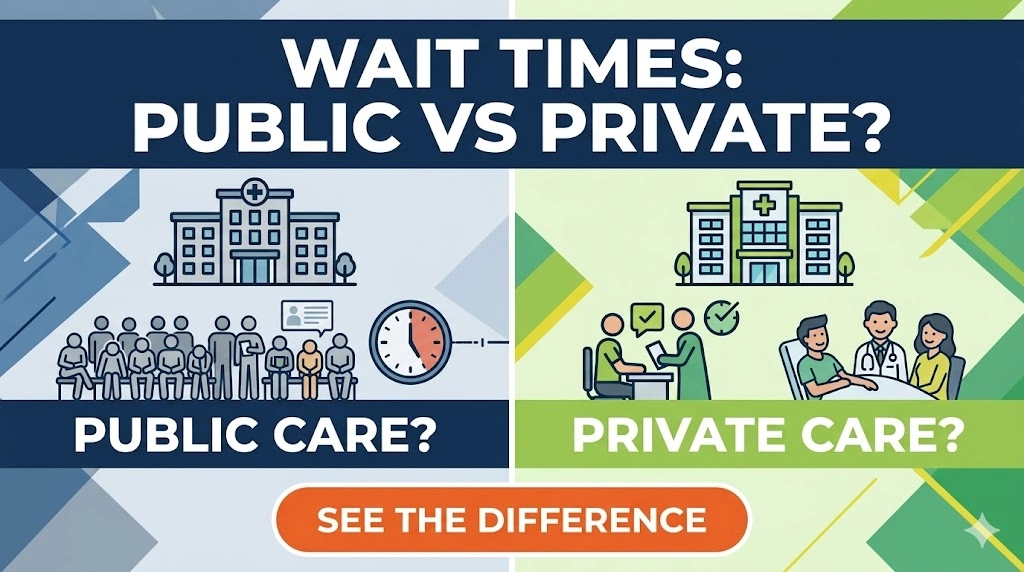
The defining characteristic of the Mexican public healthcare system is the sheer volume of patients it must process daily. Because the system is chronically underfunded and severely understaffed relative to the growing population, the wait times for non-emergency care are statistically staggering.
Recent independent health studies assessing the IMSS infrastructure have revealed that the mean waiting time for standard, elective surgical procedures—such as cataract removals, gallbladder excisions, or hernia repairs—is approximately fourteen weeks. However, this is merely an average. Depending on the specific state you reside in and the localized burden on the regional hospital, waiting six to eight months for a scheduled orthopedic surgery like a hip replacement is entirely common. Before you even reach the operating table, you must endure the wait for diagnostic imaging. The average wait time to receive an MRI, CT scan, or specialized ultrasound in the public sector hovers around eleven weeks.
These delays are not a reflection of the medical staff’s competence—IMSS surgeons are highly skilled and perform an incredible volume of procedures—but rather a symptom of infrastructural bottlenecking. When you are suffering from a degenerating joint or waiting to biopsy a suspicious mass, eleven weeks can feel like a lifetime. Understanding this stark reality is crucial for any foreigner planning their long-term health strategy, a topic we cover extensively in Public Healthcare in Mexico: IMSS and IMSS Bienestar Explained for Expats.
The Hidden Costs of Waiting for Public Care
While the financial cost of utilizing the IMSS system is exceptionally low, the hidden costs of waiting can be devastating to your quality of life. The psychological toll of living in chronic pain while staring at a calendar for a surgical date four months away cannot be overstated. I have watched fiercely independent expats slowly lose their mobility and their mental health simply because they refused to step outside the free public system to address a deteriorating knee or a severe spinal issue.
Furthermore, waiting in the public system often exacerbates the underlying medical condition. A minor, easily treatable hernia can become incarcerated during a six-month wait for an operating room, suddenly transforming a routine elective surgery into a life-threatening emergency. In addition to the physical deterioration, you must factor in the frequent trips to the clinic, the hours lost sitting in unairconditioned waiting rooms, and the bureaucratic runaround required to constantly verify your place in the queue.
There is also the recurring issue of medication shortages within the public sector. Even if you are willing to wait months for your specialist appointment, the hospital pharmacy may simply be out of stock of your prescribed maintenance medication when you finally get your script. You are then forced to purchase the drugs out-of-pocket anyway. If you find yourself in this frustrating scenario, reviewing Pharmacies in Mexico: How to Get Medications (OTC vs Prescription) will help you locate the fairest retail prices for your essential treatments.
The Speed and Efficiency of Private Healthcare
Direct Access to Specialists Without Gatekeepers
For expats who prioritize their time, comfort, and immediate peace of mind, the Mexican private healthcare sector is a revelation. The private system operates as a pure free market, entirely bypassing the bureaucratic gatekeeping that strangles the public sector. If you wake up with a strange rash, a persistent cough, or severe joint pain, you do not need to waste days trying to secure a permission slip from a general practitioner.
You have absolute autonomy over your medical care. You can simply open your phone, research the top-rated specialists in your city, and contact their offices directly. In many cases, you can secure an appointment with a highly credentialed, bilingual specialist for the very next day. This direct-access model empowers patients to take immediate control of their health trajectory. If you are unsure whether your specific situation requires a generalist’s input first, our guide on Seeing Specialists in Mexico: Do You Need a Referral or GP Recommendation? clarifies the boundaries of this incredible freedom.
The ease of access in the private sector extends to the communication style of the doctors themselves. Private specialists in Mexico are deeply focused on patient retention and satisfaction. It is standard practice for a private doctor to spend a full hour with you during an initial consultation, meticulously explaining their diagnosis, and then handing you their personal WhatsApp number so you can text them directly if your symptoms change over the weekend.
Immediate Diagnostic Testing and Fast-Tracked Surgeries
The speed of the private sector becomes truly apparent when diagnostics and surgical interventions are required. If a private orthopedic surgeon examines your knee on a Tuesday morning and suspects a torn meniscus, they will hand you a written order for an MRI. You can walk out of their office, drive straight to a private diagnostic laboratory like Chopo or Salud Digna, and have the MRI performed that exact same afternoon.
Once the imaging is complete, the results are often emailed directly to both you and your surgeon within twenty-four hours. If surgery is deemed necessary, you are not placed on a multi-month waiting list. You simply coordinate with the surgeon’s scheduling assistant, book an operating room at a private hospital of your choosing, and undergo the procedure within days. The entire lifecycle of care—from the initial pain to the diagnostic scan to the surgical resolution—can literally happen within a single week.
This hyper-accelerated timeline is exactly why medical tourism is a multi-billion dollar industry in Mexico. However, managing this rapid influx of medical data and coordinating between independent labs and surgeons can be overwhelming for a newly arrived foreigner. To understand how to physically navigate these standalone diagnostic centers, review Finding English-Speaking Doctors and Specialists in Mexico.
The Cost of Bypassing the Wait
The extraordinary speed and luxurious comfort of the private sector come with a proportional price tag. While private healthcare in Mexico is significantly cheaper than the uninsured out-of-pocket costs in the United States, it is still a massive financial burden if you are living on a fixed retirement income.
An initial consultation with a top-tier private specialist generally costs between $50 and $100 USD. An MRI might cost $300 USD. However, if that rapid diagnostic process reveals the need for a major surgical intervention—such as a complex spinal fusion or a cardiac bypass—the private hospital bill can easily exceed $20,000 USD. Private hospitals require substantial upfront deposits before they will even admit you to the surgical ward, refusing to proceed until the funds are secured. For a granular breakdown of what these interventions actually cost across different regions, consult Healthcare Costs in Mexico: Doctor Visits, Hospital Stays, and Surgery Expenses.
To manage these rapid, high-dollar transactions without losing a fortune to poor exchange rates, seasoned expats utilize Wise. When a private hospital demands a sudden $5,000 equivalent peso deposit, attempting to use a foreign debit card often triggers massive fraud blocks or incurs exorbitant dynamic currency conversion fees. By maintaining a Wise account, you can convert your home currency into Mexican pesos at the true mid-market rate and instantly execute a localized bank transfer to the hospital’s billing department, ensuring your fast-tracked surgery is not delayed by international banking friction.
Comparing the Patient Experience: Public vs Private
Language Barriers and Comfort in the Waiting Room
Beyond the stark differences in timeline, the physical and psychological experience of waiting for care highlights the massive divide between the two systems. In the public IMSS hospitals, you are entering utilitarian, severely crowded environments. The waiting rooms are often packed to capacity, requiring patients to stand in unairconditioned hallways for hours. You must bring your own toilet paper, your own hand sanitizer, and sometimes your own bed linens if you are admitted overnight.
Furthermore, the public system operates exclusively in Spanish. The administrative staff, the triage nurses, and the attending physicians will not cater to your lack of fluency. Attempting to explain a complex medical history while navigating a chaotic, loud public waiting room is a deeply stressful experience that frequently leads to dangerous miscommunications. If you are ever forced into this environment due to an emergency, understanding the linguistic landscape is vital, which we detail in Will Hospital Staff Speak English? Navigating Language in Medical Emergencies.
Conversely, the private hospital experience mirrors the luxury of a high-end hotel. The waiting rooms are pristine, quiet, and climate-controlled, often featuring complimentary coffee bars and concierge services. More importantly, the likelihood of encountering bilingual administrative staff and fluent English-speaking specialists is exceptionally high, providing a massive layer of psychological comfort when you are vulnerable and ill.
The Impact on Chronic Illness Management
For expats managing chronic, degenerative conditions such as autoimmune disorders, advanced diabetes, or cardiovascular disease, the speed of access directly correlates with the quality of life. Chronic illnesses require constant monitoring, frequent medication adjustments, and immediate triage when flare-ups occur.
In the public system, managing a chronic illness feels like a full-time administrative job. You must constantly battle the bureaucracy to secure your monthly medication refills and your quarterly specialist check-ins. If your condition suddenly worsens, you cannot simply bypass the queue; you must endure the wait times all over again, risking severe organ damage in the interim.
In the private sector, chronic illness management is a highly collaborative, immediate process. Your private endocrinologist or rheumatologist is consistently accessible. If your lab results indicate a dangerous spike in your blood markers, your private doctor can adjust your protocol that very same day. This proactive, immediate approach prevents minor flare-ups from becoming catastrophic hospitalizations. For a deeper look at structuring your long-term health strategy, read Managing Chronic Illness in Mexico: Access to Medication and Specialists.
Emergency Room Triage Differences
When a genuine, life-threatening crisis occurs, the differences in wait times and triage protocols between the two systems can dictate your survival. If you suffer a massive heart attack or are involved in a severe traffic collision, public ambulances (like the Red Cross) are legally obligated to stabilize you and transport you to the nearest public emergency room.
Public ERs practice brutal, highly efficient triage. If your situation is not immediately fatal, you will sit in the waiting room for hours while gunshot wounds and severe traumas are addressed first. The sheer volume of critical patients flowing through a public ER on a Friday night is staggering.
Private emergency rooms, on the other hand, are remarkably calm. Because they require a massive credit card hold or proof of premium insurance before admission, the patient volume is drastically lower. If you arrive at a private ER with severe abdominal pain, you will likely be seen by an attending physician within ten minutes, and wheeled into a CT scanner shortly thereafter. Preparing for these high-stakes scenarios requires immense logistical forethought, which is covered comprehensively in Medical Emergencies in Mexico: What Expats Should Know and Prepare.
Strategic Financial Tools to Bypass the Wait
Utilizing International Health Insurance
The ultimate financial hack for bypassing the grueling public wait times without liquidating your retirement portfolio is securing a premium international health insurance policy. While local Mexican insurance companies offer excellent care, they are notoriously strict about rejecting older applicants and permanently excluding pre-existing conditions.
This is why veteran expats heavily rely on global providers like Cigna Global. A comprehensive Cigna Global policy is specifically underwritten for expatriates, granting you unrestricted access to the absolute best private, JCI-accredited hospitals in Mexico. When you feel a lump or suffer a severe sports injury, you do not have to weigh the agony of a four-month IMSS wait against the terror of a $15,000 out-of-pocket private bill. You simply book the private specialist, submit the claim to Cigna Global, and receive your fast-tracked diagnostics and surgery with absolute financial peace of mind.
Furthermore, these international plans often include medical evacuation coverage. If you live in a remote beach town where even the private clinics lack advanced surgical suites, your Cigna Global policy will coordinate and fund a private air ambulance to fly you to a top-tier hospital in Mexico City or Monterrey instantly. To understand how these global plans physically integrate with local hospital billing departments, carefully review Choosing Private Health Insurance: Local Mexican Plans vs International Coverage.
Managing Out-of-Pocket Cash Payments
Even with the best international insurance policy, you will inevitably face out-of-pocket costs for your daily medical needs. Deductibles, copays for specialist consultations, and ongoing prescription runs add up quickly.
When navigating the private sector, cash is still king. Many top-tier independent specialists offer significant discounts if you pay in physical pesos rather than using a credit card terminal, which incurs hefty merchant fees. To manage this continuous need for local liquidity, expats use Wise to bypass the predatory exchange rates offered by traditional banks. By keeping a portion of your living expenses in a Wise multi-currency account, you can confidently withdraw exactly what you need for your private dermatology or cardiology appointments at a local ATM, ensuring your healthcare budget isn’t slowly drained by invisible banking margins.
Importing Specialized Recovery Aids
When you utilize the private sector to fast-track a major surgery or to quickly address a severe chronic flare-up, your subsequent recovery process begins immediately. You do not have the luxury of waiting weeks for local pharmacies to special-order the specific recovery items your surgeon recommended.
While Mexican pharmacies are incredibly efficient at dispensing standard antibiotics and painkillers, they routinely lack highly specialized, clinical-grade holistic recovery aids. If your private orthopedic surgeon recommends a specific high-absorption collagen peptide for tissue repair, or if your gastroenterologist prescribes a premium, multi-strain probiotic to rebuild your gut flora after heavy IV antibiotics, you will likely struggle to find them locally.
Expats solve this immediate logistical hurdle by ordering directly through iHerb. Because iHerb maintains a massive global inventory and ships reliably to residential addresses across Mexico, you can secure the exact nutritional and holistic supports required to maximize your rapid surgical recovery. Utilizing your Wise card to pay for these imported iHerb orders ensures you get the best currency conversion rate, allowing you to focus your energy entirely on healing rather than hunting through local markets for unavailable supplements.
Making the Right Choice for Your Expat Lifestyle
Combining Both Systems for Maximum Security
The most sophisticated expat healthcare strategy does not involve choosing exclusively between the public or the private system; it involves combining them to create an impenetrable, highly affordable safety net.
Thousands of savvy expats secure their legal Mexican residency and immediately enroll voluntarily in the public IMSS system to establish a baseline of catastrophic coverage. They pay the nominal annual fee, recognizing that if they are ever diagnosed with a massive, bankrupting illness like late-stage cancer, the public system will absorb the million-dollar cost of chemotherapy, even if the waiting rooms are uncomfortable.
Simultaneously, these expats pay entirely out-of-pocket for their routine, daily care in the private sector. They pay $50 to see a private cardiologist instantly, they pay $80 for private blood panels, and they use their Cigna Global high-deductible plan for mid-tier emergencies. This hybrid approach guarantees that you never have to endure a public wait time for diagnostic clarity, but you are completely protected from total financial ruin if the absolute worst occurs.
The Psychological Toll of Healthcare Delays
Ultimately, the decision between waiting in the public sector or paying for private speed comes down to the value you place on your own psychological well-being. Moving to a foreign country is inherently stressful; attempting to navigate a failing, overburdened public health bureaucracy while you are in physical pain is a breaking point for many foreigners.
The agonizing uncertainty of waiting weeks just to find out if a tumor is benign, or living for months with restricted mobility while waiting for a joint replacement, destroys the very quality of life you moved to Mexico to achieve. Investing in your immediate access to private healthcare—whether through dedicated savings, out-of-pocket budgeting, or robust international insurance—is not a luxury. It is the fundamental bedrock of a sustainable, joyful, and secure expat experience.
| Feature | Public Healthcare (IMSS / INSABI) | Private Healthcare Sector |
| Average Surgical Wait Time | 12 to 16 weeks (often much longer) | 2 to 7 days |
| Average Diagnostic Wait Time | 8 to 12 weeks | Same day or within 24 hours |
| Access to Specialists | Requires GP referral; heavily gatekept | Direct access; no referral needed |
| Language Spoken | Exclusively Spanish | High probability of English-speaking staff |
| Cost to Patient | Nominal annual fee; virtually free at point of care | High out-of-pocket costs or insurance premiums |
| Facility Comfort | Utilitarian, crowded, shared recovery rooms | Luxurious, private rooms, concierge amenities |
References
Primary sources (official)
- Data México (Secretaría de Economía) – Healthcare and Economic Statistics: https://www.economia.gob.mx/datamexico/en/profile/geo/mexico
Other helpful sources
- ResearchGate – Waiting times for surgical and diagnostic procedures in public hospitals in Mexico (Contreras-Loya et al.): https://www.researchgate.net/publication/271586061_Waiting_times_for_surgical_and_diagnostic_procedures_in_public_hospitals_in_Mexico
- National Center for Biotechnology Information (PMC) – Users’ perception of quality as a driver of private healthcare use in Mexico: https://pmc.ncbi.nlm.nih.gov/articles/PMC11198766/
Disclaimer
The information provided in this guide is for educational and informational purposes only and does not constitute formal medical, financial, or legal advice. Public healthcare wait times, IMSS enrollment policies, and private medical costs in Mexico are highly regionalized and subject to frequent systemic changes. Always consult directly with a certified Mexican healthcare administrator, a licensed insurance broker, or a board-certified physician to verify current wait times, treatment availability, and coverage requirements before making critical medical or financial decisions.