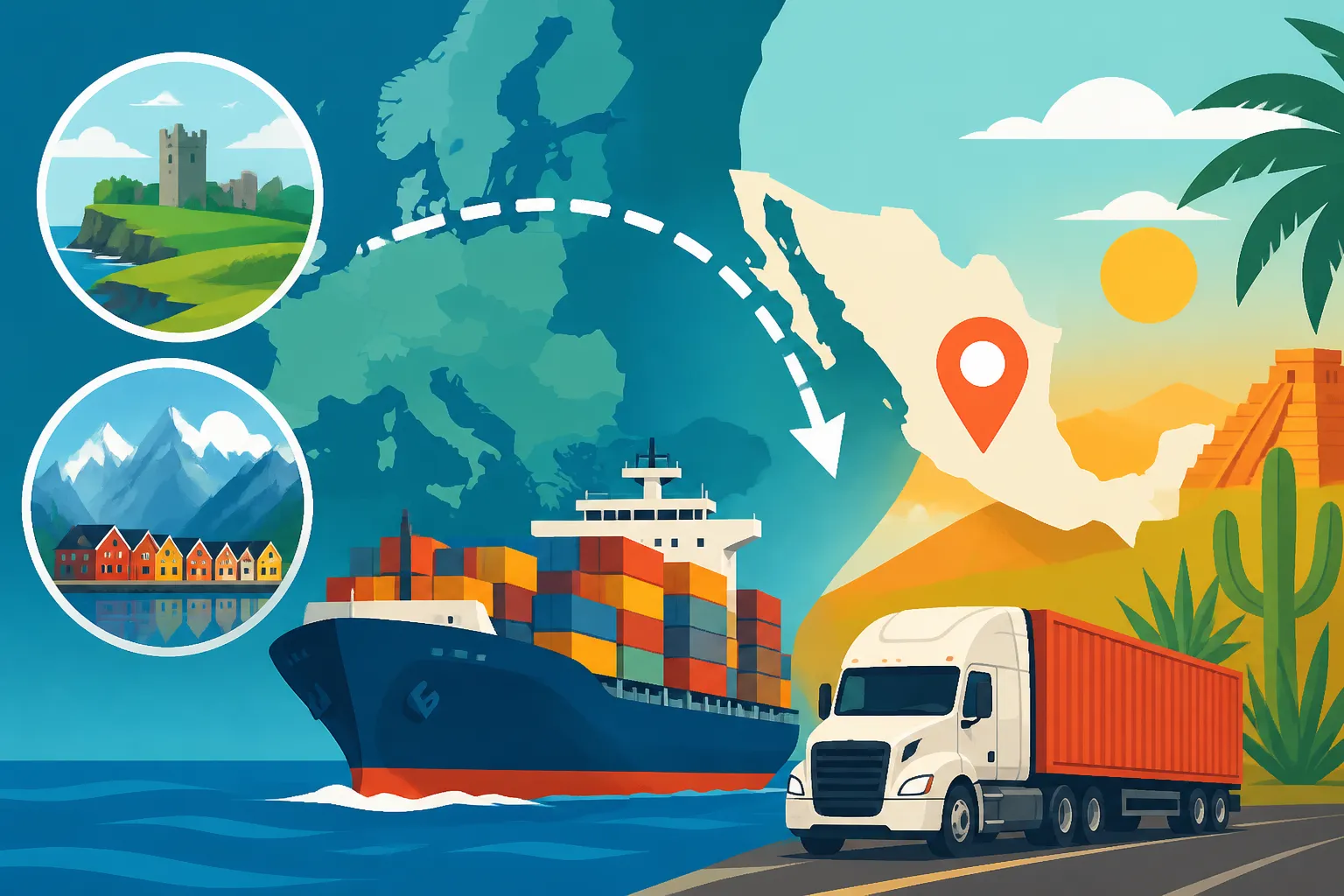
Moving to Mexico from Ireland and Scandinavia: Long-Haul European Freight
Alright, fellow adventurers, if you're reading this, you've likely caught the Mexico bug, but you're also probably scratching your head trying to figure out how to get your entire life from the beautiful, often chilly, landscapes of Ireland or Scandinavia all the way to the sunny, vibrant streets of Mexico. Trust me, I know the feeling. The idea of shipping your treasured belongings across an ocean, and then some, can feel utterly daunting. This guide is here to unravel the mysteries of long-haul European freight, specifically for those coming from Ireland and Scandinavia, helping you understand the process, tackle the paperwork, and ultimately, find the best way to bring your home with you.
Disclosure: This post may contain affiliate links. We may earn a commission at no extra cost to you if you make a purchase through these links. Read full disclosure.
The Unique Challenges of Moving from Ireland and Scandinavia to Mexico
Moving your household across continents isn't just about packing boxes; it's about navigating vast distances, contrasting climates, and intricate international regulations. For those of us coming from Northern Europe, particularly Ireland and the Scandinavian countries, to Mexico, these challenges are magnified.
Geographical Distance and Climate Concerns
The sheer geographical distance between, say, Dublin or Stockholm, and Mexico City or Cancún, is monumental. We're talking about thousands of miles, a transatlantic journey, and often, an equally significant land leg within Mexico. This isn't a quick move down the road; it's an intricate logistical ballet that requires careful planning and robust transport. Your belongings will spend weeks, if not months, in transit, likely enduring various climates and conditions along the way.
One major concern many expats overlook is the drastic shift in climate. You're moving from typically cool, often damp, and temperate environments in Ireland, Norway, Sweden, Denmark, or Finland to a country that boasts everything from high-altitude desert climates to tropical humidity. This means your prized antique wooden furniture, delicate artwork, or even electronics need to be packed with this journey in mind. Think about the potential for condensation, heat expansion, or even mold if not properly prepared. Professional movers, especially those with extensive international experience, understand these nuances and will advise on specialized packing materials and techniques to protect your items. It’s crucial to select a mover who anticipates these environmental shifts, and platforms like Sirelo can help filter for such movers by connecting you with experienced professionals.
Imagine your beloved oak dining table, a family heirloom, making its way from a cozy Irish cottage or a minimalist Nordic apartment to the steamy coastal heat of Mérida or the high-altitude dryness of San Miguel de Allende. Without proper climate-controlled packing, it could arrive warped or damaged. The journey isn't just about covering miles; it's about safeguarding your possessions through a gauntlet of environmental changes. This attention to detail in protecting against climate-related damage is a hallmark of truly reliable international movers.
Navigating EU Export and Mexican Import Regulations
Exporting from the EU (even if Ireland is post-Brexit, it's still largely aligned with EU trade practices for these purposes) is generally straightforward. Your chosen international moving company will handle the standard declarations required for goods leaving the European economic zone. However, the real hurdles often appear on the other side of the ocean: Mexican import regulations. Mexico has specific, and sometimes bureaucratic, rules for importing household goods, especially for foreigners.
The most critical document you'll need is your Menaje de Casa (Household Goods Declaration). This document, which you obtain from a Mexican Consulate in your home country (e.g., the Embassy of Mexico in Dublin, or the consulate in Stockholm or Copenhagen), proves that your belongings are indeed personal household items, not commercial goods intended for sale. Without it, you could face exorbitant import taxes on every single item, potentially making your move financially unfeasible. It's a bureaucratic hoops-and-ladders game, and the timing of this application, usually after your residency visa is approved, is paramount. This can be a source of immense frustration for many expats, as it feels like an endless cycle of paperwork.
Mexican customs can be notoriously unpredictable. While most goods pass through without major issues, there's always the possibility of delays, requests for additional documentation, or even, dare I say it, the infamous mordida (a small bribe). A reputable international moving company will have local agents in Mexico who are well-versed in the customs process, speak the language fluently, and can skillfully navigate these potential pitfalls, minimizing delays and unexpected costs. This level of local expertise is invaluable, underlining the importance of needing a service that connects you with such movers, like Sirelo, who have a proven track record. They act as your shield, ensuring your perfectly prepared paperwork translates into a smooth customs experience.
Understanding Your Long-Haul Freight Options
When you're facing a move of this magnitude, deciding how to actually ship your belongings is a major decision. It boils down to a few key methods, each with its own pros and cons, largely influenced by the volume of your items, your budget, and how quickly you need them.
Full Container Load FCL vs. Less Container Load LCL
Full Container Load (FCL) means you get an entire shipping container dedicated solely to your belongings. No sharing, no mixing with other people's stuff. These containers usually come in 20-foot (approx. 33 cubic meters) or 40-foot (approx. 67 cubic meters) sizes. Opting for FCL typically means a faster transit time because the container isn't waiting to be filled with other shipments. It's loaded at your home, sealed, and then opened only at your destination in Mexico (or by customs, if selected for inspection). This offers greater security and peace of mind, as your items are handled less. It's the ideal choice for larger households, say a three or four-bedroom home, where you're bringing a significant amount of furniture, appliances, and personal effects.
Less Container Load (LCL), on the other hand, means your belongings will share space within a container with shipments from other people. This is a more budget-friendly option, especially if you're moving from a smaller apartment, a one-bedroom home, or just a few boxes of cherished items. The downside is that LCL shipments take longer. The container needs to be filled to capacity before it departs, and once it arrives in Mexico, your goods must be deconsolidated from the shared container before they can proceed to customs and final delivery. This involves more handling, which theoretically increases the risk of damage, though reputable movers take great care. Deciding between FCL and LCL often comes down to a careful assessment of your inventory size, budget, and desired timeline. Platforms like Sirelo shine here, offering multiple options so you can compare quotes for both FCL and LCL and find the best fit for your specific needs.
Air Freight for Urgent or Smaller Shipments
While sea freight is the standard for household goods due to its cost-effectiveness for large volumes, air freight offers a dramatically faster alternative for those critical, time-sensitive, or high-value items. Think about those essential documents, vital medications, irreplaceable family photographs, or even specific electronics you can't live without for a few weeks. Air freight can get these items from Ireland or Scandinavia to Mexico in a matter of days, rather than weeks or months.
However, the speed comes at a significant price. Air freight is considerably more expensive per kilogram than sea freight, making it impractical for shipping an entire household. You wouldn't send your sofa by air, but your grandmother's antique jewelry or a specialized medical device? Absolutely. There are also restrictions on what can be shipped via air cargo, including flammables, aerosols, and certain types of batteries, due to safety regulations. Your international moving company will advise you on these limitations.
Many expats choose a hybrid approach: sending the bulk of their belongings via sea freight (FCL or LCL) and a few crucial boxes via air freight. This allows them to have essential items ready upon arrival, easing the initial weeks of settling in, while the rest of their home makes its journey across the ocean. When getting quotes from international movers found through Sirelo, be sure to inquire about both sea and air freight options to create a personalized shipping plan that balances speed, cost, and necessity.
Choosing the Right International Moving Company
This is arguably the most crucial step in your entire long-haul move. You're not just hiring someone to transport boxes; you're entrusting them with your entire life's possessions, navigating complex international laws, and ensuring a smooth transition. You need specialists with proven experience in shipping from your specific European origin to Mexico, not just a local moving company. Look for firms with international affiliations like FIDI (Fédération Internationale des Déménageurs Internationaux) or IAM (International Association of Movers), which indicate adherence to global quality standards.
This is where Sirelo steps in as your hero. It’s an indispensable platform designed to simplify this often overwhelming process. Instead of spending countless hours researching and contacting individual international movers, Sirelo allows you to submit your move details once and receive multiple, competitive quotes from a network of vetted, reputable international moving companies. This means you're not just picking any mover; you're choosing from a selection of professionals who have the expertise, the logistical network, and the local knowledge to handle a move from Ireland or Scandinavia all the way to Mexico.
When reviewing quotes, look beyond the bottom line. What's included? Is it a door-to-door service? Does it cover customs assistance? What are the insurance options? A cheap quote might exclude vital services, leading to unexpected costs down the line. A reliable moving company, found through Sirelo, will provide a transparent, all-inclusive quote, detailing every aspect of the move from packing and transport to customs clearance and final delivery. They offer transparency and peace of mind, granting you access to a network of professionals. It’s about taking the guesswork out of a massive decision and focusing on your new life in Mexico.
The Step-by-Step Process for a Smooth Move
Once you've wrapped your head around the challenges and chosen your shipping method and mover, it's time to dive into the practical steps that will get your household goods from point A to point B without too much drama.
Declaring Your Household Goods Menaje de Casa
As we touched on earlier, the Menaje de Casa is your golden ticket for importing your personal belongings duty-free into Mexico. Without this document, prepare for potentially crippling import taxes. This declaration proves to Mexican customs that the items you are importing are your personal household effects and not commercial goods for sale. It's typically processed by the Mexican Consulate nearest to you in Ireland or Scandinavia before your household goods ship and, critically, after you have received your Mexican residency visa.
To apply for your Menaje de Casa, you'll need a comprehensive list of documents. This includes your valid passport, your approved Mexican residency visa (whether it's a Mexico Temporary Resident Visa: Comprehensive Guide for Expats (2026 Update) or Mexico Permanent Residency Explained: A Complete Guide (2027)), proof of residence in your current country, and, most importantly, a detailed, itemized inventory of everything you plan to ship. This isn't just a list of "boxes"; it needs to be specific: "Box 1: Kitchen utensils, plates (12), bowls (6)", "Dining Room: Oak table, 6 chairs." It’s tedious work, yes, but it is absolutely non-negotiable for a smooth customs process.
The timing of this application is crucial. You cannot apply for your Menaje de Casa until your Mexican residency visa has been granted. Once you have your visa, you'll need to book an appointment at the appropriate Mexican Consulate. Be prepared for a formal interview, bring all your original documents plus copies, and expect to pay a consular fee. Your chosen international moving company, ideally one found through Sirelo, will guide you through this inventory creation, often providing templates and ensuring your list meets Mexican customs requirements. They've seen it all, and their expertise is invaluable in avoiding common pitfalls that can lead to delays or rejections at this stage.
Packing, Inventory, and Insurance Essentials
This is where the rubber meets the road. Proper packing for a long-haul international move is fundamentally different from a local move. For items traversing an ocean and potentially sitting in varied climates, professional packing is not just a convenience; it's often a necessity, especially if you want your insurance to be valid. Reputable international movers (like those you'd find through Sirelo) offer professional packing services. They use specialized materials designed for international shipping, such as sturdy double-wall cartons, custom crates for fragile items, and moisture-absorbing desiccants if needed.
Regardless of who packs, a meticulous, itemized inventory list is paramount. Every single box needs a number, and that number should correspond to an entry on your master list, detailing its contents. This list will be scrutinized by Mexican customs officials, so accuracy is key. Furthermore, it's your lifeline if you need to file an insurance claim later. As you declutter, remember that shipping costs are volume-based. It might be more economical to sell or donate older, less valuable items and repurchase them in Mexico, especially when considering the Cost of Living in Mexico: 2026 Comprehensive Guide.
Speaking of insurance, get it! Your belongings are traveling thousands of miles and being handled by various parties. While a good moving company will take every precaution, accidents can happen. Standard international moving insurance often covers "all-risk" from door-to-door, including damage, loss, or theft. Don't skimp here; ensure your valuable items are adequately covered. Understand the difference between basic liability, which covers very little, and comprehensive insurance. Your moving company should offer various insurance packages, and it's always wise to ask them to explain the terms and conditions in detail. Also, keep all critical documents, passports, visas, and irreplaceable items in a separate bag that travels with you, not with your freight.
Customs Clearance and Delivery in Mexico
The moment of truth: your container arrives at a Mexican port (likely Veracruz, Manzanillo, or Altamira, depending on your final destination). This is where your international moving company's local agent becomes your primary point of contact and navigates the complexities of Mexican customs clearance. They will present your Menaje de Casa and other necessary documentation. Customs officials may choose to inspect your shipment. This is a normal part of the process, and this is where your detailed inventory and perfectly prepared Menaje de Casa pay dividends. Any discrepancies or missing documents can lead to significant delays and storage fees.
Patience is a virtue when dealing with Mexican bureaucracy. The clearance process can sometimes take longer than anticipated, even with everything in order. Don't be surprised if there are unforeseen delays; it's just part of the experience. Your chosen mover, hopefully one vetted through Sirelo, will keep you updated on the status of your shipment and work diligently to resolve any issues. For tips on navigating administrative hurdles, you might find solace in our guide on Dealing with Bureaucracy in Mexico: Tips for Handling Paperwork and Appointments.
Once your goods clear customs, they will be transported to your new home. Before final delivery, ensure your moving company has accurate access information for your new residence. Are there narrow streets, steep driveways, or multiple flights of stairs? Communicate all specifics to avoid last-minute complications and additional charges. Many international movers offer "white glove" services, which include unpacking, reassembling furniture, and removing packing debris – a welcome relief after such a long journey. Remember, settling into your new home in Mexico means more than just unpacking; it's about connecting utilities and understanding your new community. For insights on preparing your new abode, check out Renting a Home in Mexico: Complete Expat Guide to Leases, Deposits, and More.
Moving your life from Ireland or Scandinavia to Mexico is no small feat, but with careful planning, the right support, and a good understanding of the process, it’s entirely manageable.
Comparison of Shipping Options
| Feature | Full Container Load (FCL) | Less Container Load (LCL) | Air Freight |
|---|---|---|---|
| Volume | Large (3-4+ bedroom home) | Small to Medium (1-2 bedroom home, fewer boxes) | Very Small (a few boxes, urgent items) |
| Cost | High, but cost-effective per cubic meter for large moves | Medium, more cost-effective for smaller volumes | Very High, based on weight/volume |
| Speed | Moderate (4-8 weeks transit) | Slower (6-12 weeks, due to consolidation) | Fast (3-7 days transit) |
| Security | High (dedicated container, less handling) | Moderate (more handling, shared space) | High (secure cargo planes) |
| Flexibility | Less flexible, fixed schedules | More flexible for smaller volumes | Highly flexible, frequent departures |
| Ideal For | Whole households, large furniture, complete relocations | Smaller apartments, specific items, budget-conscious | Urgent documents, high-value, critical items |
Disclaimer
The information provided in this guide is for general informational purposes only and does not constitute legal, financial, or immigration advice. Regulations and requirements in Mexico can change frequently. It is always recommended to consult with professional immigration lawyers, financial advisors, and international moving specialists for advice tailored to your specific situation.