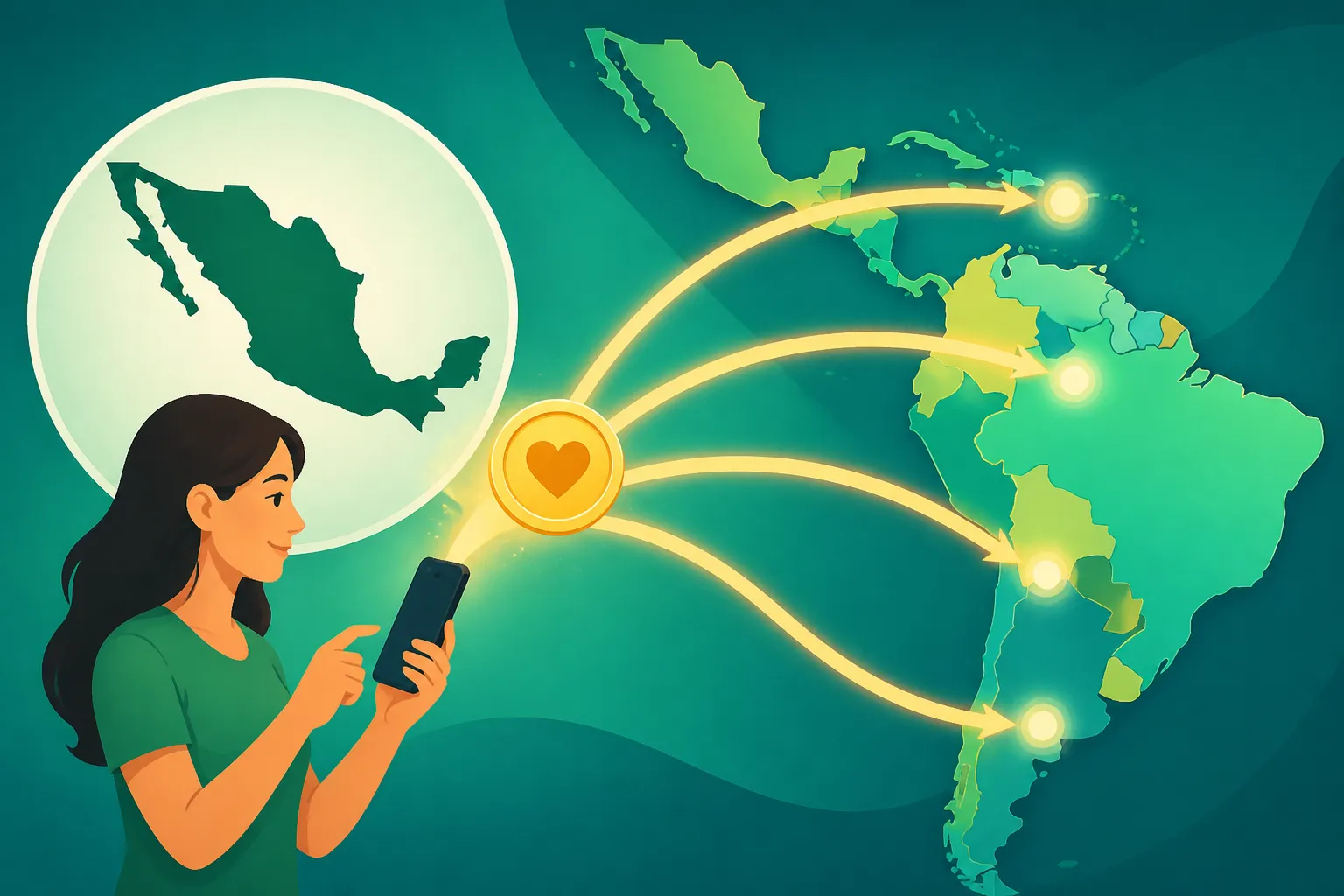
Sending Money From Mexico to Latin America: Regional Corridor Costs
Picture this: you’re living in Guadalajara and need to send 10,000 pesos to a sister in Bogotá or a contractor in Lima. Your Mexican bank quotes a flat wire fee that sounds fine, but the money that actually lands is far less than you expected. This guide breaks down the real cost of each regional corridor and how to stop losing money on every transfer.
Disclosure: This post may contain affiliate links. We may earn a commission at no extra cost to you if you make a purchase through these links. Read full disclosure.
Why Sending Pesos Across Latin America Costs More Than You Think
My first regional transfer from Mexico went to a friend in Medellín who had covered my share of a group trip. I walked into my bank branch in Zapopan, filled out the SWIFT form, paid the fee the teller quoted, and felt good about it. Two days later my friend sent me a confused WhatsApp message. The amount that reached her was noticeably short, and her bank had taken its own cut on top. Nobody had lied to me. I just didn’t understand how the costs were layered.
That layering is what frustrates so many expats here. The fee you see at the counter is only one piece. The rest is buried in the exchange rate and in charges taken by banks you never chose. If you’ve ever felt foolish after a transfer like that, you weren’t. The system makes the cost hard to see.
The Three Hidden Layers of a Bank Wire
A traditional international wire from a Mexican bank usually carries three separate costs:
- The sending fee. This is the flat charge your bank shows you upfront. It’s the only number most people ever look at.
- The exchange rate markup. Your bank converts your pesos at a rate worse than the mid-market rate you see on Google or Reuters, and keeps the difference. It never appears as a line item, so it’s the hardest cost to notice.
- The intermediary and recipient fees. Many Latin American corridors don’t have a direct peso-to-local-currency route through the traditional banking system. Your money often passes through a correspondent bank, frequently converted through US dollars along the way, and the receiving bank may also deduct a charge before crediting your recipient.
When you add up all three, the real cost of a bank wire can come to many times the fee printed on the form.
Real Numbers on a 10,000 MXN Transfer
Here is a realistic example of a 10,000 MXN wire sent through a traditional Mexican bank, compared with the same transfer sent through Wise. Treat the figures as an illustration of how costs are structured. They are not a live quote. Both banks and Wise change their pricing, so always check the provider’s own page before you send.
| Cost Component | Traditional Bank Wire | Wise |
|---|---|---|
| Upfront sending fee | 350 MXN | Included in the 120 MXN total |
| Exchange rate markup | About 476 MXN | None, converts at the mid-market rate |
| Recipient or intermediary fee | 50-100 MXN | Typically none on local payout |
| Total cost on 10,000 MXN | ~900 MXN, about 9% | 120 MXN, 1.2% |
The gap is hard to ignore. On a single transfer, the bank route costs roughly 900 pesos, about 9% of what you sent, and the transparent route costs 120 pesos, or 1.2%. If you support family abroad every month, pay a freelancer in another country, or split costs with friends across the region, that difference adds up fast.
For a broader look at all the outbound and inbound options, see Transferring Money Internationally: Best Ways to Send Money to/from Mexico.
Corridor by Corridor: How Costs Differ Across Latin America
Latin America isn’t a single payment zone. Each country has its own currency rules, its own banking infrastructure, and its own quirks. Some corridors from Mexico are fairly simple. Others are a maze. Below is how the major routes tend to behave, based on what I and other expats I know have run into.
South American Corridors: Colombia, Peru, Chile, and Brazil
Colombia. This is one of the most common corridors for expats in Mexico, partly because of the large Colombian community in Mexico City and Cancún. With traditional banks, money often passes through a US dollar intermediary before reaching a Colombian account in pesos, so you can end up paying two conversion spreads. Colombian banks may also ask the recipient to declare the reason for an incoming international transfer, which can slow things down if your friend or relative isn’t expecting it.
Peru. Transfers to Peru often run into the dollar-versus-sol question. Many Peruvian accounts are held in soles, but some recipients keep dollar accounts too. If you send through a bank without specifying the currency, you may get an automatic conversion at a poor rate. Always confirm which currency your recipient’s account actually holds.
Chile. Chile’s banking system is fairly modern, but incoming SWIFT transfers can still carry receiving-bank charges. Recipients also usually need to provide their RUT, the Chilean tax ID, so collect that before you start.
Brazil. Brazil is a big corridor because of business ties and a sizable Brazilian presence in Mexico City. Incoming foreign transfers in Brazil can involve their own conversion and tax treatment on the receiving side. Your recipient usually needs to provide their CPF, the Brazilian taxpayer number, and the rules around incoming foreign currency are stricter than many expats expect.
Central American and Caribbean Corridors
Guatemala, Honduras, and Nicaragua. These are among the heaviest remittance corridors in the region, mostly for family support. Banks usually aren’t the cheapest choice here, and cash-pickup networks have historically filled the gap. The catch is that the exchange rate on cash pickup can carry a markup that’s even harder to spot than a bank’s.
El Salvador and Panama. Both countries use the US dollar, so your pesos are converted to dollars rather than to a local currency. That sounds simple, but a bank will still apply its own peso-to-dollar rate with a markup built in.
Costa Rica and the Dominican Republic. Both work with local currencies alongside widespread dollar use. Ask whether your recipient wants colones, pesos dominicanos, or dollars, because sending the wrong currency can trigger an automatic conversion at the receiving end.
Argentina and Other Complex Markets
Argentina deserves its own warning. Over the years it has had periods of capital controls and several exchange rates in use at the same time, and the rules have shifted repeatedly. A transfer that worked one way six months ago may behave completely differently now. Before you send anything to Argentina, check the current rules carefully, confirm with your recipient how they want to receive funds, and read the provider’s guidance for that specific corridor. Don’t rely on what a friend told you last year.
Here’s a quick comparison of corridor characteristics to help you plan:
| Corridor | Common Complication | What to Collect From Recipient | Best First Step |
|---|---|---|---|
| Colombia | Dollar intermediary, purpose declaration | Full name, bank, account type, ID number | Check if a direct peso route is offered |
| Peru | Soles vs dollar account confusion | Account currency, CCI interbank code | Confirm account currency first |
| Chile | Receiving bank charges | RUT, account number | Ask recipient about incoming fees |
| Brazil | Strict incoming rules, tax ID needed | CPF, bank details | Confirm recipient can receive foreign funds |
| Guatemala and Honduras | Cash pickup markups | Full legal name, bank or pickup details | Compare bank deposit vs pickup rates |
| El Salvador and Panama | Peso to dollar markup | Account in USD | Check the dollar conversion rate offered |
| Argentina | Shifting controls and multiple rates | Preferred receiving method | Research current rules before sending |
Why Wise Is the Smartest Option for Most Regional Transfers
After years of overpaying, I switched almost all my regional transfers to Wise, and I haven’t looked back for routine payments. The main reason is simple: it shows the full cost before you hit send. No mystery markup, no surprise intermediary deduction, no awkward message from a recipient asking why the amount is short.
How the Pricing Model Actually Works
The core difference is in how conversion is handled. A traditional bank makes much of its money on the exchange rate spread, which you never see. Wise converts at the mid-market rate, the same rate you’d find on a financial news site, and charges a visible fee instead. In the 10,000 MXN example above, that model brought the total cost to 120 MXN, or 1.2%, compared with ~900 MXN, about 9%, through the bank.
On many routes, Wise also avoids the international SWIFT chain altogether. It holds funds locally in different countries, so your pesos are received in Mexico and a matching payout is sent from a local account in the destination country. That’s why the recipient fee layer often disappears. Coverage varies by country and currency, though, so check the Wise currency list for your exact corridor before you count on it.
When Wise Wins and When to Look Elsewhere
To be fair, no single tool is perfect for every situation. Here’s my honest take after using it across the region:
Where it shines:
– Regular payments to friends, family, or freelancers who have a bank account in the destination country.
– Transfers where you want the exact received amount locked in before sending.
– Situations where you’d otherwise lose money to a hidden markup, which covers most bank-to-bank corridors.
– Business payments, which I cover in more detail in Paying Overseas Contractors From a Mexican Company: Wise vs Bank Transfer.
Where you might need an alternative:
– Recipients who have no bank account at all and rely on cash pickup. Cash networks have their place here, though you should compare their exchange rates carefully. See Wise vs Remitly and Western Union to Mexico: Speed vs Cost for how those models compare.
– Corridors or currencies the service doesn’t support for payouts. This changes over time, so always check.
– Very large transfers that may trigger extra verification. Check Wise Transfer Limits for Mexico: Caps, Thresholds, and Verification Tiers before planning a big payment.
For most expats doing everyday regional transfers, the transparent route saves real money and real stress. If you’re still sending through your bank by default, run one test transfer through Wise and compare what actually lands on the other side.
Step-by-Step: Sending Your First Regional Transfer From Mexico
The first transfer is always the most nerve-wracking. Here’s exactly how I walk new arrivals through it over coffee in Roma Norte.
Setting Up and Funding Your Transfer
- Gather your Mexican banking details. You’ll fund the transfer from your Mexican account, usually by SPEI. Make sure you know your own 18-digit CLABE. If the number confuses you, see What Is a CLABE? Understanding Mexican Bank Account Numbers.
- Create and verify your Wise account. You’ll need your passport and, depending on your situation, proof of address in Mexico. Verification can take a little time, so do it before you urgently need to send money.
- Collect your recipient’s details. Use the corridor table above. Ask for the full legal name exactly as it appears on their account, plus any tax ID or interbank code their country requires.
- Enter the amount and check the quote. The screen will show the fee, the rate, and the exact amount your recipient will receive. Compare this against what your bank would quote, keeping the hidden markup in mind.
- Choose the payout currency carefully. For countries with dual currency use, such as Peru, Costa Rica, or the Dominican Republic, confirm with your recipient which currency their account holds.
- Fund by SPEI from your Mexican bank. Use the exact reference number provided so the payment matches your transfer. A missing reference is one of the most common causes of delays.
- Track the transfer and notify your recipient. Send them the tracking update so they know what to expect and when.
Avoiding Mistakes That Cost You Money
The most expensive mistakes I’ve seen have nothing to do with fees. They come from small errors that trigger returns, holds, or fraud.
- Name mismatches. If the recipient’s name doesn’t match their bank records exactly, the transfer can bounce back. When that happens with a traditional wire, you may pay conversion costs twice.
- Wrong account currency. Sending dollars to a soles account, or the reverse, can trigger an unplanned conversion at the receiving bank.
- Scam requests. Be very careful with anyone asking you to send money urgently to a new account in another country, especially over WhatsApp or social media. Impersonation scams targeting expats are common. Read Avoiding Financial Scams: Common Tricks Targeting Expats before you send money to anyone you haven’t verified by voice or in person.
- Ignoring your own records. If you send regularly, keep a clean record of each transfer. That helps with your own budgeting and with any questions about your finances later. For recurring family support, see Supporting Family Abroad From Mexico: Monthly Transfer Setup and Records.
Tax and Record-Keeping Considerations
Sending money abroad from Mexico isn’t usually a taxable event in itself, but large or frequent movements of money can raise questions about where your income came from, especially if you’re a Mexican tax resident. Keep receipts, transfer confirmations, and a short note on what each payment was for. If you run a business or pay contractors abroad, your contador may need proper documentation for your accounting. For background on how the tax authority works for foreigners, see Dealing With Hacienda (SAT) as a Foreigner.
If you hold several currencies and move money between them often, it’s also worth learning how multi-currency balances work so you aren’t converting back and forth for nothing. I cover that in Holding Dollars, Pesos, and Euros in One Account: What Converting Costs.
The bottom line from someone who learned the hard way: never judge a transfer by the fee on the counter. Look at what actually arrives. On a 10,000 MXN transfer, the difference between ~900 MXN, about 9%, and 120 MXN, or 1.2%, is money that should stay in your family’s pocket rather than a bank’s. Open a Wise account before your next regional payment, run the quote side by side with your bank, and let the numbers decide.
Disclaimer
This article is for general informational purposes only and does not constitute professional advice. Laws, prices and regulations vary by location and change over time. Consult a qualified professional for guidance on your specific situation.