Mental Health Care in Mexico: Therapy and Psychiatry
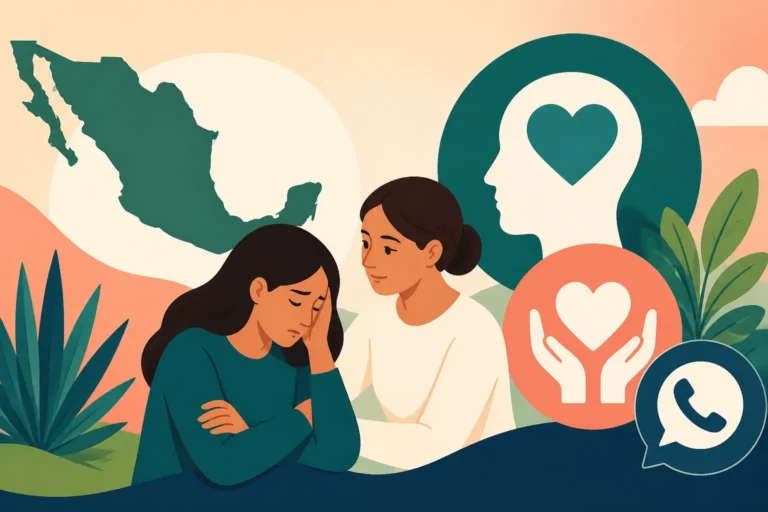
Finding yourself in a beautiful Mexican "pueblo magico" only to realize your anxiety followed you across the border is a jarring reality many of us face. I remember sitting in my sun-drenched patio in Oaxaca, feeling a crushing weight of isolation that no amount of mezcal or sunshine could fix. This guide navigates the complexities of accessing therapy and psychiatry in Mexico to ensure your mental well-being remains a priority.
Disclosure: This post may contain affiliate links. We may earn a commission at no extra cost to you if you make a purchase through these links. Read full disclosure.
The Dual System of Mental Health Care in Mexico
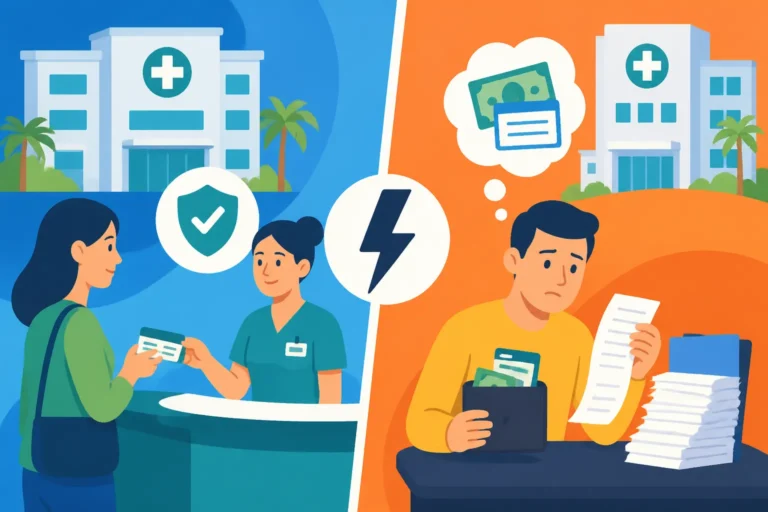
Understanding how the Mexican healthcare system treats mental health requires looking at the divide between the public and private sectors. For an expat, this distinction is the difference between waiting six months for a consultation and seeing a specialist within forty-eight hours. While the country has made significant strides in mental health awareness, the resources are often concentrated in major urban hubs, leaving those in rural areas with fewer options.
Public Mental Health Services and Their Limitations
The public sector, primarily comprised of the IMSS (Instituto Mexicano del Seguro Social) and the newer IMSS-Bienestar, provides mental health services to millions of Mexican citizens and legal residents. However, for most expats, relying on Public Healthcare in Mexico: IMSS and IMSS Bienestar Explained for Expats for mental health can be an exercise in frustration. The public system is notoriously overburdened. If you are seeking treatment for a non-emergency condition, such as mild depression or generalized anxiety, the wait times for a "psicólogo" (psychologist) can be staggering.
Furthermore, the public system often follows a very traditional medical model. You generally cannot self-refer to a psychiatrist; you must first see a general practitioner who then decides if your case is "severe" enough for a referral. In many cases, the therapy offered is brief and solution-focused rather than long-term or explorative. For those of us used to weekly sessions, the monthly or bi-monthly frequency in the public sector simply won't cut it.
The Private Sector Advantage for Expats
Most foreigners living in Mexico opt for private care, and for good reason. The private sector offers a level of personalized attention and specialized care that is much more aligned with Western expectations. In cities like Mexico City, Guadalajara, and Monterrey, you will find world-class practitioners, many of whom have studied abroad in Europe or the United States.
Private care allows you to bypass the gatekeeping of the public system. You can book directly with a psychiatrist or a therapist of your choice. The quality of facilities in private networks like Hospital Ángeles or the ABC Medical Center is exceptional, providing a comfortable and confidential environment. When you are dealing with the vulnerability of mental health issues, being in a space where you feel seen and respected is worth the out-of-pocket cost, which, surprisingly, remains quite affordable compared to U.S. or Canadian prices.
Navigating the Search for Therapy
Finding a therapist is a deeply personal journey, but in Mexico, it adds a layer of logistical complexity. You aren't just looking for a good listener; you are looking for someone who understands the "expat grief"—that specific type of mourning for your old life that often hits six months after a move. You also need to navigate the linguistic nuances of emotional expression, which is why Finding English-Speaking Doctors and Specialists in Mexico is usually the first step for most newcomers.
Overcoming the Language Barrier in Therapy
Even if your Spanish is good enough to order tacos and pay your CFE bill, expressing the intricacies of childhood trauma or the subtleties of a panic attack in a second language is exhausting. There is a specific "emotional vocabulary" that is hard to master. Many Mexican therapists are bilingual, but "bilingual" can range from "I can read a textbook in English" to "I lived in Chicago for ten years."
When searching for Mental Health Resources: Finding English-Speaking Therapists in Mexico, it is crucial to ask for a preliminary call. During this 15-minute chat, don't just listen to their words; listen to their comfort level with your slang, your cultural references, and your pace of speech. If you have to simplify your thoughts to be understood, the therapeutic process will be hindered. Many expats find success by looking for therapists who specifically advertise "Expat Counseling" as they are already familiar with the unique stressors of living abroad.
The Rise of Telemedicine and Online Options
If you live in a smaller coastal town like Sayulita or a remote mountain village, local English-speaking therapists might be non-existent. This is where Telemedicine in Mexico: Online Doctor Options becomes a literal lifesaver. The pandemic normalized online therapy in Mexico, and now many of the top-tier psychologists in Mexico City offer Zoom or Skype sessions.
Using a platform based in Mexico often results in lower fees than using a service like BetterHelp or Talkspace from back home. A session with a highly qualified private psychologist in Mexico might cost between 800 and 1,500 MXN (roughly $45 to $85 USD), whereas an international platform might charge double that. However, if you have a complex history, you might prefer a therapist from your home country who understands your specific cultural upbringing. Just be aware of the "licensing" grey area; many therapists back home are technically not allowed to "practice" across international borders, though many do so via "coaching" designations.
Psychiatry and the Logistics of Medication
Psychiatry in Mexico is a distinct field from psychology. Only a "psiquiatra" (psychiatrist) can prescribe medication. If you are arriving in Mexico with an existing prescription for antidepressants, mood stabilizers, or ADHD medication, you need to understand that the rules here are strict and often confusing for foreigners.
The Prescription Process and "Recetas Médicas"
In Mexico, medications are categorized by their potential for abuse. Most standard antidepressants (SSRIs like Zoloft or Lexapro) are technically available without a prescription at many large pharmacy chains, though this is changing. However, for anything considered a "controlled substance"—which includes most benzodiazepines (Xanax, Valium) and almost all ADHD stimulants (Adderall, Ritalin)—the requirements are rigorous.
You will need a "receta médica" (prescription) from a licensed Mexican doctor. Even if you have a bottle from your home country with your name on it, a Mexican pharmacist cannot legally honor it. You must visit a local psychiatrist, present your history, and have them issue a Mexican prescription. For controlled substances, doctors must use a specific "barcoded" prescription pad issued by the government, and you can only buy a 30-day supply at a time. This requires a monthly visit to your psychiatrist, which you should factor into your Healthcare Costs in Mexico: Doctor Visits, Hospital Stays, and Surgery Expenses budget.
Sourcing Medications at Mexican Pharmacies
Not all pharmacies are created equal when it comes to mental health. While you will see a Farmacia Similares on every corner, they primarily stock generics for common ailments. For specialized psychiatric meds, you will likely need to visit a Farmacia San Pablo, Farmacia del Ahorro, or the pharmacy department in a large Costco or Chedraui Selecto.
It is also important to note that some medications common in the U.S. are simply not available in Mexico. For example, Adderall is famously difficult to find and often unavailable for months due to import restrictions. Many psychiatrists will suggest switching to Ritalin (Trade name: Concerta or Tradea) which is more widely distributed. Before moving, check Access to Mental Health Medications: How Easy Is It to Get Antidepressants? to see if your specific brand name is available, or if you will need to work with a doctor to find a local equivalent.
| Category | Typical Cost (Private) | Frequency | Availability |
|---|---|---|---|
| Psychotherapy | 800 – 1,500 MXN | Weekly | High in cities, Low in rural areas |
| Psychiatry Visit | 1,200 – 2,500 MXN | Monthly/Quarterly | High in cities |
| SSRIs (Antidepressants) | 400 – 1,200 MXN | Monthly | High (Most Pharmacies) |
| Controlled Meds (ADHD/Anxiety) | 1,000 – 3,000 MXN | Monthly | Moderate (Requires Barcoded Receta) |
| Emergency ER Psych Eval | 5,000+ MXN | One-time | High (Private Hospitals Only) |
Insurance and Financial Planning for Mental Health
One of the biggest shocks for expats is realizing that many local insurance plans treat mental health as a "luxury" or a pre-existing condition. If you are planning your move, you need to look at the fine print of your policy to see if therapy sessions are covered or if there is a "waiting period" before you can access psychiatric care.
Local vs. International Insurance Coverage
When looking at Private Health Insurance in Mexico: GNP, AXA, and Major Insurers, you will find that "Outpatient Mental Health" is often an add-on or has a very low annual cap. For example, a plan might only cover 10 therapy sessions a year, or only cover psychiatry if it results from a "major traumatic event" like a car accident. If you have a chronic condition, these local plans might exclude your treatment entirely if you don't disclose it, or hike your premiums significantly if you do.
For this reason, many expats prefer international policies like Cigna Global. These plans are designed for people living outside their home country and typically offer much more robust mental health benefits, including higher coverage limits for both therapy and inpatient psychiatric stays. If you are a digital nomad or on a temporary stay, a provider like SafetyWing offers a more budget-friendly approach, though their mental health coverage is often limited to acute issues rather than long-term maintenance. Always verify if your chosen provider requires "pre-authorization" before you start seeing a therapist, or you might find your claims denied.
Paying Out-of-Pocket: The "Consultorio" Reality
Given that insurance can be a headache, many expats simply choose to pay out-of-pocket for mental health. The cost of a session in Mexico is often less than the "co-pay" you would pay in the U.S. for an out-of-network provider. This "cash-pay" system also offers a higher level of privacy. When you pay a doctor directly in their "consultorio" (private office), there is no insurance record of your diagnosis that could potentially follow you or affect future life insurance applications.
When budgeting, consider that How Much Does a Doctor Visit Cost in Mexico? varies by city. In Mexico City's Polanco neighborhood, you might pay 2,500 MXN for a psychiatrist, whereas in a smaller city like Morelia, the same quality of care might cost 1,200 MXN. Most private doctors accept credit cards, but smaller independent therapists often prefer cash or a "transferencia" (bank transfer) via the SPEI system.
Regional Hotspots for Mental Health Care
If mental health is a primary concern for you, where you choose to live in Mexico matters immensely. The "medical desert" is a real phenomenon in many of the coastal expat enclaves. If you need specialized care for conditions like Bipolar Disorder, Eating Disorders, or severe PTSD, you should stick to the "Big Three" cities.
Mexico City: The Epicenter of Specialized Care
For anyone with complex psychiatric needs, Healthcare in Mexico City: Top Hospitals and Clinics for Expats offers the most comprehensive resources. The city is home to the Instituto Nacional de Psiquiatría, and while it is a public institution, it sets the standard for care in the country. Private clinics in the Roma, Condesa, and Santa Fe districts are staffed by specialists who are often researchers and professors.
The ABC Medical Center (both the Observatorio and Santa Fe campuses) has dedicated psychiatric emergency services. This is one of the few places in the country where you can find an English-speaking psychiatric team on call 24/7. If you require specialized testing, such as neuropsychological evaluations or sleep studies, Mexico City is essentially your only reliable option for English-language services.
Guadalajara and Monterrey: High-Tech Alternatives
Guadalajara is often called the "Silicon Valley of Mexico," and its healthcare follows suit. For those living in the Lake Chapala area, Guadalajara is the nearest hub for Navigating Hospitals and Clinics in Mexico: An Expat’s Guide to Medical Care. The Hospital Real San José and Hospital Puerta de Hierro are excellent facilities with strong psychiatric departments.
Monterrey, being so close to the U.S. border, has a very "Americanized" medical system. The Hospital Zambrano Hellion is affiliated with the Methodist Hospital in Houston and offers some of the most advanced mental health treatments in Latin America, including Transcranial Magnetic Stimulation (TMS) for treatment-resistant depression. For expats living in northern Mexico, Monterrey is the gold standard for care.
Crisis Management and Emergency Support
No one likes to think about a mental health crisis, but being prepared can save your life. In Mexico, the traditional "911" service is available, but it is not always equipped to handle psychiatric emergencies with the sensitivity or language skills required.
What to Do in a Psychiatric Emergency
If you or a loved one is in immediate danger, your best bet is to go directly to the "Urgencias" (Emergency Room) of a major private hospital. Public hospitals are often under-resourced for psychiatric crises and can be traumatic environments for someone in an unstable state. When you arrive, specify that you need a "valoración psiquiátrica" (psychiatric evaluation).
It is vital to have a plan in place before a crisis hits. As outlined in Medical Emergencies in Mexico: What Expats Should Know and Prepare, you should keep a list of your medications, dosages, and your psychiatrist's contact information in Spanish. If you are insured through Cigna Global, keep their emergency international number handy, as they can sometimes coordinate with local hospitals to ensure you get the right level of care and that payment is handled directly.
Suicide Hotlines and Support Groups
Mexico has several crisis hotlines, though English support can be hit-or-miss. The national "Línea de la Vida" (800 911 2000) is a government-run service available 24/7. For those who prefer a dedicated expat community, many Facebook groups for "Expats in Mexico" have "off-market" lists of English-speaking crisis counselors.
Additionally, Alcoholics Anonymous (AA) and Narcotics Anonymous (NA) have a very strong presence in Mexico. In cities with large expat populations like San Miguel de Allende, Puerto Vallarta, and Ajijic, you can find daily meetings conducted entirely in English. These groups often serve as a vital "social safety net" for people struggling with the isolation of expat life.
Integrating Into Mexican Culture for Long-Term Wellness
Finally, it’s worth noting that the "Mexican way of life" can itself be a form of therapy. The culture places a massive emphasis on social connection, family, and being present in the moment. However, for an outsider, the "Mañana" culture—where things happen when they happen—can be a source of stress if you are prone to anxiety or need high levels of control.
The Importance of Social Connection
In Mexico, "solitude" is often viewed with concern rather than as a virtue. Neighbors will check on you, and the "portero" of your building will want to chat every morning. While this can feel intrusive at first, it creates a "community care" model that is often missing in the U.S. or Canada. Engaging in local activities, from "intercambio" language swaps to community gardening, can drastically reduce the symptoms of depression associated with relocation.
Don't be afraid to be honest with your local friends about your struggles. While there was historically a stigma surrounding mental health in Mexico, the younger generations and urban professionals are incredibly open about therapy. You might find that your Mexican neighbor is also seeing a "psicólogo" and can recommend a great one. Embracing the local rhythm—taking a "comida" break, walking in the park, and prioritizing relationships over work—is often the best supplement to professional care.
Medical Disclaimer
The information provided in this article is for informational and educational purposes only and is not intended as medical advice. Mental health concerns should be discussed with a qualified healthcare professional. While we strive to provide accurate and up-to-date information regarding the healthcare landscape in Mexico, regulations and availability of services can change rapidly. Always consult with a licensed psychiatrist or psychologist before starting or stopping any medication or treatment plan. In case of a life-threatening emergency, please dial 911 or proceed to the nearest emergency room immediately.