How to Register With the SAT in Mexico
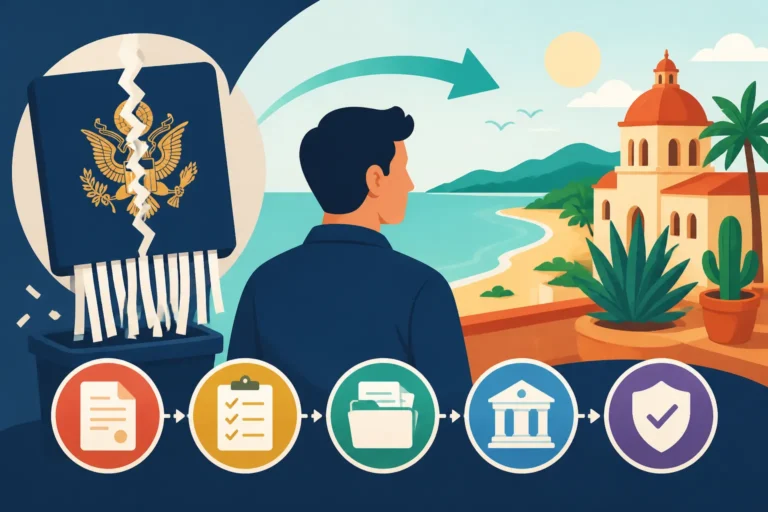
Navigating Mexican bureaucracy can feel like a Kafkaesque nightmare where the rules change depending on which office you visit and whether the official has had their morning coffee. I remember sweating through my first SAT appointment, clutching a stack of papers and praying I wouldn't be sent home for a missing photocopy I didn't know I needed. This guide solves the mystery of the registration process and ensures you walk out with your RFC in hand.
Disclosure: This post may contain affiliate links. We may earn a commission at no extra cost to you if you make a purchase through these links. Read full disclosure.
Understanding the Role of the SAT and the RFC
The Servicio de Administración Tributaria, better known as the SAT, is Mexico’s version of the IRS or the CRA. While you might want to avoid tax authorities in your home country, in Mexico, you actually need a relationship with the SAT to live a normal life. Upon registration, you are issued a Registro Federal de Contribuyentes (RFC), which is your unique tax identification number. Without this number, you are effectively a ghost in the Mexican financial system.
For many years, foreigners lived in a grey area where an RFC wasn't strictly enforced for casual living. However, in recent years, the government has tightened regulations significantly. You now need an RFC for almost everything, from closing on a property to signing up for a high-speed internet contract in certain regions. If you are planning to earn any local income, having this number is a legal requirement. Even if you are a retiree living on a foreign pension, you will likely find that Banking in Mexico: Complete Guide for Foreigners requires you to present an RFC to keep your account in good standing.
Why You Can No Longer Ignore the SAT
In the past, you could walk into a dealership and buy a car with just your passport and residency card. Those days are largely over. Most dealerships and even private sellers now require an RFC to process the CFDI (electronic invoice) for the title transfer. Furthermore, if you plan on renting a high-end apartment, many landlords use professional rental agencies that insist on an RFC for the lease agreement to ensure they are tax-compliant.
Beyond major purchases, the RFC is essential for tax residency purposes. If you are spending most of your year here, you might find that having an RFC helps you prove your status to avoid double taxation. While services like Taxes for Expats can help you navigate the complexities of filing back home, the Mexican side of the equation starts and ends with the SAT. Failing to register can lead to your bank accounts being frozen or subjected to the highest possible withholding rates on interest earned.
The RFC With and Without Economic Activity
When you register, you’ll be asked about your "régimen fiscal." If you are a remote worker for a company outside of Mexico or a retiree, you will likely register "sin obligaciones fiscales" (without tax obligations). This gives you the ID number for administrative purposes without requiring you to file monthly tax returns. However, if you plan to open a cafe, sell crafts, or work for a Mexican company, you will need a regime that allows for economic activity. Understanding How to Get an RFC in Mexico correctly from the start prevents a massive headache later when you try to change your status.
Essential Prerequisites Before Your Appointment
You cannot simply walk into a SAT office and ask for an RFC. The process is strictly managed through an appointment system, and there are several "gatekeeper" documents you must have in your possession before you even think about booking a slot. The most important of these is your CURP.
Obtaining Your CURP
The Clave Única de Registro de Población (CURP) is your population registry string. You usually get this when you receive your temporary or permanent residency card. It is a 18-character alphanumeric code. If you have your residency card but aren't sure of your CURP, you can look it up on the official government portal. You must bring a printed version of this to the SAT. It is the foundation of your identity in Mexico. For more details on this specific step, see our guide on How to Get a CURP as a Foreigner: The Mexican ID Number Explained.
The Comprobante de Domicilio Requirement
This is where most expats fail their first attempt. The SAT is incredibly picky about "proof of address." They generally want a utility bill, and the gold standard is the CFE (electricity) bill. This bill does not necessarily need to be in your name—which is lucky since most renters don't have the bill in their name—but it must be recent (usually within the last 90 days) and it must contain a "Código QR."
If you live in a rural area or a new development where CFE bills aren't standard yet, a Telmex (landline internet) bill or a water bill from the municipality may suffice. However, bank statements from foreign banks or even some Mexican banks are often rejected. Make sure the address on the bill matches the address you intend to register exactly, down to the interior apartment number and the "Colonia" (neighborhood).
Your Physical Documents Checklist
| Document | Requirement | Pro Tip |
|---|---|---|
| Passport | Original + Color Copy | Ensure it is valid for at least 6 months. |
| Residency Card | Original + Color Copy | Temporary or Permanent is fine. |
| CURP | Printed from the official site | Download the most recent version. |
| Proof of Address | Original bill (CFE preferred) | Must be less than 3 months old. |
| USB Drive | Brand new/Empty | Essential for your e.firma files. |
| Email Address | Active and accessible | You will receive verification codes here. |
The "Fila Virtual" and Booking Your Cita
Actually getting an appointment (a cita) at the SAT is often the hardest part of the process. In 2026, the demand remains high, and the SAT uses a "Fila Virtual" or virtual queue system. You go to the SAT portal, enter your CURP and email, select the service (usually "Inscripción al RFC Personas Físicas"), and then you are placed in a line.
Navigating the Virtual Queue
Once you are in the Fila Virtual, you must keep a close eye on your email. When a slot opens up, the SAT will send you an email giving you 24 hours to confirm the appointment. If you miss that window, you are kicked out of the line and have to start over. I’ve known expats who waited six weeks in the virtual queue only to miss the confirmation email because it went to their spam folder. Set an alert on your phone for any emails from "sat.gob.mx."
Choosing the Right Office
You are not strictly required to use the SAT office closest to your house, though it is highly recommended. If you live in a high-demand area like Roma or Condesa in Mexico City, appointments might be impossible to find. Sometimes, traveling an hour to a satellite office in a less "trendy" part of the city or a nearby town can save you weeks of waiting. Just ensure that you can realistically get there on time; the SAT has zero tolerance for tardiness. If you arrive five minutes late, your appointment is cancelled.
What Happens During the Appointment
On the day of your appointment, arrive at least 20 minutes early. You will usually see a line outside the building. Look for an official or a security guard and show them your printed appointment confirmation. They will direct you to a waiting area.
The Biometric Capture
Mexico is very advanced when it comes to tax identity. During your appointment, the official will take a high-resolution photo of your face, scan all ten of your fingerprints, and perform an iris scan. This is used to create your "e.firma" (formerly known as the FIEL). The e.firma is a digital signature that is legally equivalent to your physical signature. It consists of two encrypted files: a .cer file and a .key file, along with a password that you choose.
This is why the USB drive is mandatory. The official will save these files onto your drive. Do not lose this drive, and do not share these files with anyone except your accountant. If you lose your e.firma, you cannot reset it online; you have to go through the entire appointment process again. Having this digital signature is vital if you need to use services like Wise to pay local contractors or manage business expenses, as it allows you to sign off on official tax documents remotely.
The Interview Process
The official will ask you about your address and your "actividad económica." If you are not working in Mexico, emphasize that you are "Sin Actividad Económica." They will enter your details into the system and print out several documents for you to sign. Make sure to double-check every letter of your name and every digit of your birthdate. Correcting a typo on an RFC after it’s been issued is another bureaucratic hurdle you want to avoid. If you are struggling with the language, check our guide on Overcoming Language Barriers at the Doctor: Tips for Expats—many of the tips for medical appointments apply to the SAT as well.
Post-Registration: The Constancia de Situación Fiscal (CSF)
Once the process is complete, the official will hand you a printed document called the "Constancia de Situación Fiscal." This is your most important piece of paper in Mexico. It lists your RFC, your registered address, and your tax regime.
Why Everyone Wants Your CSF
In Mexico, businesses cannot issue you a "factura" (a formal tax invoice) unless they have the exact information found on your CSF. If you buy a laptop and want the warranty or the ability to deduct it as a business expense, the store will ask for your CSF. If you are Filing Taxes in Mexico as a Foreigner, your accountant will need this document first. Even utilities and phone companies will ask for it to update your billing information.
Keeping Your Information Current
If you move house, you are technically required to update your address with the SAT. This is important because the SAT sends official notifications to your registered address. If they find out you no longer live there, they can suspend your RFC. You can often do this update online using your e.firma, provided you have a new proof of address that meets their strict criteria.
Managing Your Finances as a Tax-Registered Expat
Now that you have your RFC, you are fully integrated into the system. This opens doors that were previously closed. You can now follow the steps in How to Open a Bank Account in Mexico: Requirements and Tips with much more ease. Mexican banks are increasingly hesitant to open accounts for foreigners without an RFC because they face heavy fines for non-compliance.
International Transfers and Compliance
With your Mexican bank account and RFC, you can more effectively use Wise to move money from your home country into pesos. Having an RFC can sometimes simplify the "source of funds" questions that banks ask when they see large international wires arriving. If you are working as a freelancer, you will also need to know How to Issue a Factura (CFDI) in Mexico so you can get paid by local clients. Your RFC and your e.firma are the keys to this system.
Professional Assistance
If your situation is complex—for instance, if you own property in the US and are earning rental income in Mexico—don't try to DIY your tax strategy. Firms like Taxes for Expats specialize in ensuring you don't get hit by the tax authorities in both countries. They can look at your SAT registration and ensure it aligns with your home country filings. It’s always better to pay for a consultation early than to pay a fine later. Knowing Do You Need an RFC Number? Why a Tax ID Matters for Expats' Finances is just the beginning; staying compliant is a marathon, not a sprint.
Final Thoughts for the Prepared Expat
Registering with the SAT is a rite of passage for anyone serious about living in Mexico. It signals to the government and to local businesses that you are a legitimate resident playing by the rules. While the "Fila Virtual" can be frustrating and the iris scans feel like something out of a sci-fi movie, having that RFC in your pocket makes life significantly smoother. You’ll be able to buy that car, sign that lease, and open that bank account without the "lo siento" and the headshake from a frustrated clerk. Stay patient, bring your USB drive, and remember that once you have the e.firma, the hardest part is over.
Disclaimer
This article is for informational purposes only and does not constitute legal, financial, or tax advice. Mexican tax laws and SAT procedures are subject to frequent changes. Always consult with a qualified Mexican accountant (Contador Público) or a legal professional to ensure your specific situation complies with current regulations. Enrollment in the SAT system may trigger tax obligations depending on your residency status and income sources.