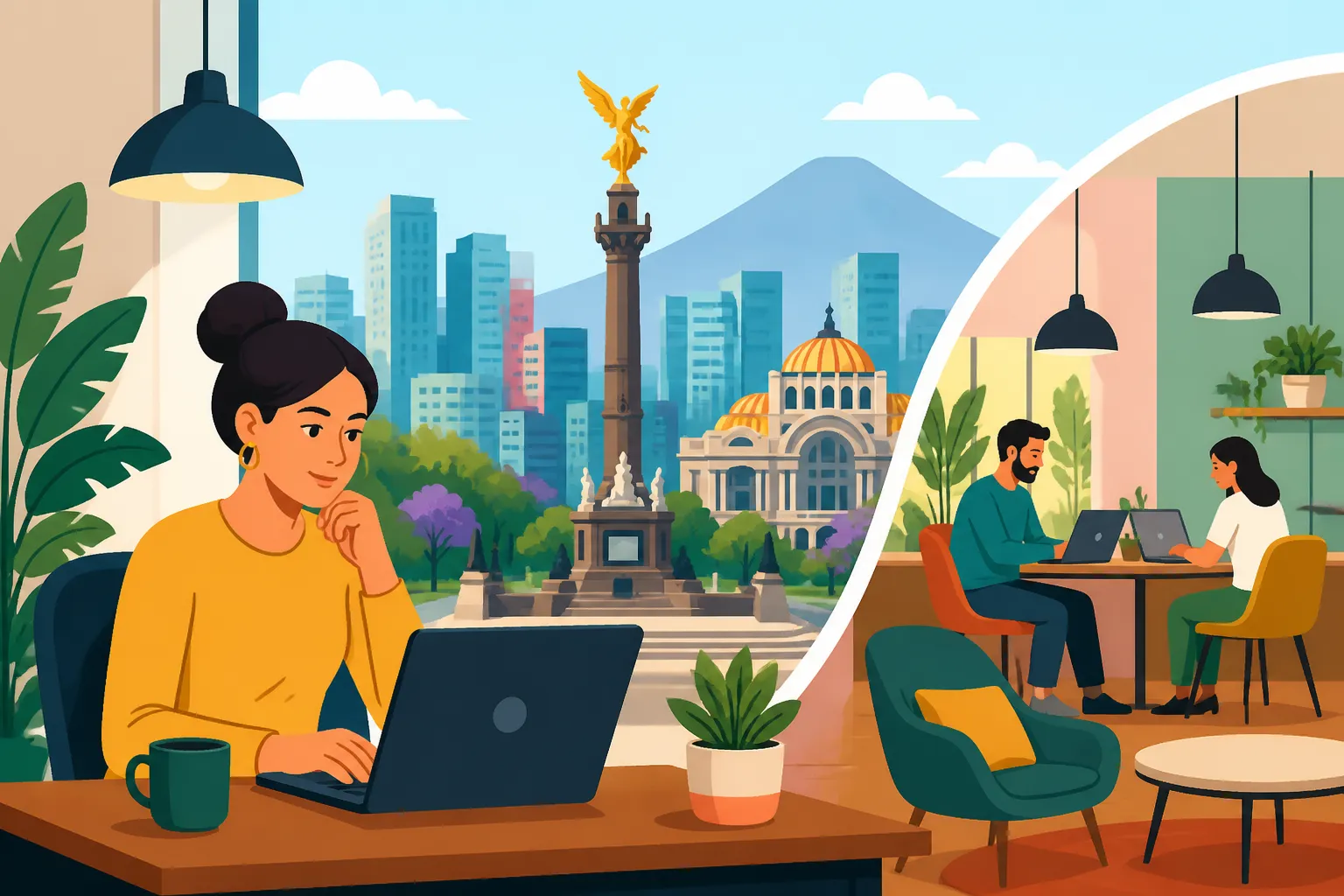
Coworking Spaces in Mexico City and Beyond
Trying to lead a high-stakes Zoom presentation while a "camotero" steam whistle screams outside your window or your neighbor decides it is the perfect morning for a three-hour jackhammering session is a rite of passage here. I’ve lived through the stress of spotty WiFi failing mid-meeting. This guide solves your search for the best professional escapes in Mexico City and beyond.
Disclosure: This post may contain affiliate links. We may earn a commission at no extra cost to you if you make a purchase through these links. Read full disclosure.
The Evolution of Coworking in Mexico City
When I first arrived in the capital, the concept of a shared office was mostly limited to sterile business centers that felt like doctor’s waiting rooms. Fast forward to 2026, and Mexico City (CDMX) has transformed into a global titan of remote work culture. The city hasn't just added desks; it has cultivated ecosystems where the design is as inspiring as the networking opportunities. You aren't just paying for a chair; you are paying for an environment that understands the unique pressures of living in a megalopolis.
The Hub of Innovation Roma and Condesa
Roma and Condesa are the undisputed heart of the expat and digital nomad scene. If you walk down Calle Colima or Avenida Ámsterdam, you’ll see people with laptops in every third cafe, but the seasoned pros know that a cafe is not a workspace. Spaces like Publico and Selina have become institutions here. Publico, in particular, offers a refined, minimalist aesthetic that makes you feel like a high-end architect even if you're just answering emails. Their rooftops are legendary, providing a necessary breath of fresh air when the city’s intensity starts to peak.
Living in these neighborhoods is a dream, but the old colonial buildings often have walls as thin as paper. I remember trying to work from a gorgeous 1920s apartment in Roma Norte, only to realize I could hear my neighbor’s entire playlist. Moving my daily operations to a dedicated coworking space saved my sanity and my professional reputation. It also placed me right in the middle of a community of creators, which is vital if you are following a Digital Nomad Life in Mexico: Remote Work Living Guide. The density of talent in these few square blocks is staggering, and the serendipitous "water cooler" moments at the espresso machine often lead to more collaborations than LinkedIn ever could.
Polanco and Juárez Professionalism Meets Style
If Roma is the creative soul, Polanco is the corporate muscle. Coworking spaces here, such as the high-end floors of WeWork or local boutique options like Homework, cater to a crowd that needs a suit-and-tie environment without the 20-year lease. The internet in Polanco is among the most stable in the city, thanks to the heavy concentration of multinational headquarters. It’s the place to be if you’re rubbing shoulders with the city's financial elite or if your clients expect a certain level of prestige when they see your background on a video call.
Juárez, on the other hand, is the "cool older sibling" of the Roma/Condesa area. It’s gritty, historic, and increasingly home to the most interesting coworking startups. Spaces here often occupy repurposed mansions, offering high ceilings and hardwood floors that evoke a sense of "Porfiriato" elegance mixed with gigabit fiber. It’s a neighborhood that feels more "real" than the polished streets of Polanco but offers better infrastructure than the older parts of the Historic Center. For those keeping an eye on their expenses, Juárez can also be slightly more accessible than Polanco, fitting well into a Cost of Living in Mexico City (2026): Detailed Expat Budget Guide.
Why Your Apartment WiFi Is Not Enough
I cannot stress this enough: do not trust a Mexican landlord when they say the internet is "excellent." In Mexico, internet stability is often a block-by-block battle. One street might have lightning-fast Totalplay fiber, while the next is stuck with aging copper lines that die the moment it rains. Professional coworking spaces invest in dedicated commercial lines and, more importantly, redundancy. They usually have two different providers so that if one goes down, the other kicks in automatically.
Beyond the technical aspect, there is the psychological "separation of church and state." When you live and work in the same 600-square-foot apartment, the walls start to close in. The "manana" culture is beautiful for vacations, but when you have a deadline, you need an environment where everyone else is also in "hustle mode." A coworking membership provides that mental switch. Plus, you’ll save a fortune on electricity—running the lights and the occasional space heater or fan all day adds up faster than you’d think.
Essential Features to Look for in a Mexican Coworking Space
Navigating the options can be overwhelming because every space claims to be the "best." However, as someone who has hopped from San Miguel de Allende to Tulum looking for the perfect desk, I’ve realized that the bells and whistles (like free beer or foosball tables) matter far less than the fundamentals. You need a space that works as hard as you do, especially when you are trying to figure out How to Work Legally as a Digital Nomad in Mexico.
Redundancy and Power Backups
In many parts of Mexico, power surges or brief outages are just a part of life. A high-quality coworking space will have more than just a "no-break" (UPS) for their routers; they will often have a backup generator or at least a robust system to keep the lights and internet on during a neighborhood-wide blackout. When you are touring a space, don't be afraid to ask specifically about their "planta de luz" (power plant). If they look at you blankly, move on.
The same applies to the internet. Ask if they use "red simétrica" (symmetrical fiber), which ensures your upload speeds are as fast as your downloads. This is non-negotiable for video editors, developers, or anyone who spends four hours a day on Google Meet. I once lost a client because my home internet flickered three times during a discovery call; that’s a mistake you only make once before you start paying for a professional desk.
Community and Networking Events
One of the biggest hurdles of expat life is the isolation that comes with remote work. A good coworking space acts as your social anchor. Look for places that host weekly "asados" (barbecues), workshops, or "jueves de chelas" (Thursday beers). These aren't just fluff; they are where you find your local accountant, a reliable graphic designer, or even just a group of people to go grab tacos with after work.
These communities are also excellent places to practice your Spanish in a low-stakes environment. While many people in the CDMX tech scene speak English, making an effort to integrate will change your experience entirely. If your Spanish is still a bit rusty, using a platform like iTalki to brush up on "office Spanish" before heading to an event can give you the confidence to strike up a conversation with the local founders. It’s about building a bridge between the expat bubble and the vibrant Mexican professional world.
Membership Flexibility vs Long Term Contracts
The beauty of the 2026 work landscape is that you shouldn't be locked into a year-long contract. The best spaces offer "Hot Desk" passes by the day, "Dedicated Desks" by the month, and "Private Offices" for small teams. If you’re a traveler, look for networks like Selina or WeWork that allow you to use multiple locations with one membership. This is incredibly useful if you want to spend three weeks in the city and then a week working from the beach.
| Feature | Budget Spaces | Mid-Range Spaces | Premium Spaces |
|---|---|---|---|
| Typical Monthly Cost | $150 – $250 USD | $250 – $400 USD | $450+ USD |
| Internet Speed | 50-100 Mbps | 200-500 Mbps (Symmetrical) | 1 Gbps+ / Dedicated Fiber |
| Coffee/Tea | Basic / Instant | Specialty / Local Beans | Barista-led / Included |
| Meeting Rooms | Limited / Extra Fee | Included hours | Advanced A/V / Unlimited |
| Vibe | Casual / Student-like | Professional / Creative | Executive / High-End |
Beyond the Capital Top Coworking Hubs Across Mexico
While Mexico City is the epicenter, the "Coworking Revolution" has spread to every corner of the Republic. As more foreigners look to escape the high rents of the capital, other cities have stepped up their game. Whether you are looking for mountain air or turquoise waves, there is a desk waiting for you.
Guadalajara Mexico's Silicon Valley
Guadalajara (GDL) is often overlooked by tourists, but for remote workers, it is a goldmine. As the tech capital of Mexico, the city is packed with developers and engineers. Coworking spaces like Nevermind or Hackers & Founders offer a vibe that feels very "Palo Alto," but with better food and lower prices. The infrastructure in neighborhoods like Americana (voted one of the coolest neighborhoods in the world) is fantastic.
Working in GDL is often more productive than CDMX because the city is more manageable. You aren't spending two hours a day in traffic, which gives you more time to focus on your projects. Plus, the weekend trips to Tequila or Lake Chapala are much easier to pull off. If you are a tech professional, you’ll find that GDL’s coworking scene is the best place to find Best Cities in Mexico for Digital Nomads: Connectivity and Lifestyle if you value a serious work environment over a party scene.
Playa del Carmen and Tulum Working in Paradise
The Riviera Maya is the "OG" of the digital nomad trail in Mexico. Playa del Carmen has a very established coworking scene with spots like Nest and Bunch of Jerks (yes, that’s the name). These spaces understand that you are likely there for the "work-hard, play-hard" lifestyle. They offer high-speed internet in a climate-controlled environment—a literal lifesaver when the Caribbean humidity hits 90%.
Tulum is a bit more "boho-chic" and, frankly, more expensive and less reliable. However, the rise of specialized remote-work hotels has made it possible to actually get things done between beach sessions. Just be prepared for the "Tulum tax" on everything from coffee to desk space. For those who want the beach without the Tulum chaos, Puerto Vallarta has also become a major hub with modern spaces that overlook the Pacific.
Mérida and Oaxaca Cultural Immersion While You Work
For those who want deep culture and incredible food, Mérida and Oaxaca City are the new frontiers. Mérida is incredibly safe and offers a slower pace of life, though the summer heat is legendary. Coworking spaces like Conexión are essential there because you simply cannot work outside in 105-degree weather.
Oaxaca is a bit more challenging; the internet in the historic center can be finicky due to the thick stone walls of the old buildings. However, spaces like Convivio have built dedicated infrastructure to bypass these issues. It’s the perfect place to work for four hours and then spend your afternoon at a mezcal tasting or wandering through the markets. Just make sure you understand Spanish Language and Everyday Communication for Visitors to truly appreciate the local hospitality in these more traditional cities.
Practical Logistics Costs Sign Ups and Expat Tech
Getting set up in a coworking space is usually straightforward, but there are a few "Mexicanisms" you should be aware of to avoid headaches. From how you pay to how you protect your data, a little preparation goes a long way.
Understanding Pricing and Invoicing
Most spaces will quote prices in Mexican Pesos (MXN), but some in tourist areas might use USD. Always try to pay in Pesos to get a better rate. If you are a resident or have a business in Mexico, you will want a "factura" (tax-compliant invoice). To get one, you’ll need your RFC (tax ID). Even if you don't need it for local taxes, having a formal receipt is vital if you plan on How to Manage Your Money in Mexico: Budgeting, Saving, and Currency Tips.
Many spaces offer a discount if you pay in cash, but be careful—always get a written receipt immediately. For recurring memberships, most high-end spaces use automated credit card billing. Ensure your bank knows you are in Mexico so they don't flag the transaction as fraud, which is a common and incredibly frustrating issue for new arrivals.
The Importance of a Reliable VPN
Public WiFi—even the encrypted kind in a coworking space—can be a security risk. More importantly, many of the apps you use (banking, Netflix, or even some work portals) might block "foreign" IP addresses. I always use a high-quality VPN to keep my connection anchored to my home country. This isn't just about security; it's about accessibility.
Furthermore, some coworking spaces might have firewalls that block certain high-bandwidth activities. Having your own VPN allows you to bypass these restrictions gracefully. Just ensure your VPN is "stealth" enough that it doesn't slow down your connection to a crawl, as internet speed is the primary reason you are paying for the desk in the first place!
Language Barriers in the Workplace
While the staff at major coworking chains usually speak excellent English, the "community managers" at smaller, local spots might primarily speak Spanish. This is actually a blessing. It’s your chance to move beyond the tourist phrases. I found that my Spanish improved more in the three months I spent at a local coworking space in San Rafael than in a year of living in an expat bubble.
If you find yourself struggling to explain technical issues—like why your port forwarding isn't working—it's worth using iTalki to do a few sessions with a tutor who can teach you "Mexican Tech Spanish." Knowing how to ask for a "reinicio de modem" (modem restart) or "ancho de banda" (bandwidth) will earn you a lot of respect from the local IT guy. It shows you are here to be part of the community, not just a visitor passing through.
Navigating Taxes and Legalities as a Remote Worker in Mexico
This is the "boring" part that everyone tries to ignore until it becomes a problem. Working from a coworking space in Mexico puts you in a different category than a tourist sitting on a beach. You are using local infrastructure to generate income, and that has implications.
Are You a Tax Resident
In the eyes of the SAT (Mexico's tax authority), if your "center of vital interests" is in Mexico, you may be considered a tax resident. Generally, if you spend more than 183 days in the country, the government might take an interest. This is where things get complicated for remote workers. Many nomads stay on a series of tourist permits, but in 2026, the government is becoming stricter.
It is highly recommended to consult with a firm like Taxes for Expats to understand your dual obligations. You don't want to find out three years later that you owe a mountain of back taxes because you didn't realize that working from a "fixed place of business" (which a dedicated coworking desk can be seen as) triggered certain rules. Knowing the landscape of The Ultimate Guide to Mexico's Visa and Residency Options (2027 Edition) is the first step to staying on the right side of the law.
Deducting Your Coworking Expenses
If you are a resident and paying taxes in Mexico, your coworking membership is a 100% deductible business expense. To do this, you must ensure the space issues you a "CFDI" (the electronic invoice) with your correct RFC. If you are working for a foreign company, check if they will reimburse you for these costs. Many companies are happy to pay for a coworking space because it ensures their employee has stable internet and isn't working from a noisy bedroom.
Even if you aren't paying taxes in Mexico, you can often deduct these expenses from your home country taxes as "office rent." Keep every single "factura." I use a dedicated folder in my Google Drive for this. It makes tax season much less of a nightmare when you have a clear paper trail of your business costs abroad.
Visa Implications of Working from a Coworking Space
There is a common myth that you can't work in Mexico on a tourist visa. The reality is more nuanced: you can work for a company outside of Mexico and be paid into a non-Mexican bank account. However, once you start wanting to stay long-term, you should look into the Temporary Resident visa.
Many coworking spaces actually help with this by providing a "proof of address" or membership letter that can sometimes be used in your residency application. If you’re serious about making Mexico your base, you should look into How to Get an RFC in Mexico for Work and eventually move away from the "border run" lifestyle. It’s more stable, and it allows you to truly invest in your local professional network.
Maximizing Your Experience Etiquette and Integration
Finally, let’s talk about the "human" element. A coworking space is a shared home. In Mexico, social harmony is highly valued, and being the "loud American" on a speakerphone is the fastest way to get blacklisted by the community.
Social Norms in Mexican Coworking Spaces
Mexicans are generally very polite and formal in professional settings. It is customary to say "buenos días" or "provecho" (if someone is eating) when you enter a common area. Unlike the heads-down, don't-talk-to-me vibe of some NYC or London offices, Mexican spaces are social. People will want to know who you are and what you do.
However, the "golden rule" of the phone booth applies here more than anywhere. If you have a call, move to a designated area. The acoustics in many of these beautiful old buildings are "bouncy," and your conversation about Q3 projections will echo through the entire gallery. Also, be mindful of the kitchen. Leaving your dirty "café de olla" mug in the sink is a major faux pas.
Balancing Work and Travel
The temptation to treat every day like a vacation is real when your "office" is two blocks from the beach in Puerto Escondido. I found that setting a strict "9-to-5" (or whatever your hours are) and sticking to it is the only way to survive long-term. The coworking space is your sanctuary for that time.
Once the laptop is closed, then you go explore. This discipline allows you to enjoy the country without the constant "guilt" of a half-finished project hanging over your head. If you need a break, look for How to Choose Between Online and In-Person Spanish Classes in Mexico to fill your evenings with something productive that also helps you integrate.
Building a Local Professional Circle
Don't just talk to other expats. Some of the most brilliant entrepreneurs I’ve met are locals who are using the same coworking spaces to launch the next big Latin American startup. Invite them for a coffee. Ask them about the local market. You’ll find that the "foreigner" barrier disappears quickly when you show a genuine interest in the local economy and culture.
By the time you’ve spent six months in a space, you shouldn't just be "that guy with the laptop." You should be a recognized part of the community. That’s when the real magic of Mexico happens—when you stop being a tourist and start being an "extranjero" who actually belongs.
Disclaimer
I am a lifestyle blogger and veteran expat, not a licensed attorney or tax professional. While I strive for accuracy based on my years of experience living in Mexico, immigration laws and tax regulations can change without notice. Always consult with the official Instituto Nacional de Migración (INM) or a qualified legal expert before making significant financial or residency decisions.