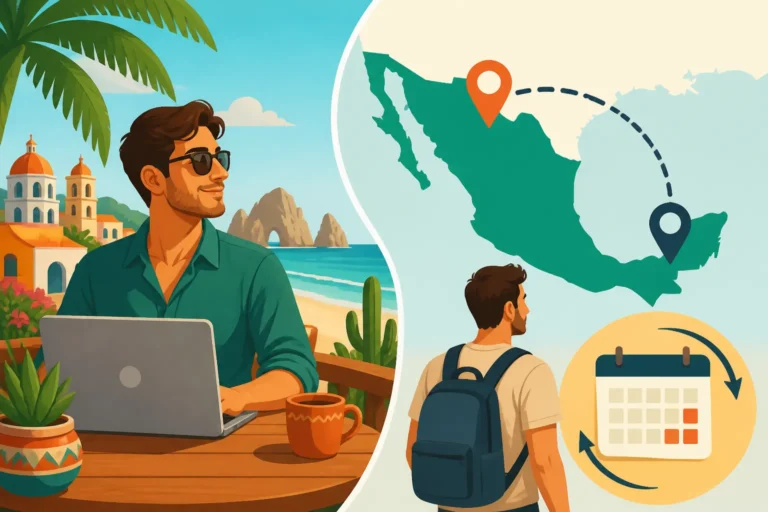
How to Work Legally as a Digital Nomad in Mexico
Oh, the digital nomad life in Mexico! It sounds idyllic, doesn't it? Beachside cafes, vibrant cities, delicious food… and working from anywhere. But let's be real, many of us arrive here with stars in our eyes, only to find ourselves scratching our heads about how to actually work legally without constantly looking over our shoulders. This guide is going to walk you through the nitty-gritty of becoming a legitimate remote worker in Mexico, ensuring you can enjoy your amazing life here without any immigration headaches.
Disclosure: This post may contain affiliate links. We may earn a commission at no extra cost to you if you make a purchase through these links. Read full disclosure.
The Reality of Remote Work on a Tourist Visa in Mexico
Let's cut right to the chase because this is where many digital nomads get it wrong, and frankly, it's a common, understandable mistake. You've heard stories, perhaps even done it yourself – working from your laptop on a tourist stamp. It feels harmless, right? You're not taking a local job, you're not competing with Mexicans for employment. But the legal reality in Mexico is a bit more rigid than the popular perception might suggest.
Why a Tourist Permit (FMM) Isn't Enough for Digital Nomads
When you enter Mexico as a tourist, whether by air or land, you're usually given a Forma Migratoria Múltiple (FMM), or a stamp directly in your passport. This document, or the stamp, explicitly grants you permission to be in Mexico for tourism, recreation, or other non-remunerated activities. The key phrase there is "non-remunerated activities." While many expats consider remote work for a foreign company to be "non-remunerated" locally because the money isn't coming from a Mexican entity, the spirit of the law, and increasingly, its enforcement, views any work activity, regardless of where the income originates, as needing proper authorization.
Think of it this way: your FMM or tourist stamp is like a temporary pass for fun. It's for sipping margaritas, exploring ancient ruins, and soaking up the sun. It's not for "logging onto Zoom calls" or "designing websites for clients back home." Even if your income isn't directly from a Mexican employer, the act of performing work while physically present in Mexico on a tourist permit is technically a violation of your immigration status. This isn't just bureaucratic red tape; it's about adhering to the country's immigration regulations, which are designed to differentiate between visitors and residents, and between those who work and those who don't. You wouldn't try to work a job in your home country on a tourist visa, would you? The principle, though often unenforced for casual remote work, remains the same here. For a deeper dive into general immigration terms, check out our guide on Mexico Immigration Terminology 101: FMM, CURP, RFC and Other Essentials.
Understanding the Legal Gray Area and Its Risks
For years, many digital nomads operated in a kind of "don't ask, don't tell" zone. Because the concept of remote work for foreign employers wasn't explicitly defined in Mexican immigration law, it often fell through the cracks. Immigration officials at entry points weren't typically asking about your remote job, and if you weren't actively seeking local employment, you were generally fine. However, things are changing.
The Mexican government has become increasingly aware of the influx of remote workers. While Mexico does not currently offer a specific "digital nomad visa" like some other countries, the established residency pathways are becoming more strictly interpreted to cover this type of activity. The risks of operating solely on a tourist visa include:
- Denied Entry: While rare, if an immigration agent suspects you're planning to work (e.g., you declare an extended stay without clear tourist plans, or have too many previous long "tourist" stays), they could deny you entry or grant you a very short stay.
- Deportation: This is the most severe risk. If caught working illegally (though for remote work, this is usually difficult to prove unless you explicitly state it), you could face deportation and a ban from re-entering Mexico.
- Difficulty with Future Residency: A history of potentially misusing tourist permits could raise red flags if you later decide to apply for a legitimate residency visa. Immigration officials do look at your travel history.
- Lack of Rights: Without proper residency, you lack many of the rights and protections afforded to legal residents, from banking access to long-term housing.
It’s crucial to understand that while many have gotten away with it, relying on this legal gray area is a gamble. For true peace of mind and long-term stability, securing a proper residency visa is the only way to work legally as a digital nomad in Mexico.
Mexico's Residency Options for Remote Workers
Since there isn't a specific "digital nomad visa" per se, the best and most common route for remote workers looking to legitimize their stay in Mexico is through the existing Temporary Resident Visa program. This visa is designed for individuals who intend to live in Mexico for an extended period (more than 180 days but less than four years) and can demonstrate financial solvency.
The Temporary Resident Visa: Your Best Bet for Legal Remote Work
The Temporary Resident Visa, or Residente Temporal, is the pathway nearly all digital nomads in Mexico ultimately choose. It's versatile and, crucially, it allows for a longer, more stable stay, which is exactly what remote workers need. This visa is generally issued for one year initially and can be renewed for up to three additional years. After four years as a Temporary Resident, you can then apply to upgrade to Permanent Residency. Our guide on the Mexico Temporary Resident Visa: Comprehensive Guide for Expats (2026 Update) goes into great detail about this process.
There are two main types of Temporary Resident Visas that are often confused by remote workers:
- Residente Temporal No Lucrativa: This is for individuals who will not be engaging in remunerated activities in Mexico. However, it's often interpreted to mean no local remunerated activities. For digital nomads whose income is entirely derived from outside Mexico, this category can work, provided the consulate understands and agrees that your remote work doesn't count as "remunerated activity in Mexico." This interpretation can vary widely by consulate.
- Residente Temporal con Permiso para Trabajar (Lucrativa): This visa explicitly allows you to engage in remunerated activities. While typically used by those with a job offer from a Mexican company, some consulates might issue this for remote workers if they are convinced you intend to be a tax resident and contribute to the Mexican economy, even if your client base is foreign. This often involves more paperwork and a clearer explanation of your work.
Given the evolving landscape, many digital nomads find it safest to pursue the Residente Temporal with the explicit understanding that they are working remotely for foreign clients. The key is demonstrating you have sufficient funds to support yourself without taking jobs from Mexicans.
Financial Solvency: Proving You Can Support Yourself
This is the cornerstone of almost any Mexican residency application. You need to prove to the Mexican consulate that you have the financial means to support yourself without needing to work locally or rely on the Mexican social system. This is where your remote income really shines! The financial requirements are typically demonstrated through:
- Monthly Income: You'll need to show consistent income deposited into your bank account for a certain number of months (usually 6 or 12, depending on the consulate). For 2026, the specific amounts are tied to the Mexican minimum wage and the Unidad de Medida y Actualización (UMA). While these figures are adjusted annually, you should expect to demonstrate a monthly income of roughly $3,000 to $5,000 USD for an individual, or slightly more for a couple. Always check the specific consulate's website where you intend to apply, as they can have slightly different requirements. You can find more up-to-date information on this in our guide on Mexico Temporary Residency Financial Requirements (2026).
- Savings/Investments: Alternatively, or in addition to monthly income, you can show a lump sum in a bank account or investments. This amount is usually significantly higher, often requiring $50,000 to $80,000 USD or more, held for a certain period.
The consulate wants to see stability. So, random large deposits won't cut it. They want to see regular income from your remote work or a substantial, stable nest egg. Bank statements and letters from your bank are your best friends here.
Navigating the Application Process: From Consulate to INM
The application for a Temporary Resident Visa for digital nomads must always begin at a Mexican consulate outside of Mexico. You cannot apply for this visa from within Mexico if you initially entered as a tourist. This is a common point of confusion and frustration for new arrivals.
Here’s a simplified breakdown of the general steps:
- Gather Documents: This is the most crucial part. You'll need your passport, passport-sized photos, a completed application form, proof of financial solvency (bank statements, investment statements, letters from your bank), and potentially a letter explaining your intent to reside in Mexico and work remotely. Some consulates might also ask for a letter from your foreign employer or contracts with international clients.
- Schedule an Appointment: Mexican consulates, especially popular ones in the US or Canada, can have long wait times. Plan well in advance!
- Consulate Interview: You'll attend an interview where you'll present your documents and answer questions about your reasons for moving to Mexico and your financial situation. Be prepared, be honest, and clearly articulate your remote work situation.
- Visa Stamped in Passport: If approved, the consulate will place a visa sticker in your passport. This sticker is your entry permit.
- Enter Mexico: You typically have 180 days from the date the visa is issued to enter Mexico.
- The Canje Process at INM: This is the second, equally important step, often called the Canje (exchange) or regularization process. Once you enter Mexico with your visa, you have a limited time (usually 30 days) to visit your local immigration office (INM – Instituto Nacional de Migración) to exchange your visa sticker for your actual Temporary Resident Card. This physical card is your official ID and proof of residency in Mexico. This step must be done in Mexico. Our guide on the Canje Process: Exchanging Your Visa for a Resident Card will walk you through this. Dealing With INM: Mexico's Immigration Institute can feel daunting, but being prepared makes all the difference.
It's a two-stage process: apply at a consulate abroad, then finish the process in Mexico. Don't skip either part!
Work Authorization and Tax Implications
Okay, you've got your Temporary Resident Visa, you've jumped through all the hoops, and you have your shiny new resident card. Now, what does this actually mean for your remote work and, perhaps more importantly, your taxes?
Does a Temporary Resident Visa Allow Remote Work for Foreign Companies?
This is the million-dollar question for digital nomads. The short answer is: yes, generally.
If you obtained a Residente Temporal visa by proving financial solvency from foreign-earned income, and your work continues to be for foreign clients or employers with no direct remunerated activity occurring with Mexican entities or individuals, then your Temporary Resident status usually covers this. The explicit work permit (permiso para trabajar) is primarily needed when you are going to be employed by a Mexican company or directly providing services to Mexican clients for remuneration within Mexico.
However, a nuance exists: if the consulate issued you a Residente Temporal No Lucrativa, technically you should not be engaging in any remunerated activities, even remote. This is why it's crucial to be clear and transparent at the consulate about your intentions to work remotely for foreign entities. Many consulates are now more familiar with the concept and, provided you meet the financial requirements, will approve the visa. If you specifically applied for and were granted a Residente Temporal con Permiso para Trabajar, then you're explicitly authorized for any form of work, including remote.
The key takeaway here is that the Temporary Resident Visa is the legal path to reside in Mexico for extended periods while earning income remotely from outside the country. It provides the legal framework for your stay, which then impacts your tax obligations. If you ever consider getting a local job in Mexico, you would then need to specifically apply for a work permit or ensure your current visa allows for it by checking our guide on Work Permits and Lucrative Activity in Mexico.
Understanding Mexican Tax Residency and Your RFC
Once you become a legal resident of Mexico, especially if you spend more than 183 days in the country within a calendar year, you will likely become a tax resident of Mexico. This is a critical distinction that many expats and digital nomads overlook. Tax residency is not the same as immigration residency.
As a tax resident, you are generally subject to Mexican income tax on your worldwide income. Yes, even that money you earn from your US or Canadian clients! This doesn't necessarily mean you'll pay taxes twice, thanks to double taxation treaties Mexico has with many countries (like the US and Canada). But it does mean you have obligations to the Mexican tax authority, the SAT (Servicio de Administración Tributaria).
The first step in fulfilling these obligations is obtaining your RFC (Registro Federal de Contribuyentes), which is your unique tax identification number. This is similar to a Social Security Number or Tax ID in other countries. You'll need it for practically everything official in Mexico, from opening a bank account to paying taxes. Registering with the SAT and getting your RFC is a mandatory step for tax residents. This can seem daunting, but resources like our guide on The RFC and SAT: Mexico's Tax System for Foreigners can simplify it, and companies like Taxes for Expats specialize in helping foreigners navigate these complexities. They can guide you through the process of registering and ensuring you’re compliant.
Income Tax on Foreign-Earned Remote Income
As mentioned, if you're a tax resident, Mexico typically taxes your worldwide income. For digital nomads earning income entirely from foreign sources, this means reporting that income to the SAT.
Here’s a general overview, but always consult with a tax professional specializing in Mexican expat taxes:
- Reporting: You will need to file annual tax declarations, and potentially monthly declarations depending on your income and how you've registered with the SAT.
- Tax Rates: Mexico has progressive income tax rates, similar to many other countries. These rates can change annually, so staying informed is key.
- Double Taxation Treaties: If your home country also taxes your worldwide income, you'll want to leverage the double taxation treaty between Mexico and your home country. This typically allows you to credit taxes paid in one country against taxes owed in the other, preventing you from paying tax on the same income twice.
- Deductions: Mexico also has various allowable deductions, which can reduce your taxable income.
Navigating Mexican income tax can be complex, especially with foreign income. This is where professional help becomes invaluable. Services like Taxes for Expats are specifically designed to assist foreigners with their tax obligations in Mexico, ensuring you remain compliant and take advantage of any available treaties or deductions. Understanding Income Tax (ISR) in Mexico: How It Works is a good starting point for learning more.
Practical Steps for a Smooth Digital Nomad Life
Beyond the visas and taxes, there are several practical steps that will make your life as a digital nomad in Mexico much smoother and more enjoyable.
Getting Your CURP and Opening a Bank Account
Once you have your Temporary Resident Card, two immediate priorities should be obtaining your CURP and opening a Mexican bank account.
- Your CURP (Clave Única de Registro de Población): This is your unique population registration code, essentially your national ID number in Mexico. You'll use your CURP for almost everything, from setting up utilities to getting a local cell phone plan, and yes, it's also necessary for banking and tax purposes. While your Temporary Resident Card usually includes your CURP, you might need to register it officially or print a certificate. Our guide on Getting a CURP as a Foreigner in Mexico explains the process in detail.
- Opening a Bank Account: With your resident card and CURP, opening a Mexican bank account becomes much easier. Many digital nomads rely on international transfer services, but a local bank account simplifies paying bills, receiving payments (if you ever do local work), and generally integrating into the financial system. Major banks like BBVA, Banorte, and Santander are popular options. You can learn more about the process in our guide on How to Open a Bank Account in Mexico: Requirements and Tips.
Having a local bank account and CURP are foundational for truly settling in and managing your finances efficiently.
Essential Language Skills and Connecting with the Community
While you can certainly get by in many expat hubs or tourist areas with just English, making an effort to learn Spanish will dramatically improve your experience and your ability to work legally and thrive in Mexico.
- Enhanced Integration: Basic Spanish helps you navigate daily life, from grocery shopping to dealing with bureaucracy (like INM or SAT). It also opens doors to local friendships and deeper cultural immersion.
- Professional Advantages: While your remote work might be in English, even a little Spanish can help you network, understand local nuances, and show respect for your adopted country.
- Learning Resources: Mexico offers countless opportunities for language learning. Immersion schools are popular, but online platforms can be incredibly flexible for digital nomads. Consider services like iTalki, where you can find native Spanish tutors for one-on-one lessons at affordable rates, fitting your flexible schedule. Just 30 minutes a day can make a huge difference! Our guide on Learning Spanish in Mexico: Top Tips and Resources for Expats provides more avenues.
Connecting with other digital nomads and expats in Mexico is also invaluable. Online groups, co-working spaces, and local meetups can provide support, advice, and a sense of community.
Ensuring You Have Adequate Healthcare
Living in Mexico as a digital nomad also means taking responsibility for your health. While Mexico has excellent healthcare options, both public and private, you need to ensure you have coverage.
- Private Health Insurance: This is generally the preferred route for most digital nomads and expats. You can choose between local Mexican health insurance plans or international coverage. Local plans like those from GNP or AXA can be more affordable for comprehensive care within Mexico, while international plans offer portability if you travel frequently.
- Public Healthcare (IMSS): As a legal resident working in Mexico (even remotely), you may eventually be eligible to voluntarily enroll in IMSS, Mexico's public healthcare system, though this process can be complex for self-employed individuals and the coverage is more basic.
- Emergency Preparedness: No matter your insurance, always know how to access emergency services and have a plan for medical emergencies.
Ensuring you have reliable health insurance is not just about legality, it's about peace of mind. Our detailed guide on Health Insurance in Mexico: How Expats Can Get Coverage (2027) offers a comprehensive look at your options.
Here's a quick comparison of the two main statuses we've discussed:
| Feature | Tourist Visa (FMM) | Temporary Resident Visa (Residente Temporal) |
|---|---|---|
| Legal Status for Work | NOT legal for any remunerated activity, even remote. | Generally legal for remote work for foreign entities (with proper understanding). |
| Duration of Stay | Max 180 days (often less at discretion of INM). | 1 year initially, renewable for up to 3 more (total 4 years). |
| Application Location | Upon entry at border/airport. | Must apply at Mexican Consulate outside Mexico, then Canje at INM. |
| Financial Proof | Not required (though proof of funds for stay helps avoid scrutiny). | Rigorous proof of consistent foreign income or significant savings required. |
| Mexican ID (CURP) | Not easily obtainable. | Obtainable after Canje process and receiving resident card. |
| Mexican Bank Account | Difficult or impossible to open. | Relatively straightforward to open with resident card and CURP. |
| Tax Implications | No tax obligations to Mexico (unless performing local work). | Becomes Mexican tax resident (usually), subject to worldwide income tax. |
| Long-term Stability | None, risky for long-term remote stay. | High, pathway to Permanent Residency. |
Disclaimer
This article is for general informational purposes only and does not constitute professional advice. Laws, prices and regulations vary by location and change over time. Consult a qualified professional for guidance on your specific situation.