Working in Monterrey: Expats in Mexico’s Industrial Capital
Landing a job in Monterrey means diving headfirst into the most intense, unapologetic business culture in the country, which can be a massive shock if you expect laid-back beach vibes. I remember sweating through my suit during my first July commute to an industrial park, completely overwhelmed by the sheer scale of the local manufacturing sector. This guide breaks down exactly how to navigate the specific industries, corporate expectations, and unique expat lifestyle in Mexico’s undisputed industrial powerhouse.
Disclosure: This post may contain affiliate links. We may earn a commission at no extra cost to you if you make a purchase through these links. Read full disclosure.
The Corporate Culture and Work Environment in Monterrey
Working in the capital of Nuevo León requires a profound shift in mindset. Monterrey is situated just a couple of hours south of the Texas border, and its business culture is a fascinating, high-pressure hybrid of traditional Mexican corporate hierarchy and aggressive North American capitalism.
Understanding the Regio Work Ethic
People from Monterrey proudly call themselves “Regios,” and the Regio work ethic is famous throughout Latin America. The corporate environment here is incredibly fast-paced, direct, and heavily focused on productivity and results. Unlike the more prolonged, relationship-building lunch meetings you might find in central Mexico, business in Monterrey is often conducted with a sharp, no-nonsense efficiency. You are expected to be highly punctual, incredibly prepared, and ready to defend your metrics.
However, despite this Americanized approach to efficiency, traditional Mexican hierarchical structures remain firmly in place. Titles are heavily respected. You must address senior leadership as Ingeniero or Licenciado until you are explicitly told otherwise. Bypassing a direct manager to speak to a department head is considered a severe breach of protocol. Navigating this delicate balance between being aggressively productive and strictly deferential requires immense emotional intelligence and cultural awareness. If you want to understand how this compares to the capital, reviewing Working in Mexico City: Opportunities and Challenges for Foreign Professionals provides excellent context.
To succeed in this specific environment, your business communication must be flawless. While many executives speak English, the operational staff and mid-level managers will communicate entirely in Spanish. Relying on SpanishPod101 to master advanced corporate vocabulary and specific manufacturing terminology ensures you never miss critical nuances during fast-paced operational meetings.
Navigating Industrial Parks and Commutes
Unlike tech startups that cluster in trendy downtown neighborhoods, the economic engines of Monterrey are located in massive industrial parks sprawled across the extreme outskirts of the metropolitan area, extending into municipalities like Apodaca, Escobedo, and Santa Catarina.
If you secure an engineering or management role, you will likely be commuting to one of these colossal manufacturing zones. The traffic in Monterrey is notoriously brutal, and public transportation out to the industrial parks is virtually non-existent for expats who expect a certain standard of safety and efficiency. You will absolutely need a reliable personal vehicle or a corporate transportation allowance to manage the daily grind. The physical toll of driving an hour each way in 100-degree summer heat is a reality that many foreign professionals drastically underestimate when accepting a job offer here.
To make this daily commute productive, many expats utilize the audio lessons on SpanishPod101 while sitting in traffic on Constitución Avenue. Turning two hours of gridlock into an immersive language and business etiquette study session is the best way to rapidly accelerate your integration into the local corporate ecosystem.
The Importance of Bilingual Professionalism
In Monterrey, being bilingual is not a unique party trick; it is a baseline requirement for almost any high-paying corporate role. Because the city’s economy is so deeply intertwined with the United States supply chain, local companies desperately need professionals who can bridge the gap between Mexican factory floors and American corporate headquarters.
You will constantly find yourself acting as a cultural and linguistic translator. You might spend your morning drafting a highly technical supply chain report in perfect English for a client in Detroit, and your afternoon leading a strict safety compliance meeting in Spanish for your local assembly line managers. You cannot effectively manage a local workforce if you cannot discipline, encourage, and train them in their native language. For a deeper dive into these linguistic expectations, you should read Do You Need to Speak Spanish to Work in Mexico? Language Requirements by Industry.
If your Spanish is currently limited to conversational pleasantries, stepping onto a Monterrey factory floor will be terrifying. You must dedicate serious time to SpanishPod101 to build a robust foundation of industrial and administrative phrasing so you can command respect from your local team from day one.
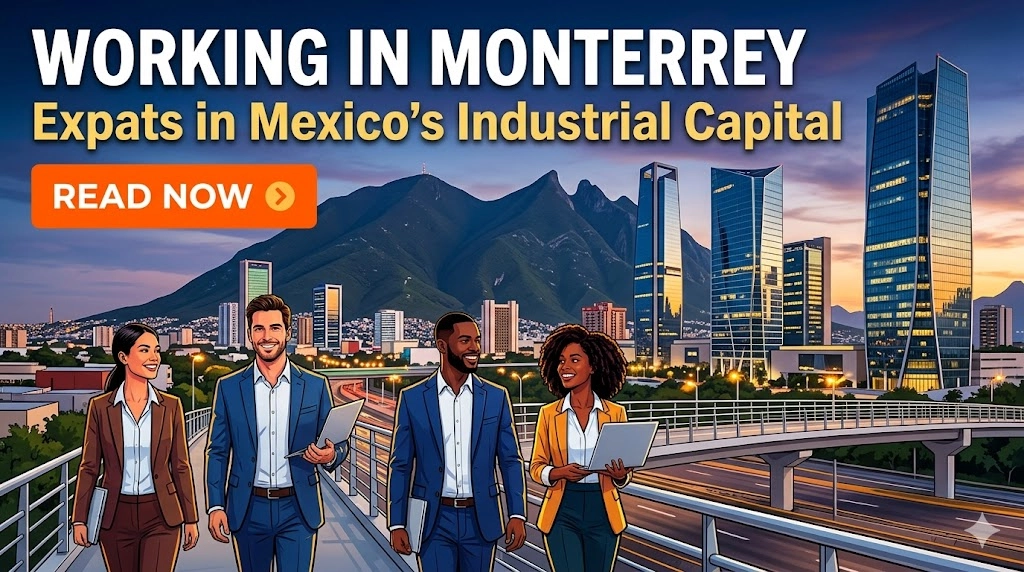
Top Industries Hiring Foreign Professionals
Monterrey does not typically attract digital nomads looking for cheap rent; it attracts seasoned corporate professionals, engineers, and industrial specialists. The expat community here is heavily skewed toward high-level management and specialized technical talent.
Advanced Manufacturing and Automotive Sectors
The absolute bedrock of the Nuevo León economy is advanced manufacturing. The region is a global powerhouse for the automotive, aerospace, and heavy machinery industries. Massive international conglomerates like Kia, Navistar, Caterpillar, and countless tier-one auto parts suppliers have enormous footprints here.
These companies frequently hire foreign nationals for plant management, specialized metallurgical engineering, robotics programming, and quality assurance directorships. When a parent company in Germany or Japan opens a new facility in Apodaca, they invariably send expat specialists on lucrative assignments to oversee the technological implementation and train the local workforce.
These roles are highly demanding but extremely stable. You will be expected to enforce strict global compliance standards while navigating local labor laws. Understanding how these local labor dynamics work is crucial, so familiarizing yourself with Mexican Work Culture: Business Etiquette and Workplace Norms is highly recommended before you attempt to restructure an existing assembly line.
IT, Tech Hubs, and Financial Services
While manufacturing gets all the glory, Monterrey also boasts a rapidly expanding tech and financial sector, heavily supported by the presence of the prestigious Tecnológico de Monterrey (Tec de Monterrey) university system. The city is a major hub for financial technology, corporate banking, and enterprise software development.
Companies operating in corporate parks in San Pedro Garza García frequently look for foreign talent with experience in international finance, cybersecurity, and global supply chain software architecture. The work environment in these sectors is slightly more modern and flexible than the traditional manufacturing floors, often mimicking the corporate culture of Texas business hubs like Dallas or Houston.
If you are leading a software team or pitching financial products to local executives, your presentation skills must be razor-sharp. Using SpanishPod101 to refine your formal presentation Spanish ensures you can confidently deliver a quarterly earnings review without relying heavily on a local translator, instantly elevating your professional credibility among Regio executives.
Specialized Engineering and Cross-Border Logistics
Because roughly 80% of Mexico’s exports go to the United States, and a massive portion of those goods pass right through Nuevo León on their way to Texas, cross-border logistics is a multi-billion-dollar industry here.
Foreign professionals with deep expertise in international trade compliance, customs brokerage, and supply chain optimization are in incredibly high demand. These roles require a masterful understanding of both the USMCA (United States-Mexico-Canada Agreement) regulations and the logistical realities of Mexican freight rail and trucking networks. It is a high-stress industry where a single customs delay can cost a manufacturing client millions of dollars. If you are negotiating these high-stakes logistical contracts, having your SpanishPod101 business vocabulary polished is the only way to ensure you don’t agree to disadvantageous shipping terms hidden in complex Spanish legalese.
Here is a quick comparison of the dominant corporate sectors for expats in Monterrey versus other major Mexican hubs:
| Industrial Sector | Monterrey Focus | Mexico City Focus | Guadalajara Focus |
| Manufacturing | Heavy Automotive, Steel, Machinery | Consumer Goods, Pharma | Electronics, Light Manufacturing |
| Technology | Enterprise Software, Logistics Tech | FinTech, Startups, E-commerce | Software Development Outsourcing |
| Finance | Corporate Wealth Management | Investment Banking, Venture Capital | Regional Banking |
| Expat Roles | Plant Directors, Logistics VPs | Marketing Heads, Regional CEOs | Senior Developers, IT Managers |
Visa Requirements and Legal Considerations for Expats
You cannot legally accept a job and go on the payroll of a Monterrey-based company without formal immigration sponsorship. The Mexican government strictly regulates the local labor market, and corporate compliance in this region is generally very high.
Securing Employer Sponsorship
To hire you legally, a Mexican corporation must be registered with the National Migration Institute (INM) and possess a valid Constancia de Inscripción de Empleador. This certificate proves they pay their corporate taxes and are legally authorized to sponsor foreign workers.
When you receive a job offer, the company’s HR and legal departments will draft a highly specific offer letter that must be submitted to the INM to initiate your work visa process. You cannot arrive in Monterrey as a tourist and simply start working while the paperwork processes; this is a severe violation that can result in deportation. You must wait for the pre-approval, attend an interview at a Mexican consulate outside of the country, and then enter with the correct visa stamp. For a comprehensive breakdown of these exact bureaucratic steps, you must read our Work Permit Process: How Employer Sponsorship Works in Mexico guide.
The legal paperwork will be entirely in formal, bureaucratic Spanish. You should never sign an employment contract or an immigration petition that you do not fully understand. By dedicating time to the advanced reading comprehension modules on SpanishPod101, you can verify that your contract’s salary, benefits, and severance clauses match the verbal offer you negotiated in English.
Transferring Within Multinational Corporations
The easiest path to working in Monterrey is via an internal transfer within a massive multinational corporation. If you currently work for an automotive supplier in Ohio that is opening a new plant in Nuevo León, an intra-company transfer (often classified under an expat assignment package) shields you from much of the local bureaucracy.
Expat packages in Monterrey are notoriously lucrative. Because the city is considered a “hardship post” by some global HR departments due to the intense summer heat and the heavy corporate workload, these packages often include luxury housing allowances, private drivers, comprehensive international health insurance, and paid tuition for your children at elite international schools. If you are currently negotiating one of these moves, understanding the local compensation landscape via Salary Expectations: Comparing Mexican Salaries to US/Canada will ensure you do not leave money on the table.
Navigating the INM and Tax Registration
Once you arrive in Monterrey with your work visa, your administrative journey is far from over. Within your first 30 days, you must process your physical residency card at the local INM office. Furthermore, your employer cannot legally pay you until you secure your RFC (Registro Federal de Contribuyentes) from the local SAT (tax authority) office.
Securing these appointments in a massive, bustling city like Monterrey is highly competitive and incredibly stressful. The officials at the SAT office will not speak English, and they require your biometric data and exact residential information to issue your tax ID. Preparing for these crucial bureaucratic encounters by practicing standard administrative dialogues on SpanishPod101 will save you the immense frustration of being turned away from a government building simply because you misunderstood an official’s rapid instructions. You will also need to secure your unique population registry number, a process detailed in How to Get a CURP as a Foreigner: The Mexican ID Number Explained.
Cost of Living and Lifestyle Balance for Professionals
Monterrey is widely considered one of the wealthiest and most expensive cities in all of Latin America. Your salary must be strategically balanced against a cost of living that frequently surprises expats who expected the generally lower prices found in southern Mexico.
Salaries versus Living Expenses in San Pedro Garza Garcia
If you are moving to Monterrey as a high-level corporate professional, you will almost certainly be looking for housing in San Pedro Garza García. This independent municipality, completely enveloped by the greater Monterrey area, is the wealthiest enclave in Mexico. It boasts pristine infrastructure, world-class dining, luxury shopping malls that rival anything in Dubai or Houston, and exceptionally high security.
However, living in San Pedro comes with a massive premium. Renting a modern, secure, three-bedroom apartment or a house in a gated community here can easily cost between $2,000 and $4,500 USD per month, entirely depending on the amenities. You will also be paying high utility costs, particularly for air conditioning, which must run constantly from May through September. While corporate salaries for expats in Monterrey are high, they are absolutely necessary to maintain a standard North American lifestyle in these exclusive zones. To get a broader perspective on national economic averages, review our comprehensive Cost of Living in Mexico guide.
Housing, Healthcare, and Expat Amenities
The infrastructure supporting the expat lifestyle in Monterrey is exceptional. The private healthcare system here is world-class, anchored by renowned institutions like Hospital San José and Zambrano Hellion (both affiliated with TecSalud). These hospitals are equipped with the latest diagnostic technology and staffed by bilingual specialists who frequently complete their medical fellowships in the United States. To fully understand how to access and fund this level of care, consult Healthcare in Mexico: Complete Guide for Expats (Public vs Private).
When securing housing and setting up basic amenities, you will constantly interact with local real estate agents, utility providers, and maintenance staff. Even in wealthy areas like San Pedro, relying entirely on English for property negotiations puts you at a severe disadvantage. Practicing real estate and home maintenance vocabulary through SpanishPod101 ensures you can confidently negotiate lease terms, request emergency plumbing repairs, and manage your household logistics effectively.
Building a Social and Professional Network
The social culture in Monterrey revolves heavily around weekend carnes asadas (barbecues). The Regio tradition of gathering around a grill, drinking local beer, and talking business in a relaxed setting is the absolute core of the city’s social fabric.
If you want to advance your career and build a genuine support network, you must participate in these gatherings. This is where the strict corporate hierarchy breaks down, and real, trusting relationships are forged. However, these events are exclusively Spanish-speaking environments. If you cannot participate in the casual banter around the grill, you will remain a perpetual outsider. Engaging with the cultural and conversational modules on SpanishPod101 is the key to unlocking these vital social circles, transforming you from a temporary foreign worker into a trusted, integrated member of the Monterrey business community.
References
Primary sources (official)
- Instituto Nacional de Migración (INM) – Trámites de Estancia: https://www.gob.mx/inm/acciones-y-programas/tramites-migratorios
Other helpful sources
- Tetakawi – Manufacturing in Monterrey Overview: https://tetakawi.com/manufacturing-in-mexico/where-to-manufacture-in-mexico/
Disclaimer
The information provided in this guide is for educational and informational purposes only and does not constitute formal legal, immigration, financial, or corporate employment advice. Mexican labor laws, corporate taxation, and INM visa requirements for foreign workers are subject to frequent changes. Always consult with a qualified Mexican immigration attorney and a formal corporate HR representative regarding your specific legal right to work, reside, and establish a professional presence in Mexico.