Consulate vs In-Country: Two Ways to Apply for Mexican Residency
Staring at a stack of Mexican immigration forms while your 180-day tourist permit slowly ticks away is a special kind of expat anxiety. I remember pacing my apartment in Querétaro, terrified that one wrong move would mean a forced flight back home. This guide breaks down the two distinct paths to Mexican residency so you can choose the right one without the panic.
Disclosure: This post may contain affiliate links. We may earn a commission at no extra cost to you if you make a purchase through these links. Read full disclosure.
The Traditional Path: Applying via a Mexican Consulate Abroad
For the vast majority of expats, the journey to becoming a legal resident starts long before they cross the border. The consulate route is the standard, "by-the-book" method that most people use to secure a Temporary or Permanent Resident visa. It involves a two-step process: an interview at a Mexican consulate outside of Mexico, followed by a final procedure at an immigration office (INM) once you arrive in the country.
When I went through this, the biggest hurdle was the sheer inconsistency between consulates. You might find that the consulate in Laredo has completely different financial requirements or appointment availability than the one in Vancouver or London. This is because each consul has a level of autonomy in how they interpret the national guidelines. Generally, you will need to prove "financial solvency" through bank statements or pension records. If your documents are not in Spanish, you will almost certainly need certified translations. Using a service like RushTranslate can be a lifesaver here, as they provide the specific certified format that Mexican officials expect, preventing your application from being tossed out over a linguistic technicality.
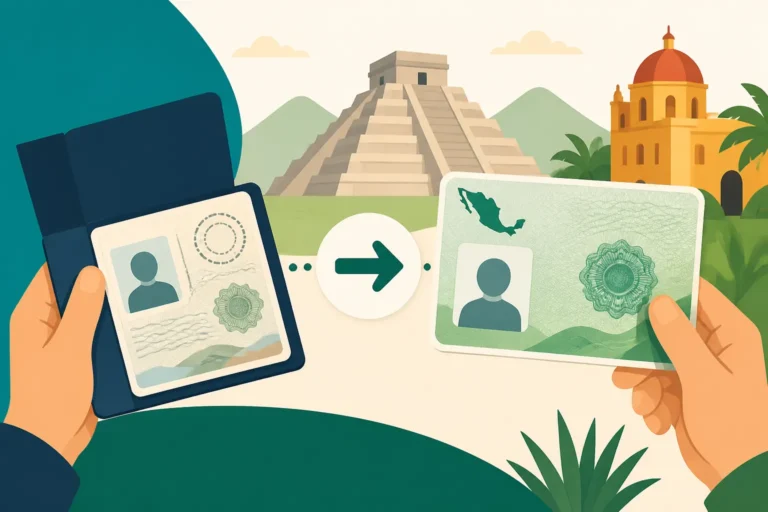
The consulate process begins with securing an appointment through the MiConsulado booking system. Be warned: appointments can be harder to catch than a glimpse of a jaguar in the jungle. Once you get in, you’ll have a brief interview where the officer determines if your intentions for living in Mexico align with the visa type you’ve requested. If approved, they place a visa sticker in your passport. This is not your residency card yet; it is merely a one-entry permit that gives you 180 days to enter Mexico and start the "Canje" (exchange) process. For more on the broad strokes of these requirements, check out The Ultimate Guide to Mexico's Visa and Residency Options (2027 Edition).
The In-Country Exception: Applying Directly at the INM
A common misconception among newcomers is that you can simply show up on a tourist permit and "flip" it to a residency card once you find a house you like. In the eyes of Mexican law, this is generally not allowed. However, there are three very specific scenarios where you can apply for residency without ever leaving the country.
The first and most common is Family Unity. If you marry a Mexican citizen or a legal foreign resident, or if you have a child born in Mexico, you can apply for a change of status at a local INM office. This is a powerful route because it bypasses the strict financial solvency requirements of the consulate path. I’ve known many couples who spent months stressing about bank balances, only to realize that their marriage certificate was the golden ticket they needed to stay. Just remember that any foreign documents, like a marriage license from the U.S. or Canada, must be apostilled and then translated by a certified translator. Again, getting these processed by RushTranslate ensures that the INM officer doesn't find an excuse to delay your file.
The second scenario is the Regularization Program (Programa de Regularización Migratoria). This is an "on-and-off" policy that Mexico has used recently to help people who have overstayed their tourist permits. If you entered Mexico as a tourist and your permit has expired, you may be eligible to pay a fine and "regularize" your status into a four-year residency. However, this is not a permanent fixture of the law and can change at any time. It is a high-risk strategy compared to the consulate route. You can read more about the nuances of this in Can You Change from a Tourist Visa to Residency Without Leaving Mexico? and Mexico Residency 2026: New Rules and Financial Criteria Updates.
The third scenario involves humanitarian grounds or specific employment offers where the employer has pre-authorization from the INM. If a Mexican company wants to hire you, they must first apply for a "Constancia de Inscripción del Empleador" and then a specific job offer permit. While the final visa is often still collected at a consulate, much of the heavy lifting happens while you are already in the country.
Consulate vs In-Country: A Strategic Comparison
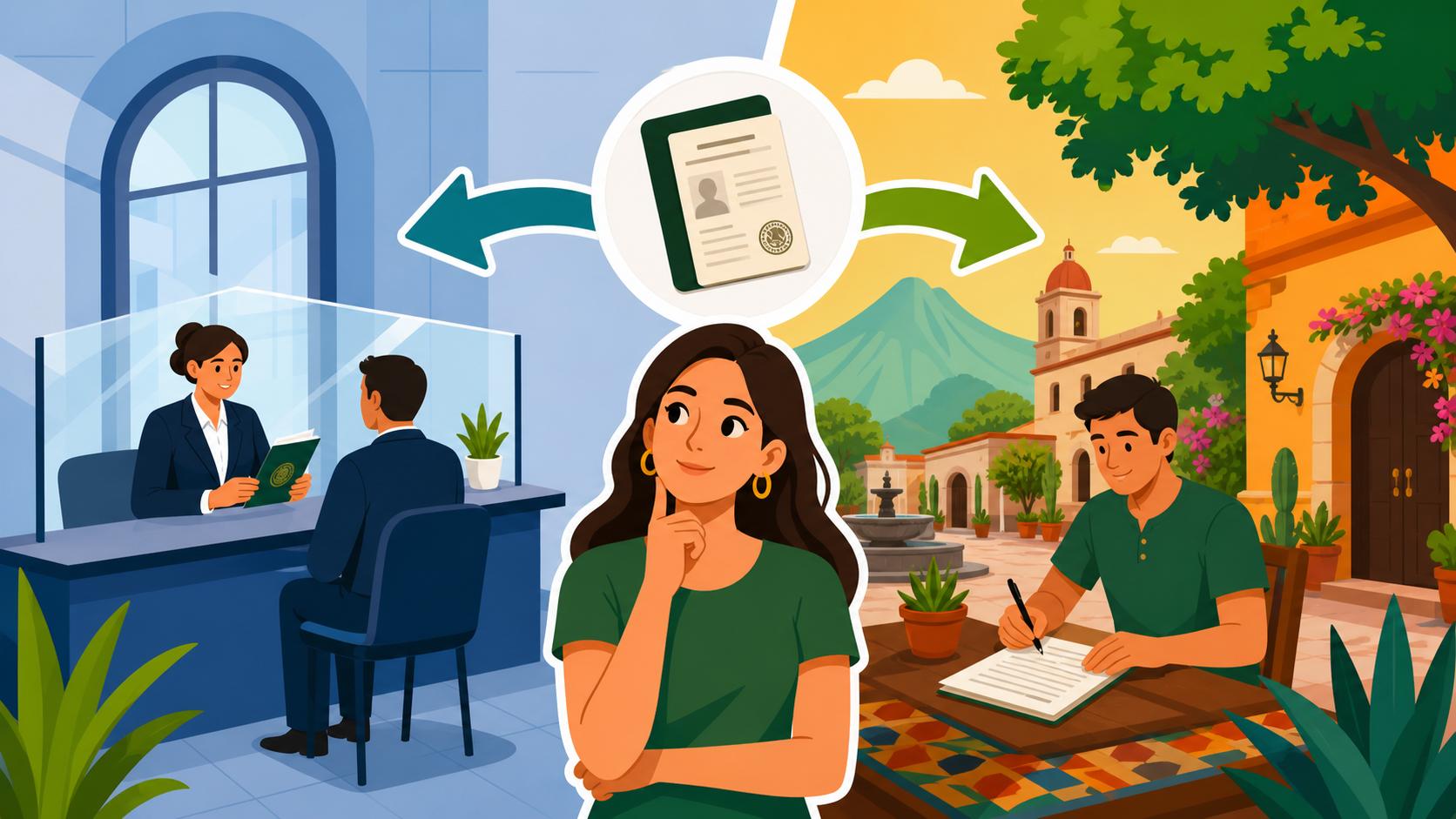
Choosing between these paths depends on your personal circumstances, your budget, and how much "bureaucratic adventure" you can handle. The consulate route is generally faster and provides more certainty, while the in-country routes are often born of necessity or family changes.
| Feature | Consulate Path (Traditional) | In-Country Path (Exception/Family) |
|---|---|---|
| Primary Requirement | Financial Solvency (Savings/Income) | Family Ties or Overstay Status |
| Location of Start | Any Mexican Consulate outside Mexico | Local INM Office inside Mexico |
| Processing Time | 1 day for visa sticker; 2-4 weeks for card | 1 to 5 months depending on the office |
| Financial Cost | Standard visa fees + Canje fees | Fines (if overstayed) + Change of status fees |
| Risk Level | Low (if you meet financial criteria) | Moderate to High (Regularization varies) |
| Translations | Required for all non-Spanish docs | Required for all non-Spanish docs |
One thing that often gets overlooked in the "Consulate vs. In-Country" debate is the issue of healthcare. When you apply through a consulate, you are essentially telling the government you are self-sufficient. While not always a hard requirement for the visa itself, having a robust international health insurance policy like Cigna Global is highly recommended. Not only does it provide peace of mind during the months your residency is "in process," but it also demonstrates to officials that you won't be a burden on the public healthcare system. If you are curious about the costs involved in the legal side of this, Mexico Immigration Fees and Costs: Budgeting for Your Residency is a great resource to help you plan your move.
Essential Steps and Common Hurdles for Both Paths
Regardless of which path you choose, you are going to face the infamous "tramite" (procedure) culture of Mexico. The paperwork is extensive, and the requirements for the format of your documents are rigid. I’ve seen grown men cry in the waiting room of the INM office in Playa del Carmen because they forgot a single photocopy or their translation wasn't "official" enough.
For the consulate route, your primary focus is the financial proof. You need twelve months of original bank statements, each stamped by the bank. If you are downloading these as PDFs, some consulates won't accept them unless they are accompanied by a letter from the bank manager. For the in-country route, the focus shifts to proving the relationship or the "regularization" eligibility. This is where the paper trail becomes vital. Every birth certificate, marriage license, or previous entry permit must be perfect. Since you'll likely be dealing with documents from your home country, using RushTranslate to handle the Spanish versions is a standard move among savvy expats. It’s one of those small costs that prevents very expensive delays.
Once you have your initial approval—either the sticker from the consulate or the "resolución" from the INM—you enter the final stage: the "Canje" or the "Tramite de Residencia." This is where you go to the local INM office to provide fingerprints and have your photo taken. My advice? Wear a nice shirt, because that photo will be on your card for the next one to four years. For a deep dive into what that specific day looks like, read Surviving the INM Office: Tips for a Smooth Visa Processing Day and How to Get Your Fingerprints and Photo Taken for Residency (INM Process).
Another hurdle is the language barrier. While some officers in big hubs like Mexico City or Puerto Vallarta might speak a little English, you should never count on it. Most of the process is conducted in Spanish. If your Spanish is still in the "ordering a taco" phase, consider hiring a "gestor" (a professional facilitator) or bringing a fluent friend. Having your medical records and insurance documents from Cigna Global ready to go can also help if you need to prove your health status for certain residency categories.
Finally, keep an eye on the "UMA" (Unidad de Medida y Actualización). This is the economic unit Mexico uses to calculate its financial requirements and fines. It changes every year in February, which means the amount of money you need in your bank account to qualify for residency also changes. If you are applying in 2026, make sure you are looking at the 2026 UMA rates, not old blog posts from three years ago.
Disclaimer
This guide is for informational purposes only and does not constitute legal advice. Mexican immigration laws and consulate policies change frequently and can be applied inconsistently. Always verify requirements with the official government website (SRE or INM) or consult with a licensed Mexican immigration attorney before making significant financial or travel decisions.