Emergency Care in a Small Mexican Town: What Your Policy Assumes
Moving to a charming, quiet pueblito in Mexico sounds idyllic, doesn't it? Picture colonial plazas, friendly faces, and the slow pace of life. But when you’re living far from the bustling big cities, a medical emergency can suddenly feel incredibly daunting. You might assume your existing health insurance policy has you covered, but the reality of emergency care in a small Mexican town, and what your policy actually assumes, could be two very different, and very stressful, things. This guide will walk you through what to expect and, more importantly, how to ensure you're truly prepared.
Disclosure: This post may contain affiliate links. We may earn a commission at no extra cost to you if you make a purchase through these links. Read full disclosure.
The Reality of Emergency Care in Small Mexican Towns
Let's be honest, the healthcare landscape in a small Mexican town is vastly different from what you might be used to in a major metropolitan area, whether back home or even in a bigger city like Guadalajara or Mexico City. It's easy to romanticize small-town living, but when your health is on the line, that romance can quickly turn into a terrifying reality check.
Limited Resources and Infrastructure
In a pueblito, you'll find a consultorio at a pharmacy, perhaps a small clínica, and if you're lucky, a very basic public hospital (hospital general or Centro de Salud). These facilities are perfectly adequate for common ailments, a quick check-up, or even a minor injury. You can often find an excellent general practitioner, or médico general, who knows everyone in town and provides wonderful, personalized care. However, they are not equipped for serious emergencies.
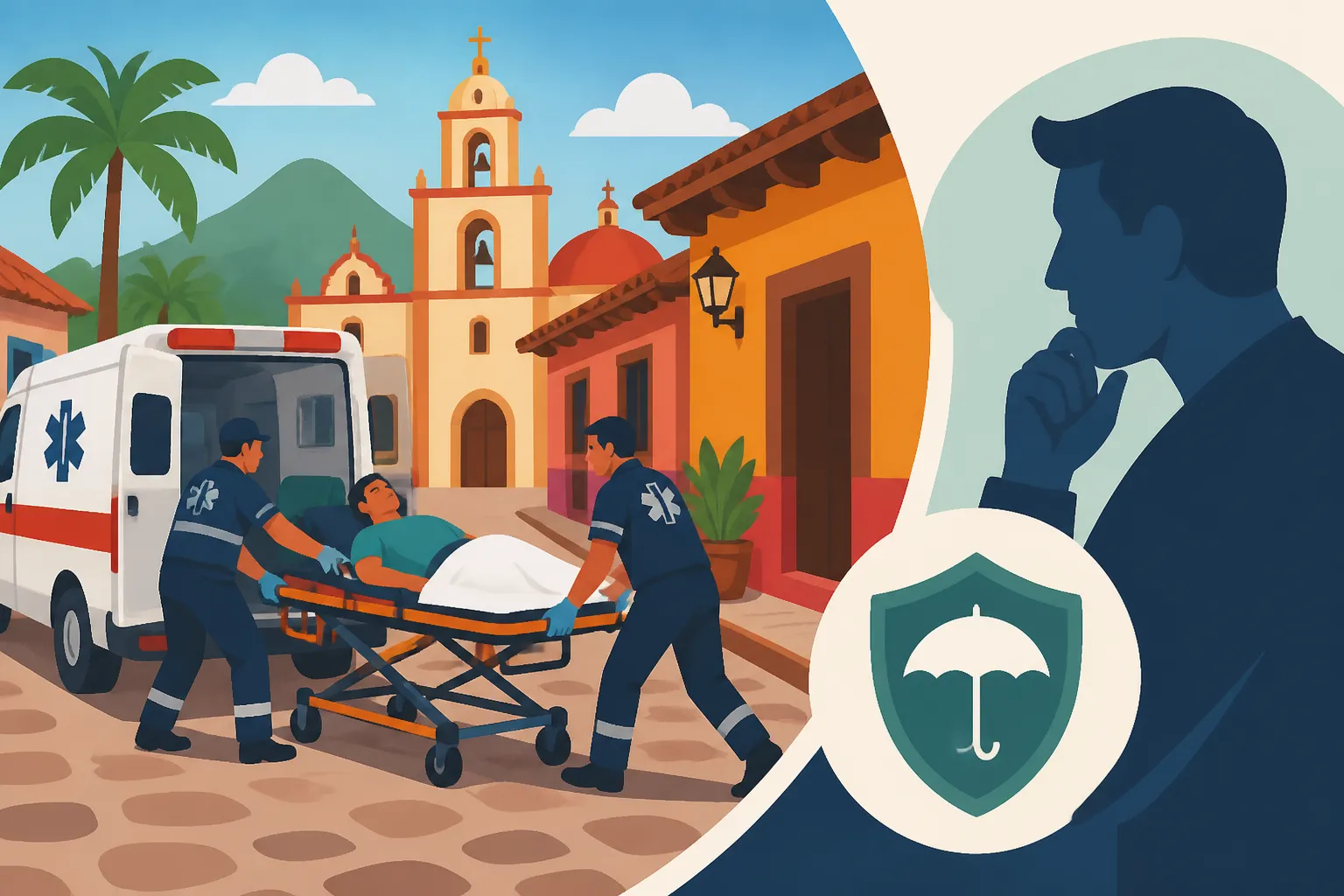
Imagine a sudden, severe appendicitis attack, a bad fall resulting in a broken bone that requires surgery, or a suspected heart attack. These situations demand immediate access to specialized equipment, surgical teams, and intensive care units. A small town clinic often lacks these. They might have an ambulance, but its capabilities could be basic, and the nearest well-equipped hospital might be hours away on winding, unlit roads. The local hospital general might be able to stabilize you, but they're likely to refer you to a larger city for anything complex. This isn't a criticism of their dedication; it's simply a matter of resource allocation in less populated areas. For more general information on the system, you can learn about the different options available in Healthcare in Mexico: Complete Guide for Expats (Public vs Private).
The Language Barrier and Local Practices
Even if you've been diligently learning Spanish, medical terminology is a whole different beast. In a high-stress emergency, trying to explain your symptoms or understand a diagnosis in a foreign language can be incredibly difficult, if not impossible. While doctors in major private hospitals in larger cities often speak English, the chances of finding an English-speaking doctor or nurse in a small town clinic are significantly lower.
This language barrier isn't just about communication; it extends to understanding local medical practices and expectations. For example, the concept of upfront payment for services is common in many private Mexican facilities, even for emergencies, especially if they don't have a direct billing agreement with your insurer. You might also find that the administrative process is slower, or that you're expected to provide family members to help with basic patient care, something unheard of in many home countries. These cultural and logistical differences can add layers of stress to an already frightening situation. It really highlights the importance of overcoming the Overcoming Language Barriers at the Doctor: Tips for Expats.
What Traditional Insurance Policies Often Overlook (and Why it Matters)
This is where the rubber meets the road. Many expats move to Mexico assuming their existing travel insurance or a basic local health plan will cover them sufficiently. While these policies might be fine for routine care or minor issues in a big city, they often have critical gaps when it comes to rural emergencies.
The "Closest Hospital" Clause and Its Pitfalls
A common clause in many standard travel or even some local health insurance policies is the "closest hospital" rule. This means your insurance will only cover treatment at the nearest facility deemed capable of handling your condition. In a small town, this "closest hospital" might be the local consultorio or a basic public clinic that is simply not equipped to deal with a serious trauma or a life-threatening illness.
The policy might state they cover "medically necessary" treatment, but if the local facility can technically offer some form of initial care, even if it's inadequate for a good outcome, your insurer might push back on covering a transfer to a better-equipped hospital. This leaves you in a terrible bind: accept substandard care or pay out of pocket for a transfer that could cost thousands of dollars. It's a risk no expat, especially those living off the beaten path, should take. When it comes to significant costs, understanding Healthcare Costs in Mexico: Doctor Visits, Hospital Stays, and Surgery Expenses is crucial.
Medical Evacuation: A Critical, Often Missing Piece
This is arguably the most important, and most overlooked, aspect of insurance coverage for expats in small towns. Medical evacuation isn't just about an ambulance ride down the street; it's about being transported by specialized ambulance, fixed-wing aircraft, or even helicopter to the nearest appropriate medical facility, which could be hundreds of miles away, or even in another country.
Most basic policies either don't cover medical evacuation at all, or they have extremely low limits that wouldn't even cover the cost of a ground ambulance for a long distance, let alone an air ambulance. If you're suffering from a stroke in a small Yucatán village and need to be airlifted to a specialized neuroscience center in Mérida, or even flown to the U.S. for complex surgery, the cost can easily run into tens of thousands, or even hundreds of thousands, of dollars. Without proper medical evacuation coverage, you or your family would be entirely responsible for these astronomical costs.
Imagine being in a critical condition and having your family scramble to find a way to pay for a private air ambulance. It's an unimaginable nightmare. This is precisely where a robust policy, like those offered by SafetyWing, truly shines, by understanding the real-world needs of expats and travelers. They prioritize getting you to the care you need, not just the care that's closest. For a broader view, it's worth distinguishing between Travel Insurance vs Local Insurance: Do Expats Need Both?
Navigating a Medical Emergency: Your Action Plan
Preparation and clear thinking are your best allies when facing a medical emergency in a small town. You can’t control everything, but you can certainly control your readiness.
Before an Emergency: Preparation is Key
This is where you earn your peace of mind.
- Secure the Right Insurance: First and foremost, invest in an international health insurance policy that explicitly includes comprehensive medical evacuation. Look for policies like SafetyWing that are designed for digital nomads and long-term travelers, as they often understand the unique needs of those living abroad, especially in regions with varying healthcare standards. Make sure you understand the limits, deductibles, and direct billing options.
- Know Emergency Numbers: Program 911 into your phone. Understand that 911 in Mexico might not function exactly like in your home country; response times can vary wildly. Also, know the local Cruz Roja (Red Cross) number, which often provides the most reliable ambulance service in many towns, even if it's volunteer-run. Keep a written list of these numbers near your phone. You can find more details in Calling an Ambulance in Mexico: How Emergency Services Operate.
- Identify Key Facilities: Before anything happens, research the nearest reputable private hospital in a larger city, not just the closest public clinic. Know its name, address, and phone number. Keep this information handy. If you’re in a popular expat area, ask around for recommendations.
- Medical Information & Emergency Contacts: Keep a laminated card in your wallet with your name, blood type, any allergies, current medications (generic names), existing medical conditions, and emergency contact details for family/friends, both local and international. Include your insurance policy number and their emergency contact line. Consider wearing a medical alert bracelet if you have a significant condition.
- Learn Basic Spanish Medical Phrases: Even a few key phrases can make a huge difference. "Me duele aquí" (It hurts here), "Tengo alergia a…" (I'm allergic to…), "Es una emergencia" (It's an emergency).
- Cash on Hand: Have a small stash of pesos (2,000-5,000 MXN) available. In an emergency, some private clinics or even public services might require immediate cash payment for initial stabilization or ambulance transport before insurance details can be sorted out.
- Build a First Aid Kit: For those minor emergencies that don't require a hospital, a well-stocked first aid kit can be a lifesaver. This includes basic pain relievers, bandages, antiseptic, rehydration salts, and any personal prescription medications. Need ideas? Check out Building a First Aid Kit: Essential Medical Supplies for Expats in Mexico.
During an Emergency: Immediate Steps
When the unexpected happens, stay as calm as possible and follow these steps.
- Call for Help: Dial 911 or the local Cruz Roja number immediately. Clearly state the emergency, your location (street address, landmarks), and the nature of the problem. If there's a language barrier, try to find a neighbor or friend who can translate.
- Inform Your Insurance: As soon as it’s feasible, contact your insurance provider's emergency line. SafetyWing, for example, has a 24/7 emergency assistance team. They can help coordinate care, verify coverage, and initiate direct billing or evacuation procedures. Don't wait until you're already in a facility to do this.
- Provide Medical Information: Give the first responders or clinic staff your medical emergency card. Insist they contact your emergency contact person and your insurance provider.
- Document Everything: If possible, or have someone else do it, take photos of any injuries, document the time of events, and keep records of who you spoke to, what was said, and any initial costs incurred. This will be invaluable for your insurance claim later.
- Do Not Pay Upfront (If Possible): If you're at a facility that accepts your insurance, try to get them to bill your insurer directly. If you have SafetyWing, they can often coordinate this. However, if you are at a very small clinic or the situation is critical, you might have to pay a small amount upfront for initial stabilization to avoid delays. Get an official receipt (factura).
After an Emergency: Dealing with Logistics and Claims
The emergency itself might be over, but the logistical nightmare can just be beginning.
- Follow-Up with Your Insurer: Even if your insurer was involved from the start, follow up with them to ensure all necessary paperwork is submitted and your claim is progressing. Provide all documentation you collected.
- Obtain Medical Records: Request copies of all medical records, diagnostic reports, and discharge summaries, preferably in English and Spanish. These are crucial for ongoing care and insurance claims.
- Seek Reputable Care: If you were initially treated in a basic facility, your insurer will likely advise or arrange for you to move to a higher-quality hospital or specialist for follow-up care. This is where comprehensive policies from providers like SafetyWing truly make a difference, as they focus on getting you the best appropriate care.
- Rest and Recover: Don't underestimate the physical and emotional toll of a medical emergency in a foreign country. Allow yourself time to recover and seek support from friends, family, or expat groups.
Why a Specialized Travel and Medical Insurance is Your Best Bet
For those living or extensively traveling in Mexico, particularly in its charming smaller towns, generic travel insurance or basic local plans simply won't cut it. You need a policy designed for the realities of expat life, and that's precisely where specialized providers excel.
Comprehensive Coverage Beyond the Basics
Many standard travel insurance policies are short-term and assume you'll be back home for anything serious. Local Mexican plans can be excellent, but they might not have the same extensive networks or international assistance capabilities you'd want for a truly dire situation far from specialized care.
A specialized policy like SafetyWing understands that you're living abroad, not just visiting for a week. They offer coverage that goes beyond typical tourist ailments, often including things like emergency dental care, prescription medication, and even coverage for some adventure sports, recognizing that expat life isn't always confined to tourist resorts. This comprehensive approach means fewer nasty surprises when you need care the most. They bridge the gap between simple travel insurance and a full-blown international private medical insurance. When considering long-term plans, remember to also look into Health Insurance in Mexico: How Expats Can Get Coverage (2027).
Flexibility for the Expat and Digital Nomad Lifestyle
One of the biggest advantages of modern, specialized insurance providers is their flexibility. Expats, especially digital nomads, rarely stay in one place or even one country for years on end. Traditional insurance plans can be rigid, requiring fixed residency or making it complicated to maintain coverage if your plans change.
SafetyWing is designed with this fluidity in mind. It offers continuous coverage for people moving between countries, or even just between different parts of Mexico. You can purchase it even if you've already started your trip, and it operates on a subscription model, making it easy to manage your coverage without long-term commitments. This means if you decide to try living in a different pueblo next month, your medical safety net moves right along with you. It’s perfect for ensuring you're covered whether you're relaxing in Oaxaca or exploring the remote Copper Canyon.
The Power of Medical Evacuation with SafetyWing
This is the big one, and it cannot be stressed enough: medical evacuation. If you're living in a small Mexican town, the chances of needing evacuation to a more advanced medical facility in a larger city – or even internationally – are significantly higher for a severe emergency.
SafetyWing understands this fundamental need. Their plans typically include robust emergency medical evacuation coverage, which is a game-changer. This means that if you're seriously injured or fall critically ill in a remote location and the local facilities can't provide the necessary care, they will coordinate and cover the costs of transporting you to a hospital that can. This isn't just about money; it's about potentially life-saving logistics and peace of mind for you and your loved ones. They will assess your condition and arrange transport to the appropriate medical center, not just the nearest one. This critical feature makes them an indispensable partner for anyone living the expat dream in Mexico's beautiful, yet sometimes medically isolated, small towns.
Here’s a quick comparison to highlight the difference:
| Feature | Typical Basic Travel/Local Policy (Small Town Emergency) | Specialized Expat/Digital Nomad Policy (e.g., SafetyWing) |
|---|---|---|
| Emergency Room Coverage | May require upfront payment, limited to local facility. | Direct billing options, coverage for appropriate facility. |
| Hospital Stays | May have lower limits, difficult to coordinate. | Higher limits, active coordination with hospitals. |
| Medical Evacuation | Often limited, low caps, or entirely excluded. | Robust coverage, high limits, transport to appropriate facility. |
| Language Support | Minimal or none. | 24/7 multilingual emergency assistance. |
| Coordination of Care | Primarily your responsibility. | Active assistance in finding doctors and arranging care. |
| Flexibility for Expats | Designed for short trips, rigid terms. | Continuous coverage, subscription model, ideal for long-term stays. |
| Direct Billing | Less common, often requires reimbursement. | More widely available, reduces out-of-pocket expenses. |
| Peace of Mind | Questionable in a serious small-town emergency. | High, knowing you're covered for best possible care. |
Choosing to live in a small Mexican town offers an incredibly rich and authentic experience. But don't let the charm blind you to the practical realities of healthcare. While the slower pace and close-knit communities are wonderful, the medical infrastructure might not be what you're accustomed to. Ensuring you have comprehensive international health insurance, especially one with strong medical evacuation coverage like SafetyWing, isn't an indulgence – it's a non-negotiable part of a responsible expat life. Don't leave your well-being to chance; be prepared for the worst so you can truly enjoy the best that Mexico has to offer.
Disclaimer
This article is for general informational purposes only and does not constitute professional advice. Laws, prices and regulations vary by location and change over time. Consult a qualified professional for guidance on your specific situation.