Sizing Your Mexico Data Plan: GB Estimates by Trip Length and Usage
Ah, the age-old expat and tourist dilemma: how much data do you really need when you're exploring the vibrant chaos and beauty of Mexico? Nothing throws a wrench into a perfectly planned day faster than realizing you’ve blown through your data, leaving you without maps, translation help, or that urgent message from family. This guide is going to walk you through how to estimate your data plan needs, ensuring you stay connected without breaking the bank or being caught offline.
Disclosure: This post may contain affiliate links. We may earn a commission at no extra cost to you if you make a purchase through these links. Read full disclosure.
Understanding Your Digital Footprint: Why Data Matters in Mexico
When you first arrive in Mexico, whether it's for a whirlwind vacation or to set up a new life, there's a certain thrill of disconnecting. But let's be realistic: we all rely on our phones. From navigating bustling markets to translating a menu or sharing stunning photos, your smartphone is often your lifeline. The question isn't if you'll use data, but how much and how effectively.
The Perils of Underestimating Data Needs
Trust me, I’ve been there. You arrive, grab a small data plan thinking, "I'll just use Wi-Fi!" Then, you're out exploring a Pueblo Mágico like San Miguel de Allende, trying to find that highly-recommended local eatery down a cobblestone alley, and suddenly, no signal, no data. Panic sets in. You're lost, you can't check bus schedules, and you can't even call a taxi or look up how to ask for directions in Spanish. It's frustrating, isolating, and frankly, a bit scary when you’re in an unfamiliar place.
Beyond the immediate frustration, underestimating your data needs often leads to exorbitant roaming charges from your home carrier. Those "convenient" daily roaming passes often cost more than an entire month's local data plan, and before you know it, that beautiful vacation photo you uploaded cost you $10 just for the upload. It's a classic trap, and one that many of us, myself included, have fallen into at some point.
Connectivity Beyond Convenience: Safety and Navigation
While it's wonderful to unplug, having reliable data in Mexico isn't just about convenience; it's about safety and peace of mind. Imagine you're exploring a new city, trying to find your way back to your Airbnb. Google Maps or Waze becomes indispensable. Or what if there's an unexpected medical emergency? Being able to quickly search for a local hospital, call an ambulance, or use a translation app to explain symptoms can be critical. You can learn more about Medical Emergencies in Mexico: What Expats Should Know and Prepare in another one of our articles.
Even something as simple as calling an Uber or Didi after a night out, especially in larger cities like Mexico City or Guadalajara, requires a stable data connection. Relying solely on public Wi-Fi can leave you vulnerable, both to unreliable signals and potential security risks. For those traveling throughout the country, perhaps taking Long-Distance Buses in Mexico: ADO and Premium Lines, having data means you can track your journey, let loved ones know you're safe, and manage unexpected delays. It's an essential tool for navigating the unexpected, which, let's face it, is a part of the adventure of living or traveling in Mexico.
Factors Influencing Your Data Usage in Mexico
Pinpointing your exact data needs can feel like guesswork, but it doesn't have to be. Your usage isn't just about how much you want to use your phone; it's shaped by your trip's nature and your established digital habits. Think of it like packing: you wouldn't bring a parka to Cancun, just as you wouldn't rely on a tiny data plan for a month-long work trip.
Trip Length and Location
A quick weekend getaway to Cancún for some beach time and resort lounging will naturally require less data than a month-long cultural immersion trip exploring all of Mexico's Regions and Where to Go: A Traveler's Overview. If you're staying mostly within a resort or a specific urban area known for good Wi-Fi, your data demands might be lower. However, if you're planning a road trip across the Yucatán Peninsula, exploring ancient Mayan ruins and hidden cenotes, you'll need significantly more data. Why? Because you'll be constantly using GPS, looking up opening hours for attractions, translating signs, and sharing your amazing discoveries on social media.
Consider also the type of location. In bustling metropolitan areas like Mexico City or Monterrey, data coverage is generally robust. However, venture into more rural Pueblos Mágicos or less developed regions, and public Wi-Fi might be sparse or non-existent, making your mobile data absolutely critical. For digital nomads or those planning an extended stay, this factor becomes even more paramount. You need a reliable, consistent connection for work, communication, and daily life, regardless of where you might roam.
Your Typical Online Habits: A Self-Assessment
This is where the rubber meets the road. Be honest with yourself about your daily phone habits. Are you a casual browser who checks email and a few social media feeds occasionally? Or are you constantly streaming videos, on video calls with family, or managing work tasks remotely? Each activity consumes data at a different rate, and understanding your personal digital rhythm is key to choosing the right plan.
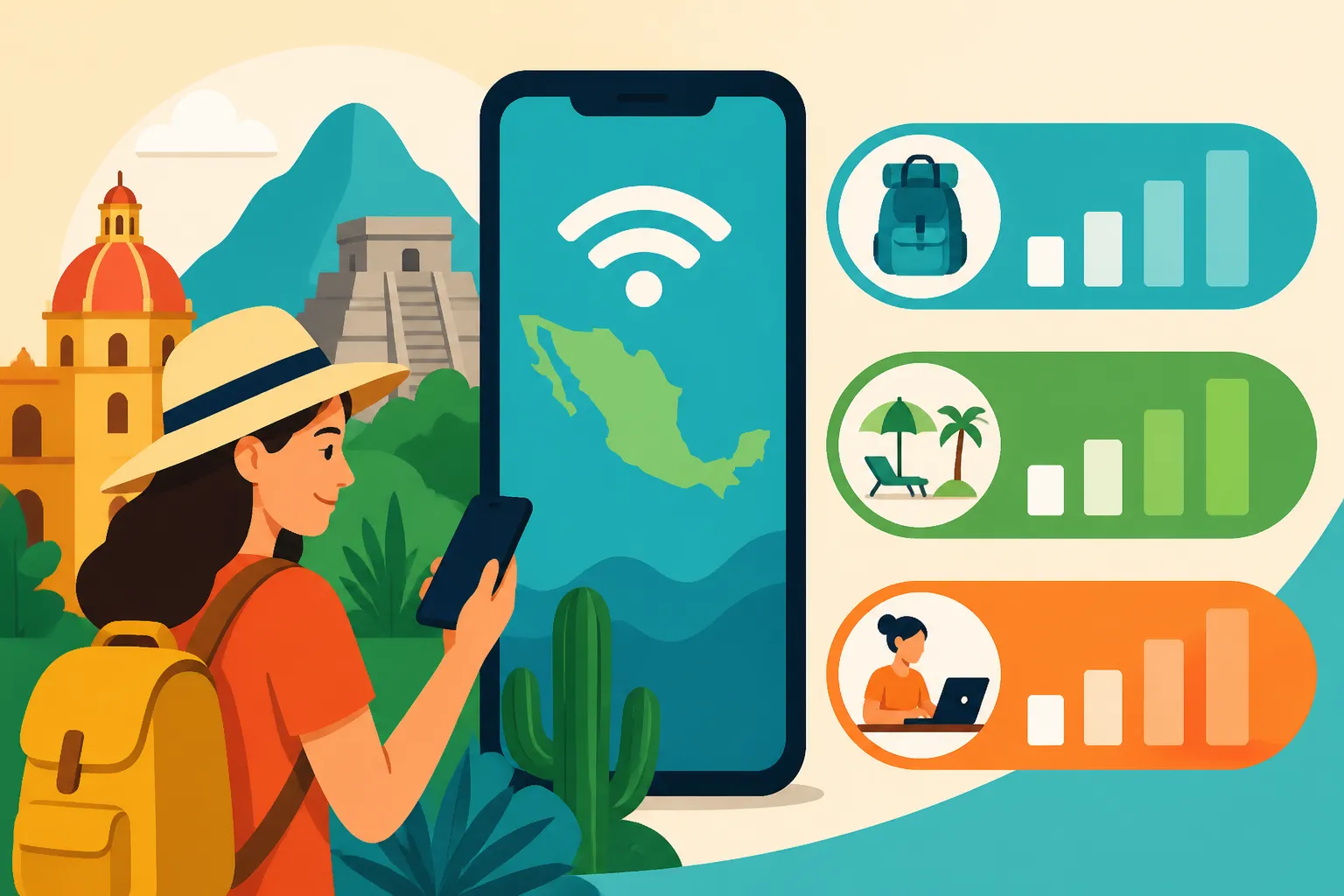
Here's a general breakdown to help you self-assess:
- Light User: Mostly messaging (WhatsApp, iMessage), checking emails, light web browsing, occasional map use. You might use 1-3 GB over a week.
- Moderate User: All of the above, plus regular social media scrolling (Instagram, Facebook), occasional photo uploads, a few short video calls, and streaming music. You could easily use 5-10 GB in a week.
- Heavy User: Frequent video streaming (Netflix, YouTube), multiple video calls (Zoom, FaceTime), gaming, heavy social media use (TikTok), large file downloads/uploads for work. This kind of usage can quickly consume 10-20+ GB in a week, sometimes even more. For those working remotely as a Digital Nomads in Mexico: Remote Work Guide for 2027, this category is a given.
If you’re unsure, check your data usage history on your phone settings for a typical week or month back home. That will give you a solid baseline to project your needs while you're traveling or living in Mexico.
Wi-Fi Availability: A Double-Edged Sword
Ah, the siren call of "free Wi-Fi!" It sounds great in theory, doesn't it? Many hotels, cafes, restaurants, and even some public squares in Mexico offer Wi-Fi. It’s easy to think you can simply rely on these hotspots and save on data. However, as any seasoned traveler or expat will tell you, relying solely on public Wi-Fi in Mexico can be a frustrating gamble.
Firstly, the availability isn't always a guarantee. That cute little coffee shop might have Wi-Fi, but it might not be working that day, or the signal could be too weak to load anything more than a text message. Secondly, speed and reliability vary wildly. You might find blazing-fast internet in a modern co-working space in Mexico City, but struggle with a dial-up-era connection in a charming but rustic posada in Oaxaca. Imagine trying to video call your family only to have the call constantly drop or freeze. Thirdly, and most importantly, security is often a concern with public Wi-Fi networks. They are often unencrypted and can be vulnerable to hackers, making activities like online banking or sharing sensitive information risky. Many expats swear by using a VPN when connecting to any public Wi-Fi, even in their own homes.
So, while Wi-Fi can certainly supplement your data plan and help you conserve it, it should rarely be your sole source of internet connectivity, especially for critical tasks like navigation, emergencies, or work. Think of it as a bonus, not a primary resource.
Data Consumption Breakdown: GB Estimates for Common Activities
Let's get down to the nitty-gritty: how many gigabytes do specific online activities actually consume? This isn't an exact science, as quality settings and background app refreshes play a role, but these are solid estimates to help you visualize your potential data use in Mexico.
Essential Communication and Navigation
These are the lifelines, the things you absolutely need when exploring an unfamiliar country. Thankfully, they're generally light on data usage.
- Messaging (WhatsApp, iMessage, Messenger): Sending text messages, even with a few photos, is very data-efficient. A typical month of heavy text-based messaging (thousands of messages) might only use 0.5 GB. Voice calls over these apps will use more, around 0.5 MB to 1.5 MB per minute.
- Email: Checking and sending emails, even with attachments, is also low data. If you’re not downloading huge files constantly, you might use 0.1-0.2 GB per week.
- Maps (Google Maps, Waze): This is crucial for getting around, whether you're driving, taking public transport, or walking. Real-time navigation uses more data than simply viewing a map. An hour of active navigation might use 5-10 MB. Crucially, you can download offline maps for specific areas in advance while on Wi-Fi, significantly reducing your data consumption for navigation.
- Light Web Browsing (news, quick searches): Skimming text-heavy websites without many videos or high-resolution images is fairly efficient. You could browse for an hour using around 20-50 MB.
For these essential tasks, a small data plan (say, 1-3 GB for a week-long trip) could be sufficient if you’re disciplined and utilize offline features.
Social Media and Casual Browsing
This category is where data usage starts to climb, mostly due to image and video content. We all want to share our incredible experiences in Mexico, right?
- Social Media (Instagram, Facebook, TikTok, X): These apps are notorious data guzzlers, especially with autoplaying videos and high-resolution images.
- Scrolling through feeds: An hour of scrolling through Instagram or Facebook could use anywhere from 100 MB to 300 MB, depending on how many videos load.
- Uploading photos/videos: Posting a few photos uses minimal data, but uploading several short video clips to stories or your feed can quickly eat up hundreds of MBs per upload. TikTok is particularly data-hungry due to its video-centric nature, potentially consuming 500 MB to 1 GB per hour of active viewing.
- Video Calls (WhatsApp, FaceTime, Messenger): A quick check-in call is fine, but extended video calls, especially in high quality, will use significant data. A 30-minute video call can use anywhere from 150 MB to 300 MB.
- Streaming Music (Spotify, Apple Music): Listening to music on the go can be a pleasant distraction, but it does use data. High-quality streaming can consume around 150 MB per hour. Downloading playlists while on Wi-Fi is a smart way to save.
If you’re a moderate user who enjoys sharing travel updates and staying connected with friends and family via video calls, you should budget for at least 5-10 GB for a week, or more for longer trips.
Streaming, Video Calls, and Heavy Usage
This is the big leagues for data consumption. If your phone is your primary entertainment device or your mobile office, you’ll need a robust plan.
- Video Streaming (Netflix, YouTube, Disney+): Watching videos, even on standard definition, uses a lot of data. An hour of Netflix on a mobile device can consume 0.5 GB to 1 GB. High definition can easily double that. Streaming regularly will decimate smaller data plans very quickly.
- Online Gaming: Mobile games, especially multiplayer ones, can be quite data-intensive, often downloading updates or communicating with servers constantly. Depending on the game, this could range from 50 MB to several GB per hour.
- Large Downloads/Uploads (Work-related): If you’re a digital nomad or simply need to transfer large files for work, this is a major factor. A single large document or a high-resolution photo batch could be hundreds of MBs or even several GBs.
- Tethering/Hotspot: Using your phone as a hotspot for your laptop or tablet will transfer your device's data consumption directly to your phone plan. This is perhaps the fastest way to burn through gigabytes. An hour of casual laptop browsing or email could be 100-200 MB, but if you're working, streaming, or updating software, it will be much, much more.
For heavy users, especially those working remotely, you're looking at needing 20 GB or more per week. Many digital nomads opt for unlimited data plans if available, or they purchase significant data bundles from reliable providers like Airalo and utilize Wi-Fi whenever possible. If you want to dive deeper into online work options, read our guide on Remote Work and the Digital Nomad Scene in Mexico.
Here's a handy table to summarize these estimates:
| Activity | Data Usage Estimate (per hour) | Example Weekly Usage (Moderate User) |
|---|---|---|
| Text Messaging (WhatsApp) | <1 MB | 1 hour/day = 7 MB |
| Email (checking/sending) | 1-5 MB | 1 hour/day = 35 MB |
| Google Maps (active navigation) | 5-10 MB | 2 hours/day = 70-140 MB |
| Light Web Browsing | 20-50 MB | 1 hour/day = 140-350 MB |
| Social Media (scrolling feeds) | 100-300 MB | 2 hours/day = 1.4 GB – 4.2 GB |
| Streaming Music (high quality) | 150 MB | 1 hour/day = 1.05 GB |
| Video Calls (WhatsApp/FaceTime) | 300-600 MB | 30 mins/day = 1.05 GB – 2.1 GB |
| Standard-Def Video Streaming | 500 MB – 1 GB | 1 hour/day = 3.5 GB – 7 GB |
| High-Def Video Streaming | 1.5 GB – 3 GB | 1 hour/day = 10.5 GB – 21 GB |
| Tethering (laptop browsing) | 100-200 MB | 2 hours/day = 1.4 GB – 2.8 GB |
Note: These are estimates. Actual usage can vary based on app settings, device, and network conditions.
Tailoring Your Data Plan: Recommendations by Traveler Type
Now that you have a clearer picture of data consumption, let's look at what kind of plan might suit your specific travel style in Mexico. It’s all about finding that sweet spot between cost, convenience, and connectivity.
The Weekend Warrior / Light User
If you're popping down to Mexico for a short jaunt—a long weekend in Puerto Vallarta, perhaps, or a quick visit to a family member in Guadalajara—you likely won't need a huge data plan. Your usage is probably limited to essential communications, checking maps occasionally, and sharing a few highlights on social media. You'll largely rely on your hotel's Wi-Fi and the Wi-Fi available at restaurants or cafes.
For this type of traveler, a smaller data package, say 1 GB to 3 GB for a 3-7 day trip, is usually more than enough. This will cover your critical needs without forcing you to overpay. You'll be able to confirm restaurant reservations, look up directions to that amazing churro stand, and send a few "wish you were here!" texts. For light users who value simplicity and immediate connection upon arrival, an eSIM provider like Airalo offers perfect, compact data packages that you can activate before you even land, bypassing the hassle of finding a physical SIM. It's truly a game-changer for short visits, letting you hit the ground running.
The Explorer / Moderate User
This category applies to those embarking on a longer vacation, perhaps a two-week adventure through the Yucatán or Central Mexico, or an expat on an initial scouting trip. You're going to be out and about, actively exploring, documenting your journey, and probably relying on your phone a fair bit for more than just essentials. This might include more extensive map usage, frequent social media updates with photos and short videos, occasional video calls with loved ones, and streaming some music while you're traveling.
For the explorer, a data plan in the range of 5 GB to 15 GB for a 1-2 week trip is a more realistic estimate. This allows for a good balance of connectivity and exploration without constant worry about running out. You'll be able to research local attractions, find the best street food, use translation apps, and keep your Instagram stories updated without having to hunt for Wi-Fi every hour. Providers like Airalo are excellent for this demographic, offering various sized packages that can be easily topped up if you find yourself using more data than anticipated. This flexibility means you're never truly stranded, and you can adjust your plan on the fly.
The Digital Nomad / Heavy User
If you're setting up shop in Mexico for an extended period, working remotely, or you simply can't imagine a day without constant, seamless internet access—streaming your favorite shows, making frequent video calls, gaming, or regularly uploading large files—then you fall into the heavy user category. Your phone is not just for leisure; it's an integral part of your daily life and often your livelihood. You'll need consistent and reliable data, not just when Wi-Fi is unavailable, but as a primary connection. Our Digital Nomads in Mexico: Remote Work Guide for 2027 can offer even more insights for this lifestyle.
For heavy users, particularly those on a longer stay or working, you should be looking at 20 GB or more per week, or even considering an unlimited data plan if available. This level of usage requires a robust solution. While local physical SIM cards from providers like Telcel can offer attractive monthly unlimited plans, they often require a local address and sometimes a Mexican bank account, which can be a hurdle for new arrivals. This is where a service like Airalo continues to shine, even for heavy users. They offer larger data bundles that are convenient to purchase and activate, and their top-up process is straightforward. Many digital nomads combine a large Airalo eSIM plan for immediate, flexible connectivity with an eventual local SIM card once they've settled and navigated the administrative hurdles. This hybrid approach ensures you're always connected, from the moment you land until you're fully established.
Choosing Your Mexico Data Solution: eSIMs vs. Traditional SIMs
Once you've got a handle on your data needs, the next big decision is how you're going to get that data. Gone are the days when your only real option was a physical SIM card. Technology has made staying connected while abroad much more streamlined, but understanding your choices is key.
The Ease and Benefits of eSIMs
For many travelers and even new expats, eSIMs are a true game-changer. An eSIM, or embedded SIM, is a digital SIM card that allows you to activate a cellular plan from a carrier without needing a physical SIM card. Your phone needs to be eSIM compatible (most newer smartphones are).
Here's why eSIMs, like those offered by Airalo, are often the hero for Mexico trips:
- Instant Activation: You can purchase and activate an eSIM plan before you even leave home. This means you land in Mexico with data already working on your phone, avoiding airport scams or the mad scramble to find a phone store.
- No Physical Swapping: No more fumbling with tiny SIM trays, worrying about losing your home SIM card, or needing a paperclip to open the slot. Your home SIM remains in your phone, allowing you to still receive calls or texts from your home number (though roaming charges for calls/texts would still apply).
- Multiple Profiles: You can store several eSIM profiles on your phone, making it easy to switch between plans or even keep a Mexican plan active alongside other international plans.
- Flexibility and Convenience: Need more data? Most eSIM providers, including Airalo, offer easy in-app top-ups. This is incredibly helpful when your usage fluctuates or you extend your trip unexpectedly.
- Cost-Effective for Shorter Stays: For trips under a month, eSIMs are often more cost-effective than international roaming and comparable to, or even cheaper than, buying a local physical SIM upon arrival, especially when you factor in the time and effort saved.
Consider Airalo as a prime example of an eSIM solution. They offer a range of data packages specifically for Mexico, from small bundles perfect for a weekend to larger ones for extended stays. You purchase, activate, and manage your plan right from their app, making it incredibly user-friendly. For detailed insights on this technology, check out our guide on Mobile Data and eSIMs for Travel in Mexico.
Physical SIM Cards: Local Providers and Considerations
Despite the rise of eSIMs, traditional physical SIM cards are still a very viable option, especially if you're planning a longer stay, want a local Mexican phone number, or if your phone isn't eSIM compatible.
Mexico's major cellular providers are Telcel, AT&T, and Movistar.
- Telcel is by far the dominant player, offering the most extensive coverage, particularly in more rural areas. Their "Amigo Kit" prepaid plans are popular among travelers and expats.
- AT&T (owned by América Móvil, the same parent company as Telcel, but operated separately) and Movistar also offer good coverage, primarily in urban centers and popular tourist destinations.
To get a physical SIM:
- Where to Buy: You can purchase SIM cards at airports, official carrier stores, OXXO convenience stores, Walmart, or other supermarkets.
- Registration: You'll typically need your passport for registration. In some cases, they might ask for a local address.
- Prepaid vs. Postpaid: Most tourists and new expats opt for prepaid plans (rechargeable credit), which are easy to manage. Postpaid plans usually require a residency card and a local bank account, which can be a hassle for new arrivals.
- Cost: Initial SIM card cost is usually low (around 50-100 pesos), and you then add a data package. You can expect to pay anywhere from 150-300 pesos (approx. $8-$17 USD) for a monthly plan with a decent amount of data (e.g., 5-10 GB). Many also offer "unlimited social media" data for apps like WhatsApp and Facebook, which can be a huge bonus.
While a local SIM can be great for extended stays, the initial setup can involve language barriers and a bit of bureaucracy. For tips on setting one up, see our post on How to Get a SIM Card in Mexico as a Foreigner.
The Pitfalls of International Roaming
Before the convenience of eSIMs and affordable local SIMs, international roaming was often the only option beyond going totally offline. While it still exists, it's generally the most expensive and least flexible choice for data in Mexico.
- Exorbitant Costs: Home carriers often charge premium rates for data roaming in Mexico. You might pay $10-$15 per day for a "roaming pass" that gives you a limited amount of data, or incredibly high per-MB rates if you don't opt into a pass. These charges can quickly rack up, leading to shocking bills upon your return.
- Unexpected Bills: It’s easy to accidentally use data without realizing it, especially with background app refreshes. Many travelers have returned home to find hundreds of dollars in unexpected roaming charges.
- Poor Service: Sometimes, even with a roaming plan, the service quality in Mexico might be inferior to what you'd get from a local provider, leading to slower speeds or dropped connections.
Unless your home carrier offers an exceptionally good roaming deal (which is rare), it's almost always smarter to opt for an eSIM like Airalo or a local physical SIM. These alternatives offer better value, more control over your spending, and often superior network performance once you're on the ground.
Practical Tips for Managing Data Usage in Mexico
No matter which data solution you choose for your Mexican adventure, proactive data management can help you stretch your gigabytes further and avoid any unpleasant surprises. A little foresight goes a long way!
Optimizing Your Phone Settings
Your smartphone is a powerful tool, but it's also a data hungry one if not properly configured. Take a few minutes to tweak some settings before you jet off.
- Data Saver Modes: Most smartphones (iOS and Android) have a "Data Saver" or "Low Data Mode" option. Enable this! It restricts background app refresh, automatically reduces video quality, and generally conserves data without you having to think about it.
- Background App Refresh: Go into your phone's settings and turn off background refresh for apps you don't need constantly updating. Social media, news, and streaming apps are big culprits here. You can allow essential apps like messaging services to continue, but cut off the rest.
- Automatic Downloads and Updates: Ensure your phone is set to only download app updates, podcasts, or cloud backups when connected to Wi-Fi. Accidentally downloading a multi-GB app update on mobile data can wipe out a small plan in minutes.
- Offline Maps and Media: This is a huge one for Mexico. Before leaving your hotel with Wi-Fi, download offline maps for the areas you plan to explore via Google Maps. Similarly, download movies, TV shows, and music playlists from your streaming services. This allows you to navigate, entertain yourself, and listen to music completely offline, saving vast amounts of data.
- High-Quality Uploads: If you're on a limited plan, consider temporarily reducing the upload quality for photos and videos on social media apps. You can always upload full-resolution versions later when you're on stable Wi-Fi.
These small changes can significantly extend the life of your data plan, giving you more freedom to use it when you truly need it for things like Spanish Language and Everyday Communication for Visitors.
Monitoring Your Data Consumption
It's easy to lose track of your data usage when you're busy exploring, but staying informed is crucial to avoid running out unexpectedly or incurring extra charges.
- Phone Settings: Both iOS and Android phones have built-in data usage trackers. Check these regularly to see which apps are consuming the most data and how much you've used since your billing cycle (or since you activated your eSIM).
- Carrier/eSIM Apps: If you're using an eSIM like Airalo, their app will typically show you your remaining data balance in real-time. For local physical SIMs, Mexican carriers usually have an app where you can check your balance or send a quick text message to an inquiry number.
- Set Data Limits: Many phones allow you to set a data warning or even a hard limit. Once you hit that limit, your mobile data will either warn you or turn off entirely, preventing overages. This is a great safeguard, especially if you're on a tight budget or a specific data package.
- Review Usage Periodically: Make it a habit to check your data usage every few days, especially if you're a moderate or heavy user. This allows you to adjust your habits on the fly. Maybe you thought you'd only stream for an hour, but you ended up watching three episodes of a show. Knowing this allows you to scale back elsewhere.
Top-Up Strategies and Emergency Data
Even with the best planning, sometimes you just need more data. Perhaps your trip extended, you found yourself without Wi-Fi for longer than expected, or a crucial work task came up.
- Easy Top-Ups for eSIMs: This is where solutions like Airalo truly shine. If you've chosen an Airalo eSIM, topping up is incredibly simple. You just open the app, select your current plan, and choose a new data package to add on. The process is quick, usually takes just a few clicks, and you're back online within minutes. This flexibility means you don't have to commit to a massive plan upfront, as you can always add more if needed.
- Recharging Local SIMs: For physical SIM cards from Telcel, AT&T, or Movistar, recharging (or recarga) is easy. You can do it at almost any OXXO, 7-Eleven, or convenience store. Just tell the cashier your phone number and how much you want to add. Many official carrier stores and even some ATMs also offer recharge services.
- Emergency Mini-Plans: Sometimes you just need a tiny bit of data to get by in a pinch. Some carriers, both eSIM and local, offer very small, short-term data bundles perfect for an hour of navigation or a quick call. Keep an eye out for these options if you're nearing the end of your main plan.
- Consider a Backup Plan: For long-term expats or digital nomads, it might be wise to have two eSIM profiles or even two physical SIM cards from different carriers if absolute connectivity is paramount. This way, if one network is down or has poor coverage in a specific area, you can easily switch to the other. You can find more comprehensive advice on long-term internet solutions in our guide to Internet and Mobile Phone Plans in Mexico: Staying Connected as an Expat.
By understanding your usage, optimizing your settings, monitoring your consumption, and knowing your top-up options, you can enjoy seamless connectivity throughout your time in Mexico, focusing on the incredible experiences rather than worrying about your data plan.
Disclaimer
Please note that immigration laws, visa requirements, and financial criteria in Mexico are subject to change. While we strive to provide the most accurate and up-to-date information, it is always recommended to consult with the official Mexican government sources (e.g., your nearest Mexican Consulate or the Instituto Nacional de Migración – INM) or a qualified immigration attorney for personalized advice. This guide is for informational purposes only and does not constitute legal or financial advice.