eSIM vs Your US Carrier’s Included Mexico Roaming: When It Actually Pays
Oh, the joy of landing in Mexico, filled with anticipation for sunshine and tacos, only to be immediately hit with the dread of a dying phone battery, "no service," or the inevitable fear of a monstrous roaming bill. It's a rite of passage for many of us, navigating the digital labyrinth of staying connected abroad. This guide is here to shed some light on one of the biggest debates for expats and frequent visitors: should you stick with your beloved US carrier's "included" Mexico roaming, or is it finally time to embrace the smarter, more flexible world of eSIMs, with a special look at how Airalo can truly transform your experience? Let's dive in.
Disclosure: This post may contain affiliate links. We may earn a commission at no extra cost to you if you make a purchase through these links. Read full disclosure.
The Frustration of Connectivity in Mexico for Expats and Travelers
Believe me, I've been there. You step off the plane, the warm Mexican air hits you, and before you even clear immigration, your brain goes straight to: "Do I have service? Can I call my Uber? What if my family tries to reach me?" The truth is, staying reliably connected in a foreign country, even one as close as Mexico, can be a surprising source of anxiety.
The Dreaded "No Service" or Sky-High Bills
It's a scenario played out countless times: you excitedly pull out your phone to snap a photo of that incredible zócalo or navigate to your Airbnb, only to be met with a stubborn "No Service" icon. Or, perhaps worse, you do have service, but a tiny, ominous notification whispers of exorbitant roaming charges eating away at your bank account. I've heard horror stories from friends who thought their "international plan" was covering them, only to return home to bills in the hundreds, sometimes thousands, of dollars. It's enough to make you want to throw your phone into the nearest cenote! This constant low-level stress about connectivity can genuinely detract from your experience, whether you're here for a short vacation or making Mexico your permanent home. You need to be able to contact people in an Medical Emergencies in Mexico: What Expats Should Know and Prepare or simply find your way around the city.
Why Your Home Plan Might Not Be Enough
Many US carriers boast about "included" or "free" roaming in Mexico. Sounds great, right? On the surface, it does. But, like many things in life, the devil is in the details – those tiny asterisks and footnotes that nobody reads until it's too late. What they often don't tell you is that while you might have data, it's typically heavily throttled after a certain threshold. That means blazing fast speeds for the first few gigs, then suddenly you're back in the dial-up era, struggling to load a simple map or send a WhatsApp message. Imagine trying to video call your grandkids with that kind of connection! Moreover, coverage can be spotty, especially once you venture beyond major tourist hubs. Your US carrier might have a roaming agreement with a local provider, but that doesn't mean you're getting the same priority or robust network access as a local customer. For many, relying solely on a home plan can be a frustrating exercise in patience and compromise. For a broader understanding of digital life here, check out our guide on Internet and Mobile Phone Plans in Mexico: Staying Connected as an Expat.
Understanding Your US Carrier's "Included" Mexico Roaming
Let's pull back the curtain on what your big-name US carriers are actually offering when they promise "free" or "included" roaming south of the border. It's a common misconception that these plans provide seamless, unlimited, high-speed connectivity, and for many, that couldn't be further from the truth.
What Major US Carriers Offer (and What They Don't Tell You)
Generally, the three major US carriers – T-Mobile, AT&T, and Verizon – do offer some form of roaming in Mexico, often bundled into their unlimited or higher-tier plans.
- T-Mobile: Often touts its "Magenta" or "Go5G" plans with included data and texting in Mexico and Canada. This is often the most generous among the big three. However, while you might get a decent amount of high-speed data (say, 5GB or 15GB), after that, your speeds are typically reduced to a crawl – think 2G speeds, which is barely enough for basic messaging, let alone streaming or even reliable navigation. Calls might be included or come with a per-minute charge depending on your specific plan.
- AT&T: Similar to T-Mobile, AT&T's unlimited plans frequently include talk, text, and data in Mexico. Again, there's usually a high-speed data cap (often around 15-25GB) before speeds are severely throttled. Their "Mexico & Canada" feature is often standard on these plans. While this sounds good, you're still beholden to AT&T's agreements with local Mexican carriers like AT&T Mexico and Telcel, and your data priority might not be top-tier.
- Verizon: Many of Verizon's "Unlimited Plus" or "Unlimited Ultimate" plans also feature Mexico and Canada benefits. They often include a set amount of high-speed data for roaming, after which, you guessed it, speeds are dramatically reduced. For those on older or more basic plans, you might need to add an international pass, which can be pricey and still come with data limitations.
The crucial detail here is the "high-speed data cap" and the subsequent throttling. While 5GB might sound like a lot, if you're relying on your phone for maps, social media, video calls, and browsing, you can chew through that surprisingly fast, especially if you're traveling for more than a few days. Once you hit that cap, your experience shifts from convenient to utterly frustrating.
The Hidden Costs and Limitations
Beyond the initial monthly fee, relying solely on your US carrier can sneakily accumulate hidden costs. What if you exceed that data cap? Many plans will automatically charge you for additional high-speed data, often at premium rates, or simply leave you with unusable 2G speeds until your next billing cycle. International calls, even within Mexico, might not be fully covered, leading to unexpected per-minute charges. Sending picture messages or using premium numbers could also incur additional fees.
Furthermore, there are limitations related to network priority and coverage. When you're roaming, you're essentially a guest on a local network. This means that during peak times or in congested areas, local customers (those with a direct Mexican SIM) will get priority over your roaming connection. This can lead to slower speeds, dropped calls, and overall less reliable service, even if the coverage map says there should be a signal. It's not about being ungrateful for the "included" service, but rather about understanding the practical realities and potential for frustration. For a truly seamless connection experience, sometimes you need to look beyond the promises of your home country provider. For those interested in deeper connectivity insights, our article on Using Your Foreign Phone in Mexico: SIM Cards and Unlocked Phones offers valuable context.
The Rise of eSIMs: A Game-Changer for Mexico Travel
If you're still relying on physical SIM cards or the often-disappointing promises of US carrier roaming, then listen up. The world of connectivity has evolved, and eSIMs are leading the charge, especially for travelers and expats in Mexico. They've genuinely changed the game, offering a level of freedom and convenience that traditional methods simply can't match.
What Exactly is an eSIM and How Does It Work?
So, what's an eSIM? Think of it as a digital SIM card, embedded directly into your phone. Instead of having a tiny piece of plastic that you need to insert and potentially lose, your phone stores multiple "SIM profiles" electronically. When you purchase an eSIM plan for a specific country or region, you download that digital profile to your device, and voilà, you're connected. There's no physical swapping of cards, no worrying about finding a pin to open your SIM tray, and certainly no risk of dropping your precious little chip on the floor of a crowded airport.
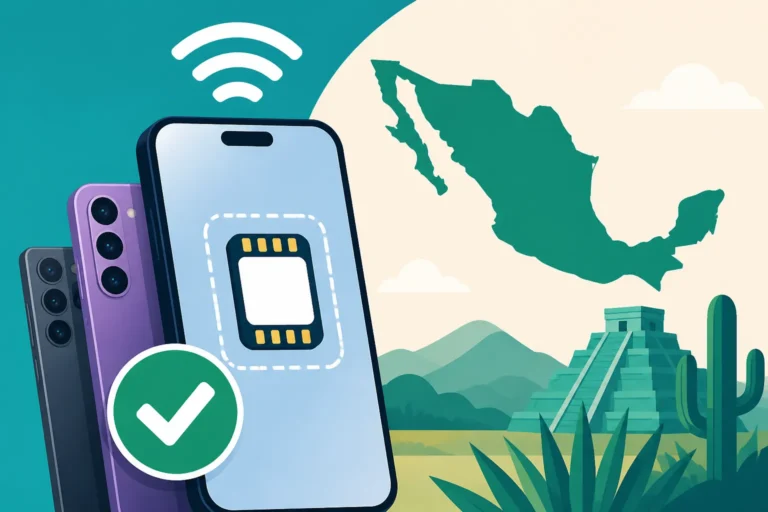
The beauty of it is that most modern smartphones (iPhone XS and newer, many Samsung Galaxy models, Google Pixels, etc.) are already eSIM compatible. You just buy a plan online, usually through an app, scan a QR code, and follow a few simple steps. Your phone treats it like a second SIM, meaning you can often keep your home country's physical SIM (and number) active for calls and texts, while using the eSIM for local data. It’s like having the best of both worlds, right in the palm of your hand. For an even more detailed look at this technology, explore Mobile Data and eSIMs for Travel in Mexico.
Why Airalo is a Top Pick for Mexico
Among the many eSIM providers out there, Airalo stands out as a genuine hero for those heading to Mexico. Why? Because they make the whole process incredibly straightforward and offer fantastic value, especially compared to the complexities and hidden costs of traditional roaming.
First off, Airalo partners with major local networks in Mexico, like Telcel, AT&T Mexico, and Movistar, meaning you're getting direct access to the same reliable infrastructure locals use. This is a crucial difference from many roaming plans that give you lower priority. With Airalo, you're not a guest; you're accessing the network like a local.
Secondly, their plans are transparent and flexible. You can choose from various data packages and durations – whether you need a small amount for a quick weekend trip or a larger bundle for a longer stay. There are no hidden fees, no surprise charges. What you see is what you get. For instance, you could grab a 5GB plan for 30 days, or a smaller 1GB plan for 7 days, all at very competitive prices. This means you have total control over your spending and your data usage. When I first discovered Airalo, it felt like a weight lifted off my shoulders, knowing I wouldn't return home to a ridiculous phone bill. It’s perfect for ensuring you stay connected, whether you're navigating Getting Around Mexico: Buses, Flights, and Car Hire or just trying to find that perfect taco stand.
The Freedom and Flexibility of eSIMs
The real power of an eSIM, particularly with a provider like Airalo, lies in the freedom it grants you. Imagine this: you land, activate your Airalo eSIM with a few taps, and immediately have fast, reliable data. Your home number remains active for receiving calls or messages from family, but all your data usage is routed through your affordable Mexican eSIM. This means no more desperate searches for Wi-Fi, no more worrying about accidentally racking up huge roaming charges, and no more being cut off from essential communication tools.
This flexibility extends beyond just cost savings. It allows you to switch plans or providers easily if your needs change. If you run out of data, you can top up instantly. If you decide to extend your trip, you can buy another plan. This level of autonomy is invaluable, especially in a foreign country where administrative hurdles can often feel overwhelming. For anyone moving to Mexico, even for a short while, understanding these connectivity options is as important as knowing about Mexico Immigration FAQs: Everything New Expats Need to Know or how to manage your finances.
Direct Comparison: eSIM (Airalo) vs. US Carrier Roaming
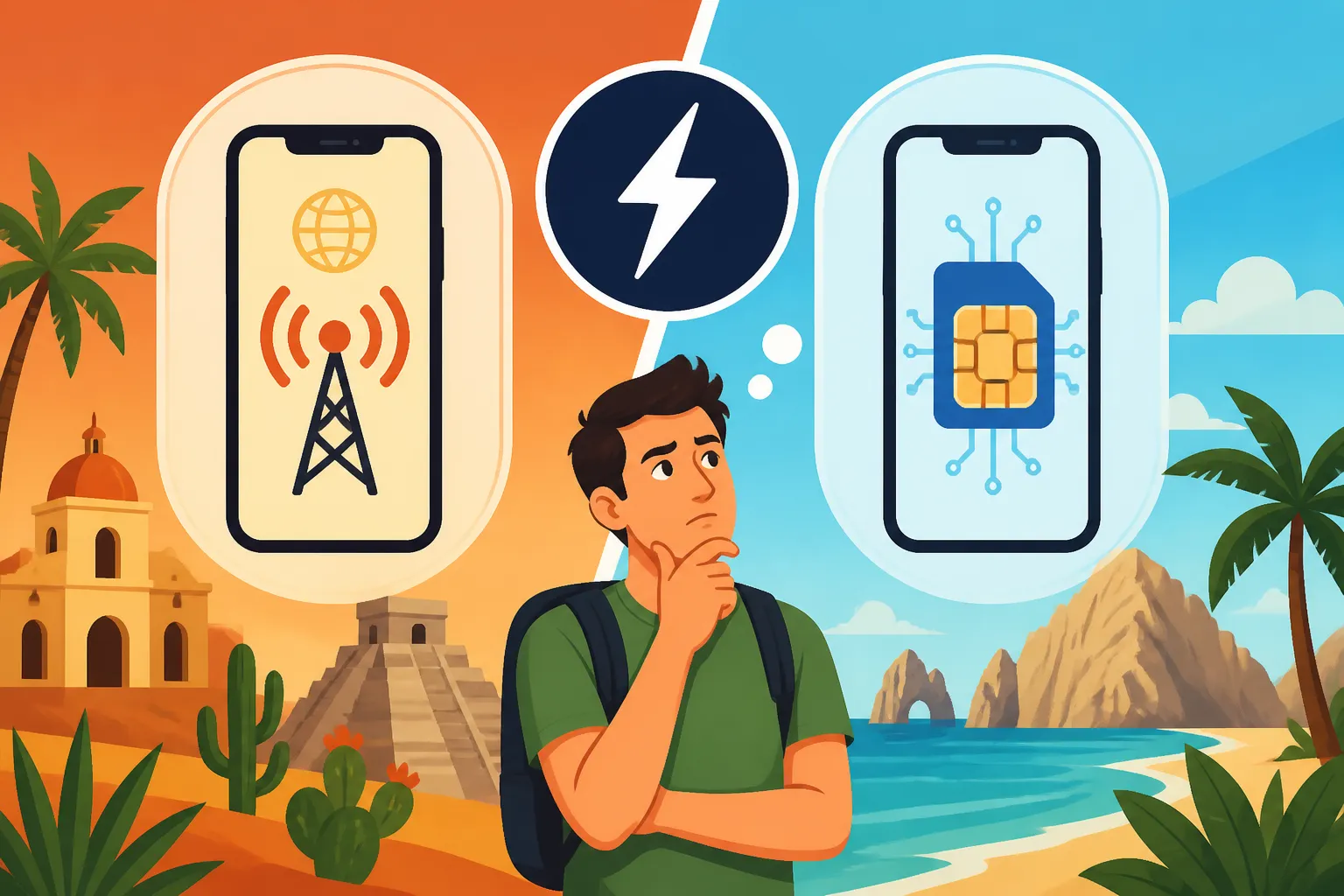
Alright, let's get down to brass tacks. You're trying to figure out the best way to stay connected in Mexico, and you've got two main contenders: your familiar US carrier's roaming package or the new kid on the block, the eSIM, with Airalo leading the charge. Which one makes more sense for your specific needs?
Cost-Effectiveness: When Each Option Shines
When it comes to your wallet, the decision between an eSIM like Airalo and your US carrier's roaming often comes down to your usage patterns and the length of your stay.
For short trips (a week or two) and moderate data usage, Airalo often comes out significantly cheaper. Let's say your US carrier offers "included" roaming with 5GB of high-speed data before throttling. If you exceed that, the additional charges can be brutal. With Airalo, you can buy a 5GB plan for 30 days for around $20-$30 USD, or even smaller, cheaper plans if you need less data. If you run out, you simply buy a top-up at a predictable price. There are no hidden fees, no bill shock. This transparency is a huge relief.
However, if you're a very light user who barely touches data and primarily relies on Wi-Fi, and your US carrier plan truly includes basic texts and calls without extra charge, then maybe, just maybe, sticking with your US plan could be marginally "free." But the risk of accidentally using too much data or making a call that isn't covered is always there.
For long-term expats or frequent visitors, the calculus changes slightly. While Airalo is excellent for its flexibility and avoiding roaming, if you're truly living in Mexico, a local Mexican SIM card from Telcel, AT&T Mexico, or Movistar often provides the best long-term value, with larger data packages and even more competitive pricing. Many expats will use an Airalo eSIM for their initial arrival or short visits, then transition to a local physical SIM once settled. But even then, Airalo remains an excellent backup or a primary choice for those who prefer not to deal with local contracts or frequent top-ups at Oxxo. Budgeting for connectivity is a key part of our guide on the Cost of Living in Mexico: 2026 Comprehensive Guide.
Network Coverage and Speed in Mexico
This is where the rubber truly meets the road. "Included" roaming from US carriers might give you a signal, but as we discussed, it often comes with significant speed limitations. Once you hit that cap, trying to load a video or even a complex webpage becomes an exercise in frustration. Imagine trying to use Google Maps to find your way through a busy market in Oaxaca City when your data speed has been throttled down to 2G – it's practically useless for real-time navigation.
Airalo, on the other hand, typically leverages the robust infrastructure of major local Mexican networks directly. This means you're not getting a throttled, low-priority connection; you're getting the same high-speed access as a local customer, depending on the network coverage in that specific area. For example, if Airalo partners with Telcel, which has the widest coverage in Mexico, you'll benefit from Telcel's network performance wherever you go. This difference in network priority and speed can be absolutely transformative for your daily life and travel experience. For reliable connectivity, especially when you're exploring the country, having decent speed makes a world of difference for everything from finding the nearest ATM to staying safe. Take a look at Staying Safe in Mexico: Practical Tips for Travelers for more on how connectivity aids safety.
Convenience and Control
The sheer convenience of an eSIM is, for many, its biggest selling point. No more finding a local store, battling language barriers to buy a SIM, or awkwardly fumbling with tiny cards. With Airalo, you download the app, choose your Mexico plan, and activate it with a few taps – often before you even leave your home country. You land in Mexico, and boom, you're connected.
This also gives you unprecedented control. You know exactly how much data you have, how long it's valid for, and how much a top-up will cost. No more mystery charges appearing on your bill weeks later. You can monitor your usage in real-time through the Airalo app, ensuring you never accidentally run out or overspend. This peace of mind is invaluable. Your home SIM stays in your phone, allowing you to receive important calls or texts from back home without incurring roaming data charges. It’s a seamless integration that simplifies international travel immensely.
Here's a quick comparison table:
| Feature | US Carrier Roaming (Typical) | Airalo eSIM for Mexico |
|---|---|---|
| Setup | Automatic, often tied to existing plan | Download app, purchase plan, activate |
| Physical SIM | Uses your existing physical SIM | No physical SIM required, digital profile |
| Data Speed | High-speed up to cap, then heavily throttled (2G) | High-speed on local networks, consistent with plan |
| Data Cost | "Included" in monthly plan, but high overage/add-on charges possible | Pay-as-you-go packages, clear pricing, no hidden fees |
| Network Access | Roaming agreement, potentially lower priority | Direct access to local networks (e.g., Telcel, AT&T Mexico) |
| Transparency | Often vague data caps and throttling details | Clear plan details, usage tracking in-app |
| Home Number | Active for all services | Active for calls/texts, eSIM for data (can keep both) |
| Flexibility | Limited, tied to carrier plans | Easy to switch plans, top-up, or try new providers |
| Ideal For | Very light users, emergency backup | Tourists, digital nomads, moderate-to-heavy data users, initial expat setup |
Practical Scenarios: Who Benefits Most from Each Option?
Understanding the technicalities is one thing, but how does this play out in real life? Let's look at a few common scenarios for expats and travelers in Mexico to see which connectivity option truly makes the most sense.
Short-Term Tourists and Digital Nomads
For short-term tourists – say, a week or two exploring Mexico City, relaxing in Tulum, or tasting mezcal in Oaxaca – an eSIM like Airalo is almost always the superior choice. You're there for a limited time, you want reliable access to maps, restaurant reviews, Uber, and WhatsApp to coordinate with your travel companions, and you absolutely do not want to return home to an unexpected bill. Airalo allows you to pre-purchase a data plan that perfectly matches your trip length and anticipated usage, and you know exactly what you're paying upfront. There’s no fiddling with physical SIMs, no struggling with Spanish at a phone store. You land, connect, and enjoy your vacation.
Similarly, digital nomads often find eSIMs to be indispensable. While many digital nomads eventually get a local Mexican SIM for long-term savings, an Airalo eSIM is fantastic for those first few weeks, or for shorter stays in different cities. You need consistent, fast internet for work, and the last thing you want is a throttled connection affecting your deadlines. Airalo offers the stability and speed of a local network, giving you peace of mind while you work remotely. It allows you to quickly get online and start working from your new temporary home, as discussed in our guide on Digital Nomads in Mexico: Remote Work Living Guide. It’s also crucial for staying connected to your work while you navigate the vibrant local scene and find the perfect coworking spot.
Long-Term Expats and Frequent Visitors
If you're an expat making Mexico your permanent home, or a frequent visitor who spends several months a year here, the situation becomes a bit more nuanced. Initially, an Airalo eSIM can be a lifesaver. It bridges the gap perfectly when you first arrive, allowing you to use your phone for crucial tasks like finding housing, communicating with real estate agents, or setting up bank accounts, without the immediate pressure of sorting out a local phone plan. This initial period is often stressful, and having seamless connectivity through Airalo can significantly ease the transition.
However, for truly long-term living, acquiring a local Mexican SIM from a provider like Telcel or AT&T Mexico might be more cost-effective in the very long run, especially if you need massive amounts of data or extensive local call minutes. These plans can be very affordable, often offering unlimited social media data and generous talk/text packages. But even then, many long-term expats keep an Airalo eSIM as a reliable backup, or for specific situations where they need to temporarily switch networks or supplement their existing plan. For instance, if your primary local network has poor coverage in a specific region you're traveling to, an Airalo eSIM on a different local network (like Movistar) can be a fantastic fail-safe. For more details on this, our article on Getting a SIM Card in Mexico (Telcel, AT&T, Movistar) is a must-read.
Families and Business Travelers
Families traveling together can also benefit greatly from the simplicity of eSIMs. Imagine trying to keep track of multiple physical SIM cards for every family member, or dealing with different roaming plans. With eSIMs, you can manage connectivity for multiple devices from one account, ensuring everyone stays connected. A parent could set up an Airalo eSIM on their child's tablet for entertainment on the go, or ensure everyone has a reliable connection in case of an emergency while exploring a new city.
For business travelers, time is money, and reliable connectivity is non-negotiable. Waiting for Wi-Fi, dealing with throttled speeds, or facing unexpected roaming bills can seriously disrupt work schedules and impact productivity. An Airalo eSIM provides guaranteed high-speed data on local networks, allowing for seamless video calls, email access, and cloud-based work without interruption. The ability to activate it instantly and manage usage transparently makes it an ideal solution for professionals who need to stay connected and productive while on the road. Knowing you have a solid connection also aids in navigating Travel Logistics in Mexico: Safety, Money, and Connectivity efficiently.
How to Get Started with Airalo for Your Mexico Trip
Getting set up with an eSIM like Airalo for your Mexico adventure is incredibly easy, and that's one of its greatest appeals. Forget the days of searching for obscure phone shops or wrestling with tiny plastic cards. This digital solution is designed for modern travelers and busy expats who value convenience and clarity.
Activating Your eSIM: A Step-by-Step Guide
The process for activating an Airalo eSIM is remarkably straightforward, even if you've never used an eSIM before. Here’s a simple breakdown:
- Check Device Compatibility: First things first, ensure your smartphone is eSIM compatible and unlocked. Most iPhones (XS and newer), many Samsung Galaxy models (S20 and newer), and Google Pixel phones (3 and newer) support eSIMs. You can usually find this information in your phone's settings or on the manufacturer's website. An unlocked phone is crucial, as carrier-locked phones often can't use eSIMs from other providers.
- Download the Airalo App: Head to your phone's app store (Apple App Store or Google Play Store) and download the official Airalo app. It’s user-friendly and intuitive.
- Choose Your Mexico Plan: Open the Airalo app and search for "Mexico." You'll see a range of data packages with different validity periods (e.g., 1GB for 7 days, 5GB for 30 days, 10GB for 30 days). Select the plan that best suits your trip length and estimated data needs. Remember to consider activities like navigation, social media, messaging, and email when estimating your usage.
- Purchase Your Plan: Once you've chosen your plan, proceed to purchase it directly within the app using your preferred payment method. The prices are clearly displayed, so there are no surprises.
- Install the eSIM: This is where the magic happens! Airalo provides clear, step-by-step instructions for installation. Typically, you'll either scan a QR code (using another device or by printing it) or follow manual installation steps directly in your phone's settings. It might look a little technical, but it’s mostly just tapping a few buttons to add a new cellular plan. Your phone will usually prompt you to label it (e.g., "Mexico eSIM").
- Activate Your eSIM: Once installed, you'll need to turn on your new eSIM line and ensure data roaming is enabled for that specific eSIM (not your primary US SIM, unless you want roaming charges!). You can usually configure your phone to use the Airalo eSIM for cellular data while keeping your primary SIM active for calls and texts. It's recommended to do this before you depart or as soon as you land.
And that's it! You'll be connected to a local Mexican network, ready to enjoy your trip without connectivity worries.
Tips for Optimizing Your eSIM Experience
To get the most out of your Airalo eSIM in Mexico, here are a few veteran expat tips:
- Buy Before You Fly: Purchase and install your Airalo eSIM before you even leave home. This way, as soon as you land and turn off airplane mode, you’re instantly connected. No stress, no delay.
- Monitor Your Usage: The Airalo app allows you to track your data usage in real-time. Keep an eye on it, especially if you're on a smaller plan, so you can top up if needed before you run out. This proactive approach saves you from being suddenly disconnected.
- Understand Dual SIM Capabilities: Learn how your phone handles dual SIMs. Most phones allow you to designate one SIM for data and another for calls/texts. You can often keep your home number active for incoming calls and texts (without using its data roaming) while using the Airalo eSIM for all your data needs. This is perfect for receiving authentication codes or staying in touch with family back home.
- Disable Data Roaming on Your Primary SIM: To absolutely avoid any accidental roaming charges from your US carrier, make sure data roaming is turned off for your primary US physical SIM in your phone's settings. Only enable data roaming for your Airalo eSIM.
- Consider a Larger Plan for Peace of Mind: If you're unsure about your data needs, it's often better to slightly overestimate and get a plan with a bit more data than you think you'll need. Running out of data when you're navigating a new city can be quite inconvenient.
- Utilize Local Wi-Fi Strategically: Even with an eSIM, smart data usage still involves connecting to secure Wi-Fi networks when available, especially for heavy tasks like large downloads or streaming. This preserves your eSIM data for when you truly need it on the go. This is a common strategy mentioned in our Travel Logistics in Mexico: Safety, Money, and Connectivity guide.
By following these steps, your connectivity experience in Mexico will be smooth, cost-effective, and stress-free, allowing you to focus on enjoying everything this incredible country has to offer.
Disclaimer
Please note that telecommunications plans, prices, and regulations in Mexico and for international carriers are subject to change without prior notice. While we strive to provide the most accurate and up-to-date information, it is always recommended to check the latest terms and conditions directly with Airalo and your respective US carrier before making any decisions. This guide is for informational purposes only and does not constitute professional advice.