Moving to Mexico from Canada: Long-Haul Trucking and Container Options
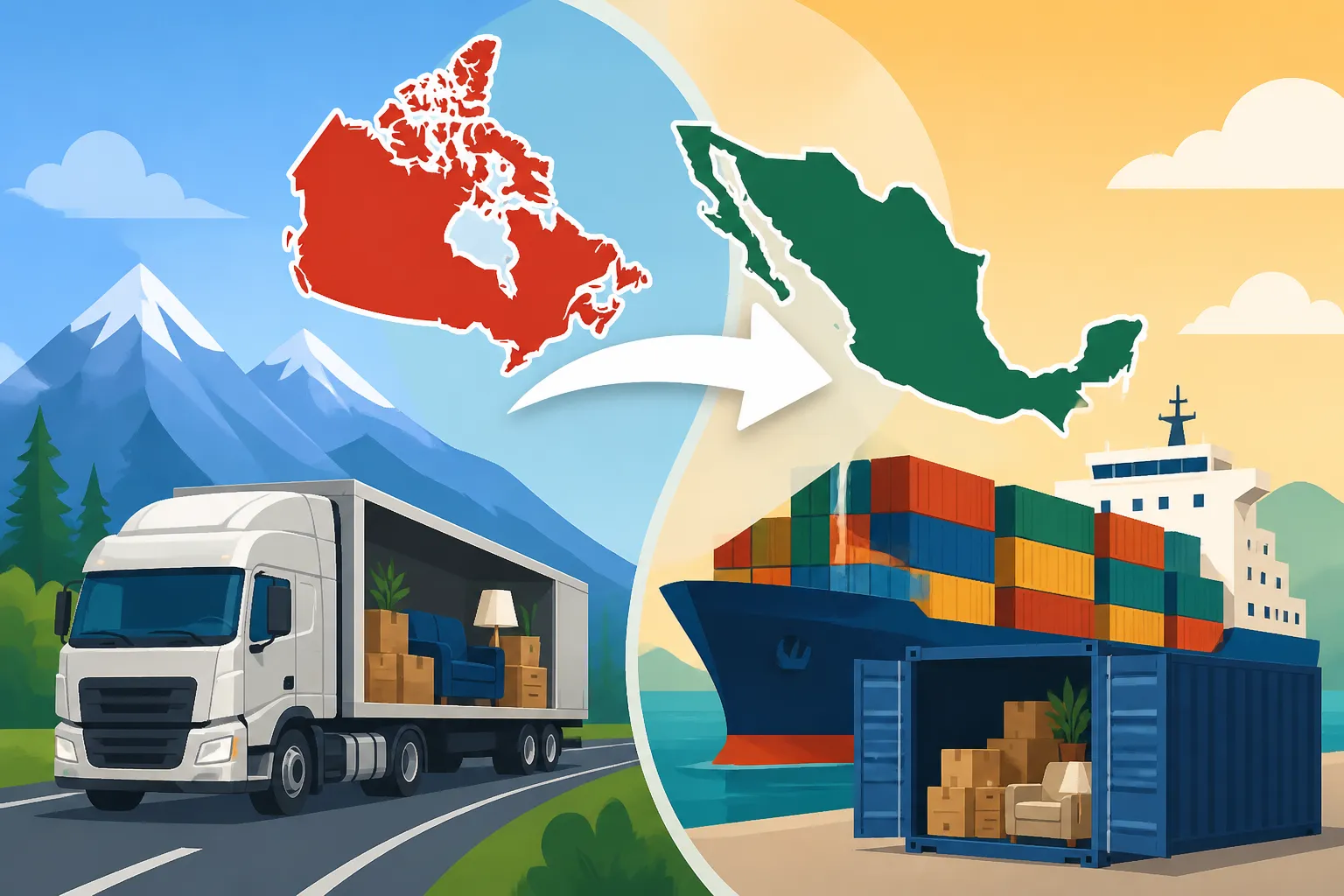
Moving your entire life from the vast Canadian landscape to the vibrant, sun-drenched streets of Mexico can feel like orchestrating a symphony with a blindfold on. The sheer logistics of packing up years of memories, furniture, and personal treasures, only to send them thousands of kilometers south, can be utterly overwhelming. This comprehensive guide is here to demystify the process of long-haul trucking and container shipping from Canada to Mexico, helping you understand your options, navigate the complexities, and ultimately ensure your cherished belongings arrive safely.
Disclosure: This post may contain affiliate links. We may earn a commission at no extra cost to you if you make a purchase through these links. Read full disclosure.
The Initial Shock of Moving Your Life South
When you first decide to make the leap from Canada to Mexico, the excitement is palpable. You dream of tacos, sunshine, and a slower pace of life. But then reality sets in: how on earth do you move a household across international borders? It's not just about throwing things into boxes; it's a colossal undertaking fraught with potential pitfalls and a truly dizzying amount of paperwork.
Bureaucracy and Customs Hurdles
Let's be real: bureaucracy in Mexico is a thing. And when it comes to importing your household goods, it can feel like you're trying to solve a Rubik's Cube blindfolded. The rules are intricate, and they seem to change depending on who you talk to, what day it is, or even the alignment of the stars. Many expats, myself included, have felt that crushing wave of frustration when dealing with endless forms, triplicate copies, and the often-vague instructions from various government agencies. You’ll quickly learn that patience is not just a virtue here; it's a survival skill. Getting your ducks in a row for your residency is one thing – read our guide on The Ultimate Guide to Mexico's Visa and Residency Options (2027 Edition) to get started – but moving your possessions is a whole other beast.
It's not uncommon to hear tales of containers being held up at the border for seemingly arbitrary reasons, or of movers demanding additional fees for "unexpected" customs issues. This isn't just an annoyance; it can throw your entire moving budget and timeline into disarray. Understanding the process, even at a high level, is your first line of defense against these common headaches. You're not just moving things; you're moving them across a significant legal and administrative divide, and Mexico’s customs officials are notoriously thorough.
The Fear of the Unknown: Logistics and Hidden Costs
The thought of your entire household, from your grandmother's antique dresser to your kids' favorite toys, traveling thousands of kilometers by truck or ship, can be anxiety-inducing. Will it be safe? Will it arrive in one piece? How long will it actually take? These are legitimate fears. The journey from Canada down to Mexico is a long one, passing through diverse climates and various checkpoints. You're entrusting a lifetime of possessions to a process that feels largely out of your control.
Beyond the physical journey, there's the ever-present worry about costs. International moving quotes can be bewildering, with terms like "port charges," "terminal handling fees," "customs brokerage," and "delivery surcharges" piling up. It's incredibly difficult to get a transparent, all-inclusive price, and many expats have been blindsided by unexpected charges upon arrival. This is where finding a reputable and transparent moving partner becomes not just important, but absolutely critical. The initial quote you get might not be the final price, and knowing what questions to ask upfront can save you a world of financial pain.
Deciphering Your Shipping Options: Full Container Load FCL vs. Less Than Container Load LCL
When you're looking at moving your goods from Canada to Mexico, you'll generally encounter two primary options: Full Container Load (FCL) and Less Than Container Load (LCL). Choosing between them depends heavily on the volume of your belongings, your budget, and your desired timeline. Each has its own set of advantages and disadvantages that can significantly impact your moving experience.
Full Container Load FCL: When Size Matters
If you're moving a substantial household – think a three-bedroom house or larger, or if you simply have a lot of bulky furniture and personal items – a Full Container Load (FCL) might be your best bet. With FCL, you get exclusive use of an entire shipping container, typically a 20-foot or 40-foot unit. This means your belongings are loaded into the container at your Canadian residence, and that container is sealed and travels directly to your destination in Mexico without being opened or shared with anyone else's items.
The main advantage here is speed and security. Since your container isn't being consolidated with other shipments, there are fewer stops and less handling involved. This generally translates to a faster transit time and significantly reduces the risk of misplacement or damage that can occur when items are repeatedly loaded and unloaded. It also offers a higher level of security, as only your items are inside the sealed container. However, FCL is a premium service, and the cost reflects that. Even if you don't fill the entire container, you're paying for the whole unit. For those with a large volume of goods and a higher budget, FCL provides peace of mind and efficiency that's often worth the investment. It’s also often preferred by those with delicate or high-value items, as the reduced handling offers an extra layer of protection.
Less Than Container Load LCL: The Shared Solution
For those with smaller households – perhaps a one-bedroom apartment, a few rooms of furniture, or just boxes of personal effects – Less Than Container Load (LCL) can be a much more cost-effective option. With LCL, your belongings are consolidated with other shipments heading to the same general region of Mexico. You only pay for the space your items occupy within the container, making it a budget-friendly choice for smaller moves.
The trade-off for the lower cost, however, is often time and handling. Because multiple shipments are being consolidated, the entire container needs to be filled before it departs. This can lead to longer transit times as your items might sit in a warehouse awaiting consolidation. Once in Mexico, the container will be opened at a local depot, and your items will be separated from the other shipments for individual delivery. This increased handling can slightly elevate the risk of damage or misplacement, so robust packing is absolutely essential. While LCL is generally slower and involves more logistical steps, for many expats moving just a portion of their lives, it offers an economical way to get their possessions to their new home in Mexico. Just be prepared for potential delays and ensure your mover provides excellent tracking.
Tackling Vehicle Shipping Separately
Many expats moving from Canada also consider bringing their car or other vehicles with them. It's important to understand that shipping a vehicle to Mexico is often a beast of its own, separate from your household goods. While it can sometimes be included in an FCL container if space allows, it usually involves specialized services and different customs regulations.
Mexico has specific rules about importing foreign-plated vehicles, and these can be quite complex, especially if you're not planning to nationalize the vehicle. If you're coming on a temporary resident visa, you might be able to bring your car on a Temporary Import Permit (TIP) for a certain period, which ties its validity to your visa. However, permanent residents cannot drive foreign-plated vehicles in Mexico; they must either nationalize them or sell them. The cost of shipping a car can vary wildly depending on the vehicle's size, the method of transport (enclosed container vs. open-air car carrier), and the distance. Beyond the shipping fees, you'll also contend with import duties, taxes, and various processing charges. It's crucial to research the latest regulations thoroughly or work with a specialized vehicle shipping broker to avoid costly mistakes. Often, for many, selling their car in Canada and buying one in Mexico proves to be a simpler and more cost-effective solution in the long run, given the complexities of vehicle importation.
The Long-Haul Trucking Expedition Across Borders
Once you’ve decided on your container type, the real journey begins. Moving your belongings from Canada to Mexico by long-haul truck is a monumental undertaking. It involves navigating thousands of kilometers, crossing an international border, and dealing with varying road conditions and logistics. This isn't your average cross-province move; it’s an intercontinental adventure for your furniture.
The Journey Itself: Routes, Transit Times, and Security
The primary route for long-haul trucking from Canada to Mexico will involve traversing a significant portion of the United States. Your movers will typically plan a route that prioritizes efficiency and security, often sticking to major highways and designated trucking corridors. While the exact path might vary, the journey usually takes several weeks, not days. From the moment your container is loaded in Calgary or Montreal until it reaches its final destination in, say, Mérida or Puerto Vallarta, you can expect transit times ranging from 3 to 6 weeks, sometimes even longer for LCL shipments due to consolidation and deconsolidation.
Security is paramount on such a long journey. Reputable international moving companies will employ experienced drivers, use GPS tracking on their trucks and containers, and adhere to strict security protocols. They understand the risks associated with cross-border transport, including potential theft or damage. It's not uncommon for trucks to travel in convoys or utilize secure overnight parking facilities. While the vast majority of goods arrive safely, the sheer distance and number of hands involved mean that choosing a mover with a proven track record of secure logistics is absolutely non-negotiable. Don’t hesitate to ask your potential mover about their security measures, route planning, and tracking capabilities.
Navigating the Mexican Customs Gauntlet
This is arguably the most critical and potentially nerve-wracking part of the entire process: crossing the U.S.-Mexico border and clearing Mexican customs. This isn't just a quick wave-through; it's a meticulous inspection process designed to ensure that all imported goods comply with Mexican law and that all duties and taxes are paid correctly. This is where your meticulously prepared Menaje de Casa (household goods list) becomes your best friend. Without it, you could face exorbitant taxes or even have your goods impounded. Our guide on Dealing with Bureaucracy in Mexico: Tips for Handling Paperwork and Appointments will give you a taste of what to expect.
Your chosen moving company will typically work with a customs broker in Mexico, who will act as your intermediary with customs officials. This broker is responsible for submitting all necessary documentation, ensuring proper classification of your goods, and facilitating the inspection process. The truck and container will undergo thorough checks, which can sometimes involve X-rays or even a physical inspection of your belongings. Any discrepancies between your actual items and your Menaje de Casa, or any undeclared prohibited items, can lead to significant delays, fines, or even confiscation. It's a moment that requires patience, precise documentation, and a knowledgeable customs partner.
The Golden Ticket: Your Menaje de Casa and Other Essentials
If there's one piece of advice I can give you regarding moving your household goods to Mexico, it's this: prioritize your Menaje de Casa. This document is not just a suggestion; it's the absolute linchpin of a smooth, affordable, and legal import process. Without it, you're essentially importing commercial goods, which comes with a very hefty price tag in duties and taxes.
Understanding the Menaje de Casa: Your Household Goods Import Permit
The Menaje de Casa is a certified inventory of your used household goods and personal effects that you're bringing into Mexico as part of your move as a resident. It's your "get out of jail free" card for customs duties on your personal belongings. The whole point is to prove to the Mexican government that you're moving your personal life, not bringing in items to sell commercially. This means your items must be clearly used and not new, commercial quantities, or restricted goods.
To obtain your Menaje de Casa, you typically need to apply at a Mexican Consulate in Canada before you move. The process involves presenting your valid temporary or permanent resident visa, a detailed inventory of every single item you're shipping (yes, every single item, down to the last spoon), proof of residence in Canada, and a signed declaration. This list needs to be incredibly specific: "box of books" isn't enough; it needs to be "10 used books of various genres." This level of detail is tedious, yes, but absolutely crucial. Any item not on the Menaje de Casa is technically subject to import duties. This is a point of major frustration for many, as the meticulousness required feels excessive, but it’s the law of the land. This permit is an extension of your residency process; you can check out details in our guide on Mexico Temporary Resident Visa: Comprehensive Guide for Expats (2026 Update).
What You Can and Can't Bring: Prohibited and Restricted Items
Just because it fits in a box doesn't mean it can cross the border without issue. Mexico has strict regulations on what can and cannot be imported, even with a Menaje de Casa. Ignoring these can lead to significant headaches, confiscation, or even legal trouble.
Commonly prohibited items include firearms and ammunition, illegal drugs, and certain types of agricultural products or plants that could introduce pests or diseases. Be very wary of bringing in anything that could be considered a weapon, even decorative ones. Restricted items are those that can be imported but require special permits or are subject to limitations. This often includes new electronics (which might be taxed even with a Menaje de Casa if they appear commercial), certain medications (refer to Bringing Prescription Medications from Home: Rules and Tips for Expats), large quantities of alcohol or tobacco (beyond personal consumption limits), and certain types of food. If you're bringing pets, there are specific health certificate requirements; our guide on Bringing Pets to Mexico: Import Requirements and Pet Care Tips can shed more light on that. It's always best to check with your moving company and the Mexican Consulate for the most up-to-date list of prohibited and restricted items before you pack. When in doubt, leave it out, or clarify it with a professional.
Insurance: Protecting Your Valuables
Imagine shipping all your worldly possessions, and something goes wrong. A box goes missing, a piece of furniture is damaged, or worse, the entire container is lost. Without proper insurance, you'd be left with nothing but a broken heart and a huge financial loss. This is why securing comprehensive transit insurance is not just an option; it's an absolute necessity for an international move from Canada to Mexico.
Standard liability coverage offered by many movers is often minimal, usually based on weight, which rarely covers the true value of your items. You need "all-risk" coverage, which covers damage or loss from the moment your items are packed until they are delivered to your new home. This type of insurance typically requires you to declare the value of your items – either a lump sum or itemized for high-value goods. Take photos of your items before packing, especially antiques or electronics, to document their condition. While it adds to the overall cost, think of insurance as a small price to pay for genuine peace of mind. After all the effort you put into getting your Mexico Temporary Resident Visa: Comprehensive Guide for Expats (2026 Update) and preparing your Menaje de Casa, you don't want to lose everything at the final hurdle.
Finding Your Moving Champion: Why a Platform Like Sirelo is a Game Changer
The thought of vetting international moving companies can feel like another full-time job. With so many variables, conflicting information, and the sheer volume of choices, how do you even begin to find a reliable partner for your Canada-to-Mexico move? This is precisely where a dedicated platform like Sirelo comes in, transforming a daunting task into a manageable process.
The Quest for Reliable International Movers
Finding a truly reliable international moving company is about more than just checking a website; it’s about entrusting your entire life to a team thousands of miles away. You need movers who are experienced in cross-border logistics, especially between Canada and Mexico. This means they understand the Menaje de Casa process inside and out, have established relationships with reputable customs brokers, and possess the necessary equipment and expertise for long-haul trucking. The challenge is sifting through countless companies, reading endless reviews (some real, some not-so-real), and trying to decipher complex service offerings. It’s a minefield for the uninitiated, and many expats have fallen victim to less-than-reputable outfits that offer lowball quotes only to hit them with hidden fees later. You can't afford to make a mistake when shipping a house full of possessions. That’s why platforms like Sirelo are built to streamline this often-stressful process, connecting you directly with vetted professionals.
Comparing Quotes and Services Seamlessly
Traditionally, getting multiple quotes for an international move involved hours of phone calls, filling out numerous online forms, and then trying to compare wildly different proposals. One company might include customs brokerage, another might not. One might offer door-to-door, while another only provides port-to-port. It’s like comparing apples and oranges, but with your life savings potentially on the line. The complexity often leads to people settling for the first seemingly reasonable quote, only to discover later that critical services were omitted or that the promised timeline was a pipe dream.
This is precisely the pain point that Sirelo addresses. It acts as a central hub where you can input your moving details once and receive multiple, comparable quotes from pre-screened international moving companies. This means you’re not just getting different prices; you’re getting offers from companies that understand the intricacies of a Canada-to-Mexico move. You can see what’s included, what’s extra, and directly compare different service levels side-by-side. This transparency is invaluable, saving you time, reducing stress, and helping you make an informed decision without the dizzying back-and-forth.
Why an Integrated Platform Like Sirelo Makes a Difference
In the complex world of international relocation, having an integrated platform like Sirelo isn’t just convenient; it’s a strategic advantage. Beyond simply providing quotes, Sirelo offers a comprehensive resource for your entire moving journey. They understand that moving to Mexico isn't just about shipping boxes; it's about navigating an entirely new administrative and cultural landscape. From detailed guides on everything from Cost of Living in Mexico: 2026 Comprehensive Guide to how to get your How to Get an RFC in Mexico, Sirelo empowers you with information.
What truly sets Sirelo apart is its commitment to quality and transparency. They partner with reputable, experienced international movers who are adept at handling the unique challenges of a Canada-to-Mexico transition, including crucial details like the Menaje de Casa. This means you're not just getting a random list of companies; you're getting access to a network of trusted professionals who have proven their expertise. Furthermore, Sirelo acts as a centralized point of contact, offering support and guidance throughout your moving process. In a journey that is often isolating and overwhelming, having a partner like Sirelo that simplifies the complex, connects you with reliable services, and provides essential information is truly invaluable. It’s your compass in the sometimes-turbulent waters of international relocation, making your move from Canada to Mexico as smooth and stress-free as possible.
Preparing for the Great Migration: Packing and Documentation
The planning stages of your move from Canada to Mexico are crucial, and they extend far beyond just choosing a mover. How you pack your belongings and how meticulously you prepare your documentation can make or break your entire shipping experience, especially when dealing with international customs.
Strategic Packing for a Cross-Continental Move
Packing for a move across the street is one thing; packing for a long-haul journey across international borders is an entirely different beast. Your belongings will endure significant transit, multiple handling points, and potentially varying climates. Therefore, robust and strategic packing is essential. Don’t skimp on quality packing materials. Invest in strong, double-walled moving boxes, plenty of packing paper, bubble wrap, and heavy-duty packing tape. Each box should be filled snugly to prevent items from shifting and breaking, but not overstuffed to the point of bulging. For fragile items, use a generous amount of protective cushioning and consider custom crating if your mover offers it.
Crucially, every single box needs to be clearly labeled on multiple sides with its contents (as per your Menaje de Casa), the room it belongs in, and your name and destination address. Numbering your boxes sequentially is also a smart move, allowing you to easily track them against your inventory and quickly identify if any are missing upon arrival. Think about how items will be unloaded and unpacked in your new Mexican home, which might not have the same space or resources as your current Canadian one. Having a "first open" box with essentials like bedding, towels, basic toiletries, and a Building a First Aid Kit: Essential Medical Supplies for Expats in Mexico is a lifesaver.
The Paper Trail: Inventory, Customs Forms, and Personal Documents
In the world of international moving, documentation is king. A meticulous paper trail is your best defense against customs delays, unexpected fees, or lost items. Your Menaje de Casa, which we’ve discussed in depth, is the centerpiece, but it’s far from the only document you'll need. You'll also require copies of your passport, your Mexican residency visa (temporary or permanent), proof of address in Mexico, and potentially other identification documents.
Beyond the official customs forms your moving company and their broker will handle, you should create your own detailed inventory list of everything you're shipping. This list should ideally mirror your Menaje de Casa, noting the contents of each numbered box. Take photos or even video of valuable items before they are packed, and definitely photograph the condition of your packed boxes before they leave your Canadian home. Keep all original critical documents – passports, visas, birth certificates, marriage certificates, academic degrees, and banking information – with you, in a secure carry-on bag, rather than shipping them with your household goods. Consider having copies of everything, both physical and digital, saved on a cloud service. For Taxes in Mexico for Expats: A Complete Guide to Income Tax and More or Money-Saving Tips: How Expats Can Cut Costs Living in Mexico, proper financial documentation is vital too. Being overly prepared with your documentation will save you immense stress and potential delays down the line.
Comparative Overview: FCL vs. LCL Shipping from Canada to Mexico
To help you visualize the key differences between your primary container shipping options, here's a quick comparison:
| Feature | Full Container Load (FCL) | Less Than Container Load (LCL) |
|---|---|---|
| Volume | Best for large households (3+ bedrooms) or large items. | Best for smaller households (1-2 bedrooms) or partial shipments. |
| Cost | Higher overall cost, but cost-effective per cubic meter for large volumes. | Lower overall cost, but higher cost per cubic meter for small volumes. |
| Transit Time | Generally faster, as it's a direct route. | Generally slower, due to consolidation and deconsolidation. |
| Security | Higher security, as container is sealed and dedicated to your goods. | Moderate security, as container is shared and handled more. |
| Handling | Less handling, loaded once, unloaded once. | More handling, loaded, consolidated, deconsolidated, then unloaded. |
| Flexibility | Less flexible with space; you pay for the whole container. | More flexible; you only pay for the space you use. |
| Ideal For | Those prioritizing speed, security, and have many items. | Those prioritizing budget and have fewer items. |
Important Disclaimer
As a lifestyle blogger and expat, I share information based on personal experience and general knowledge. While I strive for accuracy and provide up-to-date information, immigration laws, customs regulations, and financial policies in Mexico are subject to change. This article is intended for informational purposes only and does not constitute legal, financial, or immigration advice. It is highly recommended that you consult with official sources, professional immigration lawyers, customs brokers, and financial advisors for personalized advice tailored to your specific situation before making any decisions related to your move to Mexico.