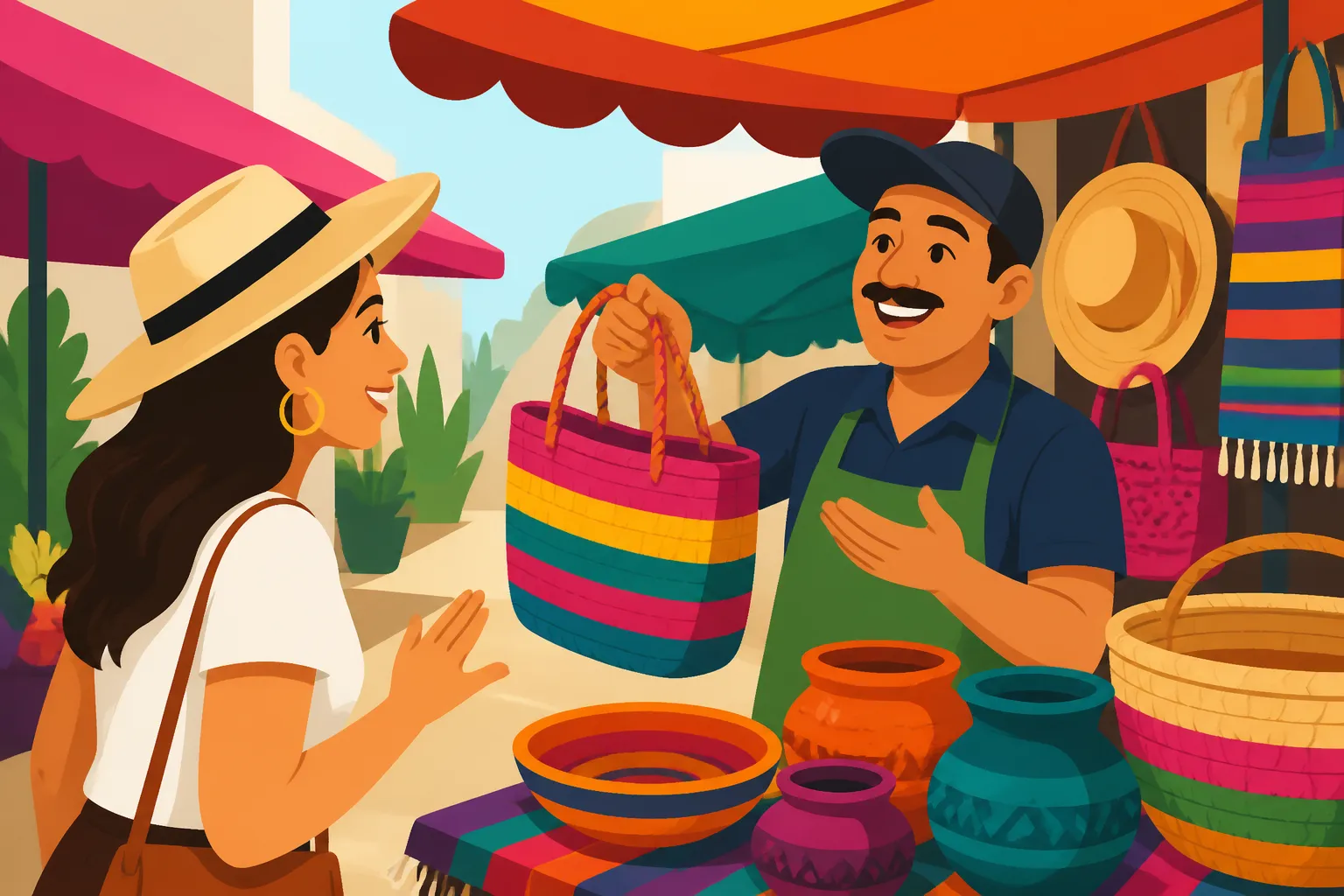
How to Bargain at a Tianguis (Street Market) in Mexico
When you first arrive in Mexico, the bustling, vibrant energy of a tianguis, or traditional street market, can be both exhilarating and a little overwhelming. For many, the thought of haggling for prices, something common here but often foreign to those from other cultures, can feel incredibly daunting. But don't worry, navigating the ins and outs of bargaining at a Mexican street market is a skill every expat and tourist can master with a little practice and a friendly attitude, and this guide will show you exactly how to do it without feeling awkward or disrespectful.
Disclosure: This post may contain affiliate links. We may earn a commission at no extra cost to you if you make a purchase through these links. Read full disclosure.
Understanding the Tianguis Culture: More Than Just a Market
To truly embrace the art of bargaining in Mexico, you first need to understand the tianguis itself. These aren't just places to buy things; they're social hubs, cultural institutions, and often the lifeblood of local communities. They're a world away from the sterile aisles of a supermarket, offering a sensory explosion that defines daily life for millions.
What is a Tianguis, Anyway?
The word tianguis comes from Nahuatl, the Aztec language, and it refers to an open-air market that has been a central part of Mexican life for centuries, long before the Spanish arrived. Unlike permanent indoor markets (mercados), a tianguis usually pops up on specific days of the week in different neighborhoods. One day it might be a sprawling collection of stalls filling a town square, the next it's gone, leaving no trace until its next scheduled appearance.
These markets are an incredible kaleidoscope of goods. You'll find everything from fresh produce, herbs, and spices piled high in colorful pyramids, to clothes, shoes, household items, tools, and of course, a treasure trove of handicrafts. The atmosphere is always lively, filled with vendors calling out their prices, the aroma of sizzling street food, and a constant murmur of conversations. It’s an immersive experience that really connects you with local life, far more than any tourist trap store ever could. If you're looking to truly experience local flavors, learning to navigate places like these is key, and it goes hand-in-hand with understanding local customs like bargaining, which are so important to Mexican Social Etiquette for Visitors: Greetings and Warmth.
Why Bargaining is Part of the Experience
For many visitors, the idea of negotiating a price feels uncomfortable, almost confrontational. However, in a tianguis, especially when it comes to certain types of goods, it's often an expected and even enjoyable part of the transaction. It's not about trying to cheat someone out of their livelihood; it's a polite dance between buyer and seller, a way to establish a connection and reach a mutually agreeable price.
Think of it less as a battle and more as a conversation. Vendors often build a little wiggle room into their initial prices, especially for items they expect tourists to buy. They anticipate a bit of friendly haggling, and when done respectfully, it can even be seen as a sign that you appreciate their craft and the effort involved, rather than just accepting the first number thrown your way. This isn't about getting the absolute lowest price possible, but about engaging in a cultural exchange.
When Bargaining is Appropriate
This is where many first-timers get confused. It’s crucial to understand that not everything is up for negotiation. Here's a quick breakdown:
- When to Bargain (Often Appropriate):
- Handicrafts and Souvenirs: This is the prime category for haggling. Think pottery, textiles, jewelry, artwork, leather goods, and other handmade items, especially if you're buying directly from the artisan or a small independent stall. Often, the vendor will expect you to try to negotiate a little.
- Higher-Priced Items: If you're looking at something that costs several hundred or even thousands of pesos, like a large piece of art, a huipil (traditional blouse), or a custom-made item, there's usually more room for negotiation.
- Buying Multiple Items from One Vendor: If you're purchasing several pieces from the same stall, it's perfectly acceptable to ask for a "precio de mayoreo" (wholesale price) or a discount for buying in bulk.
- When NOT to Bargain (Generally Inappropriate or Disrespectful):
- Food and Produce: Never haggle over the price of fruits, vegetables, meat, bread, or prepared street food like tacos or quesadillas. These are usually priced fairly, and margins are often very slim for daily essentials. It can be seen as disrespectful to the vendors who are often working incredibly hard for minimal profit.
- Fixed-Price Stores: If a store has clear price tags and looks more like a conventional shop than a market stall, prices are almost always fixed.
- Transportation: Don't try to haggle with taxi drivers (unless it's a sitio taxi where a rate might be pre-negotiated for a specific route, or you're trying to establish a fair price before getting in, if a meter isn't used), or bus ticket vendors.
- Services: Haircuts, massages, or other services usually have set prices.
Remember, the goal isn't to be cheap, but to participate in a cultural tradition. Understanding the nuances helps you approach the transaction with confidence and respect. When visiting specialized markets known for their crafts, like those found in Oaxaca: Food, Crafts, and Culture, this distinction becomes even more important.
The Art of the Deal: Practical Bargaining Strategies
So, you've identified an item where bargaining is appropriate. Now what? It's time to put on your friendly negotiator hat and engage. This isn't about aggressive tactics, but about a pleasant back-and-forth.
Observation and Preparation
Before you even open your mouth, take a moment to observe. Walk around the entire tianguis first. Look at similar items at different stalls. How do the prices compare? Some vendors might be starting higher, giving themselves more room to come down. This helps you get a feel for a fair price range. Don't show too much interest in an item right away if you plan to bargain; a casual glance is often enough.
Next, arm yourself with a few key Spanish phrases. While many vendors in tourist areas might speak some English, making an effort in Spanish shows respect and can often lead to a better deal. Phrases like ¿Cuánto cuesta? (How much does it cost?), ¿Me puede dar un mejor precio? (Can you give me a better price?), ¿Es su mejor precio? (Is that your best price?), Está muy caro (It's too expensive), and Lo compro por X pesos (I'll buy it for X pesos) are incredibly useful. Don't forget your polite greetings like Hola, Buenos días, Gracias, and Por favor. Even if your Spanish isn't perfect, the effort is appreciated. You can find more useful phrases in guides like Survival Spanish for Travelers in Mexico: Key Phrases.
Starting the Conversation
Once you've identified an item and observed prices, approach the vendor with a warm smile and a greeting. Ask the price ¿Cuánto cuesta? or ¿En cuánto lo tiene? (How much do you have it for?). Listen to their initial offer. Often, especially if they perceive you as a tourist, this price might be a bit inflated.
Now, for your counter-offer. A good rule of thumb is to start your counter-offer at about 50-70% of their initial asking price, but be prepared to meet somewhere in the middle. For example, if they say 200 pesos, you might offer 100 or 120 pesos. Never insult the item or act disinterested in a rude way. Instead, you can say something like, Es muy bonito, pero está un poco caro para mí. ¿Me lo deja en X pesos? (It's very beautiful, but it's a bit expensive for me. Can you leave it for X pesos?).
The vendor will likely counter your offer. This is where the friendly back-and-forth begins. It’s a dance. You go up a little, they come down a little. Be patient and keep smiling.
Reading the Room
Pay attention to the vendor’s body language and tone. Are they engaging playfully? Or do they seem firm on their price? If they say Es el mejor precio (It's the best price) or Ya está rebajado (It's already discounted) with a firm but polite tone, they might genuinely be at their lowest. Pushing too hard at this point can be counterproductive and even rude.
Sometimes, walking away (slowly) can be an effective tactic. If the vendor is willing to go lower, they'll often call you back with a better offer. If they don't, then you know you've either hit their rock-bottom price or they're simply not interested in negotiating further. Don't feel bad if you walk away; sometimes the prices are genuinely too high for your budget, or you find a better deal elsewhere. This is just part of the market dynamic.
The Power of a Bundle
If you’re eyeing several items from the same stall, this is your strongest bargaining chip. Gather all the items you want and ask for a total price. Then, politely ask, ¿Si compro todo, me puede hacer un descuento? (If I buy everything, can you give me a discount?).
For example, if you're buying three keychains at 50 pesos each, and a small ceramic piece at 100 pesos, the total would be 250 pesos. You could ask, Si llevo todo esto, ¿me lo deja en 200 pesos? They'll often be more flexible when you're making a larger purchase, as it guarantees them more sales. This is a win-win, as you get a better deal, and they move more inventory. This strategy is particularly useful when shopping for Mexican Crafts (Artesanías): What to Buy and Where.
Etiquette and Respect: Bargaining with Grace
Bargaining in Mexico is as much about cultural understanding as it is about saving money. Doing it with grace and respect will enhance your experience and ensure positive interactions.
Be Realistic and Respectful
Remember that for many vendors, especially in smaller towns or rural areas, selling their goods is how they feed their families. Don't aim for ridiculously low prices that devalue their work. A good bargain is one where both parties feel good about the deal. If you manage to shave off 10-20% from the initial tourist price on a handmade item, that’s a good result. Trying to get something for next to nothing is disrespectful.
It's also important to avoid comparing prices too loudly with other stalls or trying to make one vendor compete directly with another. Keep your negotiations private and focused on the person you're speaking with.
Keep it Friendly
A smile goes a long way. Use humor, be polite, and maintain a friendly demeanor throughout the negotiation. This isn't a fierce business negotiation; it's a casual exchange. Avoid any aggressive tactics, loud voices, or showing frustration. If you can’t agree on a price, simply smile, say Gracias, pero es mucho para mí (Thank you, but it's too much for me), and move on. The goal is to leave both you and the vendor feeling positive, even if a sale doesn't happen.
This friendly approach is a core part of Mexican interactions, whether you're at the market or just navigating daily life. Understanding these small cultural nuances can significantly improve your experience. While it's not strictly "tipping," the general friendly nature applies when you're deciding How Much Should You Tip in Mexico? for other services.
Cash is King
When shopping at a tianguis, always assume you'll be paying with cash, specifically Mexican pesos. While some larger stalls might have a card reader, especially in more touristy areas, it's rare. Small vendors often rely solely on cash transactions. Furthermore, paying with large bills for a small purchase can be difficult for vendors, who may not have much change.
Before heading to the market, make sure you have plenty of small denominations (20, 50, 100, and 200 peso notes). This not only makes transactions smoother but can also subtly influence a negotiation. If a vendor sees you have exact change or smaller bills, they might be more inclined to close the deal quickly. Avoid trying to pay with US dollars unless explicitly advertised, as the exchange rate they offer will almost certainly be unfavorable to you. For more on handling money, check out Cash vs Card in Mexico: What Visitors Should Know.
Saying No Gracefully
It happens. Sometimes you engage in the negotiation, but the price just isn't right, or you change your mind. It’s perfectly fine to decide not to buy. Simply say, No, gracias (No, thank you), Gracias por su tiempo (Thank you for your time), or Lo voy a pensar (I'm going to think about it) with a polite smile, and move on. Don't feel obligated to buy just because you asked for a price. Lingering and repeatedly saying "no" can be awkward, so a swift and polite exit is usually best.
Common Pitfalls and How to Avoid Them
Even with the best intentions, it's easy to stumble when you're new to bargaining. Being aware of common issues can help you avoid awkward situations.
The Language Barrier
Even if you know a few phrases, a full negotiation can get complicated quickly, especially if the vendor speaks quickly or uses local slang. Don't let this deter you.
- Use simple Spanish: Stick to direct questions and phrases.
- Numbers: Learn your numbers in Spanish! This is non-negotiable for bargaining. Practice saying them clearly.
- Show on fingers/calculator: If you're struggling with a number, don't be afraid to show it on your fingers or even pull out your phone calculator to clarify.
- Translation apps: Have a translation app ready on your phone (downloaded for offline use!) for trickier phrases, but use it sparingly to avoid breaking the flow of conversation.
Remember that patience is key. Most vendors are very understanding if you're making an effort to speak Spanish, even if it's imperfect. The desire to communicate bridges many gaps. Learning a bit about Polite Spanish in Mexico: Usted vs Tú for Visitors can also help in showing respect during these conversations.
Getting Taken for a Ride
It’s an unfortunate reality that some vendors, especially in highly trafficked tourist areas, might offer a significantly higher "gringo price" to foreigners. This is why the initial observation step is so important. By comparing prices across multiple stalls, you can get a better sense of a fair price.
If you feel like a price is truly outrageous and the vendor isn't budging or being reasonable, it's okay to just walk away. There are always other vendors, and other tianguis. Don't let the pressure get to you. Sometimes, simply having a local friend with you can make a huge difference in getting a more local price, as vendors often adjust their initial offers based on who they're talking to. This is one of those Common Cultural Surprises for First-Time Visitors to Mexico that new expats might encounter.
Losing Your Cool
The market environment can be hectic, noisy, and sometimes hot. It’s easy to get frustrated, but losing your temper or becoming impatient during a negotiation is a cardinal sin. It's considered extremely rude and will likely end any chance of a good deal, or even a pleasant interaction.
Maintain your composure, keep smiling, and approach the process with a light heart. If you're feeling overwhelmed, step away from the immediate bargaining situation, grab an agua fresca or a snack, and take a breather. Remember, bargaining is meant to be a fun, cultural experience, not a stressful one. Enjoy the hustle and bustle, soak in the sights and sounds, and let the process unfold naturally. This patience will serve you well in many aspects of Mexican life, not just at the tianguis. For broader advice on getting around, insights from Mexico City for First-Time Visitors: Neighborhoods and Highlights often include similar advice on maintaining patience in busy environments.
Here’s a quick table with some essential Spanish phrases for your next tianguis adventure:
| English Phrase | Spanish Phrase | Pronunciation (Approx.) | Usage |
|---|---|---|---|
| Hello / Good day | Hola / Buenos días | OH-lah / BWEH-nos DEE-as | Always start with a greeting! |
| How much does it cost? | ¿Cuánto cuesta? | KWAN-toh KWES-tah | Your first question for a price. |
| How much for this? | ¿En cuánto lo tiene (este)? | en KWAN-toh lo TYEH-neh (ES-teh) | Alternative for asking price. |
| Is it your best price? | ¿Es su mejor precio? | es soo meh-HOR PREH-syoh | Polite way to ask if they can go lower. |
| It's a bit expensive. | Está un poco caro. | es-TAH oon POH-koh KAH-roh | Gentle way to suggest a lower price. |
| Can you give me a better price? | ¿Me puede dar un mejor precio? | meh PWEH-deh dar oon meh-HOR PREH-syoh | Direct but polite request for a discount. |
| I'll give you X pesos. | Le doy X pesos. | leh DOY X PEH-sos | Your counter-offer. |
| If I buy several, can you give me a discount? | ¿Si compro varios, me da un descuento? | see KOM-pro VAH-ryos, meh da oon des-KWEN-toh | For buying multiple items. |
| No, thank you. | No, gracias. | noh, GRAH-syas | Polite refusal. |
| Thank you very much! | ¡Muchas gracias! | MOO-chas GRAH-syas | Essential politeness. |
Bargaining at a tianguis in Mexico is a wonderful way to immerse yourself in the local culture, interact with people, and come home with unique treasures. With a friendly attitude, a few Spanish phrases, and a good sense of humor, you’ll be haggling like a pro in no time!
Disclaimer
The information provided in this guide is for general informational purposes only and does not constitute professional advice. While we strive to provide accurate and up-to-date information, rules and customs in Mexico can change. Always exercise common sense, prioritize your safety, and consult with local experts or official sources when making significant decisions.