How to Avoid Sargassum Seaweed on Mexico’s Caribbean Coast
The allure of Mexico's Caribbean coast – with its famous turquoise waters and white sand beaches – is undeniable. However, for years now, sargassum seaweed has been an uninvited, sometimes overwhelming, visitor, causing concern for many travelers. If you're planning a trip to hotspots like Cancun, Playa del Carmen, or Tulum, you're likely wondering how to navigate this natural phenomenon. Don't fret; this guide will help you understand sargassum, anticipate its presence, and equip you with strategies to ensure your Mexican getaway remains spectacular.
Disclosure: This post may contain affiliate links. We may earn a commission at no extra cost to you if you make a purchase through these links. Read full disclosure.
Understanding Sargassum: What It Is and Why It's Here
Let's start with the basics, because understanding what sargassum is can help you wrap your head around why it's such a persistent problem. For many years, the mention of seaweed on a beach vacation conjured images of delicate green strands washing ashore, easily stepped over. Sargassum is a whole different beast. It's a type of brown macroalgae that floats in vast mats across the open ocean, forming what some scientists call the Great Atlantic Sargassum Belt. Unlike other seaweeds that attach to the ocean floor, sargassum is pelagic, meaning it floats freely, relying on currents and winds to carry it wherever they may.
Now, why has it become such an issue, particularly for Mexico's Riviera Maya? Well, the science points to a few interconnected factors. Firstly, the warming ocean temperatures likely play a role in its proliferation. Sargassum thrives in warmer waters. Secondly, and perhaps more significantly, increased nutrient runoff from agricultural and industrial activities in rivers flowing into the Atlantic – from as far away as the Amazon – acts as a super-fertilizer for this algae. These nutrients, combined with changing ocean currents, have led to unprecedented amounts of sargassum washing up on Caribbean shores, including Mexico's. It's not a local problem; it's a massive, regional environmental challenge, and Mexico happens to be right in the path of some of the heaviest flows.
When it arrives, sargassum isn't just unsightly; it brings a distinct, often overpowering, odor as it decomposes in the sun – think rotten eggs. It also makes swimming virtually impossible, turning those beautiful clear waters into a murky, brown soup. For local businesses, especially those that rely on the pristine beach image, it's a devastating blow, impacting everything from hotel bookings to snorkeling tours. It's a truly frustrating situation for everyone involved, from the tourists who saved up for their dream vacation to the locals whose livelihoods depend on those very beaches.
Knowing When and Where to Go: Predicting Sargassum
Okay, so we know what it is and why it's showing up. Now, for the million-dollar question: how do you avoid it? While there’s no magic crystal ball, understanding seasonal patterns and geographic variations can significantly improve your chances of a sargassum-free experience.
Seasonal Patterns
Generally speaking, sargassum season in Mexico's Caribbean usually runs from late spring through early fall, with peak months often falling between May and August. During these months, the warmer waters and more active Atlantic currents tend to carry larger quantities of seaweed towards the coast. This isn't a hard and fast rule, of course. Mother Nature loves to throw curveballs, and you might see periods of heavy sargassum outside these windows or relatively clear days during what should be peak season. However, planning your trip during the cooler, drier months – typically from November to February – generally offers the best odds for minimal sargassum. This period aligns with what many consider the best time of year to visit Mexico for weather, too!
I've heard countless stories of people planning their dream trip for July, only to arrive and find the beaches completely covered. It's heartbreaking, truly. While you can't guarantee anything, scheduling your trip for January or February significantly reduces the risk. But even then, always keep an eye on current conditions as your travel date approaches.
Geographic Variations and Protected Areas
This is where local knowledge really comes in handy. Not all Caribbean beaches are affected equally. The prevailing winds and ocean currents play a huge role. Generally, east-facing beaches – like those in Tulum, Playa del Carmen, and much of Cancun – are more susceptible to receiving large quantities of sargassum because they're directly in its path. Imagine a conveyor belt of seaweed moving from the open ocean straight to these shores.
However, certain areas offer a degree of natural protection. For instance, west-facing beaches or those nestled within large bays tend to fare much better. The best examples of this are the beaches on Isla Mujeres and Cozumel. Because these islands sit offshore, they often act as natural barriers, or the currents simply carry the sargassum past their more sheltered sides. Plus, the west side of Isla Mujeres faces Cancun, meaning it's often calm and clear even when the main Cancun hotel zone is battling seaweed. Cozumel also has many protected areas on its west coast, where cruise ships dock and dive boats depart. You might also find some relief in areas protected by large breakwaters or natural reefs that can disrupt the seaweed's flow, though these are less common. This local difference is a crucial tip if you're planning your trip to the Yucatán Peninsula: Beaches, Ruins, and Cenotes.
Forecasting and Tracking Tools
Since sargassum became a major concern, several resources have popped up to help travelers track its presence. These are invaluable tools, though it's important to remember they offer predictions and current conditions, which can change rapidly with the weather.
- Local Facebook Groups: Search for "Sargassum Report [Your Destination]" (e.g., "Sargassum Report Playa del Carmen"). These groups are often updated daily with photos and firsthand accounts from locals and tourists. This is often the most current and realistic picture you'll get.
- University Research: Institutions like the University of South Florida's Optical Oceanography Lab often publish satellite-based sargassum outlooks. These are more scientific and regional but can give you a broad idea of what's heading towards the coast.
- Hotel Websites/Webcams: Some hotels in affected areas now feature "sargassum cams" or daily updates on their websites to be transparent with guests. It’s always worth checking a few different hotel sites in your chosen area.
- Governmental Agencies: Mexico's Quintana Roo state government or environmental agencies sometimes release updates, though these tend to be less frequent and detailed than community-led efforts.
I personally rely heavily on those local Facebook groups. They give you the real scoop, from people on the ground, often with timestamped photos. It’s far more reliable than a generic weather forecast for seaweed.
| Season/Months | Sargassum Likelihood (Caribbean Coast) | General Weather | Best Locations for Clear Water |
|---|---|---|---|
| Nov – Feb | Low to Moderate | Cooler, Dry | Isla Mujeres, Cozumel, Pacific Coast |
| Mar – Apr | Moderate, increasing | Warm, Dry | Isla Mujeres, Cozumel |
| May – Aug | High (Peak Season) | Hot, Humid, Rainy | Isla Mujeres, Cozumel (West side) |
| Sep – Oct | Moderate to High, decreasing | Hot, Humid, Rainy | Isla Mujeres, Cozumel (West side) |
Note: This table represents general trends. Local conditions can vary greatly day-to-day.
Practical Strategies to Minimize Sargassum Impact During Your Trip
Even with the best planning, sargassum can be unpredictable. So, what do you do if you arrive and find the beach isn't quite the turquoise paradise you imagined? Don't despair! There are still plenty of ways to have an incredible trip to Mexico.
Choosing the Right Beach or Area on the Fly
If you're already on the ground and facing a sargassum-laden beach, be flexible with your daily plans. As I mentioned, places like Isla Mujeres and Cozumel are often your best bet. A quick ferry ride from Cancun (to Isla Mujeres) or Playa del Carmen (to Cozumel) can transport you to significantly clearer waters. Playa Norte on Isla Mujeres, for example, is famous for its calm, shallow, and usually clear waters, due to its north-facing, somewhat protected position.
If you’re staying in Playa del Carmen, consider heading south to calmer coves or even taking a day trip further afield. In Cancun, the shape of the "7" island means some parts of the hotel zone facing south or west might have less sargassum than the eastern tip. It's about being adaptable and willing to explore a bit beyond your immediate hotel beach.
Resort Efforts and Early Warnings
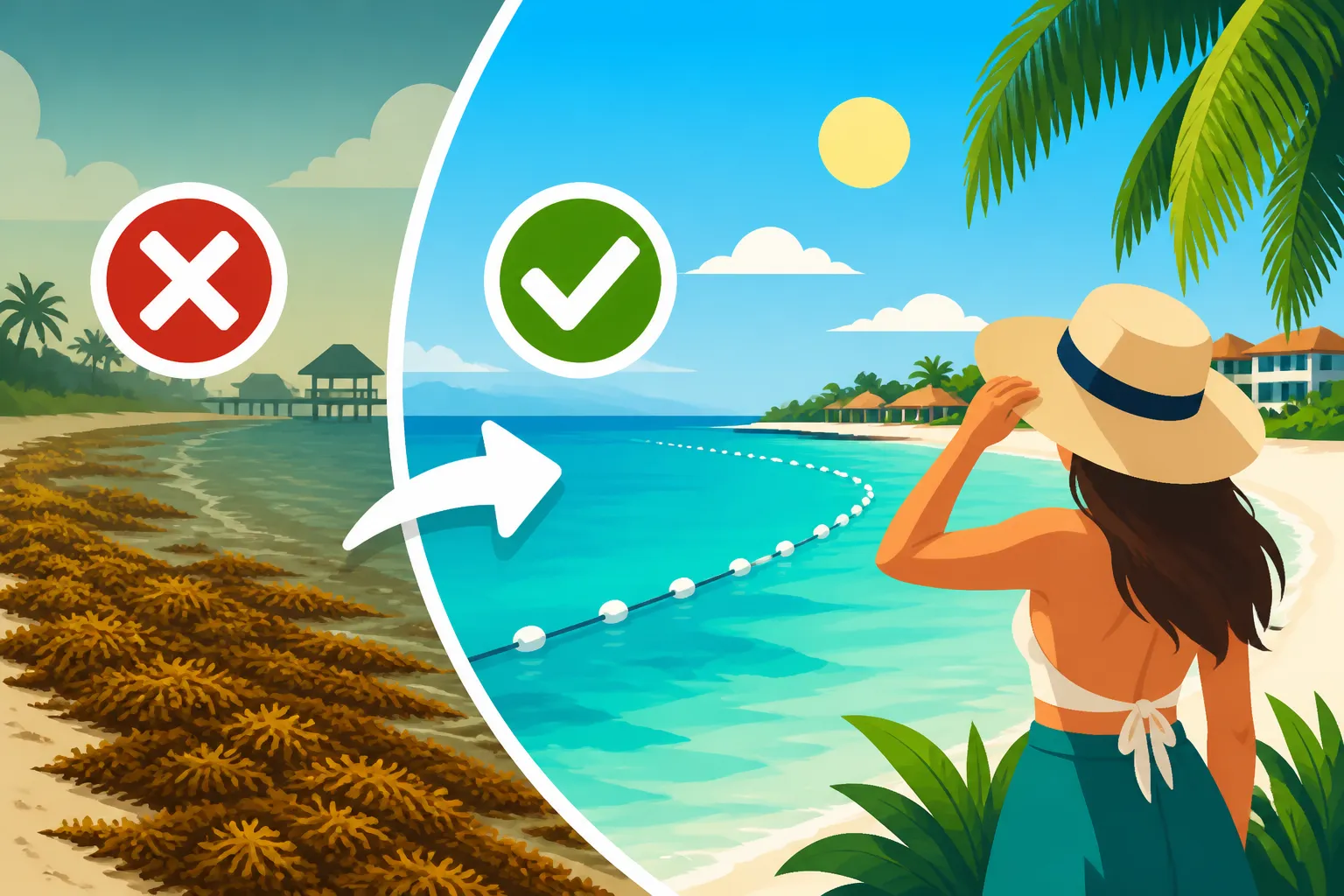
Many resorts, particularly the larger, more high-end ones, are actively fighting the sargassum battle. This includes deploying sargassum barriers or nets offshore to prevent it from reaching the beach, and organizing daily clean-up crews to rake and remove the seaweed that does wash ashore. These efforts can make a noticeable difference.
When booking your accommodation, it's worth checking recent reviews or even contacting the hotel directly to ask about their sargassum management strategies. Some resorts are more proactive and successful than others. You might also find resorts that prioritize creating sargassum-free "beach club" areas even if the rest of the coastline isn't perfect. While it's a huge logistical challenge, many properties are investing heavily in keeping their guests happy.
Embrace Alternative Activities and Inland Exploration
This is my absolute favorite strategy, and honestly, it’s how you truly experience Mexico! Mexico's Caribbean coast, and the entire Yucatán Peninsula, is brimming with incredible activities that have nothing to do with ocean swimming.
- Cenotes: These natural swimming holes, often deep in the jungle, are filled with crystal-clear freshwater and are completely unaffected by sargassum. They are truly magical places. You can spend days exploring different cenotes, from open-air pools to underground caves. Check out some popular options for Cenote Day Trips in the Yucatán.
- Archaeological Sites: The Yucatán is home to some of the most impressive ancient Mayan ruins in the world. Chichén Itzá, Tulum (with its clifftop views), Coba, and Ek Balam are all within easy reach and offer a fascinating glimpse into history. You'll be so enthralled by the ancient civilizations, you won't even remember the seaweed. Consider a trip to Maya Ruins in Mexico: Chichén Itzá, Tulum, and Palenque.
- Theme Parks & Eco-Parks: Places like Xcaret, Xel-Há, and Xplor offer a full day of fun, often with freshwater rivers, lagoons, zip-lining, and cultural shows. They are designed to entertain regardless of beach conditions.
- Colonial Cities: Take a bus inland to cities like Mérida or Valladolid. These vibrant colonial cities offer stunning architecture, delicious food, rich culture, and bustling markets. It’s a completely different vibe from the coast and provides an authentic Mexican experience. For travel to these inland gems, services like Busbud can help you find and book tickets for comfortable long-distance buses in Mexico: ADO and Premium Lines.
Viator is an excellent resource for booking these types of excursions, from guided tours to Chichén Itzá to cenote adventures. Planning ahead for these activities can ensure your itinerary is packed with amazing experiences, sargassum or not.
Booking Flexibility
When planning your trip, especially if you're traveling during the peak sargassum season, consider booking accommodations and flights with flexible cancellation policies. While it might cost a little more upfront, the peace of mind is often worth it. Sites like Booking.com often clearly outline their cancellation policies, making it easier to compare and choose options that allow you to change your plans closer to the date if sargassum reports look dire.
Having the option to pivot your travel dates or even switch your destination if needed can save you a lot of grief. No one wants to be locked into a non-refundable reservation for a week at a beach resort when the beach is unusable.
Alternative Destinations & Experiences Beyond the Coast
Sometimes, the best strategy is simply to look beyond the heavily affected areas or even Mexico's Caribbean coast entirely. Mexico is a vast country with incredible diversity, and if a pristine beach is your top priority and the Caribbean isn't cooperating, there are other spectacular options.
Exploring the Mexican Pacific Coast
If white sand and turquoise waters are your dream, but sargassum is ruining the Caribbean, why not consider Mexico's Pacific Coast? It's a completely different ocean, with different currents, and sargassum is generally not an issue there.
- Puerto Vallarta and Riviera Nayarit: This region offers stunning golden sand beaches, lush jungle, and vibrant towns. From surfing in Sayulita to enjoying gourmet dining in Puerto Vallarta, there's a huge variety of experiences. The sunsets over the Pacific are legendary, too! This can be a fantastic alternative to the Caribbean, and there’s no sargassum to worry about.
- Oaxaca Coast (Puerto Escondido, Huatulco): For a more bohemian, surf-town vibe, head to Puerto Escondido. Or, for a more developed, resort-style experience without the Riviera Maya crowds, Huatulco offers nine beautiful bays. The food in Oaxaca state is also a major draw; you won't find better moles anywhere! Explore Oaxaca: Food, Crafts, and Culture for more ideas.
- Baja California Sur (Los Cabos, La Paz): Up in the northwest, the Baja Peninsula offers a desert-meets-ocean landscape that is truly unique. Los Cabos is famous for its luxury resorts and dramatic rock formations, while La Paz is a hub for incredible marine life encounters, like swimming with whale sharks. You can even enjoy Baja California: Beaches, Wine, and Whale Watching.
These Pacific destinations offer equally stunning beach experiences without the sargassum concern. Think about what kind of beach vacation you truly want, and don't limit yourself to just one coast. Learning how to navigate domestic flights in Mexico: Airlines and Booking Tips can easily open up these other incredible regions for you.
Delving Deeper into the Yucatán's Inland Treasures
Even if you've booked your trip to Cancun or Playa del Carmen and don't want to change regions, remember that the Yucatán Peninsula is far more than just its coastline. Embrace the opportunity to immerse yourself in the rich culture and history inland.
- Mérida: Known as the "White City," Mérida is the cultural capital of the Yucatán. It's a gorgeous colonial city with vibrant markets, delicious Yucatecan cuisine (cochinita pibil, anyone?), live music, and free cultural events almost every night. It’s perfect for exploring for several days.
- Valladolid: This charming Pueblo Mágico is a perfect base for exploring Chichén Itzá, Ek Balam, and numerous cenotes. It offers a more authentic, small-town Mexican experience away from the bustling tourist corridors.
- Haciendas: The Yucatán is dotted with beautifully restored haciendas, old colonial plantations that have been converted into boutique hotels or museums. Staying at one offers a glimpse into the region's past and a tranquil escape.
Planning a few nights away from the coast to explore these areas can transform a potentially disappointing beach trip into a truly unforgettable cultural adventure. There's so much to love about Mexico beyond its shores, and sometimes, sargassum is just the push you need to discover it. For a deeper look at what the country has to offer, check out Best Places to Live in Mexico for Expats (2027 Edition).
Disclaimer
Please remember that travel information and conditions in Mexico can change rapidly. While this guide offers comprehensive advice based on current knowledge and typical patterns, sargassum predictions, local conditions, and travel regulations are subject to change. Always consult official sources and up-to-date local reports as your travel dates approach. This guide is for informational purposes only and does not constitute professional advice.