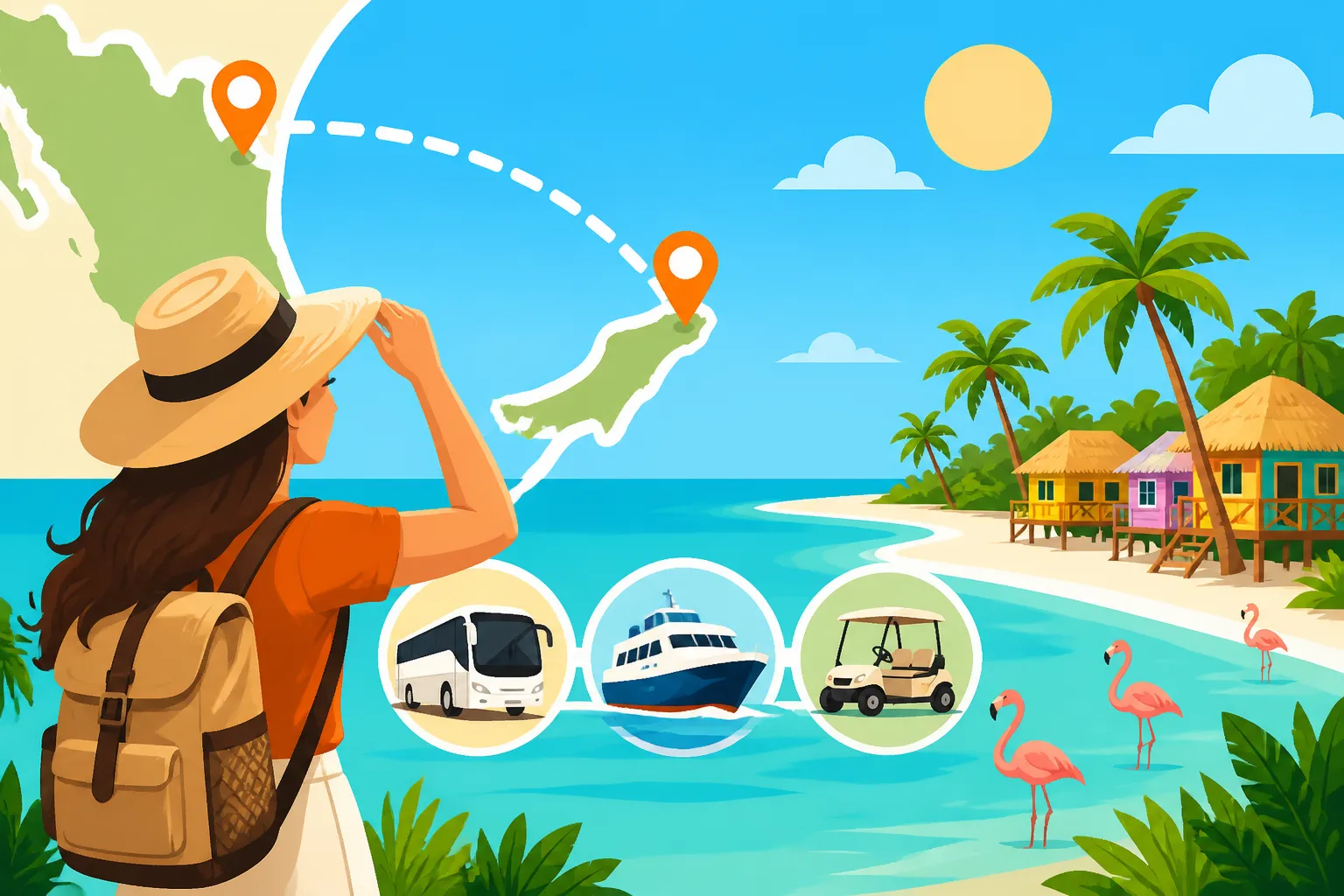
How to Visit Isla Holbox From Cancún
The first time I tried to get to Isla Holbox from Cancún, I reached the ferry dock in Chiquilá just as the last boat of the evening pulled away. I spent the night in a roadside room listening to roosters. This guide walks you through every realistic route, what each one actually involves, and how to time the trip so you make the boat.
Disclosure: This post may contain affiliate links. We may earn a commission at no extra cost to you if you make a purchase through these links. Read full disclosure.
Understanding the Route From Cancún to Holbox
Holbox is a thin sliver of sand off the northern tip of Quintana Roo. It sits inside the Yum Balam protected area, and that location explains the whole trip. There is no bridge and no road onto the island. Visitors don’t bring cars, so every route funnels you to a single place: the small fishing port of Chiquilá on the mainland. From there you take a passenger ferry across the lagoon.
If you only remember one thing, remember this: your journey has two legs. Leg one is Cancún to Chiquilá by land. Leg two is Chiquilá to Holbox by water. Almost every bad Holbox travel story comes from treating the trip as one smooth transfer when it is really two separate systems that don’t coordinate with each other.
Why Chiquilá Is the Gateway
Chiquilá is not a destination in itself. It is a working port with a few restaurants, gated parking lots, ticket booths for the ferry companies, and a lot of people in a hurry. The two ferry operators you will see are Holbox Express and 9 Hermanos. Both run passenger boats across the lagoon throughout the day, and the crossing itself is short. You will usually spend longer waiting on the dock than you do on the water.
When you arrive, people may approach to steer you toward a particular parking lot, ferry, or “package.” Most of them are just touts doing their job, and some are genuinely helpful. Stay polite and decisive. Walk to the official ticket windows at the dock and buy your ferry ticket there.
How Long the Whole Trip Takes
By car, the land leg from Cancún to Chiquilá generally takes around two to two and a half hours, depending on where you start and how traffic leaves the city. Leaving from the airport on the south side of town adds time compared with starting near downtown. Add the wait at the dock and the crossing, and a door-to-door trip of three to four hours is realistic. Public buses take longer because of stops along the way.
My honest planning rule is this: give yourself half a day. If you land in Cancún in the afternoon, think carefully before attempting Holbox the same day. Ferry service winds down in the evening, and arriving after the final crossing means a night in Chiquilá. The town has basic lodging, but it is not where you want to spend the first night of your holiday.
The Two-Leg Mindset
Once you think in two legs, the trip becomes easy to plan:
- Choose how you will get from Cancún to Chiquilá: bus, rental car, taxi, private shuttle, or a booked tour.
- Check the current ferry schedule for both operators before you leave Cancún. The companies post timetables, and they shift seasonally.
- Work backward from the last comfortable ferry departure, adding a buffer for highway delays.
- Decide what happens to your car, if you have one, before you reach Chiquilá.
- Arrive on the island with cash, because Holbox runs largely on pesos.
For a broader overview of how Holbox compares with the other Caribbean islands, see Isla Mujeres, Cozumel, and Holbox: Mexico’s Islands.
Every Way to Get From Cancún to Chiquilá
This is where most of your decisions happen. Each option trades money against convenience, and the right choice depends on your budget, your luggage, whether you have children, and how much you hate uncertainty.
Taking the ADO Bus
The budget route is the ADO bus network, which links Cancún with Chiquilá. Departures generally leave from the main downtown bus terminal, the ADO station at the junction of Avenida Tulum and Avenida Uxmal. Direct service from the airport is limited, so many travelers take an airport bus into downtown first and then transfer.
The Chiquilá route is not a premium express. Expect a regular second-class or intermediate service that stops in small towns along the way. That is part of its charm, but it is also why it takes longer than driving. Schedules are thinner than on the big tourist corridors to Playa del Carmen and Tulum, and a missed bus can mean a long wait.
Here is how I handle the bus route:
- Check the timetable for Cancún to Chiquilá the day before, either on the ADO website or app, or through Busbud, which lets you compare departure times and book seats in one place.
- Buy your ticket in advance during high season, because the limited departures fill up.
- Get to the downtown terminal early. It is busy, and the departure boards can be confusing at first.
- Keep your ferry ticket money in pesos in an easy-to-reach pocket. The bus drops you close to the dock.
- Walk straight to the ferry ticket windows once you arrive in Chiquilá.
If you have never used ADO before, How to Buy ADO Bus Tickets in Mexico covers the booking process, ID requirements, and seat selection in detail. Long-Distance Buses in Mexico: ADO and Premium Lines explains the differences between service classes.
Driving Yourself in a Rental Car
Driving gives you flexibility, and many travelers combine Holbox with stops in Valladolid or the cenotes. The usual route heads west out of Cancún on Highway 180 toward Mérida. You can take either the libre free road or the cuota toll road, then turn north toward Kantunilkín and on to Chiquilá. The final stretch is a two-lane road through quiet countryside, with topes, the infamous Mexican speed bumps, and occasional livestock.
There are three main drawbacks. First, you cannot take the car to Holbox, so you must leave it in a paid lot in Chiquilá for the length of your stay. Several gated lots operate near the dock, and they charge by the day. Second, rental insurance in Mexico is notoriously confusing, and the price at the counter can be very different from the price you saw online. Third, I strongly recommend driving that last rural stretch in daylight. It is not dangerous by default, but unlit roads, topes, and animals make night driving stressful.
Before you commit, read How to Rent a Car in Mexico Without Overpaying for Insurance, especially if you plan to pick up the car at Cancún airport.
Taxis and Private Shuttles
If you land with heavy bags, small children, or a group, a private vehicle can be worth every peso. Taxis and private transfers are the priciest ways to reach Chiquilá by road, roughly $100-$250 for the vehicle. A taxi typically runs $100-$150+ one way, and a private shuttle vehicle typically runs $150-$250. Because the price applies to the vehicle rather than per person, the math improves quickly for a family of four or a group of friends.
Agree on the fare before you get in. Confirm whether it covers tolls if you take the cuota, and make sure the driver knows you want the ferry dock in Chiquilá rather than “somewhere near Holbox.” Pre-booked shuttles also save you from the aggressive taxi scene at Cancún airport’s arrivals hall. Airport Transfers and Private Drivers in Mexico: Booking vs Taxi Ranks covers that comparison in depth.
Booked Day Tours and Small Planes
Some travelers only want to see Holbox for a day. Tour platforms such as Viator list Holbox day trips from Cancún that bundle the land transfer, the ferry, and sometimes lunch or a boat excursion. These tours make for a long day with little free time, but they remove all the logistics. I would choose one only if your schedule truly allows no overnight stay. Holbox’s best hours are early morning and sunset, and day-trippers miss both.
At the top end, small charter planes fly from Cancún to Holbox’s tiny airstrip. The flight takes you straight over the lagoon and drops you on the island, skipping Chiquilá entirely. Baggage weight limits on light aircraft are strict, so pack soft and light if you go this way. Check with the charter operator directly for current pricing and luggage rules.
Comparing the Options
| Option | Typical Cost | Best For | Main Drawback |
|---|---|---|---|
| ADO bus | Lowest cost, check ADO or Busbud for fares | Solo travelers and budget backpackers | Limited departures, longer journey |
| Rental car | Daily rental plus fuel, tolls, and Chiquilá parking | Travelers combining Holbox with a road trip | Car must stay in a paid lot in Chiquilá |
| Taxi | $100-$150+ per vehicle one way | Small groups wanting door-to-dock speed | Fare must be agreed upfront |
| Private shuttle | $150-$250 per vehicle | Families and groups with luggage | Needs advance booking |
| Booked day tour | Varies by operator, check the listing | Visitors with only one free day | Very little time on the island |
| Charter flight | Varies by operator, check directly | Travelers short on time with light bags | Strict baggage limits |
Crossing to the Island and Arriving Smoothly
Once you reach Chiquilá, the hard part is behind you. A little preparation still makes the difference between a calm arrival and a sweaty scramble.
Buying Your Ferry Ticket
Holbox Express and 9 Hermanos both sell tickets at windows on the dock. Departures are frequent during the day, so you rarely wait long in daylight hours. Whichever boat leaves next is usually the best choice. Some travelers buy a round-trip ticket, but check whether it locks you into one operator for the return. Being able to take whichever ferry leaves first on your way back can be handy.
Bring pesos. Card acceptance at the dock is not guaranteed, and the ATMs around Chiquilá are not something I would count on. The same rule applies on the island. Holbox has very few cash machines, and they are known to run dry on busy weekends and holidays. How Much Cash Should You Carry When Traveling in Mexico? will help you estimate how much to withdraw in Cancún before you leave.
Leaving a Car in Chiquilá
If you drove, follow the signs to the parking lots near the dock. These are fenced lots where you hand over your keys or keep them, depending on the lot, and pay for the number of nights you will be away. Before you walk off:
- Photograph the car from all sides and note the mileage.
- Remove anything valuable and keep it with you.
- Ask how payment works. Some lots charge upfront and others charge when you collect the car.
- Get a receipt or ticket and store it somewhere safe.
- Confirm the lot’s hours if you might return on a late ferry.
Getting Around Once You Land
Holbox’s streets are sand, and cars are essentially absent. The ferry drops you near the town center. From there you can walk if your hotel is close, or hop into one of the golf-cart taxis lined up by the pier. Hotels on the eastern stretch of beach or out toward Punta Cocos are farther than they look on a map. After a rain shower, the sand streets turn into wide puddles, so a golf-cart taxi is worth it if you have a rolling suitcase.
Many visitors rent golf carts or bicycles for their stay. Bicycles are the easiest way to explore the town and nearby beaches. Golf carts are useful for reaching the far ends of the island, though they also add to congestion on the narrow streets. Walking barefoot on the beach toward Punta Mosquito at low tide is one of the best things you can do here, and it costs nothing.
Planning Your Stay So the Trip Is Worth It
Getting to Holbox takes effort, so plan your time on the island so that effort pays off.
Choosing When to Go
The whale shark season usually runs from roughly June to September. During those months, boats head out into open water to swim with these enormous, gentle filter feeders. It is one of the most popular reasons people make the trip, and responsible operators follow strict rules about distance and the number of swimmers in the water. Before you book, read How to See Whale Sharks Near Cancún or La Paz, which explains how Holbox compares with other spots and what ethical operators look like.
Summer and early autumn also fall within hurricane season, and the weather can bring rough seas that cancel boat tours or, rarely, ferry crossings. That does not mean you should skip those months. It means you should book refundable accommodation where possible and keep a flexible day in your plan. Is Hurricane Season a Problem for Visiting Mexico? goes into the realistic risks. The drier winter months bring calmer conditions and clearer skies, but also more visitors around the holidays.
Booking Accommodation on the Island
Holbox has everything from simple posadas in town to boutique beach hotels. Rooms sell out during peak periods: whale shark season, Christmas and New Year, and Semana Santa. Booking.com is the most practical way to compare availability across the island’s small properties. Filter for free cancellation if your dates fall in storm season.
When you choose, think about location. Staying in or near the town center puts restaurants and the ferry within walking distance. Staying farther along the beach gives you quiet but means relying on golf-cart taxis. Also read reviews for mentions of hot water, air conditioning reliability, and mosquitoes, which can be fierce after rain. If you are weighing Holbox against Isla Mujeres or Cozumel, Where to Stay on Mexico’s Caribbean Islands: Comparing Room Rates by Island lays out the trade-offs.
Fitting Holbox Into a Bigger Itinerary
Holbox works well as the final stop of a Yucatán loop. Many travelers drive from Cancún to Valladolid, visit Chichén Itzá and nearby cenotes, and then head north to Chiquilá to finish with a few lazy island days. Others do the reverse, starting on Holbox to decompress after the flight before moving on to the Riviera Maya. If you are mapping out a larger route, How to Plan a Riviera Maya and Yucatán Trip helps you sequence the stops so you aren’t backtracking across the peninsula.
My personal recommendation is three nights at minimum. One night feels like a frantic dash, because you spend nearly a full day traveling in and out. Two nights give you one full day. Three nights let you settle in, see the sunset at Punta Cocos, take a lagoon trip to spot flamingos, and maybe catch the bioluminescence on a dark night away from town lights.
Getting Back to Cancún
The return trip is simply the arrival in reverse, but timing matters even more when you have a flight to catch. My rules:
- Take an early ferry back to Chiquilá if you are flying the same day.
- Leave at least a four-hour cushion between the ferry departure and your flight, and more if you are taking the bus.
- Reconfirm your bus departure or shuttle pickup the day before.
- If you drove, settle the parking fee and check the car before getting on the highway.
- Consider spending your final night in Cancún if your flight leaves early in the morning.
That last point has saved me more than once. Spending a final night near the airport removes the stress of racing a ferry schedule, a rural highway, and airport security all in one morning.
Disclaimer
This article is for general informational purposes only and does not constitute professional advice. Laws, prices and regulations vary by location and change over time. Consult a qualified professional for guidance on your specific situation.