How to Experience Semana Santa in Mexico
You have likely heard that Mexico is a land of vibrant festivals, but nothing quite prepares you for the absolute seismic shift that occurs during Holy Week. Foreigners often find themselves trapped in gridlocked traffic or standing in front of shuttered grocery stores without a clue why. This guide provides the strategic roadmap you need to navigate Semana Santa with ease.
Disclosure: This post may contain affiliate links. We may earn a commission at no extra cost to you if you make a purchase through these links. Read full disclosure.
Understanding the Cultural Weight of Semana Santa in Mexico
Semana Santa, or Holy Week, is arguably the most significant period on the Mexican calendar, often eclipsing even Christmas in terms of cultural and religious intensity. For the veteran expat, this week represents a paradox: it is a time of profound, somber religious devotion in some areas, and an explosive, chaotic beach party in others. To truly experience it, you first have to understand that the country effectively splits in two. Half of the population is participating in centuries-old processions, while the other half is packing into every available square inch of sand on the coast.
The Timeline of Events from Palm Sunday to Easter
The festivities officially begin on Domingo de Ramos (Palm Sunday), where you will see local artisans weaving intricate crosses from palm fronds outside every major church. This is a relatively quiet start to a week that builds in momentum. By the time Jueves Santo (Maundy Thursday) arrives, the atmosphere thickens. This is the day of the "Visit of the Seven Houses," where locals visit seven different churches to pray at specially decorated altars. As an expat, this is one of the best times to walk through historic centers like Oaxaca City Guide: Markets, Mezcal, and Art to see the stunning floral displays.
The emotional peak is Viernes Santo (Good Friday). This is not a "holiday" in the lighthearted sense; it is a day of public mourning. You will witness the Via Crucis (Way of the Cross), a dramatic re-enactment of the Passion of Christ. In many towns, these are high-production events involving thousands of local actors. Following this is the Sábado de Gloria (Holy Saturday). Traditionally, this was a day where people threw buckets of water at each other in the streets to symbolize the washing away of sins, though local governments in thirsty cities like Mexico City now discourage this to conserve water. Finally, Domingo de Resurrección (Easter Sunday) is a day of quiet celebration and family gatherings, often lacking the "Easter Bunny" commercialism found in the United States or Canada.
Why You Must Plan Months in Advance
If you are a newcomer, you might assume you can just hop on a bus and find a hotel on a whim. This is a critical mistake. During this week, nearly 20 million Mexicans are on the move. Schools are out for two weeks, and many businesses close their doors from Thursday through Sunday. This means that Long-Distance Buses in Mexico: ADO and Premium Lines sell out days or weeks in advance. If you haven't secured your seat, you might find yourself stranded at a terminal for eight hours.
I always recommend using a platform like Busbud to compare routes and book your tickets early, as it allows you to see the various classes of service—something that is vital when you’re looking for a "De Lujo" bus to escape the heat. Similarly, coastal hotels and popular colonial rentals are often booked a year out. If you are aiming for a specific view in a place like San Miguel de Allende, checking Booking.com six months in advance isn't being paranoid; it's being prepared. To learn more about how these periods affect the general vibe of the country, check out Mexican Holidays and Festivals: What Expats Should Know.
Where to Witness the Most Powerful Traditions
Mexico does not do things halfway. Depending on where you choose to spend the week, you will have vastly different experiences. Some regions are famous for their grit and intensity, while others are known for their silent, ghostly beauty. Knowing which "flavor" of Semana Santa you want is the first step in your journey.
The Intensity of Iztapalapa and Mexico City
In the heart of Mexico City, the borough of Iztapalapa hosts the most famous Passion Play in the world. It is a massive, sprawling event that draws over two million people. It is intense, crowded, and physically demanding to attend. Actors are chosen from the community and often spend a year physically training to carry a 200-pound cross up the Cerro de la Estrella. For many expats, this is a "bucket list" item, but it can be overwhelming. I highly recommend booking a guided experience through Viator if you want to attend; having a local guide who knows the shortcuts and the safety perimeters is the difference between an enlightening cultural experience and a claustrophobic nightmare.
While you are in the capital, you will find the rest of the city surprisingly empty. Since so many Chilangos flee to the coast, the normally gridlocked streets of the Polanco and Roma neighborhoods become eerie and quiet. This makes it an excellent time for Mexico City and Mexico's Great Cities: Explorer's Guide explorations without the usual smog and noise.
The Penitents of Taxco and the Procession of Silence
For something truly visceral, head to the silver city of Taxco. Here, the traditions are famously medieval. You will see the "Encruzados"—men who walk through the cobblestone streets barefoot, draped in heavy chains, carrying massive bundles of thorny blackberry stalks across their bare shoulders. It is a sobering sight that can be shocking for those not used to the more physical forms of Catholic penance. Because Taxco is a small town with narrow streets, accommodation is nearly impossible to find last minute. You should use Booking.com to secure a room right in the center, or you'll be walking uphill for miles after the late-night processions finish. For more on this region, see Taxco, Tepoztlán, and Day-Trip Pueblos Mágicos.
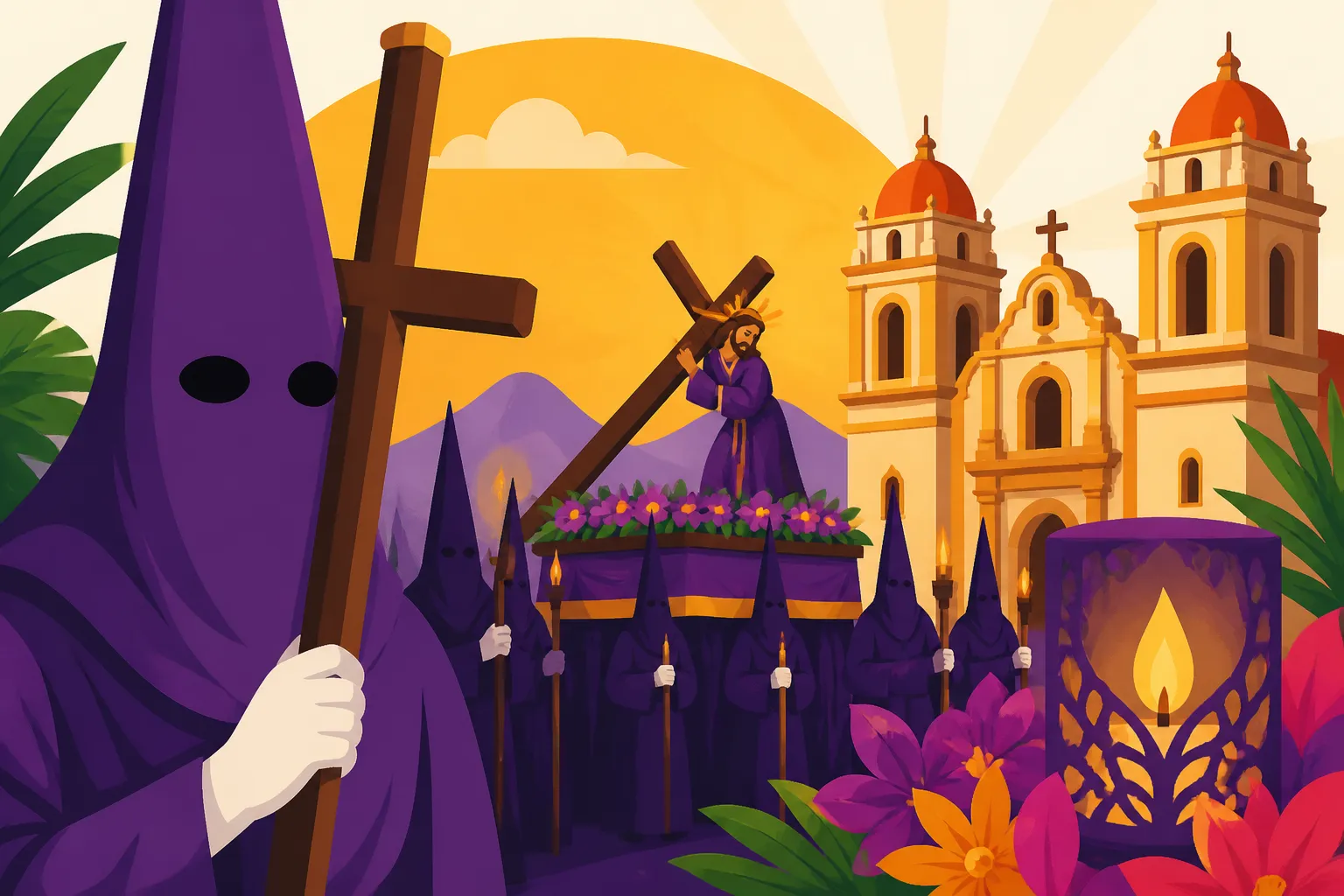
In San Luis Potosí, the "Procession of Silence" is a different kind of intensity. Thousands of people walk the streets in complete silence, many wearing the tall, pointed hoods (capirote) that some foreigners mistakenly associate with other organizations. In Mexico, these are ancient symbols of mourning and penance. The sound of the solitary drum beat and the clinking of chains against the pavement is something you will never forget.
Table: Comparison of Top Semana Santa Destinations
| Destination | Atmosphere | Key Tradition | Expat Difficulty Level |
|---|---|---|---|
| Iztapalapa (CDMX) | Chaotic/Massive | The Passion Play Re-enactment | High (Crowds/Security) |
| Taxco | Visceral/Medieval | Encruzados (Thorny bundles) | Moderate (Hills/Booking) |
| San Luis Potosí | Somber/Ghostly | Procession of Silence | Low (Well-organized) |
| San Miguel de Allende | Artistic/Ritualistic | The Burning of Judas | Low (Very Expat Friendly) |
| Puerto Vallarta | Festive/Beach | Party Atmosphere / Nightlife | Moderate (Price Hikes) |
Navigating the Logistics: Crowds, Transport, and Accommodation
The biggest hurdle for any foreigner during Semana Santa is the logistics. The infrastructure of the country is pushed to its absolute breaking point. If you go into the week with the mindset of a typical tourist, you will likely end up frustrated. You have to adopt the "Veteran Expat" mindset: expect delays, expect crowds, and plan for redundancies.
Mastering the Art of Movement
Driving your own car during this week is a lesson in patience. Toll roads (cuotas) that usually take three hours can easily take six. If you must travel between cities, the bus system is your best friend, provided you use Busbud to secure your seats in advance. The "Executive" class buses offer reclining seats and climate control, which you will desperately need when the April heat hits.
Within the cities, Staying Safe in Mexico: Practical Tips for Travelers applies more than ever. Pickpockets thrive in the dense crowds of the processions. Keep your phone in a front pocket or a cross-body bag tucked under your arm. If you are using ride-share apps like Uber, be aware that many streets in historic centers will be closed off for parades, meaning you may have to walk several blocks to meet your driver.
Where to Stay and What to Pay
Prices for accommodation often double or triple during Holy Week. If you are looking for a deal, you are about six months too late. However, you can still find gems on Booking.com if you look just outside the historic centers. For example, staying in the "Colonia San Antonio" in San Miguel de Allende instead of right by the Parroquia can save you hundreds of dollars and put you in a quieter spot when the 2:00 AM fireworks start.
If you are staying in a beach town, be prepared for "Noise Pollution." This is the week of the Banda music and the portable speakers. If you are sensitive to noise, I recommend looking for "Adults Only" boutique hotels or villas that are set back from the main malecon. To understand the different vibes of the beach towns, take a look at Festivals, Holidays, and Traditions in Mexico.
Practical Tips for the Expat or First-Timer
To enjoy Semana Santa rather than just surviving it, you need to know the unwritten rules. These are the small cultural nuances that distinguish the "tourist" from the person who truly respects and understands the local rhythm.
Dress Codes and Etiquette at Processions
While Mexico is generally casual, religious processions are a formal affair for the locals. If you are attending a Via Crucis or entering a cathedral to see the altars, dress modestly. Shorts and flip-flops are fine for the beach, but in a 16th-century church in Querétaro, they can be seen as disrespectful. Opt for breathable linens and comfortable walking shoes. You will be standing on cobblestones for hours; your feet will thank you.
Also, be mindful with your camera. While it’s tempting to snap photos of the penitents in Taxco, remember that for them, this is a deeply personal act of faith, not a parade. Always look for signs that say "No Fotos" and never use a flash during a night procession. For more on general social norms, refer to Tipping in Mexico (Propina): When and How Much.
Food Traditions: What to Eat During Lent
One of the highlights for me as an expat is the "Comida de Cuaresma" (Lenten food). Because many Mexicans abstain from red meat on Fridays and during Holy Week, you will find unique dishes that aren't available the rest of the year. Look for Capirotada, a traditional bread pudding with cheese, raisins, peanuts, and a spiced syrup. It sounds like an odd combination, but it is delicious.
You should also try Romeritos, a dish made with seepweed (a wild plant), mole, and dried shrimp cakes. Many local markets, which you can find tips for in Mexican Food Culture: Eating and Drinking as a Visitor, will have stalls dedicated entirely to these seasonal specialties. Just remember that many local restaurants might have limited menus or be completely closed on Good Friday, so stocking up on some basics at the local tianguis is a smart move.
Managing Your Expectations and "Mexican Time"
Finally, understand that the concept of time during Semana Santa is fluid. A procession scheduled for 5:00 PM might not arrive at your corner until 7:30 PM. The key is to grab a cold agua fresca, find a spot in the shade, and enjoy the people-watching. The beauty of San Miguel de Allende for Visitors or any other colonial town during this week is the community spirit. If you are in a rush, you are doing it wrong.
Embrace the chaos, carry plenty of cash (as ATMs often run out during the holiday surge), and keep a positive attitude. This is Mexico at its most raw and beautiful. Whether you are watching the "Burning of Judas" (where effigies of unpopular figures are exploded with fireworks) or simply enjoying a quiet fish taco on a less-crowded beach, Semana Santa is a time you will remember for the rest of your life.
Important Disclaimer
The information provided in this guide is for informational purposes only. Local traditions, event schedules, and safety conditions in Mexico can change rapidly. While we strive to provide the most accurate and up-to-date advice, readers should always verify local details with official government sources or trusted local guides before traveling. We are not responsible for any travel disruptions, price changes, or safety incidents that may occur during your trip.