How to Taste Tequila Like a Connoisseur
You’re at a bar in Guadalajara, facing a wall of bottles you can’t tell apart. The bartender is waiting, and the menu lists blanco, reposado, añejo and extra añejo with no explanation. Many of us end up grabbing the salt and lime out of habit. This guide covers how to read a label, how to taste properly, and where in Jalisco to practise.
Disclosure: This post may contain affiliate links. We may earn a commission at no extra cost to you if you make a purchase through these links. Read full disclosure.
Reading a Tequila Bottle Before You Ever Pour
Tasting starts at the shelf. When I first moved to Mexico, I picked bottles by how pretty they looked, and I paid for it with a few harsh, sugary hangovers. The label tells you most of what you need to know.
100% Agave vs Mixto
This is the most important line on the bottle. If it says “100% de agave” or “100% puro de agave,” the tequila was made only from blue Weber agave. If it just says “tequila,” it is a mixto. A mixto can include other sugars in the fermentation, and it usually tastes rougher, sweeter and more one-dimensional.
A mixto is fine for a party punch. If you want to taste the agave itself, pick 100% agave every time. Most serious bars in Jalisco stock almost nothing else. You will still find mixtos in convenience stores and resort bars. For the related category question, see What Is the Difference Between Tequila and Mezcal?
The Aging Categories
Tequila is grouped by how long it rests in wood, usually oak barrels that once held American whiskey. The longer it rests, the more the wood flavour takes over from the raw agave.
| Category | Wood Contact | Typical Colour | What You Taste | Best For |
|---|---|---|---|---|
| Blanco or Plata | Unaged or rested very briefly | Clear | Cooked agave, citrus, black pepper, herbs | Judging the distillery’s true quality |
| Joven or Oro | Often a blend, sometimes coloured | Pale gold | Varies widely by producer | Casual drinking, check the label |
| Reposado | Rested in oak for months | Light straw to gold | Agave plus vanilla and light caramel | A balanced first sip for beginners |
| Añejo | Aged in oak for longer | Amber | Toffee, dried fruit, baking spice | Slow sipping after dinner |
| Extra Añejo | The longest aging category | Deep amber | Rich wood, chocolate, cooked fruit | Special occasions, whisky lovers |
| Cristalino | Aged, then filtered clear | Clear | Smooth, soft wood notes with no colour | People who like aged spirits but lighter |
Many locals believe blanco is the best test of a distillery, because there is no barrel to hide behind. I agree. If a producer’s blanco is clean and vivid, their aged expressions are usually good too.
The NOM Number and Where It Was Made
Every authentic tequila carries a NOM number on the label. It identifies the distillery that made it. Dozens of brands can come out of a single distillery, so the NOM lets you spot when two very different-looking bottles share a source. Tequila is a protected designation of origin. It can only come from Jalisco and from designated municipalities in Guanajuato, Michoacán, Nayarit and Tamaulipas.
Within Jalisco, geography changes the flavour. Agave grown in the highlands, called Los Altos and centred on towns such as Arandas and Jesús María, tends to produce fruitier, more floral tequila. Agave from the lowland valley around Tequila town and Amatitán is often earthier, more herbal and more peppery. When a bartender asks “¿Altos o Valle?” this is what they mean.
The Connoisseur Tasting Method Step by Step
I won’t pretend this felt natural at first. Sniffing a spirit and swirling it in front of strangers is awkward. After a few sessions with a patient master taster in Tequila town, though, the method made sense. It slows you down so you notice what you are actually drinking.
Choosing the Right Glass
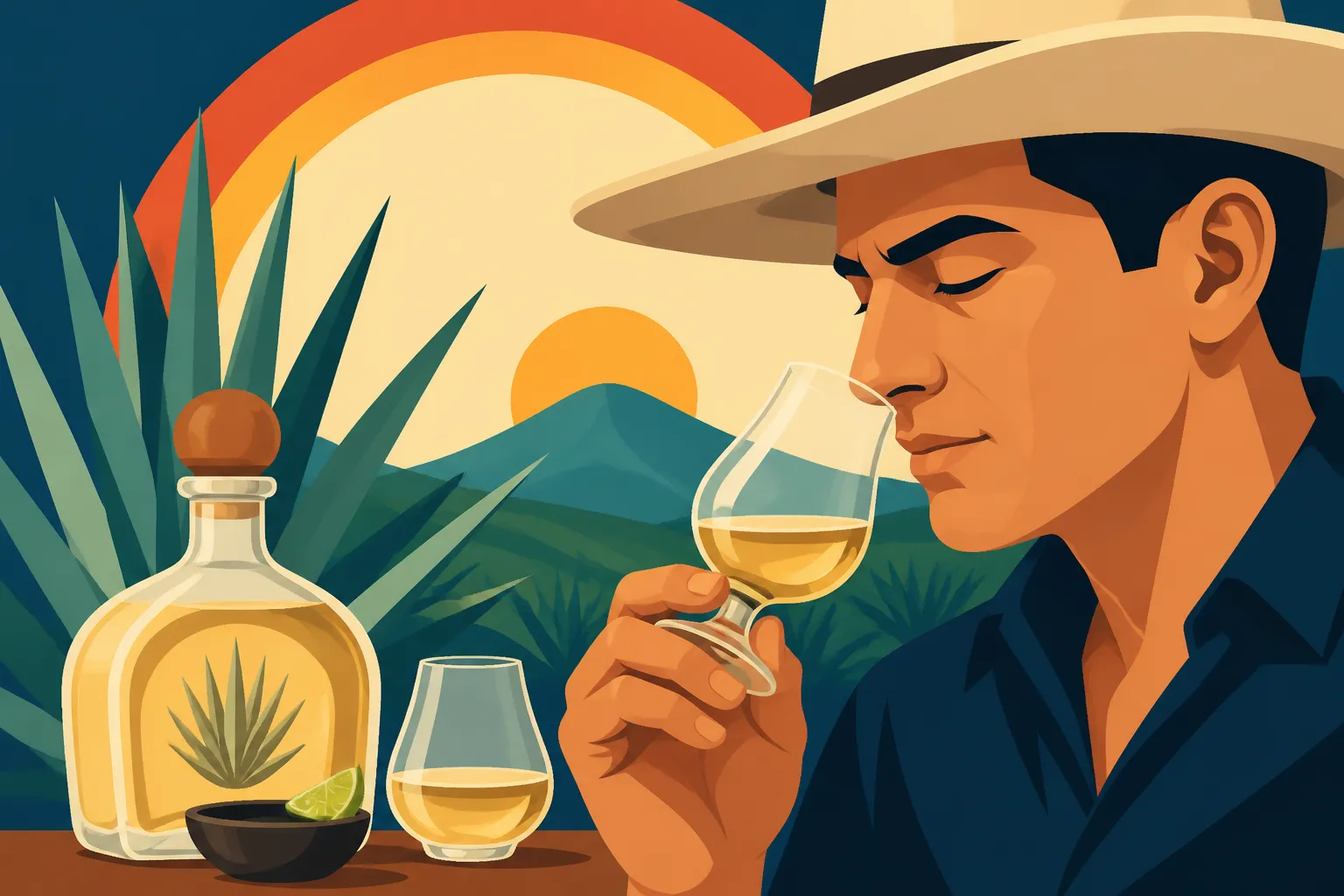
The traditional caballito, the narrow shot glass, is part of the culture. It is not ideal for tasting, because it concentrates the alcohol vapour and gives you little room to smell. Professionals prefer a stemmed glass with a slightly wider bowl and a narrow rim. A white-wine glass or a whisky-style tulip glass works at home. A stem keeps your warm hand off the spirit.
If you only have a caballito, don’t worry. Pour a small measure and don’t fill it to the top.
The Six-Step Tasting Routine
- Pour a small amount, roughly a finger’s width, and let the glass sit for a minute so the sharpest alcohol fumes settle.
- Hold the glass against a light or a white napkin. Check the clarity, then tilt and rotate it to watch the “legs,” or piernas, run down the side. Slower, thicker legs often point to a fuller body.
- Bring the glass toward your nose slowly, keeping your mouth slightly open. Don’t plunge your nose into the glass. Smell at the rim first, then just above the middle of the bowl, where different aromas sit.
- Take a tiny first sip and let it coat your tongue. Its job is to prepare your palate for the alcohol, so don’t judge the tequila yet.
- Take a second, slightly larger sip. Hold it for a few seconds, move it around your mouth, then swallow and breathe out gently through your nose. This retronasal breath is where much of the flavour shows up.
- Wait and notice the finish. Is it short or long, warm or burning, sweet or peppery? A great tequila leaves a clean, lingering agave flavour rather than a harsh scratch.
Drink still water between tequilas. Plain crackers or a small piece of bread help if you are tasting several in a row.
Building Your Flavour Vocabulary
Beginners often say “it tastes like tequila,” and that’s fair. Here are the common descriptors to listen for:
- Cooked agave: sweet, earthy, a little like roasted sweet potato or squash
- Citrus: lime zest, grapefruit, orange peel, very common in blancos
- Pepper and spice: black pepper, cinnamon, clove
- Herbal and green: fresh-cut grass, mint, eucalyptus, olive brine
- Mineral: wet stone or clay, often linked to the valley region
- Wood-driven: vanilla, caramel, toffee, coconut, chocolate in aged expressions
Production methods shape these notes. Agave cooked slowly in traditional stone or brick ovens, called hornos, tends to give deeper cooked-agave flavours. Some producers crush the cooked agave with a tahona, a giant volcanic stone wheel, which many tasters link with richer texture. Large modern diffusers extract sugars efficiently, but critics say they flatten the flavour. Asking a distillery how they cook and crush is a great way to understand what ends up in your glass.
Salt, Lime and Sangrita
That salt-lick-shoot-lime ritual exists mostly to cover up rough mixto. With a good 100% agave tequila, it hides the flavours you paid for. In Jalisco, people often sip tequila neat, alongside a small glass of sangrita. Sangrita is a tangy chaser usually made with orange juice, lime, chilli and sometimes pomegranate or tomato. Alternate sips. The sangrita refreshes your palate rather than masking the spirit. If a bar offers a “completo” or “bandera,” you’ll get tequila, sangrita and lime juice side by side.
Tasting Tequila Where It Is Made in Jalisco
Nothing trains your palate like standing in an agave field and then tasting the spirit in the same afternoon. The Tequila Valley sits northwest of Guadalajara, and the landscape of blue-grey agave is a UNESCO-recognised site in its own right. For the bigger picture, see Visiting the Tequila Region Near Guadalajara
Distilleries Worth Visiting
The town of Tequila itself is packed with options. La Rojeña, home of Jose Cuervo, is the famous large-scale experience. Casa Sauza offers a look at a historic brand with its own gardens. La Fortaleza is a favourite of purists, with a stone tahona and a small, traditional operation on the hill above town. In nearby Amatitán, Herradura’s hacienda is atmospheric and well worth the detour. If you have extra days, head up to Arandas in Los Altos to taste the fruitier highland style at its source. How to Visit a Tequila Distillery Near Guadalajara goes into booking tours and what each one includes.
The Museo Nacional del Tequila in town is small but useful for context before you start tasting.
Getting There Without Driving After Drinking
Please don’t drive yourself. Roads around Tequila are narrow, and police checkpoints are real. You have three good options:
- Booked tours: Viator lists day trips from Guadalajara that bundle transport, a distillery visit and a tasting, which removes most of the logistics.
- Public bus: Regular buses run from Guadalajara to Tequila town. You can check schedules and compare carriers on Busbud before heading to the terminal.
- The tequila train: A themed rail experience with tastings on board, more of a party than a classroom.
Tequila Train vs Bus vs Private Driver: Comparing Booked Distillery Trips breaks down which suits which kind of traveller. If you are a serious taster, go by bus and stay the night. You can taste at several smaller distilleries without rushing back. Booking.com has a decent range of small hotels and posadas in Tequila town, and they fill fast on weekends and holidays.
Practising in Guadalajara’s Bars and Cantinas
Back in the city, you can keep training. Classic cantinas around the Centro serve tequila with sangrita and botanas, the free snacks that arrive with your drinks. Bars in Colonia Americana and Chapultepec often run tasting flights of three or four tequilas side by side. For bases, see Where to Stay in Guadalajara: Centro, Chapultepec, and Tlaquepaque and for cantina etiquette, read How to Experience a Mexican Cantina as a Visitor
Some Viator listings also include guided tequila and food pairings in Guadalajara itself, which help if you’re short on time.
Building Your Palate Beyond the Trip
The real progress happens after the tour, when you taste on your own and start trusting your own nose.
Setting Up a Home Flight
- Choose three bottles from the same brand or NOM: a blanco, a reposado and an añejo.
- Pour equal small measures into identical glasses and label them underneath so you can taste blind.
- Taste from youngest to oldest, so the wood-heavy añejo doesn’t overpower your palate.
- Write two or three words for each step: appearance, aroma, first sip, finish.
- Repeat the same flight a week later and compare your notes.
Another revealing exercise is to taste two blancos side by side, one from Los Altos and one from the valley. The regional difference becomes obvious much faster than it does with aged expressions. For buying tips and what affects price at the shelf, see How Much Does Tequila Cost in Mexico?
Common Tasting Mistakes to Avoid
- Serving tequila ice-cold, which numbs the aroma. Room temperature or slightly cool is best.
- Judging by colour alone. Some cheap joven tequila is coloured with caramel to look aged.
- Tasting right after spicy food, coffee or toothpaste.
- Skipping water and trying too many tequilas in one sitting. Your palate tires quickly.
- Assuming a pricier extra añejo is automatically “better.” It’s just a different style.
Useful Spanish for the Tasting Room
You don’t need fluent Spanish, but a few phrases earn smiles and better pours:
- “¿Es cien por ciento agave?” (Is it 100% agave?)
- “¿Es de Los Altos o del Valle?” (Is it from the highlands or the valley?)
- “Lo quiero derecho, por favor.” (I’d like it neat, please.)
- “¿Me trae una sangrita?” (Could you bring me a sangrita?)
- “¿Cómo cocinan el agave?” (How do you cook the agave?)
If you want to take a bottle home, a small-batch blanco from a distillery you visited makes a much better gift than a novelty bottle from the airport. See Mexican Souvenirs Worth Buying (and What to Skip) for packing ideas, and Tequila 101: How to Taste and Where to Visit for a quick refresher before your next trip.
Disclaimer
This article is for general informational purposes only and does not constitute professional advice. Laws, prices and regulations vary by location and change over time. Consult a qualified professional for guidance on your specific situation.