How to Set Up Gas (Estacionario or Tank) in a Mexican Home
You walk into your beautiful new kitchen in Mexico, turn the stove knob to boil water for coffee, and absolutely nothing happens. I remember my first night in Querétaro, shivering because the shower was ice cold and I had no idea that my roof tank was bone dry. This guide explains exactly how to set up, refill, and maintain your gas system so you are never left in the cold.
Disclosure: This post may contain affiliate links. We may earn a commission at no extra cost to you if you make a purchase through these links. Read full disclosure.
Understanding the Mexican Gas Reality
In many countries, gas is a utility that simply exists, delivered silently through underground pipes. In Mexico, unless you are in a very specific modern development in a major city, you are likely dealing with LP gas (Liquid Propane) stored in a physical tank on your property. This means you are the manager of your own fuel supply. If you do not monitor it, it runs out.
There are two primary ways gas is handled in a Mexican household: the tanque estacionario (stationary tank) and the cilindro (portable cylinder). Understanding which one your home uses is the first step to Settling in Mexico: Step-by-Step Guide to Your First 30 Days as an Expat. Most houses and larger condos use stationary tanks located on the roof, while smaller apartments or older homes often rely on portable cylinders that sit in a service alley or a small outdoor closet.
The frustration for many foreigners is the realization that you have to "order" your utilities. It feels like an extra chore on an already long list of administrative hurdles. However, once you understand the rhythm of the local gas trucks and the apps available, it becomes second nature. If you are moving a lot of household goods and need help coordinating the logistics of your move, companies like Sirelo can assist in finding international movers who understand the nuances of transporting household items to Mexico, though they won't move the actual gas tanks for you due to safety regulations.
The Stationary Tank System (Tanque Estacionario)
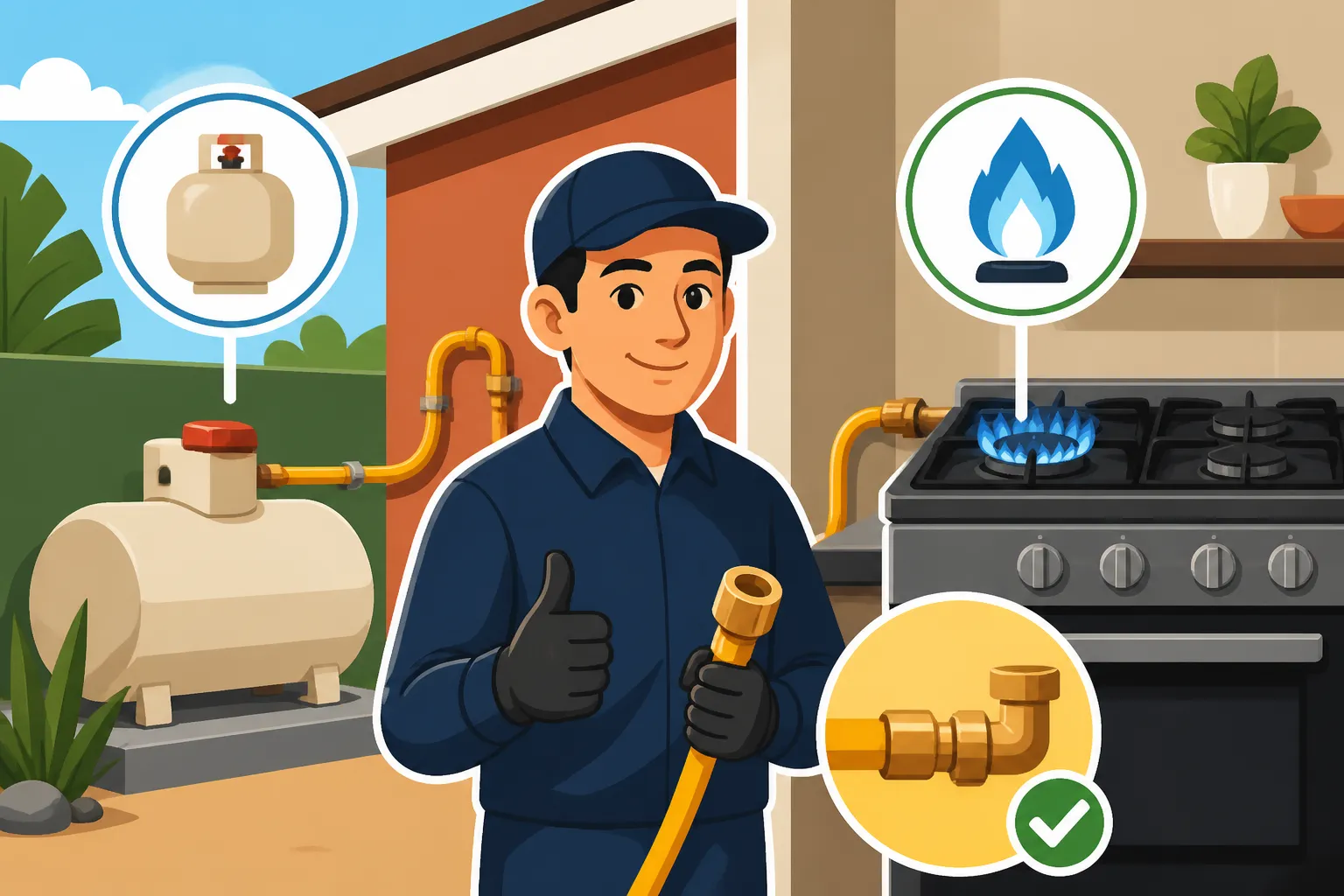
The stationary tank is the gold standard for expat living. These are large, horizontal tanks usually painted white or silver, perched on your roof. They typically hold 120, 180, or 300 liters. The beauty of this system is that you don't have to swap physical tanks; a large truck with a long hose (called a pipa) pulls up to your house and pumps gas directly into the tank.
If you are moving into a home that doesn't have one, or the existing one is rusted beyond repair, you will need to buy a new one. Brands like Tatsa or Trinity are common. You will also need a professional plumber—a plomero—to handle the installation. They will need to run copper piping from the tank to your stove and water heater. It is vital to ensure they install a linea de llenado (filling line) that runs down to the street level. This allows the gas truck to connect their hose at the sidewalk rather than dragging a heavy, dirty hose through your living room and up a ladder to your roof.
Monitoring a stationary tank is where most people fail. The gauge on top of the tank is notorious for being slightly inaccurate. A rule of thumb I learned the hard way: never let your tank drop below 20 percent. In the winter, gas prices often tick up, and delivery times can stretch as everyone tries to fill up at once. If you are still in the process of choosing a home, consider how the gas setup impacts your decision when Buying vs Renting in Mexico: How to Decide.
Managing Portable Gas Cylinders (Cilindros)
If your home uses cylinders, you are dealing with vertical tanks, usually 20kg or 30kg in size. When the tank is empty, you physically exchange it for a full one. You will know the gas truck is nearby because of the distinctive sounds: a loud whistle, a recorded jingle, or the driver shouting "¡El gaaaas!" at the top of his lungs.
To set this up, you first need to own a physical cylinder. If the rental didn't come with one, you can buy a "full" one from a passing truck for an initial deposit plus the cost of the gas. When that one runs out, you flag down a truck from the same company, they unhook your empty tank, hook up a full one, and you pay only for the gas. It’s a very manual process. I always recommend having two cylinders hooked up with a changeover valve. That way, when one dies in the middle of a shower, you can flip the valve to the backup tank and have a few weeks to flag down a truck for a replacement.
Safety is a major concern with cylinders. Always check the bottom of the tank for heavy rust or "pitting." If a delivery driver tries to give you a tank that looks like it survived a war, politely refuse and ask for a different one. A leaking cylinder in a confined service area is a recipe for disaster. This is part of the essential knowledge for Home Security in Mexico: Practical Tips for Expats, as "security" also encompasses the safety of your home's mechanical systems.
How to Order and Pay for Gas
In the old days, you had to stand on the street corner and hope a truck drove by. Today, it’s much more sophisticated. Most major cities have dominant companies like Gas Express Nieto, Zeta Gas, or Global Gas. Most of these companies now have apps or WhatsApp numbers where you can drop a pin and request a delivery.
When the pipa arrives for a stationary tank, the driver will pull the hose to your filling port. Before they start, look at the meter on the truck. It should be at zero. When they finish, they will give you a ticket showing exactly how many liters were delivered. Payment is almost always in cash or via a localized bank transfer, though some apps now allow credit cards. If you are struggling with the digital side of things, remember that having a reliable data connection is key. Using a service like Airalo for an eSIM can ensure you have the data necessary to run these delivery apps the moment you land, before you've even set up your home internet.
Here is a quick comparison of the two systems to help you budget:
| Feature | Stationary Tank (Estacionario) | Portable Cylinder (Cilindro) |
|---|---|---|
| Initial Cost | High (Tank + Installation) | Low (Cylinder Deposit) |
| Refilling | Pumper truck comes to you | Physical exchange of tanks |
| Convenience | High – can fill any amount | Low – must wait for truck |
| Monitoring | Gauge on tank (can be remote) | Weight/Guesswork |
| Best For | Large homes, families | Small apartments, solo expats |
Installation and Maintenance Safety
I cannot stress this enough: do not DIY your gas connections in Mexico. The pressure in these tanks is high, and the fittings can be different from what you are used to in the US or Canada. Hire a reputable plomero. You want them to use copper tubing (tubería de cobre) for the main lines. While flexible plastic hoses are common for the final connection to a stove, they degrade in the Mexican sun and should be replaced every couple of years.
One trick every expat should know is the "soapy water test." If you smell gas (that distinctive rotten egg odor), mix some dish soap and water in a spray bottle and spray it on the valves and joints. If bubbles start forming, you have a leak. If you encounter a leak you can't stop by tightening a valve, shut off the main tank immediately and call the gas company's emergency line. This is a vital part of knowing What to Do in a Medical Emergency in Mexico, as gas inhalation or accidents require fast action.
Also, be aware of your water heater (the boiler). Most Mexican boilers have a pilot light that can be blown out by high winds on the roof. If you have no hot water, the first step is usually checking if the pilot light is still lit, not checking if you are out of gas. If you are staying at a co-living space like Selina while searching for your permanent home, you likely won't have to worry about this, as their facilities are professionally managed, but it's a great skill to learn for your own future place.
Practical Tips for the Savvy Expat
Managing your gas is part of Managing Your Money in Mexico: Budgeting, Saving, and Currency Tips. Prices are regulated by the government but fluctuate weekly. You can check the current maximum price for your region on the CRE (Comisión Reguladora de Energía) website. This prevents drivers from overcharging you, which unfortunately can happen to unsuspecting foreigners.
- Tip the Driver: It is customary to tip the gas men, especially if they have to haul a heavy cylinder up stairs or navigate a tricky roof. 20 to 50 pesos is standard and ensures they’ll prioritize you next time you call.
- The "Weight" Scam: If you use cylinders, some unscrupulous drivers might deliver a tank that isn't actually full. Give it a little shake or try to tilt it. A full 20kg tank is very heavy and hard to move. If it feels light, don't accept it.
- Check the Date: Stationary tanks have a lifespan, usually 10 years. The manufacture date is stamped on the nameplate. If you are renting, check this date. An expired tank is a liability that the landlord should replace.
- The Regulator: Ensure you have a high-quality regulator attached to your tank. This device controls the pressure of the gas entering your home. If your stove flames are orange instead of blue, your regulator might be failing.
Keeping Your Home Running Smoothly
Once your gas is sorted, you'll start to notice the other "rhythms" of Mexican home maintenance. You might find yourself needing to coordinate How to Get Drinking Water Delivered in Mexico (Garrafones) or learning How to Set Up Electricity (CFE) in a Mexican Home. It can feel overwhelming at first, but there is a logic to it all.
Gas is the heart of the Mexican home—it cooks the tortillas and warms the morning shower. Taking an afternoon to go up to your roof, identify your tank type, and save the number of a local gas company into your phone will save you from a very cold surprise later on. Mexico is a land of "do it yourself" utility management, and once you master the gas man's whistle, you'll truly feel like a local. For more help on the financial side of these setups, see our guide on Cost of Living in Mexico: 2026 Comprehensive Guide.
Disclaimer
This guide is for informational purposes only. LP gas is highly flammable and potentially dangerous. Always hire certified professionals for installation and repair. Regulations and prices regarding gas in Mexico are subject to change by the Comisión Reguladora de Energía (CRE). Please consult with local authorities or your gas provider for the most current safety protocols in your specific region.