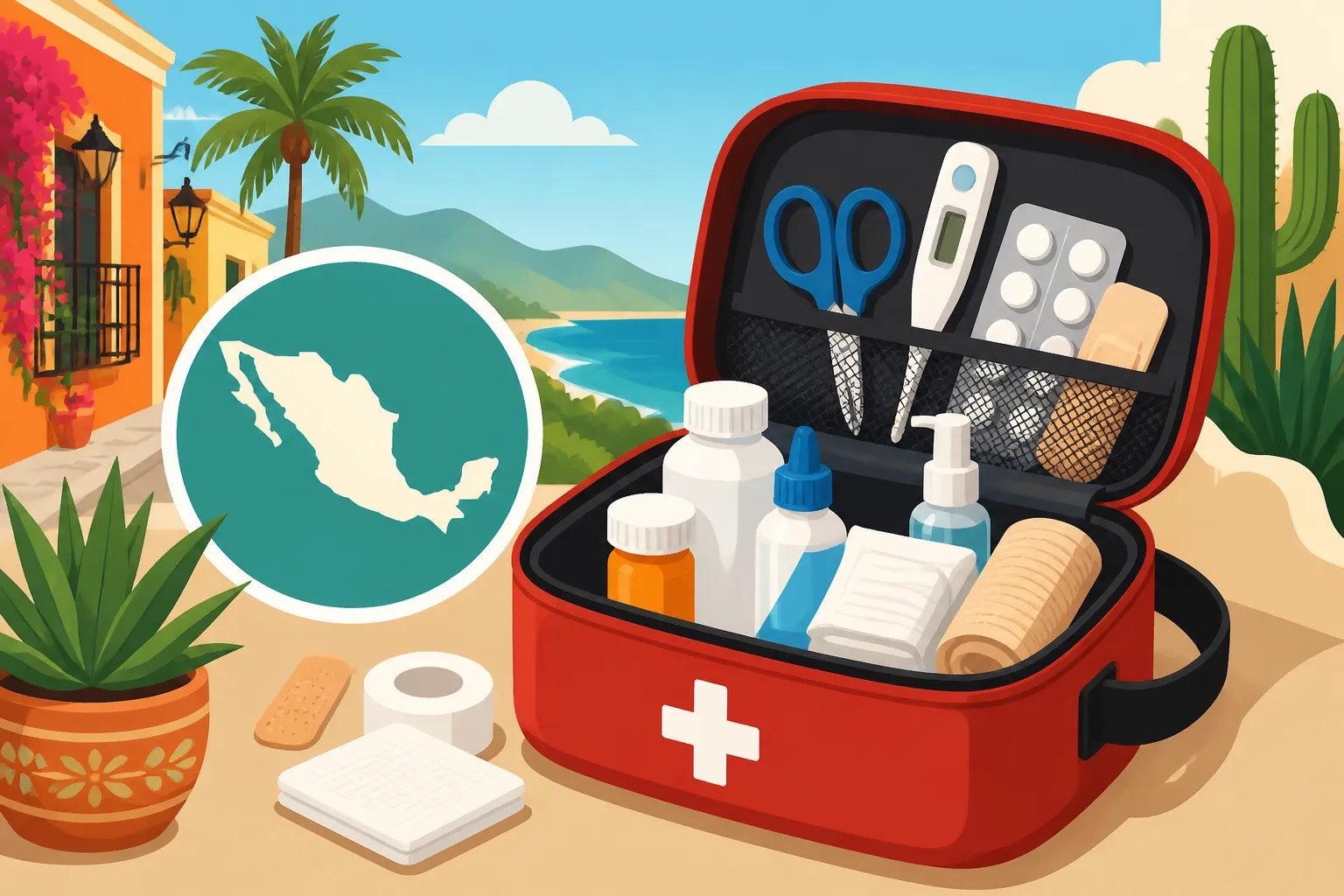
How to Pack a Medical Kit for Living in Mexico
Staring at a wall of Spanish-labeled boxes in a brightly lit Farmacia Guadalajara while your stomach performs gymnastics is a rite of passage I wouldn't wish on anyone. I remember my first week in Mérida, frantically trying to explain "heartburn" using only hand gestures and a very limited vocabulary. This guide solves the confusion by detailing exactly what belongs in your Mexican medical kit.
Disclosure: This post may contain affiliate links. We may earn a commission at no extra cost to you if you make a purchase through these links. Read full disclosure.
The Essential Over the Counter Foundations
When you first move to Mexico, you’ll quickly realize that the pharmaceutical landscape is both incredibly accessible and occasionally confusing. Unlike back home, where you might browse the aisles of a massive CVS or Boots, many Mexican pharmacies are behind-the-counter operations. You need to know exactly what you’re asking for. Your initial kit should bridge the gap between what you’re used to and what is available locally.
Digestive Health and Stomach Issues
It is an expat cliché for a reason: your gut will take time to adjust to the new bacterial flora in Mexico. Even if you are careful with Is It Tap Water Safe to Drink in Mexico? issues, the sheer change in spice levels and cooking oils can trigger distress. I always recommend packing a "starter" supply of your preferred brand of Pepto-Bismol or Imodium, but you should quickly familiarize yourself with local equivalents.
Treda is a name you will come to know well; it is a common local remedy for Traveler’s Diarrhea (Montezuma’s Revenge): Prevention and Treatment that combines an antibiotic with an adsorbent. However, for your personal kit, I suggest including a high-quality, shelf-stable probiotic from home to help your gut colonize "friendly" bacteria during your first ninety days. Also, keep a few packets of Electrol or Vida Suero Oral. These are oral rehydration salts that are vital if you succumb to the heat or a stomach bug. Dehydration happens faster than you think in the Mexican sun.
Pain Management and Fever Reducers
In the US or Canada, we are used to buying Ibuprofen or Acetaminophen in bottles of 500 tablets for a few dollars. In Mexico, pain relief is often sold in blister packs of 10 or 20, which can be significantly more expensive per pill. I always tell new arrivals to pack a "bulk" bottle of their preferred NSAID.
That said, you can find Paracetamol (Acetaminophen) and Naproxeno everywhere. If you have a specific brand preference, like Advil or Aleve, they are available but labeled as "Advil" or "Aleve" at a premium price. If you are managing a more significant issue, you might want to look into Health Insurance in Mexico: How Expats Can Get Coverage (2027) to ensure you have access to specialists who can prescribe stronger alternatives if needed. Always include a digital thermometer in your kit; fevers can escalate quickly in tropical climates, and having an accurate reading is the first step in deciding whether to call a doctor.
First Aid and Wound Care for Tropical Climates
The Mexican environment—depending on whether you are in the humid jungles of Tulum or the dusty highlands of San Miguel de Allende—presents unique challenges for wound healing. A small scratch that would heal in three days in Seattle might take two weeks and a round of antibiotics in Puerto Vallarta if you aren't careful.
Managing Scrapes and Infections in Humidity
Humidity is the enemy of a dry scab. In coastal areas, the air is so thick with moisture that "airing out" a cut often just leads to infection. Your kit must include high-quality, waterproof bandages. The local brands are fine for quick fixes, but for long-term wear, I’ve found that the "Tough Strips" or hydrocolloid bandages from abroad stay on much better through the inevitable sweat and humidity.
You should also include a bottle of Microdyn or a similar colloidal silver spray. While locals use it primarily to disinfect vegetables, it is an excellent antiseptic for skin. Triple antibiotic ointments like Neosporin are harder to find in some parts of Mexico; you’ll often find "Barmicil" or "Quadriderm," which are "cocktail" creams containing a steroid, an antifungal, and an antibiotic. I personally prefer to keep a tube of pure Bacitracin or Polysporin from home to avoid unnecessary steroid exposure for minor cuts.
Specialized Items Hard to Find in Mexico
There are a few items that are surprisingly difficult to track down or are vastly different in quality. For instance, high-zinc sunscreens that don't feel like thick paste can be pricey here. I also recommend packing a high-quality "after-bite" stick or hydrocortisone cream. The mosquitoes here, especially during the rainy season, are relentless.
If you have sensitive skin, bring your own hypoallergenic medical tape and gauze. While Navigating Hospitals and Clinics in Mexico: An Expat’s Guide to Medical Care is generally a positive experience, the supplies used in smaller clinics can sometimes be generic and irritating to those with sensitivities. Having your own Building a First Aid Kit: Essential Medical Supplies for Expats in Mexico ensures that if you do need minor patching up, you have materials that won't cause a secondary rash.
Prescription Medications and Documentation
This is where the transition gets "real." If you take maintenance medication for blood pressure, cholesterol, or thyroid issues, your medical kit isn't just about the pills; it's about the paperwork.
Navigating Mexican Pharmacies with Foreign Prescriptions
Technically, a Mexican pharmacist cannot fill a foreign prescription. However, Mexico has a unique system where many pharmacies have a "consultorio" (a small doctor's office) attached to them. You can take your bottle from home to this doctor, pay a fee of about 50 to 100 pesos, and they will write you a local version of the prescription.
For your move-in kit, bring a three-month supply of any essential meds. Make sure they are in their original bottles with your name on them to avoid issues at customs. Once you are settled, you can explore Pharmacies in Mexico: How to Get Medications (OTC vs Prescription) to find out which of your medications are available over the counter (many are!) and which require that local script. It’s also wise to check if your Cigna Global or similar international policy covers the cost of these prescriptions, as some high-end medications for chronic conditions can actually be more expensive in Mexico than in the US.
The Importance of a Medical History File
Your medical kit should include a waterproof folder containing a "cheat sheet" of your medical history. This should be translated into Spanish. Include your blood type, any allergies (especially to antibiotics like Penicillin), and a list of current medications with their chemical names (e.g., "Lisinopril" instead of just "Zestril").
In the event of Medical Emergencies in Mexico: What Expats Should Know and Prepare, having this information ready can save vital minutes. If you are using a nomad-focused insurance like SafetyWing, keep a printed copy of your summary of benefits and their emergency contact number in this folder as well. I’ve seen expats struggle to log into a portal while in the back of an ambulance; don't let that be you.
Specialized Kit Additions for Specific Regions
Mexico is a continent-sized country with vastly different climates. Your kit in Mexico City needs to look different than your kit in Cozumel.
High Altitude Essentials for Central Mexico
If you’re moving to CDMX, Guadalajara, or any of the colonial highland cities, you are going to be living at a significant elevation. Altitude sickness isn't just for mountain climbers; even at 7,000 feet, you might experience headaches, shortness of breath, and insomnia. Check out Altitude Sickness in Mexico: Tips for Adjusting to High Elevations for deep-dive tips, but for your kit, ensure you have plenty of Ibuprofen and perhaps some Chlorophyll drops, which some expats swear by for oxygenation.
The air is also incredibly dry in the highlands. Saline nasal spray and high-quality eye drops (like Refresh or Systane) are absolute must-haves. I remember waking up with nosebleeds my first month in San Miguel because I wasn't prepared for the lack of humidity.
Coastal and Jungle Protection
For those heading to the coasts, your kit needs to focus on "The Three S's": Sun, Stings, and Stomach. Beyond the standard first aid, I recommend including "Jellyfish Squish" or a small bottle of vinegar for stings if you spend a lot of time in the water.
Fungal infections are also more common in the heat. An anti-fungal powder for your feet and "Gold Bond" or a similar anti-chafing powder will be your best friends. If you’re managing a long-term condition in these areas, you'll need to be extra diligent about Managing Chronic Illness in Mexico: Access to Medication and Specialists because the heat can affect how your body processes certain medications.
| Item Category | Recommended to Bring (Home Country) | Easy to Find (Mexico) |
|---|---|---|
| Pain Relief | Bulk Ibuprofen/Naproxen (500ct) | Paracetamol, Aspirin |
| Digestive | Specific Probiotics, Pepto-Bismol | Treda, Electrol, Omeprazole |
| Wound Care | Neosporin, Tough-Strip Bandages | Microdyn, Alcohol, Gauze |
| Respiratory | DayQuil/NyQuil (liquid caps) | Antiflu-Des, Tesalón |
| Prescriptions | 90-day supply + Paper Scripts | Generic equivalents at "Similares" |
| Allergy | Benadryl (hard to find in some spots) | Loratadine, Cetirizine |
Final Thoughts on Maintenance and Safety
A medical kit isn't a "set it and forget it" item. Every six months, especially in Mexico’s heat, you need to check for expired medications and see if your ointments have separated. Heat can degrade the efficacy of many drugs, so keep your kit in the coolest, driest part of your home—definitely not in a humid bathroom.
It is also worth noting that while you might feel prepared with your kit, you should always know the logistics of Calling an Ambulance in Mexico: How Emergency Services Operate. Whether you have SafetyWing for your travels or a more robust plan through Cigna Global, the kit is your first line of defense, but the local healthcare system is your safety net.
Don't be afraid of the local pharmacies. Some of the most helpful medical advice I've received in Mexico came from a seasoned pharmacist who suggested a local herbal tea (Manzanilla) for a stomach ache that my expensive imported pills couldn't touch. Embrace the local wisdom, but keep your familiar comforts close at hand. Being prepared means you can spend less time worrying about your health and more time enjoying the sunset with a cold drink—made with purified water, of course.
Disclaimer
This guide is for informational purposes only and does not constitute professional medical advice. Always consult with a qualified healthcare provider before starting any new medication or treatment. The author is an expat sharing personal experiences, not a licensed medical professional. Ensure you follow local laws regarding the importation of medications and consult official government resources for the most current regulations.