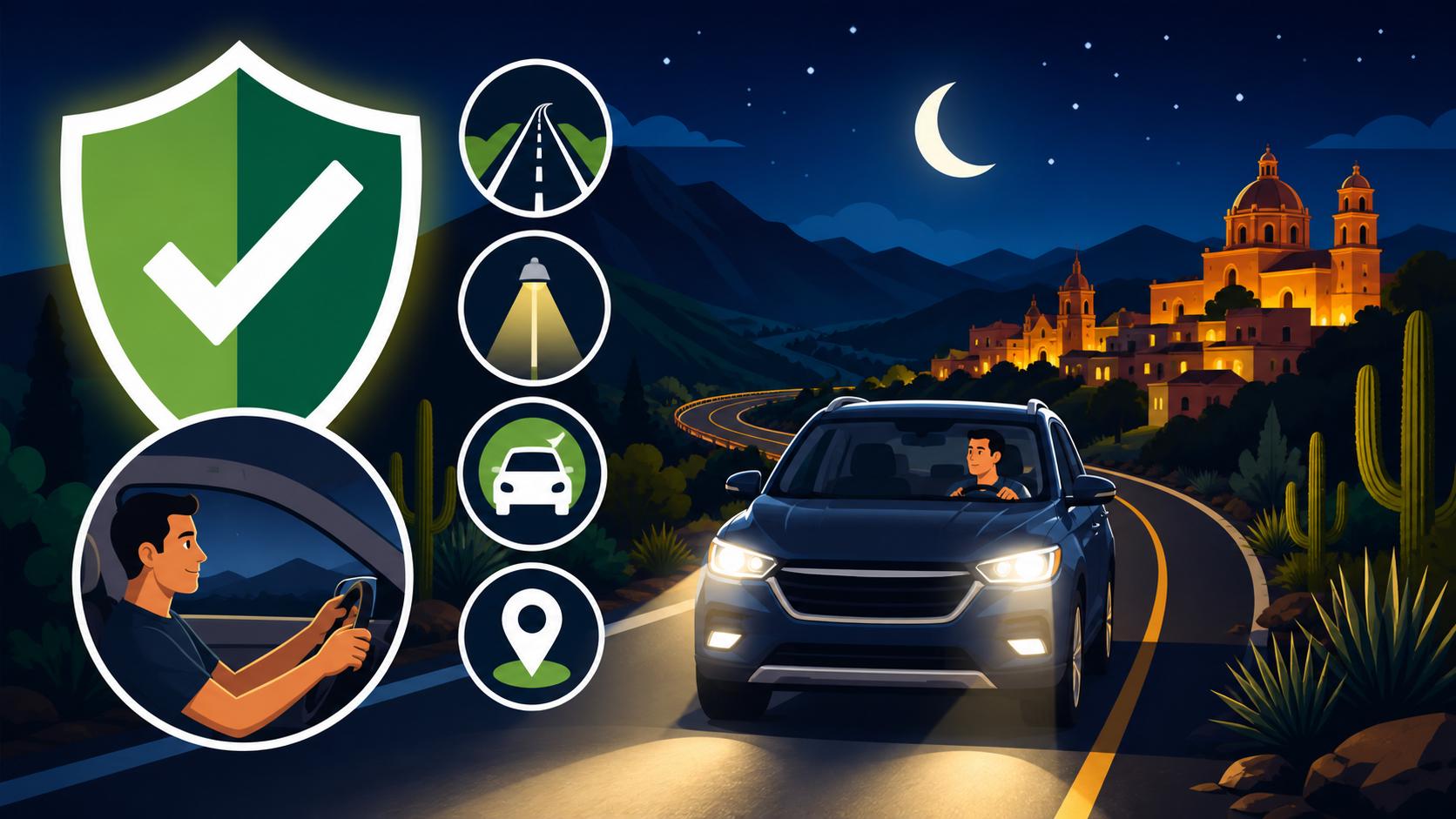
Is It Safe to Drive at Night in Mexico? Road Safety Tips for Expats
You are cruising down a scenic highway in Michoacán or perhaps winding through the lush corridors of Chiapas, and the sun begins to dip below the horizon faster than you anticipated. I remember my first month living in Mexico, getting caught on a secondary road after sunset near Lake Chapala; I hit a "tope" so hard I thought my front axle had surrendered to the pavement. This guide solves the ultimate expat dilemma: determining when—and how—it is actually safe to drive at night in Mexico.
Disclosure: This post may contain affiliate links. We may earn a commission at no extra cost to you if you make a purchase through these links. Read full disclosure.
Understanding the Real Risks of Night Driving in Mexico
The question of whether it is safe to drive at night in Mexico isn't a simple yes or no; it is a matter of geography, infrastructure, and situational awareness. Many expats arrive with fears fueled by sensationalist headlines, but the reality on the ground is often more nuanced, involving practical hazards that are far more likely to ruin your night than any cinematic "bandido" scenario. The lack of lighting on most rural roads creates a visibility vacuum that hides everything from massive potholes to unannounced construction zones.
Infrastructure and Visibility Issues
One of the most jarring things for a new expat is the sheer invisibility of road hazards. In many parts of Mexico, street lighting is a luxury reserved for the main avenues of major cities. Once you exit the city limits, you are reliant entirely on your headlights. This becomes a major issue when you consider the "topes" (speed bumps). These aren't your gentle suburban humps; they are often concrete mountains designed to stop a truck, frequently unmarked and painted the exact same color as the asphalt. Hitting one of these at 60 kilometers per hour in the dark can cause thousands of dollars in damage.
Furthermore, road maintenance can be inconsistent. While the main highways are generally excellent, the "Libre" (free) roads can develop "baches" (potholes) large enough to swallow a tire overnight, especially during the rainy season. Because you cannot see the depth of a puddle at night, you may think you are driving through a shallow splash when you are actually diving into a rim-bending crater. This is why Car Insurance in Mexico: Understanding Coverage and Costs is one of the first things you should secure before even considering a long-distance trip.
Livestock and Wildlife on the Road
In rural Mexico, the road is often shared with more than just cars. Farmers frequently allow their cattle, horses, and donkeys to graze along the shoulders of the highway. As the temperature drops at night, the asphalt retains heat, attracting animals to the center of the lane. A black bull standing in the middle of a pitch-black highway is nearly impossible to see until you are less than 50 meters away. Unlike a deer that might dart across the road, a Mexican cow will often simply stand its ground, leading to catastrophic collisions.
It isn't just large livestock either; dogs are ubiquitous in Mexico and often sleep near the warm pavement. Swerving to miss an animal at high speeds on a narrow, two-lane road with no shoulder is a recipe for a rollover. When you factor in the lack of reflective paint on many secondary roads, your reaction time is cut in half. If you are still in the planning stages of your move, you might want to read about Bringing Your Car vs Buying in Mexico: Pros and Cons for Expats to decide if your current vehicle’s headlights and safety features are up to the task of Mexican rural life.
Security and Safety Concerns
We have to address the elephant in the room: security. While most "horror stories" are outliers, there are specific regions and stretches of road where illegal checkpoints or highway robberies are a documented risk after dark. Criminal elements often take advantage of the cover of night and the isolation of certain stretches to intercept vehicles. This is why the universal advice among veteran expats and locals alike is to stay off the roads between sunset and sunrise, particularly in troubled states or remote border areas.
Even official presence can be confusing at night. You may encounter military or police checkpoints that are poorly lit. Seeing a group of men with long guns in the dark can be terrifying if you aren't prepared for it. Staying informed through local expat groups and knowing Safety in Mexico: What Expats Need to Know About Staying Safe is vital. The rule of thumb is simple: if the locals aren't driving that stretch at night, you shouldn't be either.
Essential Road Safety Tips for Expats
If you absolutely must drive at night—perhaps due to an emergency or a significant delay—there are ways to mitigate the risk. Preparation is your best friend. I always tell newcomers that driving in Mexico is a "team sport"; you need your passenger to act as a co-pilot, watching for those invisible topes while you focus on the center line.
Route Planning and Timing
The golden rule of driving in Mexico is to always use the "Cuotas" (toll roads) rather than the "Libres" (free roads). Cuotas are generally better maintained, have higher security presence, and offer much better visibility. More importantly, when you pay your toll, you are actually paying for a basic level of insurance that covers road hazards and provides access to the Green Angels (Angeles Verdes), a fleet of bilingual roadside assistance trucks that patrol the highways.
Before you set out, make sure your navigation is updated. I highly recommend using a local SIM or an e-SIM from a provider like Airalo to ensure you have consistent data for GPS updates. Google Maps and Waze are generally reliable, but they don't always account for the "human" elements of Mexican roads, such as a sudden festival blocking a main street or a temporary detour through a dirt track. If a drive is taking longer than expected, don't be a hero. Look for a safe place to stop, such as a Selina location in a nearby city, which offers reliable accommodation and a familiar environment for expats to regroup.
Vehicle Preparation and Emergency Kits
In the U.S. or Canada, a breakdown at night is an inconvenience; in Mexico, it can be a genuine safety hazard. Before any long trip, check your tire pressure, coolant levels, and specifically your headlights and high beams. You will use your high beams significantly more often here due to the lack of streetlights. If your car is older, consider upgrading to high-quality LED bulbs to pierce through the darkness.
You should also carry a robust emergency kit. Beyond the standard jumper cables and spare tire, you need a high-visibility vest, reflective triangles, and a powerful flashlight. I’ve found that ordering these items through Amazon Mexico is the easiest way to get specific gear delivered right to your door without hunting through local "ferreterías." Your kit should also include plenty of water and some basic medical supplies. For a deeper dive into what you need, check out Building a First Aid Kit: Essential Medical Supplies for Expats in Mexico.
Navigation and Communication
Never rely on a single source of truth for your directions. Download offline maps for the entire region you are traveling through, as cell service can vanish the moment you enter a mountain pass. Keeping your phone charged is non-negotiable, and having a secondary power bank is a smart move. If you find yourself in a situation where you are lost or feel unsafe, knowing the Emergency Numbers in Mexico: How to Call Police, Fire, or Ambulance is the difference between a controlled situation and a panic.
In addition to digital tools, learn the "unwritten" language of the road. In Mexico, if a truck in front of you turns on its left turn signal on a two-lane highway, they are often telling you it is safe to pass. However, at night, this can be confusing. Be extremely cautious with these signals; it is always better to wait for a clear, visible straightaway than to trust a signal in the dark.
Navigating Common Roadside Scenarios
Driving at night often brings you face-to-face with scenarios that require a calm head and a specific set of cultural "scripts." Whether it's a flashing light behind you or a sudden roadblock, knowing how to react is key to a smooth experience.
What to do at Military and Police Checkpoints
Checkpoints are a standard part of life in Mexico. At night, these can be intimidating because they often use high-intensity floodlights that blind you as you approach. If you see a checkpoint, slow down immediately, turn on your interior dome light so the officers can see you, and keep your hands on the steering wheel. Most of the time, they are looking for high-level criminal activity and will simply wave an expat through once they see your face.
Always have your documents ready: your passport (or a high-quality copy), your residency card, and your driver's license. If an officer asks to see your papers, be polite and use your basic Spanish. If you are worried about the legality of a stop, it helps to understand What to Do If You’re Pulled Over by Police in Mexico. While rare, you should also be aware of the cultural context of Dealing with Corruption: Should Expats Pay “Mordida” (Bribes)? so you can handle the situation firmly but respectfully.
Handling Breakdowns in the Dark
If your car dies or you get a flat at night, do not stay in the vehicle if it is positioned in a dangerous spot on the road. Move the car as far onto the shoulder as possible. Turn on your hazard lights and place your reflective triangles well behind the vehicle to give other drivers plenty of warning. This is where your high-visibility vest becomes a lifesaver.
If you are on a Cuota, call the Green Angels by dialing 078. They are a fantastic service and are generally very helpful to foreigners. If you are on a Libre or in a city, you might need to rely on a private tow or a ride-share app. It’s worth knowing Using Uber and Ride-Sharing Apps: A Guide for Expats in Mexico as a backup plan. In many cases, it is safer to leave the car (if it’s secure) and take a taxi or Uber to the nearest town rather than waiting on a dark shoulder for hours.
Interacting with Other Drivers
Mexican drivers have a different relationship with their high beams. Many will leave them on until the last possible second, which can be blinding. Instead of retaliating with your own high beams, focus on the white line on the right side of the road to maintain your lane position. You will also notice that many older trucks have very poor tail lights, or none at all. This "ghost truck" phenomenon is one of the most dangerous aspects of night driving.
If a vehicle is tailgating you with bright lights, do not speed up. Simply find a safe place to pull over slightly and let them pass. It is much better to have a fast, aggressive driver in front of you (where they can act as a "pathfinder" for topes and potholes) than behind you. For those who decide that driving themselves at night is too much of a headache, you might want to compare your options with Are Taxis Safe in Mexico? Using Cabs vs Ride-share Apps.
Comparison of Road Types for Night Driving
| Feature | Cuota (Toll Road) | Libre (Free Road) |
|---|---|---|
| Pavement Quality | Generally Excellent | Variable (Potholes common) |
| Security Presence | High (National Guard/Angeles Verdes) | Low to None |
| "Topes" (Speed Bumps) | Very Rare | Extremely Frequent |
| Livestock Risk | Fenced (Lower Risk) | High (Unfenced) |
| Roadside Help | Included in toll (078) | Private only |
| Lighting | Better at junctions/tolls | Rarely lit |
Practical Advice for New Arrivals
If you are just settling into your new life, my best advice is to avoid long-distance night travel for at least your first six months. You need time to calibrate your eyes to the specific "texture" of Mexican roads. The shadows here behave differently, and the way "topes" are positioned often follows a logic that takes time to learn. If you've just arrived and are still navigating the paperwork of your vehicle, you might find How Much Does It Cost to Import or Nationalize a Car in Mexico? a useful resource to ensure your car is legal before you hit the highway.
In summary, while you will inevitably find yourself driving after dark in a city or during a short trip, the "veteran expat" rule is to be home by sunset. Mexico is a beautiful country with spectacular landscapes that are meant to be seen in the light. Don't let a poorly timed drive turn into a stressful ordeal. Plan your trips, use the Cuotas, keep your Airalo data active for maps, and always have a backup plan.
Disclaimer
This guide is for informational purposes only. Road conditions and security situations in Mexico can change rapidly. Always check official government travel advisories and local news before embarking on a trip. The author and publisher are not responsible for any incidents, damages, or legal issues that may arise from your travel in Mexico. Always drive with valid insurance and follow local laws.