Mexico Exit Fee Explained: Do You Need to Pay to Leave the Country?
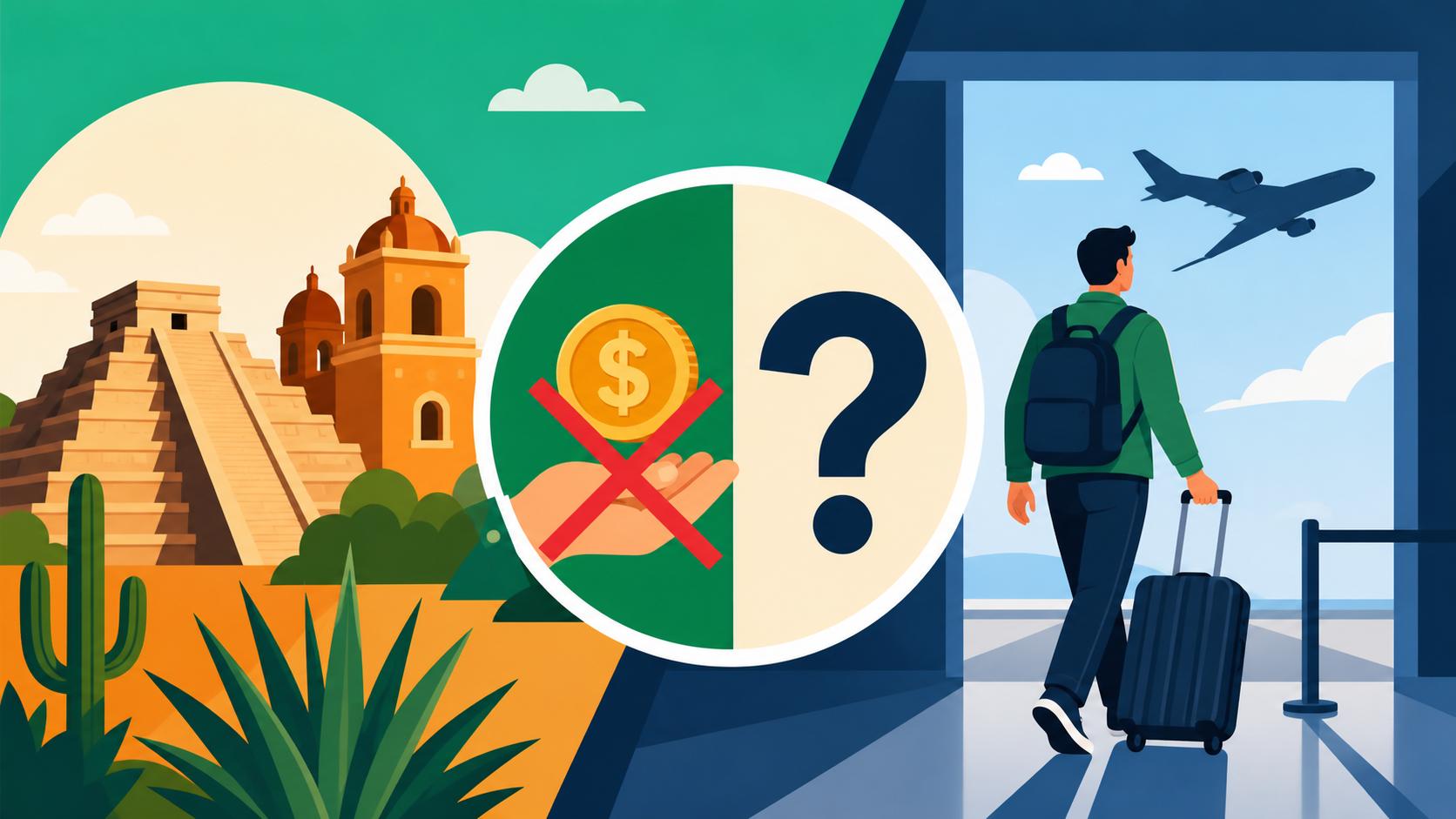
Standing at the airport check-in counter with your bags packed and your boarding pass ready, only to have an official tell you that you owe a "departure tax" or "exit fee" you’ve never heard of, is a classic expat panic moment. I remember the first time this happened to me at the Cancun airport; I was convinced I was being scammed until I realized I simply didn't understand the rules. This guide solves the mystery of the Mexico exit fee, explaining exactly who has to pay, how much it costs in 2026, and how to avoid paying it twice.
Disclosure: This post may contain affiliate links. We may earn a commission at no extra cost to you if you make a purchase through these links. Read full disclosure.
Understanding the DNR Fee or Derecho de No Residente
To navigate the Mexican immigration system, you first have to understand the terminology. What most people call the "exit fee" is officially known as the Derecho de No Residente (DNR). It is not actually a fee for leaving the country, but rather a fee for the privilege of visiting as a non-resident. Think of it as a tourist tax that the Mexican government applies to anyone entering the country for leisure, transit, or short-term business without a residency visa.
What Exactly is the DNR
The DNR is a federal fee managed by the Instituto Nacional de Migración (INM). As of 2026, the fee is generally around 717 MXN, though this amount is adjusted annually based on the federal tax laws and the value of the UMA (Unit of Measurement and Settlement). If you are visiting as a tourist, this fee covers the processing of your entry and the administrative costs of monitoring your stay. Most travelers don't even realize they've paid it because, for the vast majority of people arriving by air, the cost is bundled directly into the price of their airline ticket. You might see it listed in the "Taxes and Fees" breakdown of your flight receipt under a code like "UK" or simply "Mexico Visitor Tax."
Who is Exempt from Paying
One of the biggest frustrations for new expats is paying a fee they are legally exempt from. If you have already started your residency process, you should review The Ultimate Guide to Mexico's Visa and Residency Options (2027 Edition) to understand your specific status. Generally, the following groups do not have to pay the DNR:
- Temporary and Permanent Residents: If you hold a valid residency card, you are a resident, not a visitor. Therefore, the "Non-Resident" fee does not apply to you.
- Diplomats: Foreign officials on state business.
- Children under two years old: Most airlines and border crossings waive the fee for infants.
- Land Entrants staying less than 7 days: Historically, if you crossed the border by land (at places like Tijuana or Laredo) and stayed for less than a week, the fee was waived. However, be aware that enforcement at land borders has become much stricter, and many agents now require the payment regardless of the duration of the stay.
Why the Confusion Happens at the Border
The confusion often stems from the transition between the old paper FMM system and the new digitalized entry process. For years, travelers received a paper "tourist card" that they had to hand back upon departure. If you lost that paper, you paid a fine. Today, while much of the process is digital, the underlying tax remains. If you are confused about the current paperwork required for entry, you should check out Mexico Tourist Card (FMM) Explained: Entry Requirements for 2026 for the most recent updates on digital vs. paper requirements.
How and Where to Pay the Exit Fee
Depending on how you entered Mexico, the method of payment for your DNR can vary wildly. This is where most expats and long-term travelers get tripped up, especially those who make frequent "border runs" to reset their tourist status or those who are in the middle of a residency application.
Paying Through Airlines vs Land Borders
If you fly into Mexico on a commercial carrier, the airline is legally required to collect the DNR on behalf of the Mexican government. When you leave, you shouldn't have to pay anything at the airport unless you are flying on a very small regional carrier or a private charter that doesn't include taxes in its pricing. However, if you enter Mexico by land, the process is manual. You are expected to stop at the INM office at the border, present your passport, and pay the fee. They will usually provide you with a bank slip to take to a nearby Banjercito or authorized bank, or they may have a credit card terminal on-site. If you skip this step when entering by land, you will be stopped when trying to leave the country (either at a land checkpoint or the airport) and forced to pay the fee then.
Dealing with the INM Officers at the Airport
If you are a resident, you must be proactive. When checking in for a flight out of Mexico, the airline agent might see your foreign passport and automatically assume you are a tourist who needs to pay the fee if it wasn't in your ticket. You must show your residency card immediately. If they insist you owe money, ask for a breakdown of the taxes already paid in your ticket. For those who are still navigating the residency process, keep in mind that having a health policy from Cigna Global or another international provider can sometimes be helpful evidence of your expat status when discussing your situation with officials, though it isn't a legal substitute for a visa. If you are ever in a position where you need to prove your financial or legal standing to INM, ensure you have all your documents ready; if they are in English, you might need a service like RushTranslate to provide certified Spanish versions.
The Paperwork Trail for Payments
Always keep your receipts. If you pay the DNR at a land border, the official should give you a stamped receipt or a portion of the FMM (if they are still using paper at that specific crossing). Do not lose this. If you are asked to pay again when leaving at an airport like Mexico City (AICM) or Guadalajara, showing that stamped receipt is your only defense against a double payment. Many travelers find that Surviving the INM Office: Tips for a Smooth Visa Processing Day offers great advice on how to handle these types of bureaucratic interactions without losing your cool.
| Traveler Type | Payment Method | Typical Cost (2026) | Proof Required |
|---|---|---|---|
| Air Tourist | Included in flight ticket | ~717 MXN | Flight Receipt / Digital FMM |
| Land Tourist (>7 days) | Paid at Border Bank/INM | ~717 MXN | Bank Receipt |
| Temporary Resident | Exempt | $0 | Residency Card |
| Permanent Resident | Exempt | $0 | Residency Card |
| Diplomatic Status | Exempt | $0 | Diplomatic ID |
Avoiding Common Pitfalls and Scams
While most INM officials are just doing their jobs, the complexity of the exit fee system creates opportunities for "misunderstandings" that end up costing you money. Being informed is your best defense against overpaying or falling for unofficial "expedite fees."
The Double Payment Trap
The most common issue is the double-payment trap. This happens when a tourist flies into Mexico (paying the fee in their ticket), then leaves by land, and later re-enters. Or, more commonly, a resident buys a ticket where the airline erroneously included the DNR fee. If you are a resident and you see a charge for "Mexico Visitor Tax" on your flight receipt, you are actually entitled to a refund from the airline. This process can be a headache, often requiring you to fill out a form on the airline's website and provide a copy of your residency card and your How to Get a CURP as a Foreigner: The Mexican ID Number Explained document to prove your status. Most people decide the $40 USD isn't worth the five hours of bureaucracy, but for a family of four, it adds up quickly.
Keeping Your Documentation in Order
If you are in the process of applying for residency, you are in a "gray zone." You must obtain a Permiso de Salida y Regreso (Exit and Re-entry Permit) if you plan to leave while your application is pending. Without this permit, your application will be cancelled the moment you step out of the country. This is a critical step covered in Leaving Mexico and Re-entering: Travel Tips for Residents and Visa Holders. In this scenario, you still shouldn't have to pay the DNR, but you will have to pay the fee for the permit itself, which is a separate administrative cost.
Language Barriers and "Fees"
Sometimes, an official might tell you that there is a "service fee" for processing your exit if you are running late or if your paperwork is slightly disorganized. Genuine government fees always come with an official receipt from a computer or a numbered carbon-copy book. If someone asks for cash without a receipt, it is likely not a legal fee. To help you communicate better in these high-stress moments, it's worth learning some Mexico Immigration Terminology 101: FMM, CURP, RFC and Other Essentials so you can ask specifically for the "recibo oficial."
Leaving Mexico with Residency Status
For those of us who have made the jump from tourist to resident, the exit fee is a thing of the past—mostly. However, the responsibility shifts from "paying the fee" to "proving you don't have to pay it."
Why Residents Don't Pay the Fee
The DNR is specifically for "Non-Residents." Once you have your Residente Temporal or Residente Permanente card, you are part of the Mexican tax and immigration system in a different way. You are expected to be contributing to the economy through other means, and the government no longer views you as a transient visitor. This is why it is so important to keep your residency card in a safe but accessible place during travel. I always carry a digital scan on my phone and a physical photocopy hidden in my luggage, just in case the original is lost. If you're wondering how this status affects other parts of your life, like medical care, you might find Health Insurance in Mexico: How Expats Can Get Coverage (2027) a helpful read.
Essential Paperwork for Residents at Departure
When you leave Mexico as a resident, you no longer fill out a standard tourist FMM. In many airports now, the process is fully digital. You scan your residency card at a kiosk or an immigration officer scans it at the gate. If you are at an airport that hasn't fully upgraded yet, they may still ask you to fill out a form. The key is to ensure the officer marks you as a "Resident" and not a "Tourist." If they accidentally stamp you in or out as a tourist, it can create massive problems for your legal status later on.
Certified Translations and Legal Support
If your residency is based on marriage or work, and you need to present foreign documents to immigration to clarify your status and avoid fees, remember that Mexico is very strict about official translations. Using a service like RushTranslate for your birth certificate or marriage license ensures that the INM accepts the paperwork without question. You can learn more about this in How to Translate Documents for Your Mexican Visa Application (Certified Translations). Having a solid folder of "just in case" documents can save you from an unexpected 700-peso charge and a lot of frustration at the border.
Summary of the Mexico Exit Fee
The "Mexico Exit Fee" is actually a pre-paid tourist tax called the DNR. For air travelers, it's usually in your ticket. For land travelers, you pay it at the border. Residents are exempt but must prove their status. Always keep your receipts, check your flight breakdowns, and never pay a fee without getting an official government receipt in return.
Disclaimer
The information provided in this article is for informational purposes only and does not constitute legal or immigration advice. Mexican immigration laws and fees are subject to frequent changes. Always consult with the official website of the Instituto Nacional de Migración (INM) or a qualified immigration attorney before making travel or residency plans. While we strive to provide the most up-to-date information for 2026, real-world application can vary by port of entry and individual official discretion.