How Do Expats Typically Pay Rent in Mexico? Cash vs Bank Transfers
I will never forget the sheer terror of walking down a busy street in Mexico City with $1,500 USD equivalent in physical peso bills stuffed into my backpack, praying I wouldn’t get mugged on the way to my landlord’s office. If you are moving south of the border, figuring out how to securely pay your rent without bleeding money on exchange rates is critical. This guide breaks down the exact mechanisms, risks, and modern cross-border solutions for managing your Mexican housing payments.
Disclosure: This post may contain affiliate links. We may earn a commission at no extra cost to you if you make a purchase through these links. Read full disclosure.
The Evolution of the Mexican Rental Economy
The Historical Dominance of Physical Cash
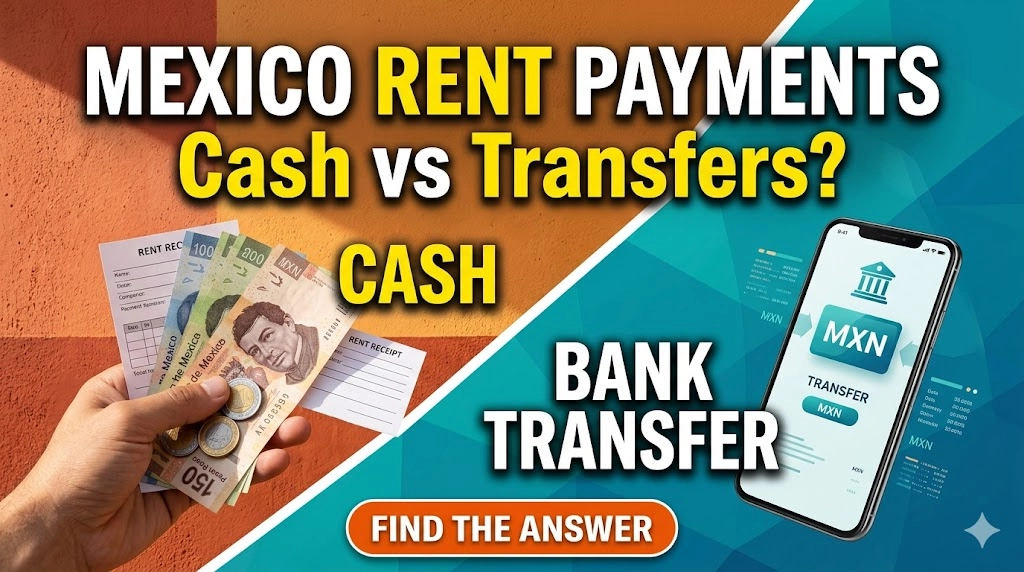
Historically, the Mexican real estate market operated almost entirely in the shadows of the informal cash economy. For decades, landlords preferred, and often explicitly demanded, that tenants pay their monthly rent in physical pesos. This preference was rooted deeply in a desire to bypass the banking system and avoid declaring rental income to the federal tax authorities.
When you signed a lease ten or fifteen years ago, the standard protocol involved making a trip to the bank, withdrawing stacks of billetes (bills), and physically handing them to the property owner or their designated property manager in exchange for a flimsy, handwritten paper receipt. There was no digital footprint, no electronic confirmation, and very little legal recourse if a dispute arose over whether a payment was actually made.
For expats, this archaic system was a logistical nightmare. It forced foreigners to rely heavily on international debit cards, constantly fighting daily ATM withdrawal limits just to scrape together enough cash by the first of the month. While the market has modernized significantly, you will still encounter old-school landlords in smaller coastal towns or traditional neighborhoods who operate strictly on this legacy cash-first mindset. If you encounter one, you must carefully weigh the inconvenience against the value of the property, a dynamic we explore in Renting a Home in Mexico: Complete Expat Guide to Leases, Deposits, and More.
The SAT Crackdown and the Shift to Digital
In recent years, the Mexican rental landscape has undergone a massive, federally mandated digital transformation. The Servicio de Administración Tributaria (SAT), Mexico’s federal tax authority, initiated a severe crackdown on undeclared rental income. The government introduced strict laws requiring landlords to issue formalized, digitally stamped tax invoices known as CFDI (Comprobante Fiscal Digital por Internet) for every single rental payment they receive.
Furthermore, Mexican tenant laws were updated to state that if a landlord attempts to evict a tenant for non-payment of rent, the judge will immediately demand to see the CFDI tax receipts. If the landlord has not been issuing these official digital receipts and paying taxes on the income, the eviction case is frequently thrown out. This legal shift terrified property owners and forced the vast majority of the formalized rental market out of the cash shadows and into the digital banking system.
Today, if you are renting a mid-to-high-end apartment in a major expat hub like Mexico City, Guadalajara, or Mérida, physical cash is rarely accepted. Corporate landlords and professional real estate agencies strictly require traceable, digital bank transfers. They want a clean paper trail to satisfy SAT compliance. Understanding this digital requirement is crucial when planning your financial architecture, which we detail in Banking in Mexico: Complete Guide for Foreigners.
Why Some Landlords Still Demand Pesos
Despite the heavy hand of the SAT, the cash economy in Mexico is highly resilient. You will still find independent landlords who stubbornly refuse digital transfers. This usually happens when you bypass professional real estate agencies and find a trato directo (direct deal) with an older property owner on Facebook Marketplace or by calling a “Se Renta” sign hanging in a window.
These landlords demand cash for two primary reasons. First, they are actively dodging income taxes to maximize their profit margins. Second, they may not possess the financial literacy or the technological infrastructure required to generate SAT-compliant CFDI invoices every month. By keeping the transaction in physical cash, they keep the property entirely off the government’s radar.
While renting from these cash-only landlords often yields a significantly lower monthly rent, it introduces massive vulnerabilities for the expat. You have no formal, legally recognized proof of payment. If the landlord suddenly claims you missed a month, a handwritten receipt scribbled on a notepad holds very little weight in a Mexican civil court. You must approach these informal agreements with extreme caution and hyper-vigilance regarding documentation.
Paying Rent in Physical Cash: The Risks and Realities
The ATM Withdrawal Nightmare
If you deliberately choose, or are forced into, a cash-only rental agreement, you must immediately confront the mechanical nightmare of ATM withdrawals in Mexico. Your home-country bank limits how much cash you can withdraw daily, usually capping it at $500 or $1,000 USD. Mexican ATMs also impose their own strict withdrawal limits per transaction, frequently capping out at 8,000 to 10,000 MXN (roughly $400 to $500 USD).
To pay a $1,500 USD monthly rent, you cannot simply walk up to a machine and pull out the entire sum. You must execute a coordinated, multi-day withdrawal strategy. You will find yourself visiting the ATM on the 28th, the 29th, and the 30th of the month, hoarding stacks of 500-peso notes in your apartment until you have accumulated the full rent amount.
This process is incredibly stressful. ATMs frequently run out of cash on weekends, or the machines swallow foreign debit cards due to localized network errors. If an ATM eats your card on the day before rent is due, you are financially paralyzed. This is exactly why maintaining redundant financial tools is critical, a strategy we heavily emphasize in Using Credit and Debit Cards in Mexico: What Expats Need to Know.
Currency Conversion Bleed
The hidden, devastating cost of paying rent in physical cash is the currency conversion bleed. When you use a standard US, Canadian, or European debit card at a Mexican ATM, you are subjected to multiple layers of financial friction.
First, the local Mexican bank will charge an access fee (usually 30 to 80 pesos). Second, your home bank may charge an out-of-network international withdrawal fee (often $5 USD per transaction). Finally, and most destructively, you are hit with a retail exchange rate margin. The ATM network will skim 2% to 5% off the true mid-market exchange rate.
If you are pulling out $1,500 USD in pesos over three separate transactions, you could easily be losing $50 to $75 USD every single month in invisible banking fees and poor exchange rates. Over the course of a 12-month lease, you are effectively paying an invisible “expat tax” of nearly $1,000 USD simply for the privilege of accessing your own money. You must utilize specialized, no-foreign-transaction-fee debit cards to mitigate this severe financial leakage.
Security Risks of Carrying Cash
Beyond the terrible math, paying rent in cash introduces a severe, unavoidable physical security risk. Mexico is generally safe for expats who exercise situational awareness, but crimes of opportunity are a reality in major urban centers.
Walking down the street on the first of the month carrying a thick envelope containing 20,000 or 30,000 pesos makes you a highly lucrative target. If you are targeted for an “express kidnapping” or a mugging while transporting your rent money, the financial loss is catastrophic and completely uninsured.
If you absolutely must pay in cash, you must execute the transaction with military precision. Never follow a routine. Do not withdraw cash from the exact same ATM at the exact same time every month. Once you have the cash, immediately store it in a heavy-duty, bolted document safe—which you can discreetly order online via Amazon Mexico and install in your closet—until the exact moment you meet the landlord. Never meet a cash landlord in a public cafe; insist on executing the handover inside the secure perimeter of your rented property. For a broader look at personal safety protocols, review Safety in Mexico: What Expats Need to Know About Staying Safe.
Domestic Bank Transfers: The SPEI Network
What is SPEI and How Does it Work
The absolute gold standard for paying rent, utilities, and services in modern Mexico is the Sistema de Pagos Electrónicos Interbancarios, universally known as SPEI. Developed and operated by Banco de México (Banxico), SPEI is an incredibly robust, instantaneous domestic wire transfer network.
Unlike the sluggish ACH system in the United States, which can take days to clear, SPEI operates in real-time, 24 hours a day, 7 days a week. When you execute a SPEI transfer from your Mexican bank app, the funds physically arrive in your landlord’s bank account within three to five seconds. It is a flawless, highly transparent system that completely eliminates the need for physical cash or paper checks.
To execute a SPEI transfer, you only need three pieces of information from your landlord: their full legal name, the name of their bank (e.g., BBVA, Santander, Banorte), and their 18-digit CLABE (Clave Bancaria Estandarizada) number. Once the transfer is complete, the SPEI system generates a verifiable digital receipt containing a tracking number (clave de rastreo), providing you with ironclad legal proof that you paid your rent on time.
The Catch: Opening a Mexican Bank Account
The efficiency of the SPEI network is legendary, but there is a massive catch for newly arrived expats: accessing it generally requires holding a local Mexican bank account.
Opening a tier-one bank account in Mexico is a notoriously hostile bureaucratic process. Traditional banks will not open an account for a foreigner who only possesses a 180-day tourist visa. You must possess a formal Temporary or Permanent Residency card (Tarjeta de Residente). Furthermore, the bank will demand a Comprobante de Domicilio (proof of address), which is usually a CFE electricity bill. This creates a frustrating paradox: you need a bank account to pay your rent, but you need a rental address to open the bank account.
If you are navigating this bureaucratic maze, you must remain incredibly patient. You will spend hours sitting in bank branches with massive stacks of photocopied immigration documents. We dissect the exact workarounds for this paradox in our comprehensive guide on Banking in Mexico: Complete Guide for Foreigners. Until you secure this account, you are effectively locked out of the native SPEI ecosystem.
Securing Your Comprobante de Pago
When you use the SPEI network, you are inherently protecting yourself against landlord disputes. Because the system is heavily regulated by Banco de México, every transaction is permanently logged on the federal ledger.
If your landlord ever claims that your rent transfer did not arrive, you do not need to argue with them. You simply take the 30-digit alphanumeric clave de rastreo (tracking key) generated by your banking app and input it directly into Banxico’s public CEP (Comprobante Electrónico de Pago) portal.
The portal will instantly generate an official, digitally stamped PDF document proving the exact second the funds settled into the landlord’s specific account. This document is legally indisputable in a Mexican court. However, to execute these transfers and generate these receipts from your smartphone while out and about, you must have an unbreakable mobile data connection. I highly recommend securing an Airalo eSIM so your banking apps function flawlessly, even if your apartment’s Wi-Fi goes down on rent day. Managing these digital transactions is a core component of Digital Nomads in Mexico: Remote Work Guide.
International Wire Transfers: The SWIFT Trap
Hidden Fees and Terrible Exchange Rates
If you have not yet secured a Mexican bank account, your landlord might suggest that you simply wire the rent directly from your US, Canadian, or UK bank to their Mexican account. This sounds convenient in theory, but it relies on the archaic SWIFT (Society for Worldwide Interbank Financial Telecommunication) network.
Paying your Mexican rent via a traditional SWIFT wire transfer is a catastrophic financial mistake. Traditional banks absolutely gouge consumers on international wires. First, your home bank will charge a flat outbound wire fee, typically ranging from $30 to $50 USD per transfer. Second, the receiving Mexican bank will often charge an inbound wire fee of $15 to $25 USD simply to accept the funds.
The true financial violence, however, occurs in the exchange rate. Banks rarely execute SWIFT transfers at the true mid-market rate. They apply a heavily padded corporate exchange rate, secretly skimming 3% to 5% of the total transfer volume. When you combine the flat wire fees and the padded exchange margin, sending a $1,500 USD rent payment via SWIFT can easily cost you over $100 USD in friction fees every single month.
Unpredictable Arrival Times
Beyond the exorbitant cost, SWIFT transfers are notoriously sluggish and unpredictable. While a domestic SPEI transfer settles in three seconds, an international SWIFT wire can take anywhere from two to five business days to clear the various intermediary clearinghouses.
If your rent is due on the 1st of the month, and you initiate a SWIFT wire from your Bank of America account on a Friday afternoon, the funds might not actually hit your landlord’s BBVA account in Mexico until the following Wednesday. During those five days of digital purgatory, the money has left your account but hasn’t arrived in theirs.
This delay creates immense anxiety and friction. Mexican landlords are fiercely protective of their cash flow, and they will likely begin texting you aggressively on the 2nd of the month, demanding to know where the money is. You have no way of speeding up the SWIFT network, leaving you to desperately apologize for a banking delay you cannot control.
Why Landlords Hate SWIFT
It is not just expats who suffer under the SWIFT system; Mexican landlords actively despise it. When an international wire arrives in a Mexican bank account, it triggers immediate, aggressive scrutiny from the SAT tax authorities and the bank’s internal anti-money laundering (AML) algorithms.
If a landlord regularly receives large, international SWIFT wires from foreign accounts, their Mexican bank may preemptively freeze their account, demanding extensive documentation to prove the origin of the funds and the nature of the transaction. Landlords do not want to deal with this compliance nightmare. Consequently, if you tell a prospective landlord that you intend to pay rent via international bank wires, they will frequently reject your rental application outright. They want domestic, frictionless SPEI transfers, not international red tape.
Cross-Border Payment Platforms: The Expat Solution
Bypassing Traditional Banks
To solve the paradox of needing to pay a Mexican landlord domestically without actually possessing a Mexican bank account, the global expat community relies exclusively on modern, cross-border fintech platforms. The undisputed champion of this space is Wise (formerly TransferWise), followed closely by competitors like Remitly and Xoom.
These platforms act as a bridge between the archaic international banking system and the hyper-efficient domestic Mexican SPEI network. You link your home-country checking account (or debit card) to the fintech platform. You instruct the platform to send a specific amount of Mexican Pesos to your landlord’s 18-digit CLABE account.
The platform debits your home account in your native currency, mathematically converts it, and then utilizes their own localized Mexican banking partners to push the pesos directly into your landlord’s account via the domestic SPEI network. Your landlord receives a standard domestic transfer, completely bypassing the international SWIFT flags that trigger AML freezes.
How to Lock in the Mid-Market Rate
The primary reason expats fiercely defend platforms like Wise is their absolute transparency regarding exchange rates. Unlike traditional banks that hide their profit margins inside padded conversion rates, premium cross-border platforms use the true mid-market exchange rate—the exact same rate you see when you type “USD to MXN” into Google.
Instead of hiding fees in the exchange rate, they charge a small, clearly stated, upfront percentage fee for executing the transfer. This transparency allows you to calculate the exact cost of your rent down to the penny. By locking in the mid-market rate, you save hundreds of dollars a year compared to executing traditional bank wires or withdrawing massive amounts of cash from local ATMs.
Ensuring Your Landlord Gets Paid Instantly
The speed of these cross-border platforms is revolutionary. If you fund your transfer using a debit card or a pre-funded currency balance within the fintech app, the conversion and execution happen almost instantaneously.
I have personally sat across a desk from a Mexican landlord in Guadalajara, opened my cross-border app on my phone, initiated the transfer, and watched the landlord’s phone ping with a deposit notification from their local bank less than ten seconds later. This level of speed builds immense trust with property owners and entirely eliminates the anxiety of the five-day SWIFT purgatory.
To ensure these transfers execute flawlessly while sitting in a leasing office, you must have secure, unthrottled internet. Relying on an office’s public Wi-Fi to log into a financial app is a massive security risk. Utilizing the encrypted cellular data from an Airalo eSIM guarantees that your banking credentials remain secure while initiating these high-value rent transfers.
Navigating the Initial Deposit and Move-In Day
The Capital-Heavy Move-In Reality
The day you actually sign the lease and receive the keys to your Mexican apartment is a highly capitalized event. You cannot simply write a personal check and hand it to the landlord; Mexican real estate does not operate on the honor system of personal checks.
On move-in day, you are generally required to provide the first month’s rent, a security deposit (depósito en garantía) equal to one month’s rent, and the upfront cost of the legal eviction policy (Póliza Jurídica), which typically costs 30% to 50% of a month’s rent. If you are renting a house for $1,200 USD a month, you must have nearly $3,000 USD in highly liquid capital ready to deploy instantly.
Because you cannot transfer this volume of capital via ATM withdrawals, you must rely on the cross-border fintech platforms discussed above. You must confirm with the landlord days in advance that they accept SPEI transfers initiated from international fintech bridges, ensuring there are no misunderstandings when it is time to hand over the keys. We explore budgeting for these hefty upfront fees in our Cost of Living in Mexico: 2026 Comprehensive Guide.
Establishing a Basecamp Before Committing
Attempting to coordinate these massive cross-border transfers, set up utility accounts, and negotiate a long-term lease during your very first week in Mexico is a guaranteed recipe for burnout and catastrophic financial mistakes.
The most intelligent financial strategy a new expat can deploy is the “soft landing.” Instead of rushing into a 12-month lease, book your first four to six weeks at a premium, community-driven coliving space like Selina. By establishing your initial footprint at a Selina basecamp, you bypass the entire rental payment nightmare. You simply pay for your accommodation online with your foreign travel credit card, accumulating points and enjoying total fraud protection.
Staying at a Selina allows you to securely stash your luggage, connect to enterprise-grade Wi-Fi, and take a deep breath. You can use this month-long buffer to open a local bank account, secure your residency card, and physically tour long-term apartments, ensuring that when you finally do sign a lease, your financial infrastructure is fully prepared to execute the payments like a local.
The Ultimate Move-In Day Checklist
When you finally execute your first rent payment and take possession of the property, you must aggressively document the transaction.
| Payment Method | Key Requirement | Primary Risk | Expat Recommendation |
| Physical Cash | Safe transport, handwritten receipt | Theft, ATM fees, zero legal proof | Avoid unless deeply discounted |
| SWIFT Wire | Bank routing numbers, high patience | Exorbitant hidden fees, 5-day delays | Never use for monthly rent |
| Local SPEI Transfer | Mexican bank account, CLABE number | Requires residency visa to open account | The absolute gold standard |
| Cross-Border Fintech | Home bank linked to app, CLABE | Occasional AML identity checks | Best solution for new arrivals |
Never hand over your deposit or initiate the transfer until you have physically walked through the apartment with the landlord, signed the inventario (inventory list detailing existing damages), and physically tested the keys in the deadbolt. Once the transfer clears, demand a digital confirmation via WhatsApp and insist on receiving the formalized CFDI tax receipt if you are renting through an agency. Protecting your capital requires vigilance, a mindset we apply to all utilities and services in Home Utilities in Mexico: Setting Up Electricity, Water, Gas, and Internet.
References
Primary sources (official)
- Banco de México (Banxico) – SPEI: The central bank’s official documentation on the Interbank Electronic Payment System (SPEI), explaining the 24/7 clearing process and domestic transfer mechanics. https://www.banxico.org.mx/services/interbanking-electronic-payme.html
Other helpful sources
- Airalo: Global eSIM provider ensuring expats maintain highly secure, uninterrupted cellular data to initiate cross-border rent transfers and access banking apps seamlessly. https://www.airalo.com/
- Amazon Mexico: Essential e-commerce platform for expats needing to rapidly and discreetly source heavy-duty, bolt-down document safes to protect cash reserves and immigration papers. https://www.amazon.com.mx/
Disclaimer
The information provided in this article is for educational and informational purposes only and does not constitute financial, investment, legal, or tax advice. Mexican tax laws, SAT compliance requirements for landlords (CFDI issuance), and domestic banking regulations are highly complex and subject to rapid change. Cross-border fintech platforms frequently update their fee structures, exchange rate margins, and anti-money laundering (AML) compliance protocols. Executing large cash transactions in Mexico carries inherent physical security risks. Always conduct extensive due diligence, avoid transferring funds before physically inspecting a property, and consult with a licensed, bilingual Mexican accountant or real estate attorney before signing legally binding leases or transferring massive capital deposits.